Philosophy
fromBig Think
2 days agoThe flimsy case for evolving dark energy
Theoretical physicists risk falling into motivated reasoning by overly believing speculative ideas without sufficient supporting evidence.
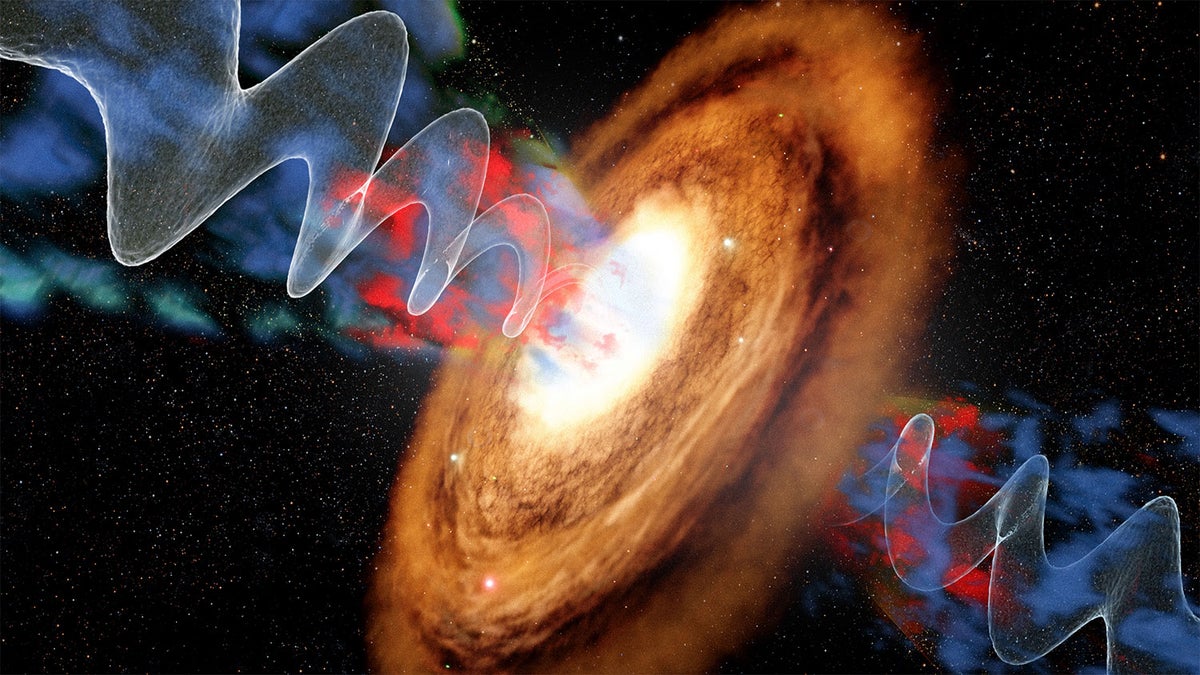
an electron within a molecule gets excited to a higher-energy state, the electron de-transitions back to the lower energy state, where it emits light of a very specific wavelength in the process. Then, pumped or injected energy re-excites an electron within that very same molecule back into that higher-energy state, over and over.
One of the most exciting aspects is the rich chemistry we detect. We see dozens of different molecules, including some complex organic molecules that contain carbon, the same element that forms the basis of life on Earth. From ACES, we are learning more about how the ingredients for planets, and potentially life itself, can arise in the universe.
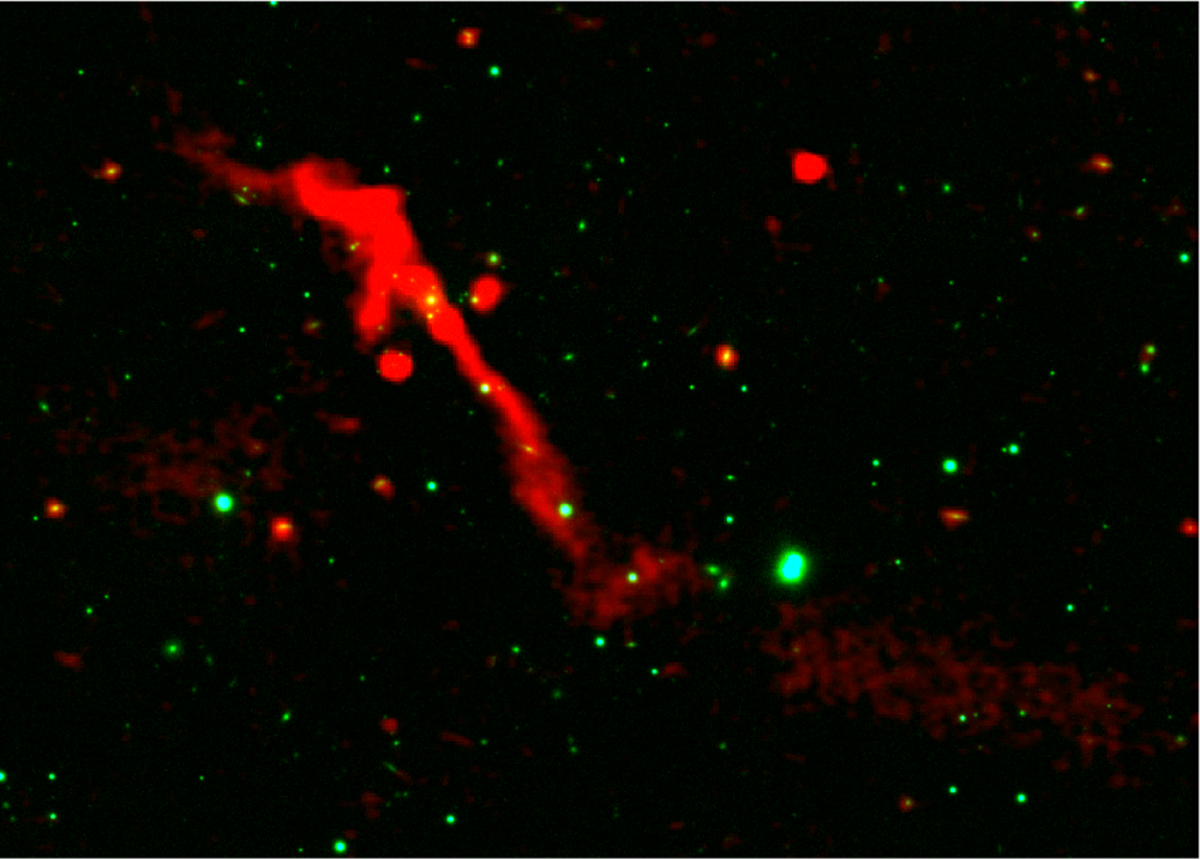
This system is truly extraordinary. We're seeing the radio equivalent of a laser halfway across the universe. Fundamentally, masers and lasers are focused beams of light in the same frequency. In the realm of astrophysics, these can arise from clouds of dust being excited into a higher energy state from the light emitted by other sources, like stars and black holes.
Star-formation will eventually end, and then the last shining stars will burn out. Galaxies will dissociate due to gravitational interactions, ejecting all masses and leaving only supermassive black holes behind. And then those black holes will decay via Hawking radiation, leaving only cold, stable, isolated bodies, from which no further energy can be extracted, all accelerating away from us within our dark energy-dominated Universe.
Looking skyward fills us with wonder. Off-world, the Sun, planets, stars, and galaxies all await. Our Solar System encompasses our own cosmic backyard. Farther away, stars and star clusters abound within the Milky Way. Hundreds of billions of stars exist just within our home galaxy. Inside our Local Group, only Andromeda surpasses us in mass, size, and stars. More than 5 million light-years away, galaxies abound in groups and clusters.
Okay, first thing first: the universe is in fact expanding. We've known this for more than a century now, and it's the basis for modern cosmology. This idea is called the big bang modelwhich is an unfortunate name because it brings to mind a cosmos expanding like an explosion, with galaxies moving away from each other through space like shrapnel. But in fact space itself is expanding, and that's different.
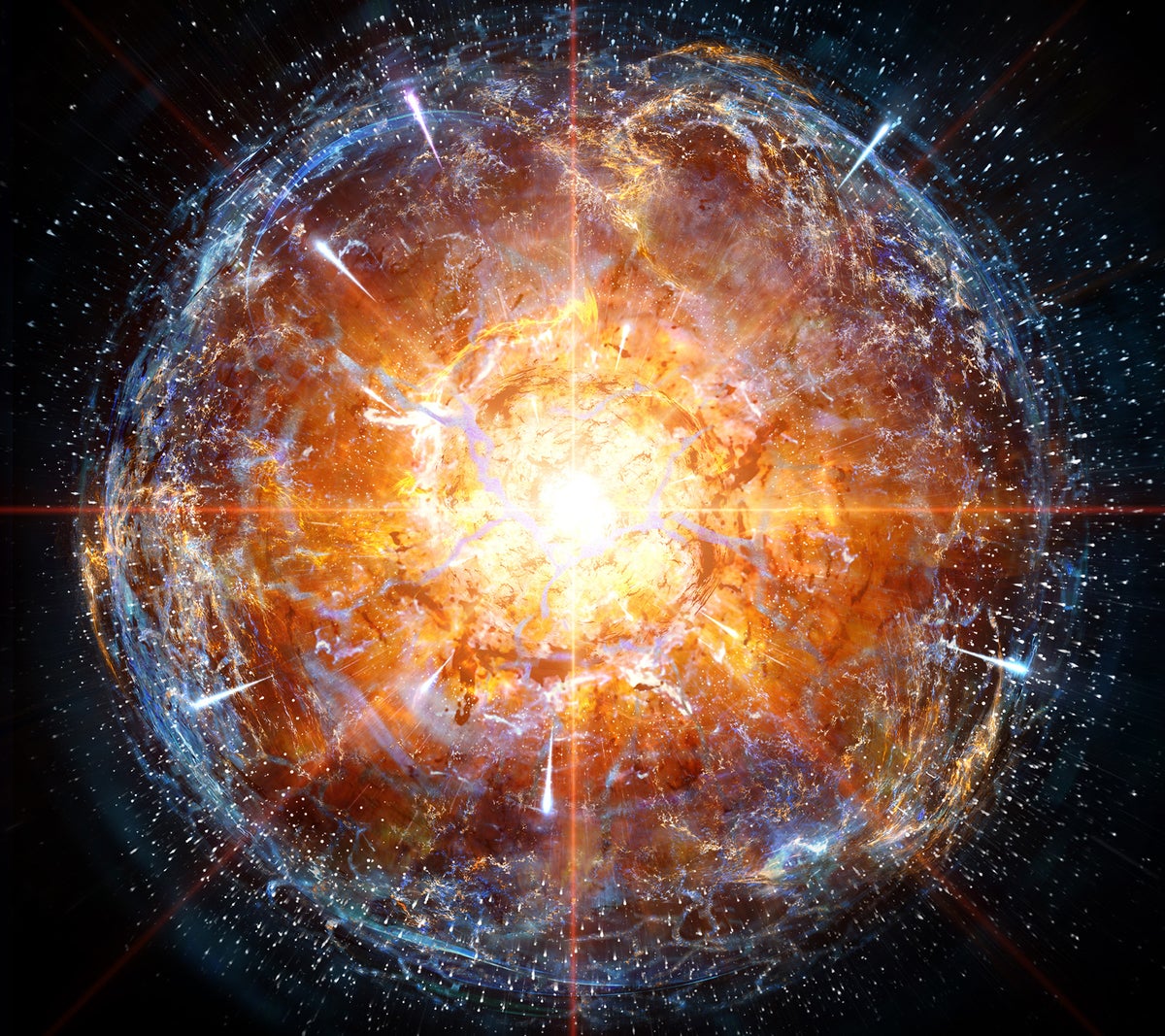
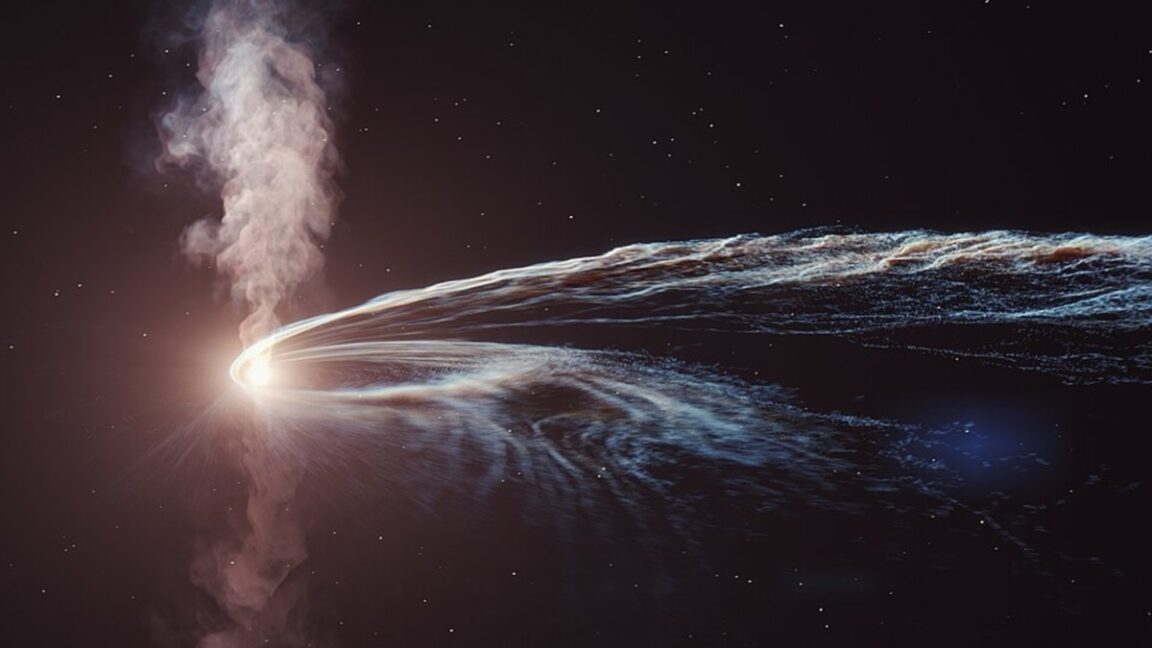
The universe is exploding. Or parts of it are. The night sky may seem calm, even serene, but that masks events of a catastrophic and nearly unimaginable scale. Across the galaxy and even the cosmos itself, immense outbursts of energy occur that could easily vaporize our planet. Happily, space is vast, and the terrible distance between these events and us diminishes what we see to a faint glowusually.
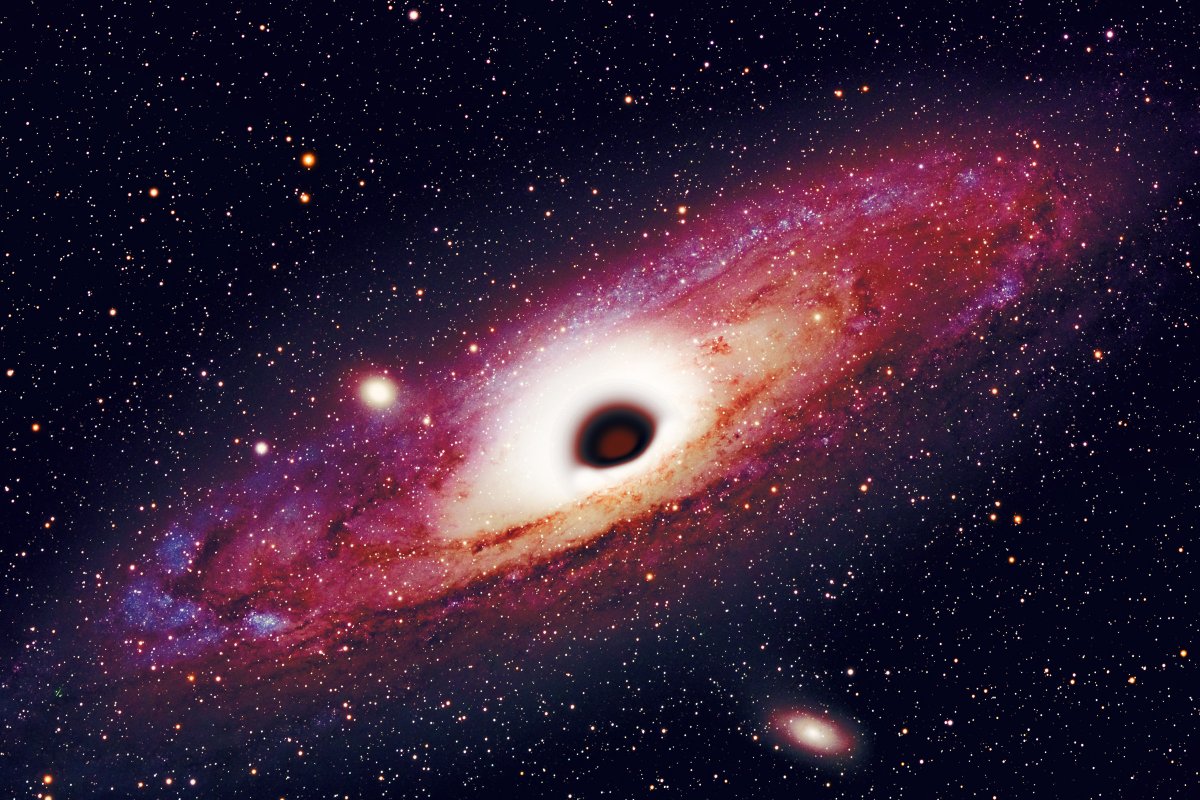
A bright star in a nearby galaxy has essentially vanished. Astronomers believe that it died and collapsed in on itself, transforming into the eerie cosmic phenomenon known as a black hole. "It used to be one of the brightest stars in the Andromeda galaxy," says Kishalay De, an astronomer with Columbia University and the Flatiron Institute. "Today, it is nowhere to be seen, even with the most sensitive telescopes."
A dead star 730 light years away appears to be forming a powerful structure around itself - and despite their best efforts, astronomers aren't sure how. The cosmic corpse, designated RXJ0528+2838, is an incredibly dense stellar remnant known as a white dwarf, with a Sun-like star orbiting around it. This binary arrangement isn't uncommon throughout the universe, but what is strange is the structure surrounding the former body: a highly energetic and luminescent cloud known as a nebula,
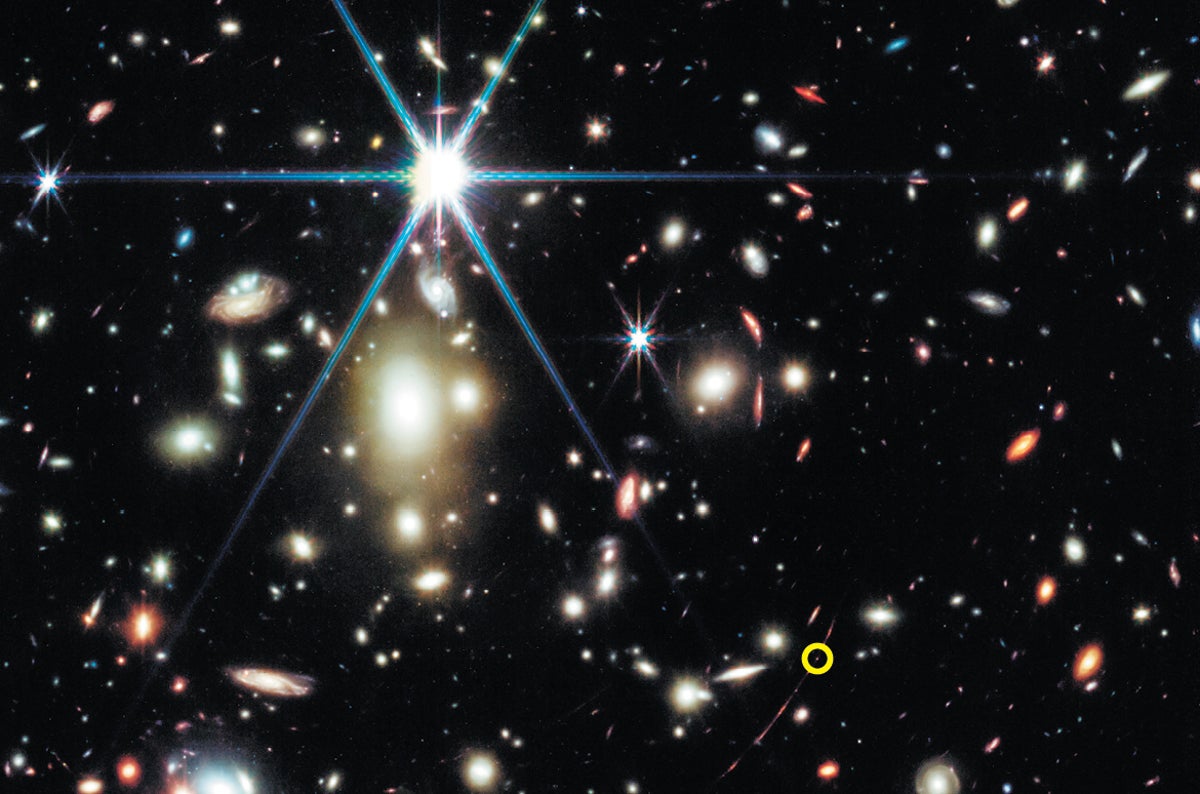
The Hubble Space Telescope displayed what the Universe looks like. Its successor, JWST, now reveals how the Universe grew up. Galaxies formed and grew massive swiftly: requiring under 300 million years. Larger-scale, more massive structures, like galaxy clusters, take longer. The earliest mature, fully-fledged cluster is CL J1001+0220. Simulations predict such clusters to appear late: after 2-3 billion years. However, proto-clusters, or still-forming galaxy clusters, appear far earlier.
We don't merely have the Hubble tension to reckon with, or the fact that different methods yield different values for the expansion rate of the Universe today, but a puzzle over whether dark energy is truly a constant in our Universe, as most physicists have assumed since its discovery back in 1998. While "early relic" methods using CMB or baryon acoustic oscillation data favor a lower value of around 67 km/s/Mpc, "distance ladder" methods instead prefer a higher, incompatible value of around 73 km/s/Mpc.
Supermassive black holes are mysterious bodies. Scientists aren't entirely sure how these beating hearts at the centers of most large galaxies formed. That includes Sagittarius A* (Sgr A*), the supermassive black hole at the center of our own Milky Way galaxy. Now a new preprint study is shedding light on Sagittarius A* by studying what happens as material falls toward the black hole.