#crash-fixes
#crash-fixes
[ follow ]
#autonomous-vehicles #waymo #tesla #robotaxis #automotive-technology #robotics #baidu #robotaxi #self-driving-cars


fromComputerWeekly.com
1 day agoNorth America drives video telematics market to 22 million units by 2030 | Computer Weekly
The integration of cameras to enable various video-based services in commercial vehicle environments has become one of the strongest trends over recent years, in a fleet video telematics sector that is set to grow by 16% globally to 2020.
European startups

fromMail Online
3 days agoScientists work out why the car you just overtook seems to reappear
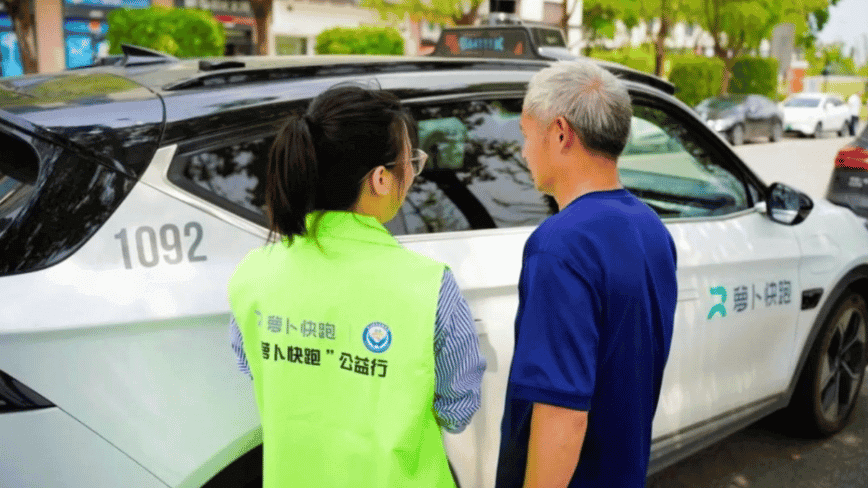
Dr. Conor Boland explained that red-light timing can erase small speed advantages, allowing a slower car to catch up again and again. He noted, 'You pass a car, and then a few minutes later, it ends up beside you again.' This phenomenon is partly psychological, as we remember surprising moments when the same car shows up again, but it is also built into how traffic works.
Psychology




fromTechCrunch
2 weeks agoCyberattack on vehicle breathalyzer company leaves drivers stranded across the US | TechCrunch
Intoxalock spokesperson Rachael Larson confirmed that the company had been hit by a cyberattack, stating that they took steps to temporarily pause some of their systems as a precautionary measure.
Information security
fromsfist.com
2 weeks agoPiedmont Cybertruck Crash Survivor Files Lawsuit Against Tesla Over Faulty Door Locks
Riordan couldn't get any of the doors to open, and none of the unlock buttons would activate. Per the Chronicle, Riordan eventually broke the window by repeatedly ramming a tree branch into the glass. He just sat there in flames with a rescuer pounding on the window, trying to get him out, Miller's attorney, Anthony Label, a partner at the Veen Firm, said regarding Miller.
SF parents

Artificial intelligence
fromTechCrunch
3 weeks agoFord's new AI assistant will help fleet owners know if seatbelts are being used | TechCrunch
Ford launched a free AI assistant for commercial customers to analyze fleet data and improve profitability, betting that software generates revenue even when offered at no cost.
San Francisco
fromFuturism
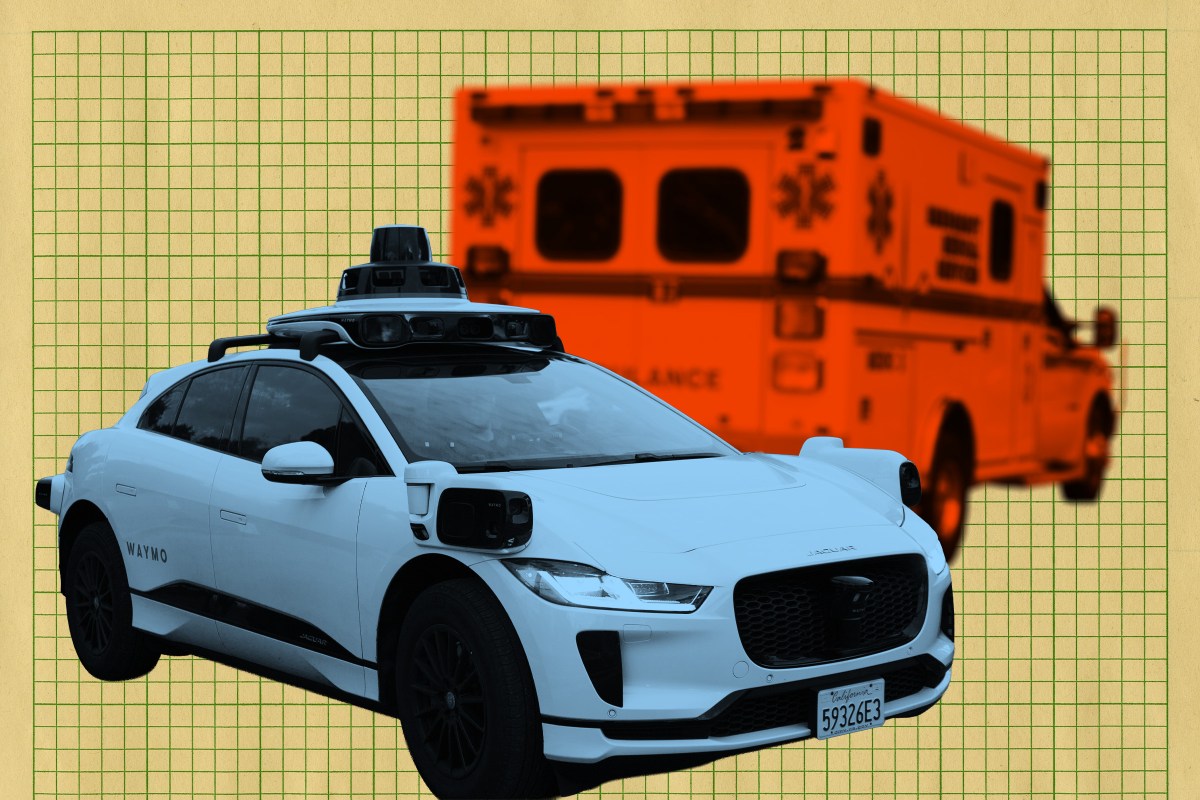
4 weeks agoEmergency Responders Say They're Now Unpaid "Roadside Assistance" for Confused Waymos
San Francisco emergency responders are increasingly forced to provide roadside assistance for malfunctioning Waymo robotaxis, diverting critical resources from actual public safety emergencies.
fromFast Company
1 month agoIf technology could bring traffic fatalities down to nearly zero, why not embrace it?
Compact, low-rise villages and cities made sense based on how far people could reasonably travel on foot or by horse. This was true all the way up until the late 1800s. Then came an invention that let people travel incredible distances in seconds, entirely reshaping cities with dense population clusters.
Miscellaneous
Gadgets
fromComputerWeekly.com
1 month agoConnectivity, AI drive fleet safety, productivity and decision-making | Computer Weekly
AI, connected data, and safety-focused services are transforming fleet operations, with GPS tracking adoption at record highs and AI delivering measurable safety improvements and cost reductions.
fromwww.businessinsider.com
6 days agoDriverless cars, meet your eye doctor
Kinetic's CEO Nikhil Naikal states, 'We have eyes, and when we need to correct vision, we go to an optometrist... In the same way, this is a digital prescription to correct the errors of the car's understanding of the world around it.'
Cars
fromBusiness Insider
1 week agoWhy fully self-driving cars are almost impossible
Despite significant investments and technological advancements, the reality is that no vehicle currently operating on public roads can be classified as fully autonomous. The complexities of real-world driving conditions present insurmountable challenges.
Cars
fromTheregister
2 months agoTech support detective solved crime by checking the carpark
"A floor manager responsible for production asked me to fix his PC, which was so slow he could literally make a coffee in the time between double-clicking an icon and having the program open," Parker told On Call. The manager's PC was only a year old and ran Windows XP, a combo that at the time of this tale should have made for decent performance.
Information security
fromwww.bbc.com
2 months agoMan dies after being hit by police vehicle
A man in his 30s has died after he was hit by a police vehicle on an emergency call in south London. The pedestrian was struck by the marked vehicle on Borough High Street at 00:34 GMT, the Metropolitan Police said. He was given emergency first aid by officers and treated by paramedics from the London Ambulance Service, but died at the scene.
UK news
fromFuturism
2 months agoDelivery Robot Gets Stuck on Train Tracks, Gets Obliterated by Locomotive
Footage of the incident, which took place January 15, shows the robot sitting motionless on the tracks, seemingly making no attempt to get out of the way as the unmistakable blare of the train horn gets louder and louder. "Oh it's gonna crush it!" the onlooker taking the video can be heard saying moments before the train, operated by Brightline, flattens the unfortunate bot into the tracks. Sparks can be seen flying from beneath the train before the video cuts off.
Startup companies
fromTechCrunch
3 weeks agoDrivers in fatal Ford BlueCruise crashes were likely distracted before impact | TechCrunch
The safety board released documents for each crash and announced it will hold a public hearing on March 31 in Washington D.C., where it will discuss the findings and likely issue recommendations to Ford. The NTSB is an independent federal agency that investigates transportation accidents, but doesn't regulate the industry.
Cars
fromComputerWeekly.com
2 months agoMotive accelerates Edge AI safety for automotive operations | Computer Weekly
"Collision rates and related costs remain unacceptably high around the world," said Shoaib Makani, co-founder and CEO of Motive. "Organisations need AI-powered driver safety solutions that can perceive and respond in real time. We've added three times more compute, created the first AI dash cam with stereo vision, and added hands-free communication, all in one system, so organisations can detect more risks and act faster. This isn't just a new product; it reflects a shift toward proactive, AI-driven road safety."
Artificial intelligence
Cars
fromFortune
1 month agoBy Tesla's own math, it reveals that its robotaxis are 4x worse at driving than humans, with redactions hiding even more details | Fortune
Tesla's autopilot robotaxis experienced five crashes in Austin within one month, and Tesla's own data shows human drivers are four times safer than its autonomous system.
Artificial intelligence
fromeLearning Industry
2 months agoArtificial Intelligence In Transportation Training And Education
AI enables individualized transportation training by evaluating trainee performance, tailoring instruction, simulating real scenarios, and measuring performance for targeted improvement.
frominsideevs.com
2 months agoZF's AI-Powered Software Could Make The ESP Off' Button Irrelevant
Modern cars, including EVs, have tons of safety features baked in, but sometimes the driver still has to take over when the going gets tough. That's why most new cars out there still have a button somewhere that disengages the traction control system, which can come in handy when tackling slippery roads or deep snow because it allows the wheels to spin without the electronics cutting power.
Artificial intelligence
fromArs Technica
1 month agoWhat happens to a car when the company behind its software goes under?
As vehicles become platforms for software and subscriptions, their longevity is increasingly tied to the survival of the companies behind their code. When those companies fail, the consequences ripple far beyond a bad app update and into the basic question of whether a car still functions as a car. Over the years, automotive software has expanded from performing rudimentary engine management and onboard diagnostics to powering today's interconnected, software-defined vehicles.
Cars
fromEngadget
2 months agoHonda vehicles used to proactively report road safety issues in nation-first pilot
Honda and DriveOhio have teamed up on a new road safety initiative in which Honda vehicles are being used to collect real-time data that can advise about potential issues and road deficiencies before they become a problem. Honda's Proactive Roadway Maintenance System, which has been in prototyping since 2021, uses "advanced vision and LiDAR sensors" to identify issues such as worn or obstructed road signs, damaged guardrails, rough roads and emerging potholes.
Cars
fromArs Technica
2 months agoIs 2026 the year buttons come back to cars? Crash testers say yes.
It's helpful to know that the lack of physical buttons isn't just a trend pushed by designers-the bean counters like it, too. It's quicker-and therefore cheaper-during assembly to just fit a capacitive touch module that controls multiple settings or switches than it is to have individual buttons, each connected to a wiring loom. Which is why we're seeing the controls for heating and cooling the interior, the headlights, seat heaters, and more move from knobs and dials and sliders and buttons to touch panels.
Cars
[ Load more ]