#daikin-park
#daikin-park
[ follow ]
Environment
fromFortune
2 days agoData centers are so hot, their 'heat island' effect is raising temperatures up to 6 miles away and impacting 343 million people worldwide, study finds | Fortune
AI infrastructure is creating a 'data heat island effect' that raises local temperatures and impacts millions of people.
fromYanko Design - Modern Industrial Design News
1 week agoThe Award-Winning Playground Built to Never Be Replaced - Yanko Design
The collection, created for Polish manufacturer Nolmo, recently took home a win at the European Product Design Award 2025, earning recognition in the Outdoor category.
Design
Agriculture
fromYanko Design - Modern Industrial Design News
2 weeks agoThis Wood Greenhouse Solves the Biggest Problem Backyard Gardeners Face - Yanko Design
The Miracle-Gro Wood Greenhouse by ShelterLogic extends growing seasons and protects plants from frost and weather using double-wall polycarbonate insulation and strategic ventilation systems.
fromTravel + Leisure
3 weeks agoThis Florida City Just Ranked No. 1 in the World for Its Green Space
The city of Orlando happens to have the most green space per resident than any other major city, according to a new analysis from travel platform BookRetreats. The city, known as The City Beautiful, offers roughly 2,777 square feet of greenery per person. That translates to more than 148 parks, gardens, and recreation areas, according to the study, with plenty of lakes, trails, and botanical gardens to explore.
Travel
fromBusiness Matters
3 weeks agoIndoor air quality is becoming a business priority
MVHR (Mechanical Ventilation with Heat Recovery) systems are designed to continuously replace stale indoor air with fresh outdoor air while recovering heat that would otherwise be lost. In commercial and residential buildings, this technology provides several important advantages. First, it allows buildings to remain energy efficient without sacrificing airflow.
Real estate
fromLondon Business News | Londonlovesbusiness.com
4 weeks agoHow to maintain efficient heat recovery ventilation in modern commercial spaces - London Business News | Londonlovesbusiness.com
Checking your equipment once a month helps catch small issues before they turn into expensive repairs. A routine keeps everything running smoothly and extends the life of the hardware. Managers should create a simple checklist for their maintenance staff to follow.
Business
fromEarth911
1 month agoGuest Idea: Map Appliance Power to Identify and Tame Your Home's Top Electricity Consumers
Appliance power mapping means measuring each appliance's actual electricity consumption rather than relying on manufacturer estimates. Using tools like plug-in electricity monitors (such as a Kill-A-Watt meter) or whole-house energy monitors (like Sense or Emporia Vue), you collect real data on how much electricity each device draws-while running, in standby, and when nominally "off."
Remodel
fromYanko Design - Modern Industrial Design News
3 weeks agoThis Planter Fits the One Balcony Spot Every Other Pot Ignores - Yanko Design
The Eckling is designed specifically for balcony corners, addressing a gap that rectangular window boxes and round hanging pots have never managed to fill. Most railing planters sit along a straight stretch of rail, so corners get skipped entirely. An L-shaped recess cut into the base of the hemispherical bowl allows it to rest squarely on two railing legs at a corner junction, no extra hardware required.
Design
fromdesignboom | architecture & design magazine
2 weeks ago400-foot installation turns climate pledge arena into a living environmental interface
Inside Climate Pledge Arena, a large-scale media installation titled Turn the Tide transforms two interior walls into an architectural interface combining environmental imagery, and . Designed by Digital Kitchen within the arena by , the installation spans nearly 400 feet across the building's east and west walls. The intervention is integrated into the spatial environment of the arena, which is recognized as the world's first net-zero carbon certified arena.
Renovation
fromdesignboom | architecture & design magazine
1 month agored and white geometric sports complex emerges along daixi's riverfront
The project is structured around the concept of 'Abstract Landscape,' drawing from principles in Chinese landscape painting that prioritize spiritual interpretation over literal representation. Rather than replicating historical forms, the design translates landscape qualities into geometric compositions and spatial sequences. Abstract volumes reference the condition of distant mountains and nearby waters, while controlled color contrasts establish a clear visual framework.
Miscellaneous
fromArchDaily
3 weeks agoHow Architecture Is Learning to Generate Its Own Energy
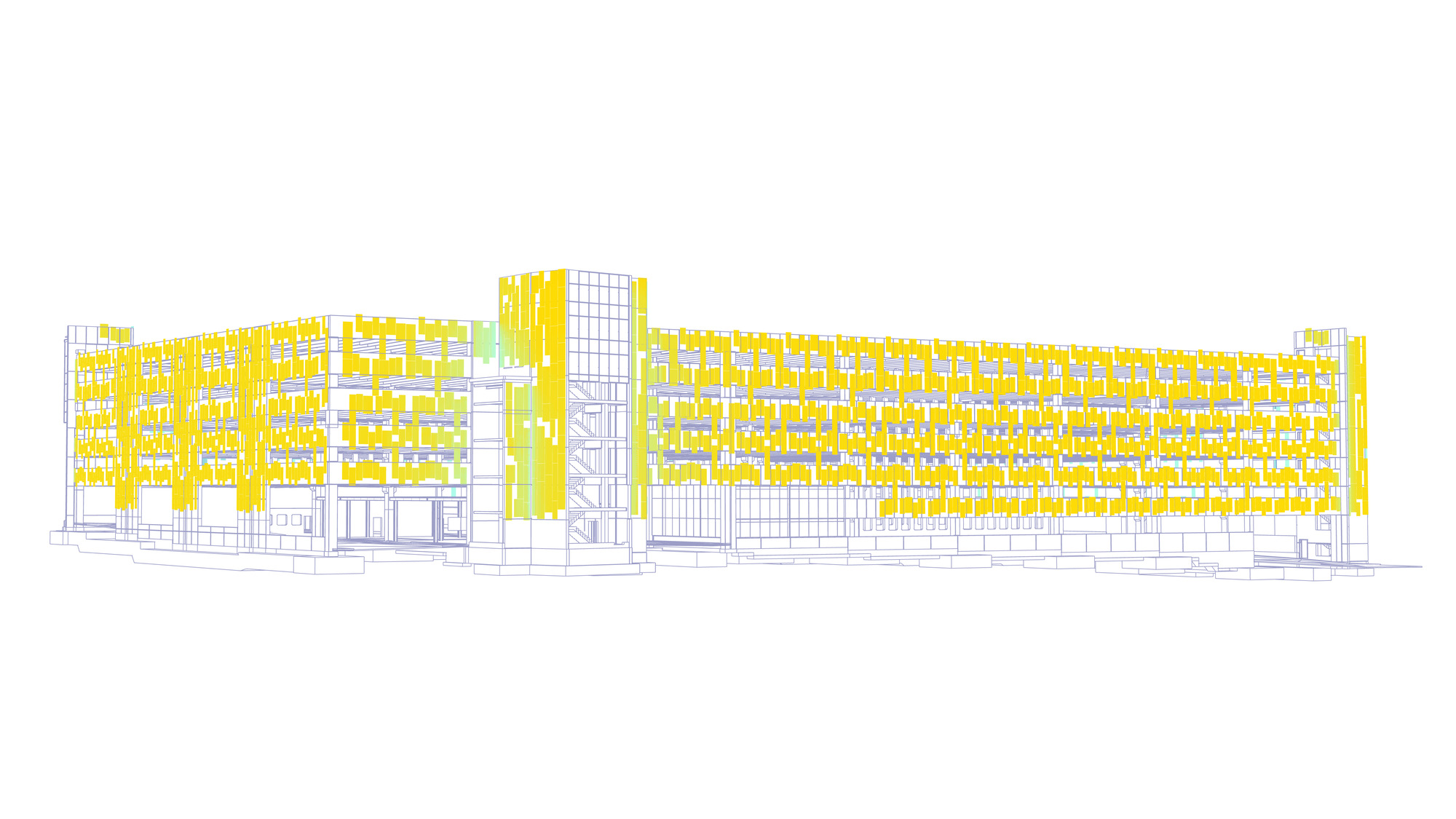
Photovoltaic (PV) solar energy represents a modular technology that can be manufactured in large-scale facilities, generating economies of scale, while also being adaptable to small-scale applications. From residential rooftop systems to large-scale power generation installations, photovoltaic solar energy has established itself as a cost-effective option for electricity production in many countries around the world.
Environment
#building-integrated-photovoltaics

Renovation
fromYanko Design - Modern Industrial Design News
3 weeks ago5 Solar Panel Designs So Beautiful You'd Never Know They're Generating Power - Yanko Design
Buildings are evolving from energy-efficient structures into active power generators through integrated photovoltaic technology and aesthetic solar solutions.
Gadgets
fromYanko Design - Modern Industrial Design News
1 month agoA Water Heater That Doubles as a Data Center - and Cuts Your Energy Bill - Yanko Design
Superheat H1 replaces traditional heating elements with processors that simultaneously compute and heat water, using a single electricity input twice to reduce hot water energy consumption by up to 80 percent.
fromwww.dw.com
1 month agoHow heat pumps work in cold weather
Subzero temperatures don't pose a problem for heat pumps. The refrigerants used in the heat exchanger, which transfers heat from outside a building to inside, have an extremely low boiling point below minus 40 C. That means even when it's very cold, a heat pump can absorb ambient heat from the outside air and use it to warm a building.
Environment
fromdesignboom | architecture & design magazine
1 month agochado's monolithic white concrete brick office stands near botanical garden in russia
The selected site offers reduced urban intensity during working hours and direct visual access to surrounding greenery. The decision to locate the office here was driven by the relationship between workspace and landscape, prioritizing framed views of nature as part of the daily working environment.
Design
fromwww.berkeleyside.org
1 month agoA heat pump croons about climatic healing' in Berkeley musicians' song
The UC Berkeley Chancellor's Fund, the college's attempt at venture capital, has raised more than $250,000 from a single investor. Chancellor Rich Lyons has said he wants to blur the edge between the university and the region's startup ecosystem. (SF Business Times) A man in his 60s was taken to Highland Hospital on Saturday night after a driver struck him in a crosswalk at San Pablo and Ashby avenues. (Berkeley Scanner)
Education
fromNature
2 months agoHow 'forest bathing' keeps lungs healthy
During the COVID-19 pandemic, Italian scientists documented something interesting: in areas with more trees per capita, the number and severity of COVID-19 cases were lower than in places with fewer trees, even when accounting for differences in human population density. This work is part of a growing body of research around the world investigating whether time spent in forests and nature can provide protection from infections, such as COVID-19 and pneumonia; inflammatory conditions, such as asthma, emphysema and bronchitis; and even cancer.
Public health
fromTheregister
1 month agoEdinburgh councillors pull the plug on 'green' AI datacenter
"This is an absolutely momentous decision," said APRS director Dr Kat Jones, adding that the debate exposed a broader industry problem since both planning officials and councillors repeatedly questioned what qualifies as a "green datacenter."
UK news
frominsideevs.com
2 months agoNissan Put Solar Panels On An Ariya EV. Here's How Much Range They Add
The experimental car can add up to 14.3 miles of range per day in heavy sunlight, even if that requires perfect conditions. In the real world, the company says the car can get up to 13.2 miles of range per day while tooling around sunny Dubai, or just 6.3 miles of extra oomph in cloudy London. Taking the car on a two-hour 50-mile (80 km) trip on a sunny day added 0.5 kilowatt-hours of electricity to the battery pack, Nissan claims,
Cars
Startup companies
fromTechCrunch
2 months agoHow Quilt solved the heat pump's biggest challenge | TechCrunch
Quilt's three-zone heat pump uses sensor-rich, data-driven control to maintain efficiency under demanding conditions while simplifying multi-zone installations and enabling over-the-air performance upgrades.
fromwww.dw.com
2 months agoThe city that swapped parking for green space
Though they're individually tiny, parking spots quietly play a dominant role in shaping urban landscapes. Most US cities dedicate at least 25% of their developable land to them. Some, even more. That land usage doesn't only determine the way a city looks. It also means covering large swathes of urban areas in heat-absorbing asphalt, which contributes to making summers hotter and heightens the risk of flooding since it prevents drainage during storms and heavy rainfall.
Miscellaneous
Real estate
fromwww.theguardian.com
2 months agoGreen spaces should be the norm for all new housing developments in England, guidelines say
New government guidelines recommend mixed-use, heritage-preserving, nature-inclusive neighbourhood developments with shops, schools, green spaces and flood protection as standard for new housing developments.



fromThe Verge
2 months agoPila makes the power station pretty
With Pila, you could plug one battery unit, measuring 15.0 × 26.5 × 3.3 inches (380 × 675 × 85mm) and 45lbs (20.4kg), into a standard 120V kitchen wall outlet and keep the fridge permanently plugged into the Pila home battery - no electrician required. When there's an outage, the fridge will automatically failover to protect your food. The battery can also be configured to charge when energy rates are low
Gadgets
fromSilicon Canals
1 month agoWhy your house is dustier than your neighbor's and the airflow mistake causing it - Silicon Canals
I was that person who only changed their HVAC filter when it looked like it had grown its own ecosystem. Richie Drew, Vice President of Operations at One Hour Heating & Air Conditioning, puts it bluntly: "Dirty filters can reduce airflow, increase dust in your home and strain your heating system." Think about it this way: your HVAC filter is like the bouncer at an exclusive club, except instead of keeping out people without the right shoes, it's blocking dust particles from circulating through your home.
Remodel
Design
fromdesignboom | architecture & design magazine
2 months agostudio cochi architects wraps okinawa workspace in double-skin of insect netting and vinyl
Studio Cochi built an on-site woodworking workshop and office in rural Okinawa to control craftsmanship, precision, and timelines for wooden sashes and fixtures.
Design
fromYanko Design - Modern Industrial Design News
2 months agoThis Solar Pavilion Powers the Grid and Charges Phones from Its Seats - Yanko Design
A solar-powered public pavilion provides shade, generates and stores electricity, and offers lighting, fan operation, and device charging while visibly celebrating renewable energy.
fromwww.archdaily.com
2 months agoResidence AV / YAMA architects
Residence AV is a courtyard house located in a dense residential neighborhood in Bruges, Belgium. Designed by YAMA architects, the project responds to a paradoxical brief: a strong desire for connection to the surrounding context combined with an equally strong need for privacy. The client, living alone, was attracted to the social presence and perceived safety of the neighborhood, yet sought a dwelling that could withdraw from direct views and support a more introspective way of living.
Design
fromWIRED
1 month agoI Love My Dehumidifier and Will Never Go Back to the Damp
You should buy a dehumidifier. It will almost certainly improve your home environment. Pulling moisture from the air helps banish condensation and mold, making it cheaper and easier to regulate the temperature in your house or apartment. There's a reason the chatter about dehumidifiers has grown so loud and sales are soaring; it's because they work. Whether you've seen a persuasive Reddit thread, a life hack on TikTok, or an expert guide to the best dehumidifiers, the hype is real.
Environment
Design
fromYanko Design - Modern Industrial Design News
1 month agoWhy This Air Conditioner Filter Took Design Cues from Your Toolbox - Yanko Design
Snapcool reimagines AC filter maintenance with a tape-measure-inspired sliding filter, making cleaning effortless, visible via an orange compartment, and visually appealing.
fromBest Products
2 months agoOur Favorite Humidifiers to Turn Your Home Office Into the Best Remote Destination
The purpose of a humidifier is to increase and regulate the indoor air's moisture level. How this works is different depending on the season and temperature both inside and outside. Overall, though, a humidifier helps maintain a comfortable, healthy, and optimal humidity range of 30 to 50%. To create this environment, most humidifiers use water vapor or steam to help combat dryness caused by heating systems or harsh climates (which often happen indoors during winter).
Environment
fromBusiness Insider
1 month agoI didn't want my family's old house in Japan to sit empty - so I turned it into a cafe
I grew up visiting this house. It originally belonged to my grandfather's older sister, and whenever I traveled down from Iwate, the northern prefecture in Japan where I grew up, this was where the family gathered. Later, I worked as a rehabilitation consultant at hospitals in Osaka and Yokohama. I moved, but this place was always in the back of my mind.
Renovation
fromArchDaily
1 month agoHealth, Habitat, and Civic Infrastructure: Designing the City as a National Park
Cities around the world share a common goal: to become healthier and greener, supported by civic infrastructure that restores ecosystems and strengthens public life. The question is how to reach this. Global climate targets, local building codes, and municipal standards increasingly guide designers and planners toward better choices. Still, many cities struggle to translate these frameworks into everyday, street-level comfort and long-term ecological protection.
Environment
fromdesignboom | architecture & design magazine
2 months agomodular 3D printed facade wraps workspace in japan like knit textile
CIRCULUS Atelier is the working studio of Oka Architecture Design & Co., Ltd. (OAD) and a built application of the practice's CIRCULUS architectural framework, which examines circularity, continuity, and long-term adaptability in design. Conceived as both a in Yokohama, , and a prototype, the project investigates how digital fabrication can inform architecture as a system that integrates exterior enclosure and interior spatial treatment within a unified logic.
Design
Design
fromdesignboom | architecture & design magazine
2 months agoperforated corrugated panels regulate light and ventilation at library in tanzania
Lei Wa Lakom Library in Kazole Village is an open, climate-responsive community hub combining Swahili shading principles, perforated panels, timber structure, and a water feature.
fromDesign Milk
2 months agoThe KOKUYO DIG Office in Tokyo Doubles as a Space for Learning
Workplaces serve as centers to support business transactions, often with cues from traditional corporate styling but little else. For its new office in Tokyo, the staff at KOKUYO, a leading manufacturer of office furniture, stationery, and supplies, envisioned a combination work and learning hub that sparks child-like imagination. The 5,317-square-foot space, completed by DDAA in collaboration with KOKUYO's own design team, centers on the theme of learning.
Design
fromArchDaily
2 months agoSelf-Sufficient Facades: Where Solar Protection Meets Renewable Energy
Spaces of light and darkness are conceived to enhance circulation and spatial directionality, as well as to highlight the colors, textures, and forms of specific architectural elements. That said, the impact of natural light on building facades reveals the need to develop strategies that support energy savings, improve the thermal and visual comfort of interior spaces, and promote the reduction of carbon emissions.
Design
[ Load more ]