Artificial intelligence
fromThe Nation
1 day agoThe AI Boom Is a Climate Bust
AI is increasingly being used to spread climate change disinformation, complicating efforts to combat the climate crisis.
Rising temperatures are projected to increase the prevalence of physical inactivity, translating into additional premature deaths and productivity losses, especially in tropical regions. Prioritising heat-adaptive urban design, subsidised climate-controlled exercise facilities, and targeted heat-risk communication is essential to mitigate these emerging health and economic burdens, in addition to ambitious emissions reductions.
Dozens of local communities, states, and individuals are suing major oil and gas companies and their trade associations over rising climate costs and for allegedly lying to consumers about climate change risks and solutions. At the same time, some states are enacting or considering laws modeled after the federal Superfund program that would impose retroactive liability on large fossil fuel producers and levy a one-time charge on them to help fund climate adaptation and resiliency measures.
"So whenever people think about hot weather, they always talk about the temperature," he says. "There's two issues with that. First of all, most people don't realise that the temperature is measured in the shade. So if you're in direct solar radiation, the amount of heat stress you're exposed to is much greater as it will stress your body out a lot more."
ICE has designs on every major US city. It plans to not only occupy existing government spaces but share hallways and elevator bays with medical offices and small businesses. It will be down the street from daycares and within walking distance of churches and treatment centers. Its enforcement officers and lawyers will have cubicles a modest drive away from giant warehouses that have been tapped to hold thousands of humans that ICE will detain.
Tech companies are conflating traditional artificial intelligence with generative AI when claiming the energy-hungry technology could help avert climate breakdown, according to a report. Most claims that AI can help avert climate breakdown refer to machine learning and not the energy-hungry chatbots and image generation tools driving the sector's explosive growth of gas-guzzling datacentres, the analysis of 154 statements found.
He had flown in from Mar-a-Lago and, he told me, was there to observe. The next day, he watched as Åsa Rennermalm, a Rutgers University professor who studies polar regions, sat onstage with European foreign ministers and spoke out against cuts to U.S. science funding. "A leading US Arctic scientist is on stage absolutely ripping her country to the delight of the audience," Dans wrote on X. "Embarassing." He punctuated his post with an American-flag emoji.
There is nothing more fundamental to human existence than breathing. Without air, people die in a matter of minutes. As well as the oxygen that is essential for survival, air contains pollutants of increasingly anthropogenic origin. These contaminants are emitted into outdoor air by combustion, which is essential for generating energy, and by the industrial and agricultural processes that underpin every element of modern life. Contaminants also penetrate buildings, in which they mingle with indoor air pollutants, rendering homes and offices not entirely safe.
With a major winter storm about to blast pretty much every US state east of the Rocky Mountains, many are scrambling to prepare for the cold, ice, and snow. And according to popular meteorology influencer Max Schuster, there's yet another winter-weather hazard to watch out for: trees exploding in the frigid air. On a viral post on X-formerly-Twitter, Schuster - who holds a meteorology degree
If you are reading this on the East Coast, congratulations on the warmer weather you're finally getting this week. It was cold and snowy for a while there. Here in the West, we wish we'd been in your shoes. Spare a thought for the tens of millions of us who live on the other side of the continent, where a catastrophe is unfolding.
The remaining question, though, was where all this methane was coming from in the first place. Throughout the pandemic, there was speculation that the surge might be caused by super-emitter events in the oil and gas sector, or perhaps a lack of maintenance on leaky infrastructure during lockdowns. But the new research suggests that the source of these emissions was not what many expected. The microbial surge
Ice-sheet retreat lined up with low algae growth over the past ~500,000 years, implying less CO₂ uptake in parts of the Southern Ocean during warm periods. The study points to iceberg-delivered, iron-rich sediments from West Antarctica during warm intervals, not windblown dust. The iron-bearing minerals in these sediments were highly weathered and not readily bioavailable to marine algae. If WAIS keeps shrinking, similar sediment delivery could weaken Southern Ocean carbon uptake, creating feedback that could amplify climate change.
Warwick, N., Griffiths, P., Keeble, J., Archibald, A., & Pyle, J. Atmospheric implications of increased Hydrogen use. GOV.UK https://www.gov.uk/government/publications/atmospheric-implications-of-increased-hydrogen-use (2022).
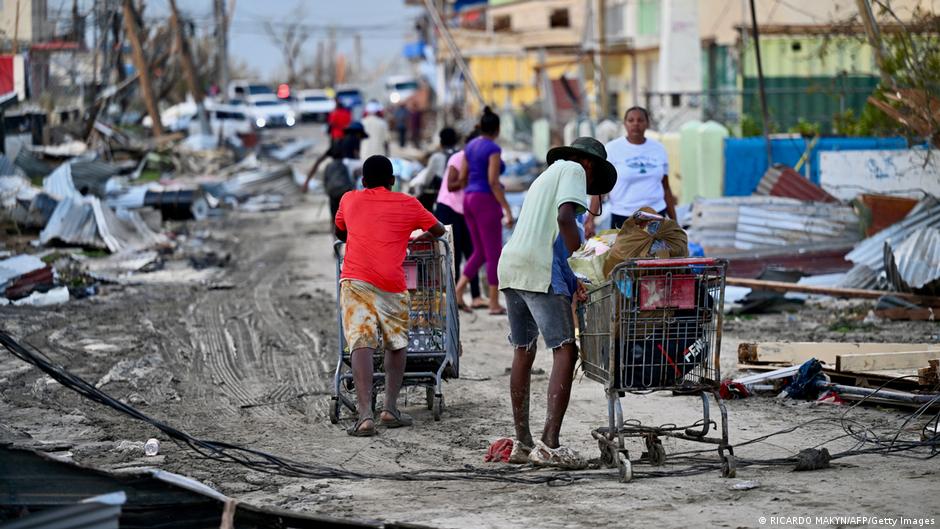
When the category-5 storm Hurricane Melissa struck Jamaica in October, its path crossed communities that had varying levels of preparedness. Many with maintained coastal protections, upgraded drainage and reliable early-warning systems had power and water restored in days. Others were immobilized for weeks.
On Thursday the Environmental Protection Agency is expected to scrap the agency's landmark 2009 global warming endangerment finding, breaking with the long-standing scientific consensus that global warming poses a risk to human health. The finding has played a critical role in regulating greenhouse gas emissions from cars and trucks. The transportation sector accounted for 28 percent of all U.S. emissions in 2022.
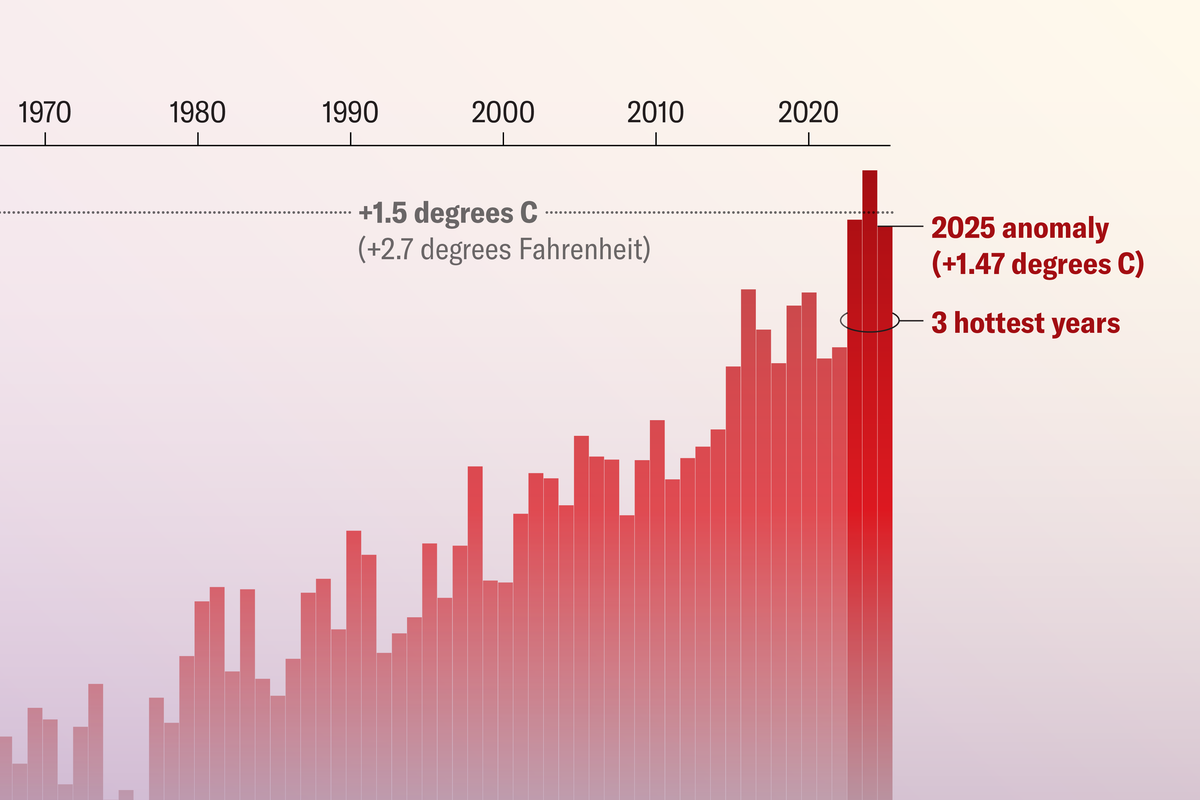
The past 11 years are now the warmest 11 years in the 176-year history of temperature records. What is especially concerning about 2025 is that it occurred during La Niña, a natural Pacific cooling pattern that usually brings lower temperatures. This time, it did not help. Climate scientist James Hansen reports that global warming is now speeding up by 0.31°C per decade, and he predicts we will pass the +1.7°C mark by 2027.
Carbon markets are simultaneously promoted as an essential climate financing tool, and criticized as a license to pollute. A carbon market puts a price on greenhouse gas emissions via carbon credits that get bought and sold, almost like stocks. A credit represents one metric ton of CO 2 that has been avoided or removed through a specific project. A project could target emissions through agricultural practices, CO 2 capture or reforestation.