#de-evolution
#de-evolution
[ follow ]
#food-security #de-extinction #climate-change #national-security #biodiversity-loss #evolutionary-psychology

#de-extinction
OMG science
fromwww.theguardian.com
2 weeks agoCan scientists really resurrect the dodo? Inside the company that says they can
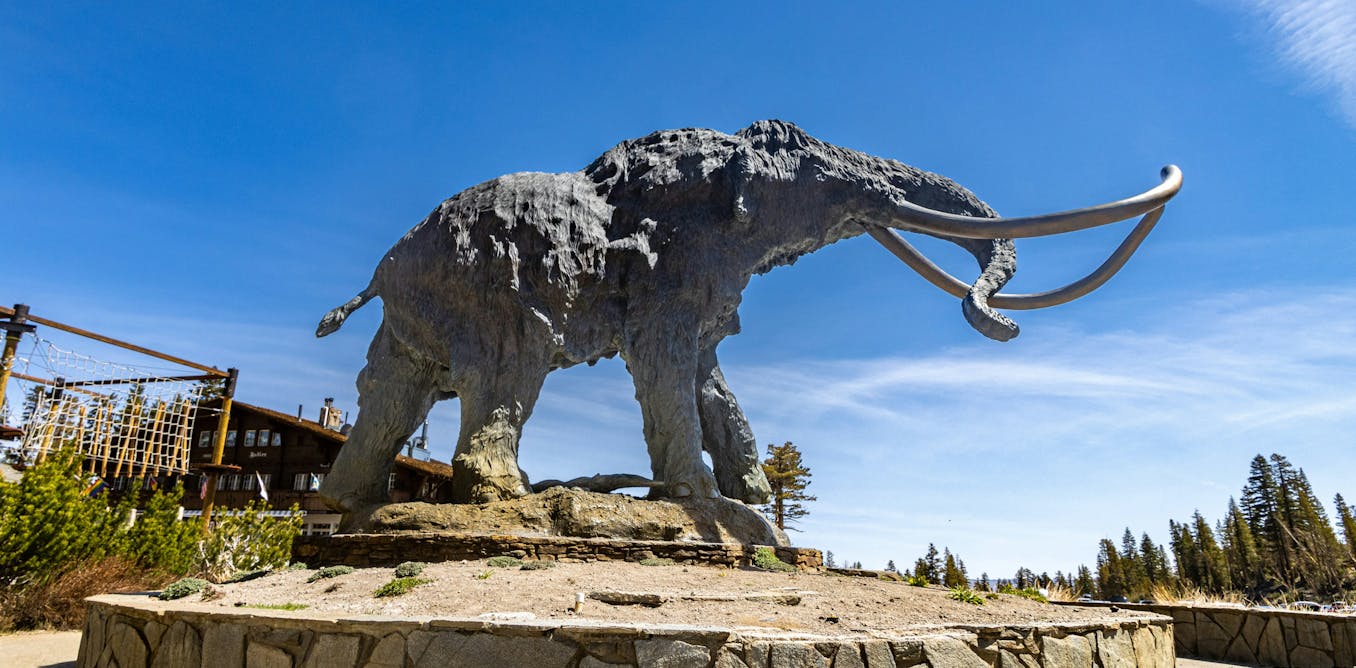
Colossal Biosciences is using ancient DNA and gene editing to resurrect extinct species including dire wolves, woolly mammoths, and dodos, raising questions about the ethics and feasibility of de-extinction technology.
OMG science
fromwww.npr.org
1 month agoColossal Biosciences breeds controversy while trying to revive mammoths
Colossal Biosciences uses gene-editing, cloning, and AI technologies to resurrect extinct species like woolly mammoths while developing tools to save endangered animals, though critics question the ethics and feasibility of de-extinction.
OMG science
fromwww.theguardian.com
2 weeks agoCan scientists really resurrect the dodo? Inside the company that says they can
Colossal Biosciences is using ancient DNA and gene editing to resurrect extinct species including dire wolves, woolly mammoths, and dodos, raising questions about the ethics and feasibility of de-extinction technology.
OMG science
fromwww.npr.org
1 month agoColossal Biosciences breeds controversy while trying to revive mammoths
Colossal Biosciences uses gene-editing, cloning, and AI technologies to resurrect extinct species like woolly mammoths while developing tools to save endangered animals, though critics question the ethics and feasibility of de-extinction.
Psychology
fromPsychology Today
2 weeks agoThe Evolution of Brain and Intelligence
Human brains are large and complex but not uniquely so compared to other species; human intelligence is adapted to specific ecological niches, with symbolic reasoning being a key cognitive distinction from other animals.
Television
fromwww.theguardian.com
1 month agoPerfect for an apocalypse! How the nuclear bunker became TV's hottest property
Billionaires are building elaborate underground bunkers and cities as doomsday shelters, reflecting both real-world anxiety and growing entertainment fascination with apocalyptic scenarios.
Environment
fromPsychology Today
1 month agoOur Missing Climate Tools Are Psychological and Evolutionary
Humans must evolve culturally and deliberately through effective decision-making to manage climate challenges, overcoming short-term thinking as animals demonstrate rapid evolutionary adaptation to environmental change.
fromBig Think
1 month agoAsk Ethan: Will anything persist when the Universe dies?
Star-formation will eventually end, and then the last shining stars will burn out. Galaxies will dissociate due to gravitational interactions, ejecting all masses and leaving only supermassive black holes behind. And then those black holes will decay via Hawking radiation, leaving only cold, stable, isolated bodies, from which no further energy can be extracted, all accelerating away from us within our dark energy-dominated Universe.
Science
fromWIRED
2 months agoTrue Patriots Are Cashing In on the Apocalypse
When it comes to prepping, look to the Mormons. It's right there, in the official name of the religion: To be a "Latter-day Saint" is explicitly to believe in, and prepare for, the end times. This is why, on a calm morning last September, I arrive just outside Salt Lake City in a place called American Fork and knock on the door of Tyler Stapleton, the chief product engineer for off-grid power products at 4Patriots, one of the biggest companies pushing preparedness into the mainstream.
Gadgets
Science
fromenglish.elpais.com
1 month agoLudovic Slimak on Neanderthals: It was suicide. Humans disappear when they no longer want to live because their values have collapsed'
Neanderthals, despite cultural complexity and interbreeding, went extinct around 42,000 years ago, likely due to isolation and abandonment while Homo sapiens prevailed.
fromThe Nation
1 month agoAt the Doorstep of Tomorrow
The war began the week of my 26th birthday. There was a lightness on that day, something born from what remained of our childhood. Sparks like candy, crackling in our mouths: colorful letters; laughter leaking out through voice notes; hearts adorning our text chats; an abundance of cake. But the days that followed are laid out like burnt matchsticks; once the first one was lit, the flames consumed the rest. The war spared nothing on the calendar; I have had no other birthdays since.
World news
fromBig Think
2 months agoWhy the real revolution isn't AI - it's meaning
Peter Drucker saw this symbiosis first. He realized that the new industrial order would depend on a worker who produced ideas instead of widgets. The knowledge worker became the engine of prosperity, and management became the social technology that synchronized millions of minds. The modern firm was as much an invention as the transistor it depended on. Three decades later, Tom Peters caught the next wave.
Business
fromwww.scientificamerican.com
2 months agoWhy Does Life Keep Evolving These Geometric Patterns?
The mirror spider can rapidly shift a patchwork of minuscule reflective plates underneath its abdomen's outer surface, altering the pattern of mirrorlike flashes. This uncommon display comes from common building blocks: Similar tilelike arrangements of plates and soft joints appear throughout the tree of life, from turtle shells to tropical fruit peels. Researchers have now compiled 100 examples of this pattern across animals, plants, microbes and viruses, which they describe in PNAS Nexus.
Science
fromDefector
2 months agoThis Worm Is A Millennial | Defector
Sometime in the late 1990s, an adult ribbon worm was scooped up from the murk in the waters off the San Juan Islands, in the Pacific Northwest. He was moved to a tank along with a smattering of other invertebrates, including two vermilion bat stars and approximately 30 beige peanut worms. In the years since, the worm has been transported across the country to Virginia, where he lives now.
Science
[ Load more ]