#death-rate
#death-rate
[ follow ]
#public-health #global-health #covid-19 #life-expectancy #hiv #healthcare-access #health-disparities


fromwww.theguardian.com
2 days agoWhy reducing air pollution deaths isn't just about reducing air pollution
Air pollution is the second-largest risk factor for early death globally. Traditionally, our response has focused on reducing the levels of pollution people breathe, but this is only part of the story.
Public health
fromsfist.com
1 week agoReport: More Than 150,000 US COVID Deaths Were Unreported In 2020 and 2021
"Our antiquated death investigation system is one key reason why we fell short of accurate counts, particularly outside of big metropolitan areas," said Andrew Stokes of Boston University, the senior author on the paper.
Coronavirus

World politics
fromNature
3 weeks agoNational statistics are in crisis around the world - and the impacts will be severe
Official statistics face a credibility crisis due to falling survey response rates and political undermining, threatening the data infrastructure that governments, businesses, and organizations rely on for decision-making.
Coronavirus
fromwww.scientificamerican.com
2 weeks agoCOVID probably killed 150,000 more people in its first two years than official U.S. tolls show
COVID-19 deaths in the U.S. during 2020-2021 may have reached nearly one million when accounting for approximately 150,000-160,000 unrecorded deaths, with disproportionate impact on marginalized populations.
fromHarvard Gazette
2 weeks agoNew study links more immigrants with lower elderly mortality - Harvard Gazette
"This result is very supportive of the value that foreign-born workers add to the health of our population. When you have an increase in immigration, you end up with more long-term care workers. It's additive, not substitutive."
Healthcare
fromThe Atlantic
2 weeks agoI Remember a World Without Vaccines
I am open-minded; I believe in integrative practices, and I agree that the medical establishment can be arrogant and unduly influenced by the pharmaceutical industry, which now funds so much of medical research. But I fully understand Scherer's frustration with his interminable discussions with Kennedy about scientific articles.
Coronavirus
Cancer
fromwww.theguardian.com
3 weeks agoThe Guardian view on cancer survival rates: there is good news about healthcare amid the gloom | Editorial
Cancer mortality in the UK has dropped 29% over 40 years, though recent progress has slowed with rising deaths from certain cancers and persistent treatment delays.
Boston
fromBoston.com
1 month agoLife expectancy gap for Black Bostonians is growing, health officials warn
Boston's Black residents' life expectancy gap compared to non-Black residents doubled from 3.3 years in 2013 to 6.6 years in 2024, with Black life expectancy at 76.2 years versus 82.2 years for others.
Miscellaneous
fromFast Company
1 month agoRural health's $50 billion tech transformation: Too fast to last
CMS's $50 billion Rural Health Transformation Program faces implementation challenges as states rush to deploy solutions without adequate understanding of rural community needs, risking wasted funds and unintended consequences.
Public health
fromwww.independent.co.uk
2 weeks agoWomen almost 150 times more likely to die from maternal sepsis in Africa than Europe
Women in sub-Saharan Africa are 150 times more likely to die from maternal sepsis than mothers in developed nations due to inadequate water, sanitation, and hygiene infrastructure in maternity wards.
US politics
fromwww.theguardian.com
1 month agoRising anger over lop-sided' and immoral' US health funding pacts with African countries
African countries are rejecting US bilateral health agreements as exploitative, with demands for biological resources, data sharing, and mineral access violating national sovereignty.
fromNebraska Examiner
3 weeks ago3 states and New York City join global disease response network * Nebraska Examiner
GOARN, which includes more than 310 national public health agencies, United Nations agencies, academic institutions, and nongovernmental groups, helps identify and manage infectious disease outbreaks worldwide. Since it was established in 2000, GOARN says it has helped manage more than 175 global health emergencies across 114 countries.
Public health
fromwww.bbc.com
3 weeks agoHarrow records highest rate of TB in London
The National TB Surveillance System said 44 in every 100,000 residents had active TB in Harrow, and cases "still seem to be rising", the council said. Laurence Gibson, Harrow's director of public health, said the current cohort of residents with TB were "likely to have been infected before they travelled to the UK", adding that it was an issue across north-west London.
Public health
Public health
fromwww.theguardian.com
3 weeks agoTrump policies set to increase rates of lung disease and death, study finds
Trump administration policies across healthcare, environment, workplace, and vaccines are projected to significantly increase lung disease rates and premature deaths among Americans.
Public health
fromwww.theguardian.com
3 weeks agoPatients face long journeys for medicines as pharmacies cut weekend hours
One in six English pharmacies have reduced weekend hours since 2022, causing over 20% loss of weekend opening hours and forcing patients to travel long distances or seek emergency care.
fromwww.theguardian.com
1 month agoThis is a life and death story for the UK so why is it being brushed under the carpet?
A child born this morning in Britain can expect to be in good health only until they are 61. The last 20 years of their life will be blighted by illness: dodgy hearts, painful joints, an inability to get about. Our healthy life expectancy has been dropping for years; it is now the lowest since 2011, when records began.
Public health
fromwww.independent.co.uk
2 months agoNearly 23 million extra deaths worldwide by 2030 as aid cuts bite, study says
From reproductive rights to climate change to Big Tech, The Independent is on the ground when the story is developing. Whether it's investigating the financials of Elon Musk's pro-Trump PAC or producing our latest documentary, 'The A Word', which shines a light on the American women fighting for reproductive rights, we know how important it is to parse out the facts from the messaging. At such a critical moment in US history, we need reporters on the ground.
US politics
#womens-cardiovascular-health

Public health
fromScienceDaily
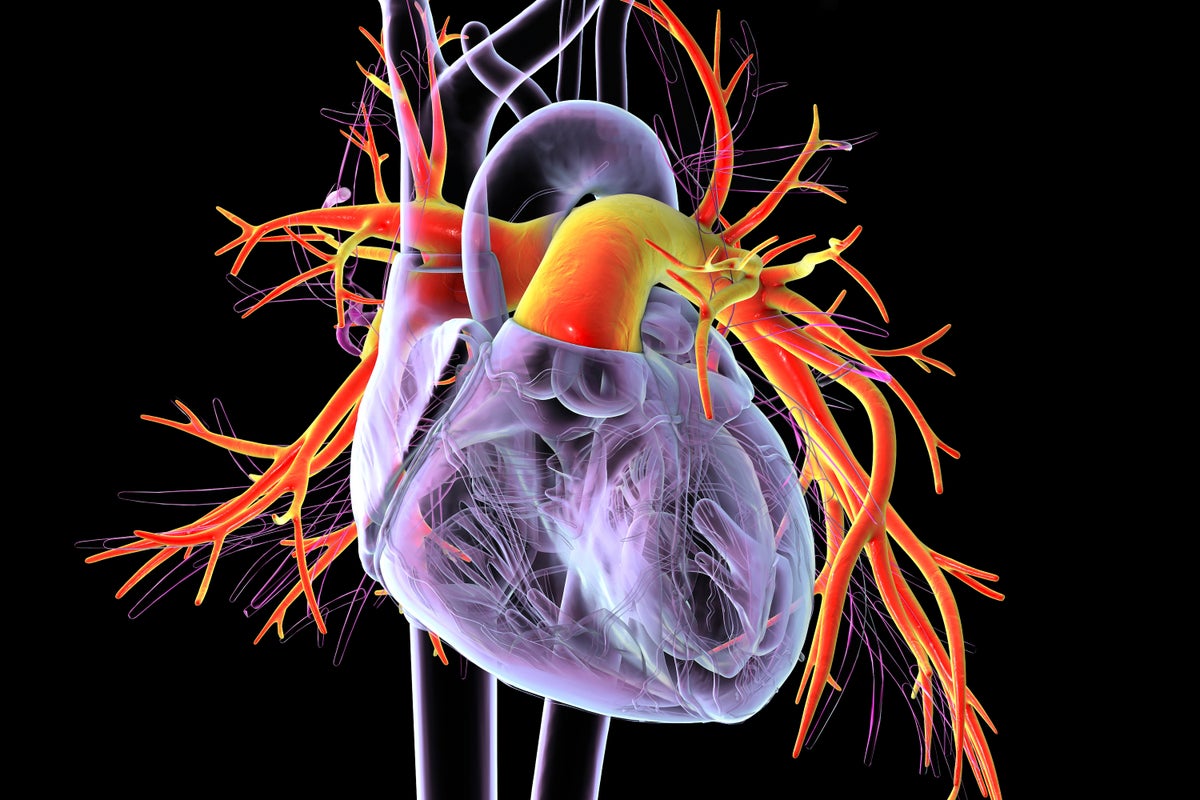
1 month agoAmerican Heart Association warns 60% of US women will have cardiovascular disease by 2050
Cardiovascular disease in women will surge by 2050, with nearly 60% developing hypertension and one in three young adult women facing CVD, driven by rising obesity and diabetes rates.
Public health
fromAdvocate.com
1 month agoBudget cuts and ignorance of history are racing us towards another HIV & AIDS epidemic
The Trump administration is cutting HIV/AIDS funding across CDC, research, state grants, and global programs, threatening decades of progress against a disease that devastated communities in the 1980s.
fromAxios
2 months agoThe 3 groups lagging most in America's post-COVID rebound
The latest Census data also suggest the next phase of U.S. politics will be shaped less by a single national economy than by who benefited from growth and where they live. By the numbers: The U.S. median household income rose to $80,734, the 2020-2024 American Community Survey released Thursday and examined by Axios showed. That's a 4.4% jump from 2015-2019 after inflation.
US politics
fromBusiness Insider
2 months agoWe want to hear your story about healthcare access
In 2026, the US healthcare system is changing. Enhanced Affordable Care Act subsidies have expired, causing premiums for marketplace plans to spike - and pricing some families out of health insurance entirely. President Donald Trump's One Big Beautiful Bill Act will reduce coverage for some patients with Medicaid and funding for hospitals, especially those in rural areas. Costs for Medicare and private insurance are also rising: Employer-based healthcare premiums have increased by 9%, the largest rise in more than a decade.
Healthcare
Public health
fromTruthout
1 month agoPublic Health Agencies Struggle to Keep Up With Rising Tuberculosis Cases
Tuberculosis cases and containment costs are rising nationwide, with Johnson County, Iowa experiencing a tripling of latent infections and costs surging from $17,000 to $65,000 annually, while state funding for contact tracing has been withdrawn.
Public health
fromBusiness Matters
1 month agoChronic Disease Prevention Remained Abstract for Too Long - Barbara Mkhitarian Made It Measurable
Digital prevention programs combining nutrition coaching with behavioral psychology achieve average 7 kg weight loss and sustained diabetes risk reduction through evidence-based lifestyle intervention.
fromHarvard Gazette
1 month agoAmerican heart health worsening - Harvard Gazette
Many other higher-income countries are grappling with rising obesity and diabetes, but the U.S. stands out for how consistently those risks translate into worse cardiovascular outcomes, and how wide the gaps are by income, race, ethnicity, and geography.
Public health
fromwww.amny.com
1 month agoOp-Ed | How we're fighting a leading cause of death for New Yorkers | amNewYork
By creating one of the nation's first state health departments, lawmakers and elected officials in 1901 were taking a leadership role in public health that continues to this day. Take the issue of heart health: Just last month, Governor Hochul unveiled a budget proposal that makes major investments in our fight against cardiovascular disease. Healthy hearts start with healthy diets, which is why Governor Hochul included over $100 million for nutrition programs, food banks and food pantries in the Executive Budget.
Public health




from48 hills
2 months agoThe US fails again to fix the real causes underlying poor health - 48 hills
If you're smoking three packs of cigarettes a day, should you expect society to pay when you get sick?" He added that while Americans would always have the right to "eat donuts all day," nevertheless, "should you then expect society to care for you when you predictably get very sick at the same level as somebody who was born with a congenital illness?
Public health
fromwww.scientificamerican.com
1 month agoInfectious diseases may be more dangerous to people who are overweight. Experts explain why
Being overweight doesn't just make people more susceptible to chronic illnesses such as heart disease and diabetesit might also increase their risk of severe influenza and other infections, a new study confirms. The study, published today in the Lancet, suggests that people with obesity may be more susceptible to death and hospitalization from a variety of infections caused by viruses, fungi, parasites and bacteria.
Public health


fromEmptywheel
2 months agoIt's the Inequality, Stupid: Why Test, Trace, Isolate Won't Stop Covid-19 in America
Everything is changing, and in the face of that, America is failing. Over 90,000 souls have paid for our failing. Millions more are living in terror for their livelihoods and their families. But Covid-19 isn't a technology problem, or a science question, or a supply chain issue, or even a question of doctoring. This challenge is public health, and that is something we've been failing at for a damn long time.
fromLos Angeles Times
2 months agoCancer survival rates soar nationwide, but L.A. doctors warn cultural and educational barriers leave some behind
For all cancers, the five-year survival rate more than doubled since the mid-1990s, rising from 17% to 35%. This also signals a 34% drop in cancer mortality since 1991, translating to an estimated 4.8 million fewer cancer deaths between 1991 and 2023. These significant public health advances result from years of public investment in research, early detection and prevention, and improved cancer treatment, according to the report.
Public health
fromPsychology Today
2 months agoUnderstanding and Addressing Limited Health Literacy
Adult literacy advocate Toni Cordell recounts the story of feeling comforted when her doctor told her that her medical concern could be solved with an easy surgery. She agreed to proceed without asking further questions and didn't understand the medical consent forms because she didn't read well. At a follow-up office visit a couple of weeks after the procedure, Cordell was shocked when the nurse asked, "How are you feeling since your hysterectomy?"
Public health
fromwww.bbc.com
2 months agoTrial launched to 'help spot health risks early'
Public health consultant Dr Ross Keat said supporting people earlier to make small preventative changes would make "a big difference later on". Some 3,500 people in the north of the island within that age bracket are eligible for the checks. The checks will be carried out by two pre-existing nurses that support GP staff and would not replace GP appointments, Keat explained, adding that the cost would be minimal and absorbed by Ramsey Group Practice.
Public health
fromBoston.com
2 months agoAnother New England state edged out Mass. as the healthiest in the nation
The 2025 America's Health Rankings report by the United Health Foundation ranked Massachusetts as the second healthiest state in the nation, falling shy of first-place New Hampshire. The state saw some progress with a 17% increase in cancer screenings among adults aged 40 to 75 between 2022 and 2024. It also had a low prevalence of obesity at only 27% of adults. Massachusetts last ranked No. 1 in 2017 and has remained in the top five since.
Public health
fromwww.scientificamerican.com
2 months agoCancer Survival Rates Are the Highest They've Been since the 1970s
On Tuesday the American Cancer Society (ACS) released its annual report on cancer statistics in the U.S., and it offered a rare bit of good news: the proportion of people who were alive at least five years after a cancer diagnosis hit a record high. The report found that, among all cancer patients diagnosed between 2015 and 2021 in the U.S., the survival rate at the five-year mark relative to those who didn't have cancer was 70 percent.
Public health
[ Load more ]