#depot-works
#depot-works
[ follow ]
#operational-efficiency #data-centers #robotics #warehouse-automation #ai-infrastructure #automation



Real estate
fromInc
2 weeks agoWhy Connectivity Is the New 'Location' in Commercial Real Estate
Digital infrastructure and connectivity now rival or surpass traditional location as the primary factor determining real estate value for business properties, with 96% of U.S. business leaders willing to pay premium prices for reliable connectivity.
fromTechCrunch
2 weeks agoAmazon adds 1-hour and 3-hour delivery options in the US | TechCrunch
Our customers are busier than ever and are looking for new ways to save time while keeping their households running. We saw an opportunity to use our unique operational expertise and delivery network to help make customers' lives a little easier while unlocking even more value for Prime members.
E-Commerce
fromwww.businessinsider.com
1 week agoThe world's largest sporting goods retailer is seeing warehouse productivity boosts with robots
Decathlon's Portugal warehouse doubled its order preparation capacity from 57,000 to 114,000, showcasing the significant impact of Exotec's robotic systems on productivity.
European startups
UK news
fromComputerWeekly.com
3 weeks agoUnreliable fleet connectivity driving employee exodus | Computer Weekly
UK fleet operators face significant connectivity challenges that threaten competitiveness, with unreliable networks causing customer complaints and operational disruptions despite limited failover protections.
Artificial intelligence
fromFuturism
2 weeks agoFactory Paying Human Worker to Watch Robot Worker All Day
Humanoid robots like Digit are being deployed in factories with human supervisors, with costs expected to drop from $10-$25 per hour to $2-$3 per hour, potentially displacing workers earning $20 per hour.
E-Commerce
fromEngadget
2 weeks agoAmazon launches one- and three-hour delivery options in the US
Amazon launched one-hour and three-hour delivery options across 2,000+ locations, covering 90,000 products including essentials and discretionary items, with costs ranging from $5-$20 depending on membership and speed.
Miscellaneous
fromComputerWeekly.com
3 weeks agoRender Networks unveils synchronised agentic critical infrastructure architecture | Computer Weekly
Render Networks expands ClearWay platform to automate critical infrastructure deployment, reducing capital risk through real-time field verification and audit-grade accountability across complex multi-asset projects.
fromWIRED
3 weeks agoHow Can a Locomotive Pull a Long Train That's Much Heavier?
Have you ever watched a mile-long freight train rumble by and wondered how one locomotive can pull more than a hundred fully loaded cars? The locomotive weighs maybe 150 metric tons, and each car is about 100 metric tons, which means it's hauling 10,000 tons. I mean, if you weigh 170 pounds, this would be like pulling three SUVs totaling 12,000 pounds.
Science
fromMedium
1 month agoFolding in Traceability
In enterprise commerce, totals don't drift because someone forgot algebra. They drift because reality changes: promos expire, eligibility changes when an address arrives, catalog data updates, substitutions happen, and returns unwind prior discounts. When someone asks "why did the total change?" you need more than narration. You need evidence - a trail of facts you can replay and a pure computation that deterministically produces the same result.
Scala
fromLondon Business News | Londonlovesbusiness.com
3 weeks agoWhy long range communication is useful for industrial monitoring - London Business News | Londonlovesbusiness.com
Long-range radio waves can pass through obstacles more easily, which makes them perfect for monitoring expansive factories or outdoor infrastructure. A recent report by Fabrity highlighted that these systems use very little power. This allows sensors to operate for 5 to 10 years on a single battery. Using such tech means you do not have to install expensive wiring across your entire site.
Roam Research
Artificial intelligence
fromComputerWeekly.com
2 weeks agoLab for autonomous agents to drive boost in manufacturing in India | Computer Weekly
IBM Research launches Emergence India Labs to develop autonomous systems for manufacturing, logistics, and infrastructure, positioning India as a frontier AI research hub beyond traditional IT services.
E-Commerce
fromBusiness Matters
3 weeks agoThe Hidden Costs of DIY Shipping: When to Switch to an Ecommerce Shipping Platform
DIY shipping becomes a business bottleneck as order volume grows, consuming excessive time and increasing errors while established shipping platforms automate processes and enable scalability.
Alternative transportation
fromArchDaily
1 month agoRural Transportation Hubs: Infrastructure Design, Access, and Regional Mobility
Rural transportation hubs are vital national infrastructure anchors that require distinct architectural and operational models reflecting dispersed populations and freight-dominant needs, not urban replicas.


Gadgets
fromComputerWeekly.com
1 month agoConnectivity, AI drive fleet safety, productivity and decision-making | Computer Weekly
AI, connected data, and safety-focused services are transforming fleet operations, with GPS tracking adoption at record highs and AI delivering measurable safety improvements and cost reductions.
E-Commerce
fromBusiness Matters
1 month agoSupplier Verification: A Practical Guide for Smarter Global Sourcing
Supplier verification is a strategic necessity in global trade, requiring thorough assessment of legal status, production capability, quality systems, financial stability, and regulatory compliance before establishing business relationships.
Artificial intelligence
fromFortune
1 month agoI help manage one of the world's most constrained supply chains, up close to the defining energy bottleneck of the decade | Fortune
Power transformer shortages are the critical bottleneck limiting AI infrastructure expansion and corporate electrification globally.
Miscellaneous
fromDevOps.com
1 month agoI Learned Traffic Optimization Before I Learned Cloud Computing. It Turns Out the Lessons Were the Same. - DevOps.com
Cloud infrastructure requires understanding system behavior and costs to operate effectively at speed, similar to how skilled drivers anticipate conditions rather than simply driving fast.
fromBusiness Matters
1 month agoThe impact of road signs on economic development
When routes are well organized, there are clear directional signs, and speed limits become reasonable. The early installation of warning signs allows transport companies to plan deliveries more accurately and avoid delays. For businesses, time is money. When a truck carrying goods does not spend hours detouring due to an unclear traffic scheme or stuck in traffic where it could have been avoided thanks to competent traffic management, fuel costs, driver wages, and vehicle maintenance costs are reduced.
Alternative transportation
fromComputerWeekly.com
1 month agoDelivery comms, intelligent fulfilment, and AI's growing influence | Computer Weekly
Nine in ten retailers globally are planning to raise their spending on artificial intelligence (AI) to optimise their e-commerce operations over the next 12 to 24 months, with online delivery execution a key area of focus. A total of 38% of European retailers identify speed, tracking and proactive communication around the delivery process as areas where AI can deliver the greatest impact.
E-Commerce
fromFuturism
1 month agoAI Is Destroying Grocery Supply Chains
Whole Foods shelves sit empty after a data breach shut down its wholesale distributor. Meat packers working for JBS Foods are paralyzed as an $11 million ransomware attack takes out their processing facilities. Some 2.2 million workers at Stop & Shop and Hannaford have their personal data exposed as the result of a cyberattack on parent company Ahold Delhaize USA. These scenarios, straight from a William Gibson novel, are becoming increasingly common in supply chains across the world.
Food & drink
Artificial intelligence
fromArchDaily
1 month agoCompute Isn't Weightless: AI Infrastructure and the Architecture of the City
AI development is reshaping urban infrastructure and spatial planning in the Greater Bay Area through government-led initiatives that translate computational needs into physical zones, data centers, and specialized districts.
Alternative transportation
fromFast Company
1 month agoThe 'time is money' mantra is a terrible starting point for planning and designing infrastructure
Using productivity and time-as-money frameworks to justify transportation planning decisions is economically flawed and oversimplifies the complex nature of traffic congestion and urban mobility.
Business
from24/7 Wall St.
2 months agoThe Warehouse Automation Seller Just Turned Profitable While the Retail Giant Builds Its Own
Investors face choosing Symbotic's newly profitable automation-as-a-service with volatile trading and insider selling or Amazon's scale-driven in-house robotics investment.
fromSocketsite
9 years agoSelf-Driving Truck Tech Headed for San Francisco's Waterfront
It has been almost three years since the Port of San Francisco awarded TMG Partners the redevelopment rights for San Francisco's Pier 38, with TMG winning over the Port with a pitch that emphasized the speed with which they planned to act and an "immediate revitalization" of the pier with a mix of public, office and maritime uses. But Pier 38, which has been shuttered since 2011, remains red tagged and inactive.
San Francisco


fromSustainable Bus
2 months agoAutonomous Systems: depot-first autonomy for smartbuses
For more than a decade, autonomous buses have been "almost ready." Demonstrations with safety drivers began around 2015, and ten years later, this is still largely what we see. The reason is not a lack of ambition - it is physics, safety, and economics. Autonomous buses on city streets are inherently difficult. They carry dozens of passengers, operate as heavy vehicles, and move through a chaotic urban environment.
Business
fromDevOps.com
1 month agoHow AI Is Expanding Who Gets to Build Infrastructure - DevOps.com
Baron traces the origin story back to his time building high-scale systems at Instana (which exited to IBM in 2020), where the reality of "always-on" platforms made one thing obvious: the tooling we rely on is often too low-level, too rigid, and too disconnected from real-world use cases. That gap has only widened as environments have exploded in complexity-more cloud providers, more managed services, more hybrid setups, more internal APIs, and "gillions" of tools stitched together into brittle workflows.
Software development
fromeLearning Industry
2 months agoARD Logistics Modernizes Compliance Training With Genie: Turning Internal Knowledge Into Microlearning Courses With Up To 96% Completion
ARD began using GoSkills in 2021, looking for an affordable, cloud-based platform to train a distributed workforce. The company needed one centralized place where teams could build skills on demand. Through the GoSkills Learning Management System (LMS) and its built-in Course Library, ARD has trained more than 150 learners, including leaders and employees, in essential hard and soft skills.
Online learning

fromYanko Design - Modern Industrial Design News
2 months agoThis Trolley Stacks and Rotates Like Shipping Containers at a Port - Yanko Design
Most storage furniture sits where you put it, fixed shelves and cabinets that do their job but rarely respond to how space changes during a day. Trolleys help with mobility, but they often feel generic, more utility than character. Harbor 051 is a storage trolley that borrows its logic from a place built entirely around movement and stacking, Busan Port, where containers shift and cranes swing in a constant choreography.
Design
Tech industry
fromInfoQ
2 months agoUber Moves from Static Limits to Priority-Aware Load Control for Distributed Storage
Priority-aware, colocated load management with CoDel and per-tenant Scorecard protects stateful multi-tenant databases by prioritizing critical traffic and adapting dynamically to prevent overloads.
fromArmin Ronacher's Thoughts and Writings
1 month agoThe Final Bottleneck
At that point, backpressure and load shedding are the only things that retain a system that can still operate. If you have ever been in a Starbucks overwhelmed by mobile orders, you know the feeling. The in-store experience breaks down. You no longer know how many orders are ahead of you. There is no clear line, no reliable wait estimate, and often no real cancellation path unless you escalate and make noise.
Software development
fromLondon Business News | Londonlovesbusiness.com
2 months agoIs cantilever racking right for your warehouse? - London Business News | Londonlovesbusiness.com
Designed specifically for loads with length or irregular shape, cantilever systems are widely used across manufacturing, builders' merchants, and industrial storage environments. What is cantilever racking? Cantilever racking consists of vertical columns with horizontal arms extending outwards to support loads. Unlike pallet racking, there are no front uprights or obstructions, which makes loading and unloading long items safer and more efficient. This open design allows materials to be handled by forklift, side loader, or manually, depending on the application.
Business
fromwww.theguardian.com
2 months agoMy work went from air-conditioned offices to delivering food on a bike. The culture shock is significant | David Rayfield
Then he caught wind of my colourful language and turned back to get in my face. He was a skinhead in a bad mood. Accusing me of being in his way, he told me I was lucky he didn't do more damage. I paused mid-reply. This was the moment I realised he was ready to go to hell tonight, and the only thing he wanted to take with him was me.
Food & drink

fromBrooklyn Eagle
2 months agoBold new proposal would restore Brooklyn Marine Terminal to fully functional maritime hub
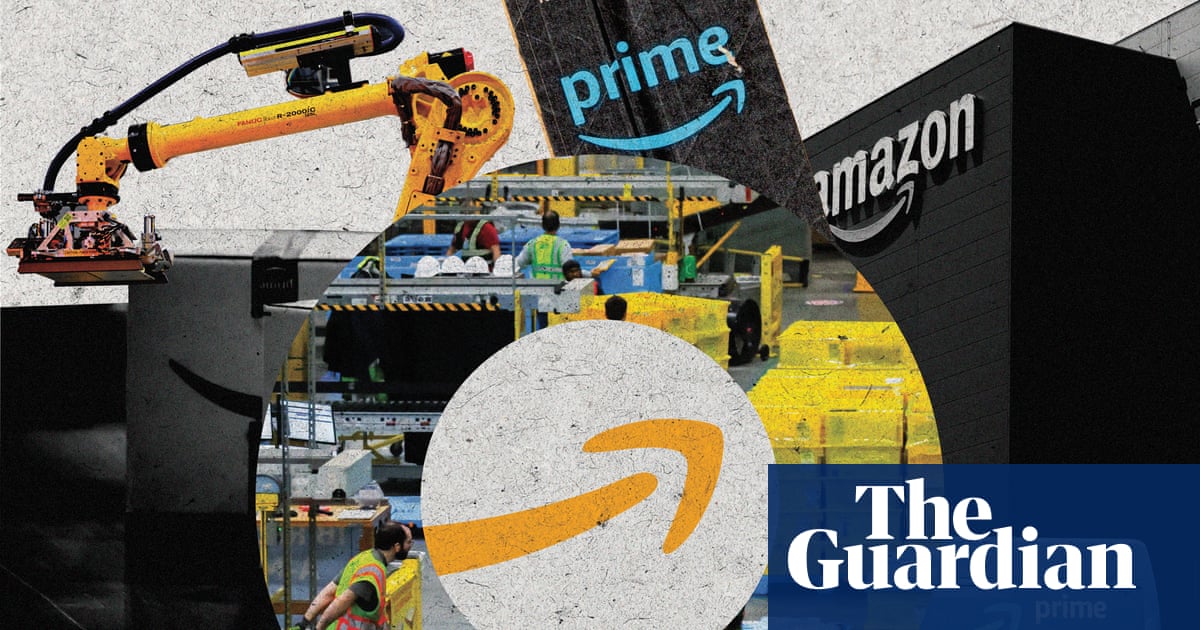
COLUMBIA STREET WATERFRONT DISTRICT - The City Club of New York trustee Tom Fox introduced on Tuesday a new to redevelop the 122-acre "all-maritime" proposal Brooklyn Marine Terminal situated on an industrial waterfront site stretching from Atlantic Avenue to Red Hook on the East River. Fox, co-founder of New York Water Taxi, the precursor to NYC Ferry Service, has numerous civic credits to his name, including spearheading the creation of the Brooklyn-Queens Greenway and co-founding the original Brooklyn Bridge Park Coalition.
New York City
fromBusiness Matters
1 month agoWhy Tolerance Management Is a Business-Critical Skill in Modern Manufacturing
We are now in a time of manufacturing where precision is more than a technical necessity; it's a business requirement. The more complex, globally dispersed and demanding things get, the less slack remains in the system. Under these circumstances tolerance management has become a decisive competence and affects competitiveness not only in terms of controlling costs, ensuring quality and improving production efficiency but also for long term market success.
Business
fromwww.facilitiesdive.com
1 month agoAll eyes on utilization: How CRE leaders are rethinking building space
The global average building utilization rate dramatically jumped in 2025 to 53%, the highest since before the pandemic, validating the effectiveness of hybrid strategies in driving more in-office activity, according to CBRE. Utilization rates were 38% in 2024 and 35% in 2023, compared to the 65% that most respondents to CBRE's global workplace occupancy benchmarking program identified as their target.
Real estate
fromLondon Business News | Londonlovesbusiness.com
2 months agoHow to build a more reliable end-of-line packaging process - London Business News | Londonlovesbusiness.com
End-of-line packaging often sits at the quiet end of a production line, yet it carries an outsized responsibility. This is the final checkpoint before products leave your facility, meet customers, and represent your brand in the real world. A single error here can undo hours of upstream efficiency and compromise overall product integrity. That's why building reliability into this stage is essential for both operational efficiency and customer satisfaction.
Business
from24/7 Wall St.
2 months agoTop 5 Railroad Equipment & Railcar Leasing Stocks: Picks & Shovels of Logistics
The railroad industry is a logistics artery, but the companies supplying the equipment that moves freight are where the real money gets made. Locomotives, railcars, tank cars, and digital rail systems are the picks and shovels of modern logistics. These companies capture recurring revenue from manufacturing, leasing, and maintenance contracts, benefiting from regulatory replacement cycles, nearshoring tailwinds, and the simple reality that freight must move.
Business
Artificial intelligence
fromeLearning Industry
2 months agoArtificial Intelligence In Transportation Training And Education
AI enables individualized transportation training by evaluating trainee performance, tailoring instruction, simulating real scenarios, and measuring performance for targeted improvement.
fromFast Company
2 months agoThis startup helps enterprising resellers prevent nearly a million pounds of returns from ending up in landfills
Americans are likely to have spent a record $1 trillion-plus this holiday shopping season alone, and about $5.5 trillion in retail sales in all of 2025, according to estimates by the National Retail Federation. That includes many unhappy returns for retailers: And when it comes back to them, a lot of the $850 billion in returned merchandise is often cheaper to discard than to inspect, sort, and resell-adding millions of tons to landfills every year.
E-Commerce
Artificial intelligence
fromwww.housingwire.com
2 months agoHome Depot launches AI tool to automate contractor material lists
Home Depot launched Material List Builder AI to rapidly generate construction materials lists, boosting pros' efficiency, protecting margins, and encroaching on pro-building market share.
fromThe Business of Fashion
2 months agoHow Integrated Technology Is Reshaping Retail Operations
The technology underpinning retail operations is under scrutiny in 2026 as fashion executives look to streamline systems with the aim to unlock efficiency, cut costs and meet consumer expectations for speed and personalisation in the shopping journey. At the retail event Lightspeed Edge on 12 January, Lightspeed - the unified point-of-sale (POS) and payments platform for SMEs such as Apricot Lane Boutique and Neal's Yard Remedies - convened industry leaders to explore the strategic imperative for integrated technology ecosystems over siloed systems.
E-Commerce
[ Load more ]