Right-wing politics
fromTruthout
1 day agoNo Kings Must Mean No War: Foreign Policy Is Least Democratic Space in Politics
The majority of Iranian Americans oppose the war on Iran, despite media portrayal of pro-monarchy sentiments.
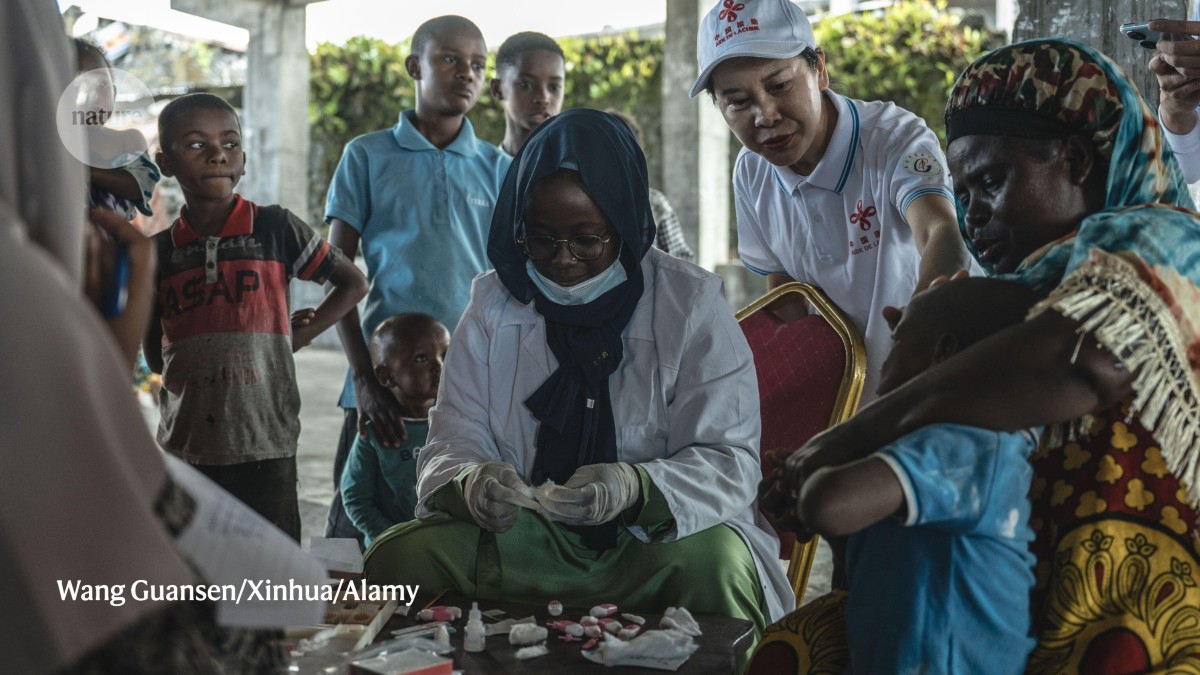
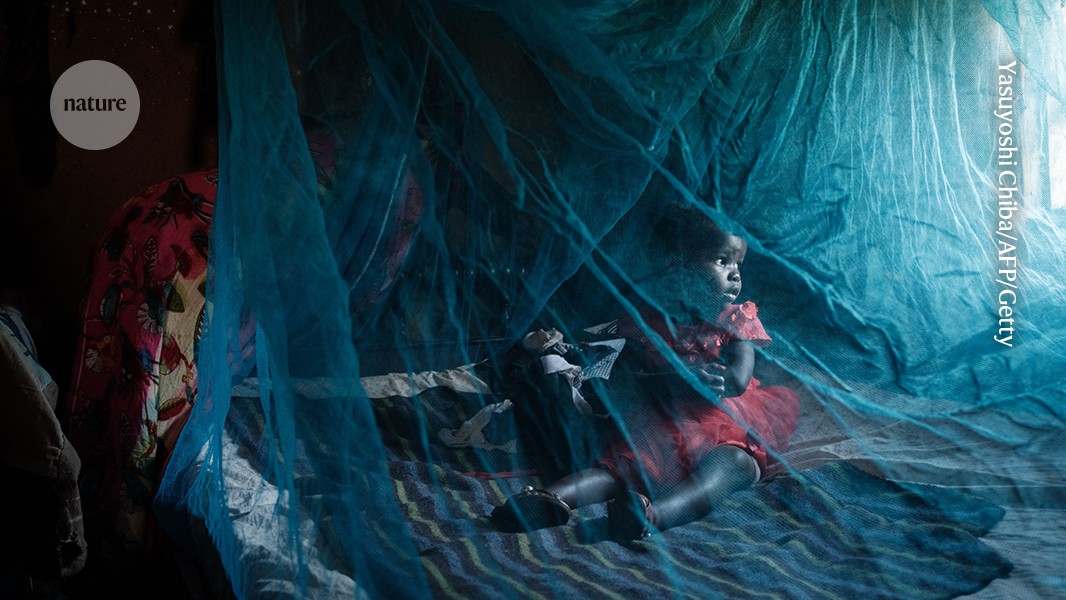
In late 2025, the United States shocked the world by suspending global health aid, leading experts to predict 700,000 additional deaths annually, primarily among children. This prompted the US to propose unusual bilateral health agreements with developing countries, which have drawn criticism for being exploitative.
"The specific barrier is capital," says Lisa George, global head of the Macquarie Group Foundation. "Without access to capital, it's very hard to get social mobility and educational mobility in life."
Women are responsible for collecting water in more than 70% of rural households that do not have access to mains water across the developing world. Women and girls collectively spend 250m hours a day collecting water globally. The climate crisis is exacerbating the problem, according to a new report from the UN.
Campaigner Aysha Hawcutt stated that residents were 'not anti-homes', but believed the Adlington plan was 'the wrong proposal in the wrong place'. She expressed pride in the community's resilience against the development threats.
Multinational firms are under rising pressure-from investors, regulators, and employees-to demonstrate positive societal impact in the places where they do business. With ESG-focused institutional investments projected to reach nearly $34 trillion this year and roughly 90% of large U.S. companies now disclosing ESG reports, these pressures are now a central part of corporate strategy.
Defense Secretary Pete Hegseth took the unprecedented step of designating a U.S. firm-Anthropic-as a supply chain risk. Anthropic's crime? It refused to violate industry-wide protocols against using AI for mass surveillance or autonomous weapons. Hegseth's designation, which has until now been reserved for foreign firms, bars U.S. military contractors from doing business with the company.
When routes are well organized, there are clear directional signs, and speed limits become reasonable. The early installation of warning signs allows transport companies to plan deliveries more accurately and avoid delays. For businesses, time is money. When a truck carrying goods does not spend hours detouring due to an unclear traffic scheme or stuck in traffic where it could have been avoided thanks to competent traffic management, fuel costs, driver wages, and vehicle maintenance costs are reduced.
Politicians must stop prioritising socially and ecologically destructive growth that only increases the profits and serves the consumption demands of the world's richest individuals and corporations. Instead, to tackle the interwoven crises of rising inequality, ecological collapse and a resurgent far-right politics, a new economic agenda is needed.
In places where inclusion is part of the infrastructure of their economy-supply chains, procurement processes, capital access, or business ownership-people thrive. Inclusive economies create more resilience by expanding the base of potential business owners who can build, own, innovate, and hire. They allow more opportunities for homeownership and investing in the longevity of communities. As our economy becomes increasingly stratified and volatile, we need as much resiliency as we can get.
But if you're innovating within your industry, it's a problem you should expect and prepare for because it means having to operate in two realities-the internal reality where you know the challenges in your industry and how you're going to solve them, and the external reality where nobody else has recognized the problem that needs to be solved. In a highly regulated industry like healthcare, safety, and stability create an inertia that often works against innovation.
Understanding the difference in purpose Unlike private businesses, which exist to make a profit, public institutions are designed to create impact - especially social and economic outcomes that benefit everyone, not just paying customers. A public agency doesn't measure its success in revenue or margins, but in how much it improves lives, builds equity and maintains public trust. This doesn't mean budgets and spending don't matter - they absolutely do - but money is not the goal. It's the tool.
There are more signs that the United States is disengaging from the global order established after World War II. President Donald Trump has ordered his administration to pull out of more than 60 agencies, half of them part of the United Nations. Trump argues that being a member of these organisations is contrary to his country's interests. The secretary of state went as far as saying they're useless or wasteful.
Instead of handing Trump $1 billion checks, governments should work together to protect the UN and other institutions established to uphold international human rights and humanitarian law, the global rule of law, and accountability, Charbonneau said. The annual dues UN member states must pay are set according to each country's gross domestic product (GDP), debt and other factors. The US accounts for 22 percent of the core budget, followed by China with 20 percent.
Last summer, the Dalai Lama was having a party in Dharamshala for his 90th birthday, and Bethany Morrison, a newly appointed State Department official, was eager to meet with him there. Inconveniently, the United States had recently canceled about $12 million worth of annual foreign aid benefiting Tibetan-exile communities as part of the implosion of USAID. This, Morrison and other State officials thought, would not make a particularly good impression on His Holiness, according to a former State and a former USAID official.
There is little doubt that this is what African countries need if they are serious about universal health coverage - ensuring that every member of their populations has access to this fundamental human right. But such an approach has never been implemented in Africa. Some of the reasons for this are outlined in a report on health financing by the Africa Centres for Disease Control and Prevention (Africa CDC), the continent's public-health agency based in Addis Ababa, published last week (see go.nature.com/3o9wxfc).
UN spokesperson Stephane Dujarric said on Monday that while the US ambassador, Mike Waltz, said last week that payments would begin within weeks, no further details had been offered. list of 3 itemsend of list We've seen the statements, and frankly, the secretary-general has been in touch for quite some time on this issue with Ambassador Waltz, Dujarric said during a news briefing.
Across history, the relocation of capital cities has often been associated with moments of political rupture, regime change, or symbolic nation-building. From Brasília to Islamabad, new capitals were frequently conceived as instruments of centralized power, territorial control, or ideological projection. In recent decades, however, a different set of drivers has begun to shape these decisions. Rather than security or representation alone, contemporary capital relocations are increasingly tied to structural pressures such as demographic concentration, infrastructural saturation, environmental risk, and long-term resource management.
Clean energy technologies have become more affordable around the world. Yet for many countries in the Global South, the cost of transitioning to a low-carbon economy remains disproportionately high. But not because the equipment is more expensive: in fact, solar and wind components are often imported at comparable prices around the world, as global manufacturing scale and trade have helped standardize hardware costs. Instead, the disparities in financing costs reflect the way the global financial system fails to adequately capture, differentiate and price risk.
United States President Donald Trump launched the Board of Peace on Thursday, saying it's one of the most consequential bodies ever created in the history of the world. This is all part of the agreement to reach a ceasefire in Gaza after more than two years of Israel's genocidal war on Palestinians in the territory. Trump said the board will work in partnership with the United Nations to address crises far beyond Gaza.
Most of the targets are U.N.-related agencies, commissions and advisory panels that focus on climate, labor and other issues that the Trump administration has categorized as catering to diversity and woke initiatives. The Trump Administration has found these institutions to be redundant in their scope, mismanaged, unnecessary, wasteful, poorly run, captured by the interests of actors advancing their own agendas contrary to our own, or a threat to our nation's sovereignty, freedoms, and general prosperity, the State Department said in a statement.
In a new executive order, President Donald Trump has declared that the United States will withdraw from 66 international organizations and bodies, including several focused on tackling climate change. Trump made his disregard for climate change clear when he withdrew the US from the Paris climate agreement for a second time in early 2025, but these new withdrawals further confirm the second Trump administration is against global collaboration in general.
The International Monetary Fund has warned mounting geopolitical tensions and an escalation of Donald Trump's tariff war could hit global economic growth and trigger a backlash in financial markets. In an update as Trump threatens to impose tariffs on Nato allies opposed to his ambitions in Greenland, the Washington-based fund said a renewed eruption in trade tensions was among the biggest risks to global growth in 2026.