#digital-image-stacking
#digital-image-stacking
[ follow ]
#professional-headshots #photography #google-photos #google-gemini #portrait-photography #personal-branding
Social media marketing
fromFstoppers
2 weeks agoShowcase Photography on Instagram in 2026 | Fstoppers
Instagram's algorithm has fundamentally shifted away from static photography, requiring photographers to adapt their content strategy and embrace storytelling to maintain audience reach and engagement.
Artificial intelligence
fromEngadget
3 weeks agoYou can (sort of) block Grok from editing your uploaded photos
X and xAI introduced a feature allowing users to block Grok from modifying their uploaded images, but this limited measure fails to address widespread misuse of the image generation tool for creating nonconsensual intimate imagery.
Graphic design
fromTechCrunch
3 weeks agoAdobe is debuting an AI assistant for Photoshop | TechCrunch
Adobe launches AI assistant for Photoshop in beta across web and mobile, enabling object removal, color changes, and lighting adjustments through natural language prompts, while expanding Firefly with generative editing tools.
Web design
fromThe Verge
3 weeks agoYou can now ask Photoshop's AI assistant to edit images for you
Adobe launches agentic AI features across Creative Cloud apps, enabling users to edit images and documents through conversational chatbot interfaces in Photoshop, Acrobat, and Express, with integration into Microsoft Copilot and ChatGPT.


Apple
fromFast Company
3 weeks agoPhotoshop's new AI assistant makes it easer than ever to edit images
Adobe launches an AI assistant for Photoshop Web and Mobile that enables intuitive photo editing through prompts, voice commands, and touch navigation, with results integrable into full Adobe creative workflows.
fromGSMArena.com
1 month agoXiaomi 17 Ultra Photography Kit and Photography Kit Pro hands-on
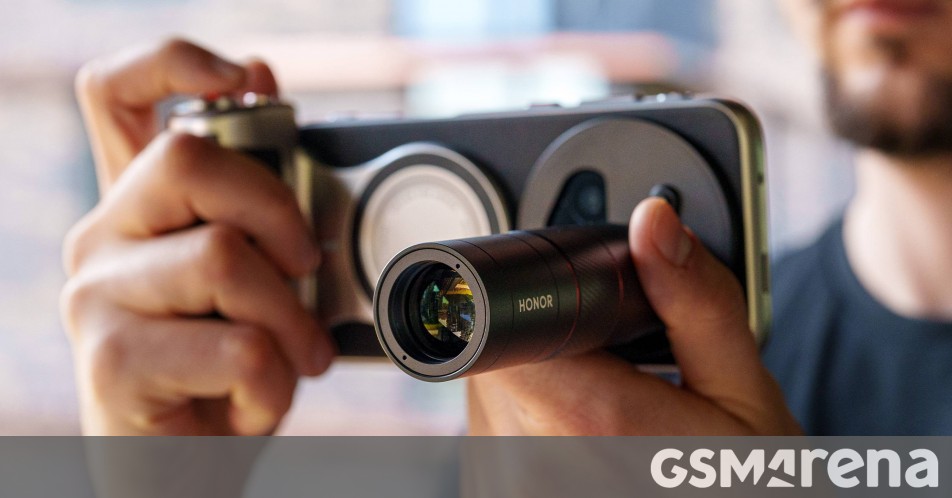
Xiaomi's Photography Kit Pro for the Xiaomi 17 Ultra represents this evolution by adding manual control features and filter compatibility. The kit includes a magnetic case with detachable filter threads, a photography grip with USB-C connectivity supporting 90W HyperCharge, and customizable controls including a two-stage shutter, zoom lever, video button, and adjustable dial.
Mobile UX
fromThe Verge
1 month agoThe Galaxy S26 is a photography nightmare
The new camera features, on the other hand, are neither of those things. They're something worse. Something scarier. On this episode of The Vergecast, Nilay and David discuss the new phones, then dive into the ways in which the S26's AI camera features seem to be clearly designed to change the whole idea of what happens when you try to take a picture.
Gadgets
Artificial intelligence
fromBusiness
1 month agoImage to Image AI: A Smarter Way to Transform and Enhance Visual Content - Business
Image to Image AI transforms existing photos into enhanced or stylized versions using artificial intelligence, eliminating the need for manual editing skills or complex tools.
fromEngadget
1 month agoThe best budget cameras for 2026
If it's speed you want for sports or action shots of your kids, models like Canon's R50 can shoot bursts as fast as many high-end cameras. Creators, meanwhile, can choose Sony's ZV-E10 for vlogging jobs. There are also great, and cheap, models in the action and gimbal camera categories.
Gadgets
fromPetaPixel
1 month agoGoogle's Pomelli Photoshoot Feature is Here to Hammer Nails into the Coffin of Photography
Introduced yesterday, Photoshoot uses Google's powerful generative AI tools, including Nano Banana, to create "professional" images of a product. Users simply click on 'Create a Product Photoshoot' and upload a photo of their product. It can be any photo, no matter how bad. "Don't worry about polish - we'll take care of it," Google says facetiously. From that user-generated image, Photoshoot will create various shot templates, including 'Studio', 'Floating', 'Ingredient', and 'In use'.
Marketing tech
fromThe Verge
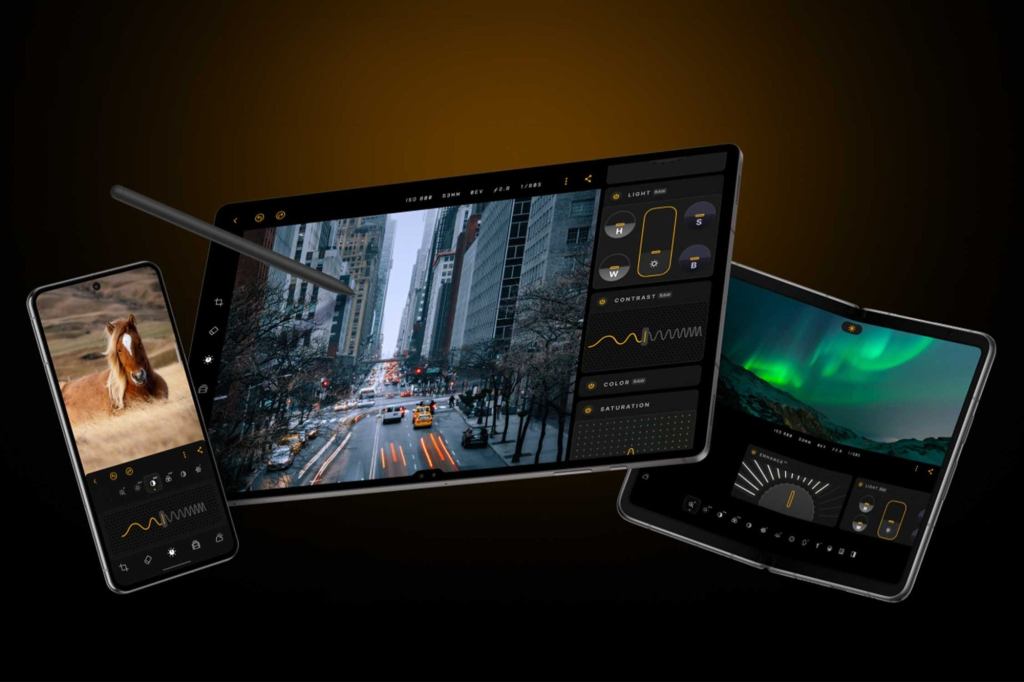
1 month agoGoogle adds a camera to Snapseed on iOS
The Snapseed camera defaults to an automatic mode, but also includes optional controls for ISO, shutter speed, and focus, along with flash and zoom. It allows you to shoot using saved looks and edit stacks from the app, which can be altered after the shot is taken, along with a range of preset film effects inspired by specific films from Kodak, Fujifilm, and more. There's even a handful of UI color themes to pick from too.
Mobile UX
fromGSMArena.com
2 months agoWhy Camera Hardware Is Back at the Centre of Smartphone Photography
In recent years, smartphone photography has become increasingly dominated by software. Computational imaging, AI processing, and post-capture optimisation now play a central role in how images are produced. Yet as these techniques become more widespread, camera hardware is once again emerging as a key differentiator. The REDMI Note 15 Pro 5G Series reflects this shift clearly, placing renewed emphasis on sensor capability and optical fundamentals rather than relying solely on software to define image quality.
Gadgets



fromZDNET
2 months agoI took 500 photos with the best Android camera phones at Grand Canyon - this model wins it for me
One of the key components of a modern-day phone is the camera setup. Most phones have multiple cameras, and their quality can vary, which is why, when we get the opportunity, we like to take multiple phones out and shoot side by side. While photos and photo quality are often subjective, it helps us determine which phones can really deliver, from a megapixel perspective.
Gadgets
fromGSMArena.com
2 months agoFuture iPhone models could get a multispectral sensor for improved imaging
Multispectral imaging works by capturing light in several distinct wavelength bands, including those not visible to the human eye. This enables more detailed information capture when compared to traditional RGB sensors, which only detect red, green, and blue wavelengths. Using multispectral sensors could help future iPhones achieve better material separation and improved depth perception, with the latter resulting in more accurate portrait photos.
Mobile UX
fromThe Verge
2 months agoThe telephoto is the only phone camera that really matters
Samsung's Galaxy S20 Ultra wasn't the first phone to feature a periscopic telephoto lens - both Huawei and Oppo beat the Korean company to it - but it was the first in the US to make such a big deal about it. Almost all of Samsung's marketing for the S20 Ultra centered on its so-called Space Zoom, its 5x optical folded periscope lens, capable of digitally zooming much further.
Gadgets
fromEngadget
2 months agoEngadget review recap: Valerion VisionMaster Max, Canon EOS R6 III and Samsung Bespoke Fridge
Engadget has been testing and reviewing consumer tech since 2004. Our stories may include affiliate links; if you buy something through a link, we may earn a commission. Read more about how we evaluate products. Catch up on the recent reviews published by Engadget. Our reviews team is rested up after the CES grind and we're back to business. This week we reviewed the latest devices from Valerion,
Gadgets
fromThe Verge
2 months agoProcess Zero II will let you do a little processing, if you want
This update includes the next iteration of the app's much-discussed Process Zero mode, adding HDR and ProRAW support to what is intended to be a hands-off, anti-computational image processing method. There's a new black-and-white film simulation that also supports HDR, and more new "Looks" to come. This is my semi-regular cue to remind you that HDR is not a dirty word. We tend to associate the term with an over-processed look when high-contrast scenes are translated to an SDR display.
Photography
fromEngadget
2 months agoAdobe Photoshop upgrades its Firefly-powered generative-AI editing tools
Adobe has improved the tools for Generative Fill, Generative Expand and Remove that are powered by its Firefly generative AI platform. Using these tools for image editing should now produce results in 2K resolution with fewer artifacts and increased detail all while delivering better matches for the provided prompts.
Photography
fromFstoppers
2 months ago11 Predictions for the Photography Industry in 2026
Forget the film camera revival that never quite materialized at scale. The defining hardware trend of 2026 will be the continued adoption of C2PA (Content Credentials) signing in camera bodies beyond the flagship tier. Leica and Nikon have been early movers here, with Sony engaged in the broader Content Credentials ecosystem. This year, we are likely to see signing capabilities expand from flagship and select professional models into higher-volume lines as implementation costs fall and workflow integration matures.
Photography
Photography
fromDesign You Trust - Design Daily Since 2007
2 months agoSpectacular Winning Images from The Society of Photographers' Photographer of the Year 2025
Society of Photographers' 2025 awards honored winners from nearly 6,000 submissions across 28 categories showcasing outstanding storytelling, technical mastery, and emotional depth.
fromFstoppers
2 months agoMaking Money With Photography in 2026 Is Not What You Think
One of the first points is uncomfortable but practical: sometimes the fastest way into a new lane is a short, intentional stint working for free. Ranft frames it as an access trade when the door is locked, not a lifestyle, and he's blunt about using discretion so you don't get exploited. The emphasis is on choosing situations where the learning is real, the stakes are real, and the experience creates proof you can show later.
Photography
[ Load more ]