#digital-sovereignty
#digital-sovereignty
[ follow ]




European startups
fromSilicon Canals
4 days agoFrench AI startup Mistral secures $830M from seven banks to fund sovereign GPU infrastructure independent of US cloud - Silicon Canals
Mistral AI secured $830M in debt financing to purchase Nvidia GPUs for a European data center near Paris, emphasizing digital sovereignty in AI.

fromComputerWeekly.com
3 weeks agoWhy the CMA must act now on cloud before the UK loses its digital future | Computer Weekly
After an extensive two-and-a-half-year investigation, the CMA published its findings in July 2025. The report was explicit: Amazon Web Services (AWS) and Microsoft together account for roughly 80% of the UK's cloud services market, a duopoly so deeply entrenched that the watchdog recommended both companies be designated with strategic market status.
UK politics
European startups
fromComputerworld
4 weeks agoGov't IT spending seen as key to building Europe's tech ecosystem
European governments are shifting from US technology suppliers to open-source alternatives to achieve digital sovereignty and reduce dependency, with public sector IT spending driving this transition.


fromFortune
1 month agoEurope doesn't lack tech talent. Its leaders lack execution | Fortune
Digital infrastructure is no longer just an industry; it is strategic power. Search engines shape access to knowledge. Cloud platforms host government data. Operating systems underpin public services. When those layers are controlled abroad, so is a slice of Europe's economic and political autonomy.
Miscellaneous
fromTechzine Global
1 month agoDutch Tax Authority hands US software company control over VAT system
With 1.5 billion euros per week in VAT revenue at stake, there are now serious concerns about digital sovereignty. If that revenue of €1.5B a week disappears, the state will have to quickly borrow more on the international capital market. In theory, America could stop this process in the Netherlands thanks to a new tender.
EU data protection
EU data protection
fromTheregister
1 month agoWorried Europeans can now cut Azure's phone cord completely
Azure Local now operates fully disconnected without cloud connectivity, enabling European organizations to run mission-critical infrastructure with complete digital sovereignty and no dependency on cloud services.
fromZDNET
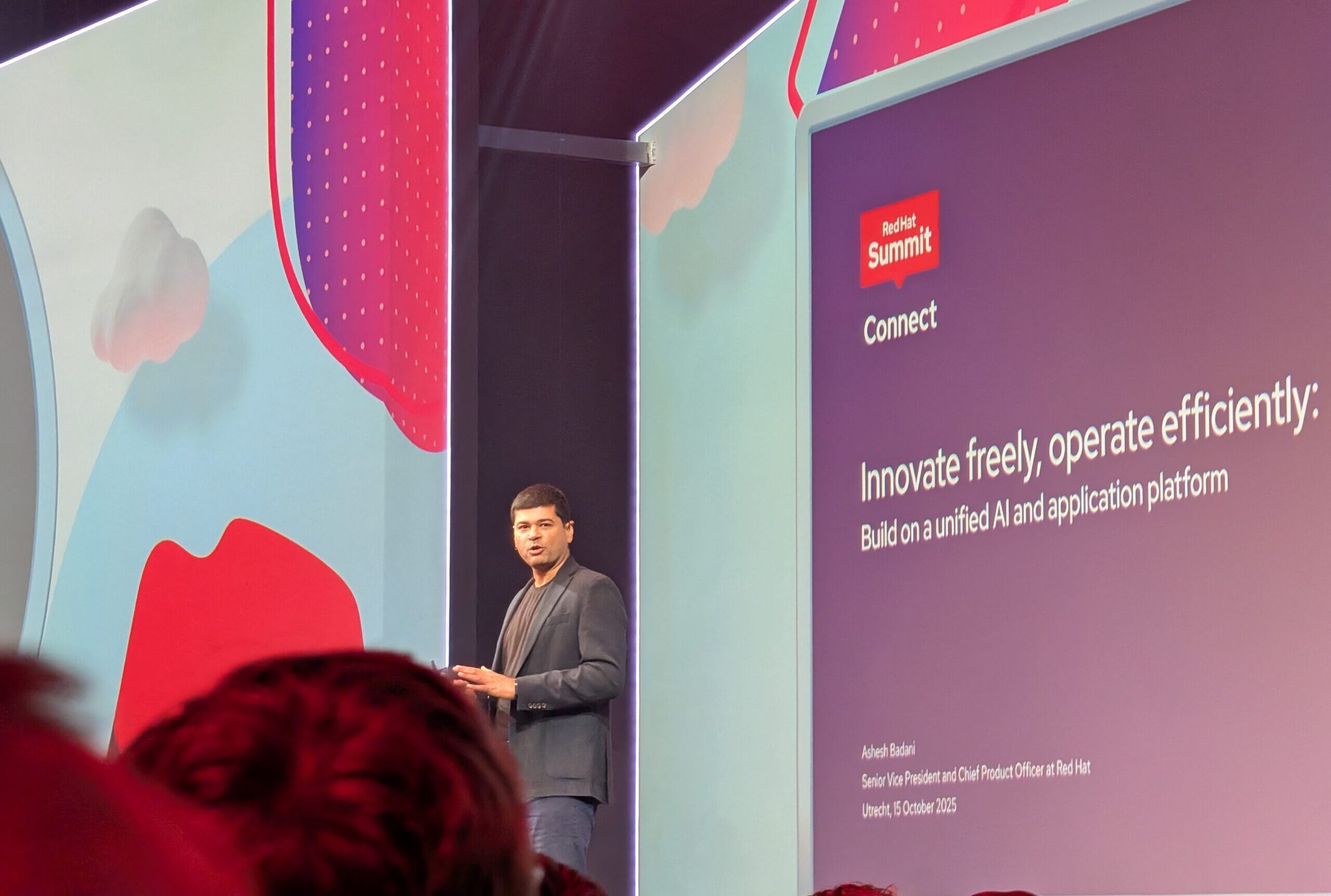
1 month agoHow digitally sovereign are you? Red Hat can help measure that
If you have all the information you need at hand, it should take you 10 to 15 minutes to complete the survey. This new web-based, self-service survey walks organizations through 21 multiple-choice questions. Areas covered include data residency, encryption key control, disaster recovery planning for geopolitical events, and the ability to prevent sensitive data from crossing borders. The goal is to move digital sovereignty from vague policy talk to a measurable "sovereignty baseline" that IT and business leaders can act on.
EU data protection
fromwww.theguardian.com
1 month agoEuropeans are dangerously reliant on US tech. Now is a good time to build our own | JohnnyRyan
They can no longer use e-commerce, book hotels online or hire a car. Their home smart devices ignore them. Credit cards from European banks no longer function, because Europe has still not developed its own EU-wide payments system, so most electronic purchases go through Visa and Mastercard. Converting euros to foreign currencies is extraordinarily difficult because everything passes through dollars. Living in Europe is no protection against Donald Trump bricking your digital life.
Europe politics
fromTheregister
1 month agoDigital sovereignty must define itself before it can succeed
There was and is method to it. Type approval means that the device won't kill you, won't jam your airwaves, won't burst into flames, and other desirable negatives. If a business buys approved equipment, it won't invalidate its insurance, and many other legal protections and permissions flow. When the system stops working, which it does when individual consumers can buy cheap stuff directly from overseas, fiery death can follow.
EU data protection






fromZDNET
1 month ago5 Linux servers that let you ditch the public cloud and reclaim your privacy - for free
You may have noticed that many European Union (EU) governments and agencies, worried about ceding control to untrustworthy US companies, have been embracing digital sovereignty. Those bodies are turning to running their own cloud and services instead of relying on, say, Microsoft 365 or Google Workspace. If you prize your privacy and want to control your own services, you can take that approach as well.
Privacy technologies


fromTheregister
1 month agoCounting the waves of tech industry BS from blockchain to AI
They called out about half a dozen particular instances of what they considered to be bullshit technology. We were too busy laughing sympathetically to whip out a laptop to make notes, but as best as we can recall the sequence, they were: Containers Kubernetes The "Cloud" Anything at all "as a Service" The Blockchain - anything, everything, based on it And now, arguably the biggest and worst of all, "generative AI"
DevOps
fromThe Local France
1 month agoFloods and snow, property, and a question: essential articles for life in France
This week's practical must-reads from The Local feature advice on what to do if you live in an area under a flood warning, the latest snow news for winter sports lovers, an update on France's Budget now that we have one, and why the Île de Ré is so expensive. This week, the French Riviera and parts of western France have been under high alert for flooding. It is the leading natural disaster affecting France and can lead to fatalities. Here's the crucial advice to follow if you are caught in a flood where you live.
France news
France news
fromwww.independent.co.uk
1 month agoFrance ditches Zoom and Teams for homegrown system amid European digital sovereignty push
European governments and institutions are shifting away from U.S. Big Tech toward domestic or free software to protect digital sovereignty, privacy, and operational resilience.


Artificial intelligence
fromComputerWeekly.com
2 months agoConsiderations for ensuring a minimum viable digital sovereign cloud | Computer Weekly
Enterprises shift to private, sovereign AI and hybrid on-prem solutions for privacy, control, performance, and regulatory compliance, driving server vendors to supply hybrid AI infrastructure.
fromWIRED
2 months agoThe Race to Build the DeepSeek of Europe Is On
Against that backdrop, Europe's reliance on American-made AI begins to look more and more like a liability. In a worst case scenario, though experts consider the possibility remote, the US could choose to withhold access to AI services and crucial digital infrastructure. More plausibly, the Trump administration could use Europe's dependence as leverage as the two sides continue to iron out a trade deal. "That dependency is a liability in any negotiation-and we are going to be negotiating increasingly with the US," says Taddeo.
Artificial intelligence
fromComputerWeekly.com
2 months agoInterview: How ING reaps benefits of centralising AI | Computer Weekly
According to Li Mandri, ING's centralised approach to AI development has resulted in a high success rate for pilot projects, with 90% moving to production compared to the industry average of 30. The bank has standardised on cloud-hosted AI models from preferred partners, which are then made available globally, allowing ING to scale. He says the platform is centrally managed with risk controls, guardrails and real-time monitoring.
Artificial intelligence
US politics
fromwww.theguardian.com
2 months agoTrump may be the beginning of the end for enshittification' this is our chance to make tech good again | Cory Doctorow
Digital devices are artificially locked by US-dominated tech companies, but hardware can run any software, creating an opening to unbundle platform control and reclaim choice.
fromTechzine Global
3 months agoDigital sovereignty: from buzzword to business imperative
Digital sovereignty has outgrown its niche as an IT concern and is now firmly on the boardroom agenda. This has been fueled in no small part by geopolitical concerns. However, while geopolitics may have pushed it into the spotlight, at its core digital sovereignty is about one thing: keeping the business running no matter what happens. When critical systems fail, there is always a cost.
Miscellaneous
US politics
fromBusiness Insider
3 months agoThe US banned a former EU official's visa over Big Tech rules - and the fight is playing out on X
The US imposed visa bans on five Europeans, citing European coercion of American platforms to censor US viewpoints and asserting extraterritorial censorship concerns.
fromNieman Lab
3 months agoThe year journalism stops outsourcing its independence
Without a fundamental shift in how newsrooms think about and build technology, journalism's independence is in jeopardy. The threats are not abstract. Link referrals to newsroom websites are declining from both search engines and social media sites because tech companies want to keep users engaged in their own platforms. Information held in the cloud can be subpoenaed, often in secret, putting sources and journalists at risk.
Media industry
fromIT Pro
4 months agoCIOs wrestle with Europe's new digital sovereignty approach
Europe's long-running struggle to define digital sovereignty - and to turn it into something practical - is reaching an inflection point. That was the message at this year's Gaia-X Summit in Porto, where executives and governments argued that the continent finally has the technical foundations for sovereign data sharing. All it needs now is the political will, economic models, and global partnerships to make it work at scale.
EU data protection
fromTechzine Global
4 months agoThe Netherlands investigates impact of Kyndryl's acquisition of Solvinity
The Dutch government will investigate the consequences of the American IT company Kyndryl's takeover of the Dutch cloud service provider Solvinity. The company plays an essential role in the national identity system DigiD. Solvinity believes that the collaboration with Kyndryl will offer more opportunities to continue innovating in IT management, security, and automation. "We are aware of the questions that are circulating in the market," said CEO Daniëlle Schuur earlier this month.
Miscellaneous
EU data protection
fromwww.theguardian.com
4 months agoThe world's digital empires are jostling for power in Europe, we can't afford to be useful idiots | Thierry Breton
Europe must enforce comprehensive digital laws to secure digital sovereignty, regulate major platforms, and condition market access on compliance to protect citizens and democracies.
fromTheregister
4 months agoGeopolitics push European CIOs to think local on cloud
A survey of CIOs and tech leaders in Western Europe has found 61 percent want to increase their use of local cloud providers amid global geopolitical uncertainty. Around half (53 percent) said geopolitics would restrict their use of global providers in the future. Gartner surveyed 241 CIOs and IT leaders in Western Europe between May and July. It found that ongoing geopolitical tension was fueling concerns over digital sovereignty.
Miscellaneous
fromZDNET
4 months agoSUSE Linux Enterprise Server 16 lands - with AI and EU support baked in
Lots of companies are announcing AI this and AI that, but few of them offer more than new AI lipstick on an old pig when you look at them closely. Then, there's what SUSE is doing with its release of SUSE Linux Enterprise Server 16 (SLES 16), available today. This new version is positioned as an AI-ready operating system tailored to the demands of today's hybrid cloud, data center, and edge computing environments.
EU data protection
fromresund Startups
5 months agoCyber Security Festival 2025: With Tech Visionary David Heinemeier Hansson
Cyber Security Festival 2025, one of the regions premier cybersecurity event, is set to bring together over 1,200 IT professionals, experts, and thought leaders - including David Heinemeier Hansson, the creator of Ruby on Rails, co-founder of 37signals, and New York Times-bestselling author. Two days of discussions, hands-on workshops, and networking await participants. Taking place on November 4-5, 2025, at TAP1 in Copenhagen, the festival will tackle the most pressing challenges in cybersecurity, from AI-driven threats to geopolitical cyber warfare.
Information security
fromZDNET
5 months agoAnother European agency shifts off Big Tech, as digital sovereignty movement gains steam
Even before Azure had a global failure this week, Austria's Ministry of Economy had taken a decisive step toward digital sovereignty. The Ministry achieved this status by migrating 1,200 employees to a Nextcloud-based cloud and collaboration platform hosted on Austrian-based infrastructure. This shift away from proprietary, foreign-owned cloud services, such as Microsoft 365, to an open-source, European-based cloud service aligns with a growing trend among European governments and agencies. They want control over sensitive data and to declare their independence from US-based tech providers.
EU data protection
fromTechzine Global
5 months agoDigital sovereignty requires cooperation, not isolation
German Minister for Digital Affairs Karsten Wildberger emphasizes that Europe's call for digital sovereignty should not be confused with protectionism. According to him, Europe must develop its own digital infrastructure. This is to reduce dependence on American technology companies. That does not mean that cooperation with the United States should be ruled out. In an interview with Reuters, Wildberger explains that Germany and the European Union can no longer be mere spectators or customers in the digital sector, but must play an active role themselves.
Miscellaneous
fromTechzine Global
5 months agoEurope invests 1 billion in Apply AI strategy
The European Commission is investing €1 billion in artificial intelligence. Its aim is to reduce dependence on American and Chinese technology. This Apply AI strategy focuses on ten crucial sectors, from healthcare to defense. The European Commission's new Apply AI strategy builds on an action plan published in April this year, writes Reuters. The goal is clear: Europe wants to become less dependent on foreign technology.
Artificial intelligence


fromComputerworld
6 months agoA European alternative to M365? Nextcloud looks to capitalize on digital sovereignty interest
Nextcloud, a German productivity and collaboration software vendor, hopes to capitalize on the shift in mood. Working with Ionos, a German data center hosting company, Nextcloud plans to launch an open-source service that it bills as a digitally sovereign competitor to better-known US software-as-a-service (SaaS) products like Microsoft 365 (M365). Nextcloud, which launched in 2016, already develops and sells a suite of collaboration and productivity tools called Nextcloud Hub, which includes apps for document editing, email, and video meetings.
Miscellaneous
fromComputerWeekly.com
6 months agoForrester Technology & Innovation Summit preview: Digital sovereignty in the public cloud | Computer Weekly
Given that corporate IT relies heavily on cloud-based infrastructure and services delivered via the public cloud, access to the data held in the cloud is paramount. Should all mission-critical data be held on-premise? What roles should digital sovereignty and digital residency play in a corporate IT strategy? These are among the questions being discussed at Forrester's forthcoming Technology & Innovation Summit in London.
Software development
[ Load more ]