#displacement-and-reconstruction
#displacement-and-reconstruction
[ follow ]
#displacement #gaza #refugees #reconstruction #humanitarian-crisis #humanitarian-aid #deportation #immigration







Business intelligence
fromLondon Business News | Londonlovesbusiness.com
6 days agoWhy GIS matters in modern infrastructure and urban planning: Building smarter, future-ready cities - London Business News | Londonlovesbusiness.com
GIS is essential for effective urban planning, enabling data-driven decisions that enhance infrastructure and quality of life in rapidly growing cities.
fromwww.theguardian.com
6 days agoEvery child wants to find joy': the scheme designing playground equipment for disaster zones
Meininger, who grew up in Germany but now lives in London, likes making things. So when he saw how much his young sons enjoyed the jungle gym and play forts at the local park, he made an indoor treehouse for them.
Parenting


fromDefector
2 weeks agoDam It All To Hell | Defector
Hoppers, like Pixar's pre-Disney films, is a delight. The beavers' world is immersive and richly realized, grounded in science but never dry. The plot zigs and zags between moments of absurdity and emotional heft to stirring effect; I cried multiple times, and not just because of the low-hanging fruit of grandma death.
Independent films
fromArchDaily
3 weeks agoMobility Justice: Urban Equity in an Era of Innovation
Every city contains two transportation systems. One is the visible network of roads, rail lines, sidewalks, and bus routes mapped in planning documents. The other is the invisible geography of privilege and exclusion embedded within it: the neighborhoods that received highways instead of parks, the communities whose bus routes were cut, the sidewalks that abruptly end at the edge of a district.
Alternative transportation
France politics
fromwww.aljazeera.com
2 weeks agoPalestinian refugees face new displacement as Israel's bombs hit Lebanon
Palestinian refugees in Lebanon, displaced since 1948, face renewed trauma and displacement as Israeli military operations intensify, forcing families from camps into further uncertainty.
fromSilicon Canals
3 weeks agoPeople who moved countries for love and people who moved countries for work carry completely different versions of displacement. One chose a person and lost a place. The other chose a place and discovered that without their people in it, a better country can still feel like a beautiful room with no furniture - Silicon Canals
She said she stood in her new kitchen, which had radiant floor heating and a view of the fjord, and cried because the bread smelled wrong. She'd moved from São Paulo for a man she'd met at a data science conference. The apartment was beautiful. The healthcare was extraordinary. The man was kind. And the bread smelled wrong, and that wrongness cracked open something in her she hadn't known was load-bearing.
Remote teams
fromwww.theguardian.com
4 weeks agoI am trying to live': Haitians in Mexico seek community despite broken immigration systems
With time, as his research led to police intervention, he caught the attention of the city's gangs. In November 2024, during a period of escalating violence in the Haitian capital, gang members entered the compound where Gensley lived. They burned the radio station, my home and many other things in the area. They even killed his dog.
US news
Psychology
fromPsychology Today
1 month agoHow to Help Communities Rebound from Crisis and Disaster
Disaster psychology provides an empirically-based framework for building community resilience and growth during crises through understanding predictable psychological phases and natural recovery mechanisms.
Right-wing politics
fromThe American Conservative
3 weeks agoClose Foreign Consulates in U.S. Sanctuary Cities
Migrant-sending countries maintain extensive consulate networks in the United States primarily to serve their large diaspora populations, including undocumented immigrants, contributing to immigration enforcement challenges.
Mental health
fromPsychology Today
1 month agoNavigating the Messy Middle of Disaster Recovery
Disaster recovery extends beyond the initial crisis phase; year two brings psychological challenges including chronic stress, financial strain, and bureaucratic delays that impair functioning and compound trauma.
World politics
fromTruthout
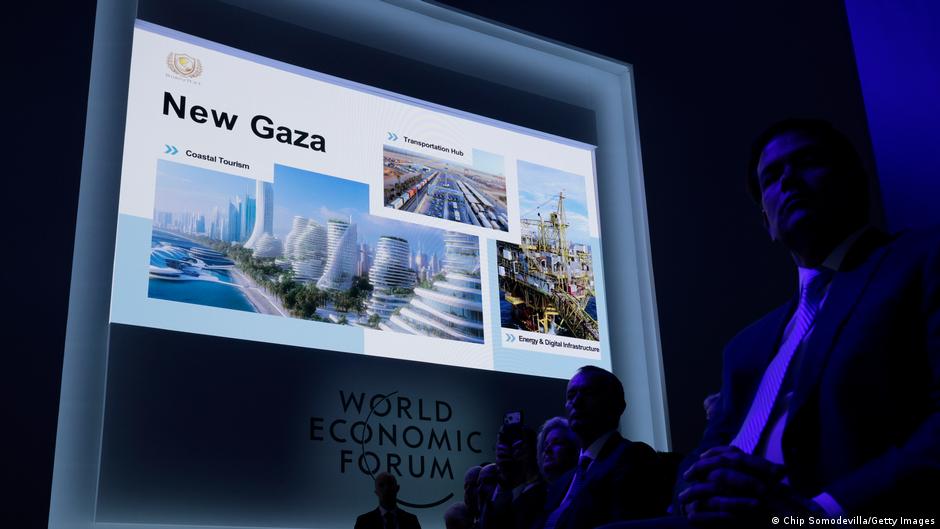
3 weeks agoPalestinians in Gaza Slam Kushner's Reconstruction Plan as Disguised Theft
Jared Kushner presented a $25 billion master plan to reconstruct Gaza with skyscrapers, housing, and commercial centers, while Trump proposed clearing inhabitants to create a Middle Eastern resort destination.
World news
fromenglish.elpais.com
3 weeks agoNearly 800,000 people displaced by war against Iran and Lebanon
A February 28 U.S.-Israel attack on Iran and Lebanon displaced 767,700 people and left 14.1 million existing refugees in extreme vulnerability, while a 30% reduction in global humanitarian funding in 2025 severely constrains response capacity.
Environment
fromNature
1 month agoClimate change and geopolitics threaten water supplies - but disaster is not inevitable
Global water systems face crisis from overuse, pollution, and climate change, requiring urgent strengthening of international water-sharing treaties with dynamic monitoring systems.
World politics
fromwww.aljazeera.com
4 weeks agoWhy international law is still the world's best defence
The post-World War II international legal order faces erosion from ultranationalism, great-power rivalries, and norm violations, risking a return to force-based politics where power supersedes principle.
France politics
fromwww.theguardian.com
4 weeks agoThe memories stay behind': hundreds of thousands flee the Israeli bombs in Beirut
Over 500,000 people in Beirut were displaced by Israeli evacuation orders affecting southern suburbs and areas south of the Litani River, forcing mass exodus and leaving neighborhoods in ruins.
World news
fromwww.aljazeera.com
1 month agoNearly 66,000 Afghans displaced amid fierce fighting on Pakistan border: UN
Nearly 66,000 people displaced in Afghanistan due to escalating cross-border violence between Afghanistan and Pakistan along the Durand Line, with ongoing military confrontation risking further humanitarian crisis.
fromIndependent
1 month agoUkrainian stories: 'When we arrived here, we were like aliens from another planet. I had to start my life from scratch'
Four years on from the invasion, we talk to the Ukrainians who have settled in Co Kerry, why they chose to come here, the heartbreaking stories from their homeland, and dealing with the 'small percentage of haters'
Miscellaneous
fromArchitectural Digest
2 months agoDesigning When Your City Is Under Siege
Life doesn't pause for grief or fear. You might be going through something devastating but you're still packing lunches, still driving your kids to baseball practice, still showing up to work. One minute I find myself prepping for a whole home presentation and the next minute I'm checking the news, hoping and praying that no one has been killed on the streets today.
Design
fromtherealdeal.com
2 months agoBuilders get their remedy, and some cities tweak their defenses
Cedar Street just came out victorious in a multi-year saga with the city of La Canada Flintridge, winning the first successful builder's remedy case in California Superior Court for its 80-unit mixed-use project at 600 Foothill Boulevard and setting a path for other developers to build. But the fight may have left its scars, in time, stress and now soured relationships with some officials.
Real estate
fromwww.dw.com
1 month agoGerman government pushes Syrians to return to their homeland
Of these, 3,678 of them have already gone back to their home country. For German Interior Minister Alexander Dobrindt, this is proof of the migration policy that he has been promoting: "Those who have no prospect of staying receive targeted support for their voluntary repatriation." This "targeted support" includes the cost of the flights and 1,000 (ca. $1200) per adult and 500 for minors.
Miscellaneous
US politics
fromArchitectural Digest
2 months agoWhen Politics Drives You From Home: 5 Americans Who Uprooted Their Lives Because of the State of the Nation
Politics has become a major driver of relocation, with many Americans choosing new communities that align with their political beliefs despite logistical and emotional costs.
fromArchDaily
1 month agoMoving Capitals Across Global Contexts: From Strategic Planning to Environmental Necessity
Across history, the relocation of capital cities has often been associated with moments of political rupture, regime change, or symbolic nation-building. From Brasília to Islamabad, new capitals were frequently conceived as instruments of centralized power, territorial control, or ideological projection. In recent decades, however, a different set of drivers has begun to shape these decisions. Rather than security or representation alone, contemporary capital relocations are increasingly tied to structural pressures such as demographic concentration, infrastructural saturation, environmental risk, and long-term resource management.
World news
fromwww.theguardian.com
1 month agoTo live a normal life again, it's a dream come true': UK's first climate evacuees can cast off their homes and trauma
When Storm Dennis hit the UK in 2020, a wall of dirty, frigid water from a tributary of the Taff threw Paul Thomas against the front of his house in the south Wales village of Ynysybwl. He managed to swim back into his home before the storm surge changed direction, almost carrying him out of the smashed-in front door. I was holding on to downpipes to stop myself being dragged out again.
Environment
fromNature
1 month agoHow to rescue the aid industry: focus on conflict prevention, not just relief
In 2025, the administration of US President Donald Trump ordered the US Agency for International Development to be closed; this year, it withdrew the country from 66 international organizations. Other Western nations that are plagued with high levels of debt and pressure to prioritize domestic challenges have slashed their foreign aid, too. According to projections, official development assistance dropped by 9-17% in 2025, amounting to some US$55 billion.
World news
Miscellaneous
fromwww.aljazeera.com
2 months agoFrom Crimea to Cameroon: Ukraine's minorities reflect on life during war
A Muslim cultural centre offered shelter to displaced Ukrainians, fostering cohesion, dispelling anti-Muslim misconceptions, and promoting understanding of Ukraine's longstanding Muslim heritage.
fromwww.aljazeera.com
1 month agoAs Sudanese city returns to life after two-year siege, drone threat lingers
Life is cautiously returning to the streets of Dilling, the second largest city in South Kordofan state, after the Sudanese army broke a suffocating siege that had isolated the area for more than two years. For months, the city had been encircled by the paramilitary Rapid Support Forces (RSF) and the Sudan People's Liberation Movement-North (SPLM-N), cutting off vital supply lines and trapping civilians in a severe humanitarian crisis.
World news
fromwww.aljazeera.com
2 months agoGlobal conflicts pushing humanitarian law to breaking point, report warns
In the full glare of the world's media spotlight, Israel has been conducting its genocidal war against Palestinians in Gaza while the mass killing of civilians in Sudan has not stopped since the outbreak of that country's war in 2023. Violence is ongoing elsewhere from Myanmar's civil war to conflict in Nigeria. Drone attacks targeting noncombatants have become commonplace in Ukraine while massacres of civilians across multiple conflicts continue, including in Ethiopia, Haiti, Myanmar, Yemen all with apparent impunity.
World news


[ Load more ]