#dna-evidence
#dna-evidence
[ follow ]
#criminal-investigation #dna-testing #human-remains #missing-person #cold-case #missing-persons #murder
fromLos Angeles Times
4 days agoHuman remains found on a Bay Area beach in 1999 and 2023 have been identified
Human remains found on Bay Area beaches in 1999 and 2023 have been identified as those of Walter Karl Kinney, a banker who disappeared in 1999. The remains were discovered by a family searching for sea shells in 2022, leading to an investigation that linked the remains to Kinney's family through DNA analysis.
California
fromNature
1 week agoCan a mouse be cloned indefinitely? Decades-long experiment has answers
Asexual reproduction is ultimately unsustainable for mice, and potentially other mammals, too. The clones looked normal and lived as long as normal mice. But large mutations - including the loss of an entire chromosome - accumulated in the cloned lineage at an unusually high rate.
OMG science
Business intelligence
fromComputerWeekly.com
2 weeks agoAI tools offer 'near-real-time' analysis of data from seized mobile phones and computers | Computer Weekly
Cellebrite's AI-powered Guardian Investigate platform enables police to rapidly analyze mobile device data, discover connections between datasets, track phone locations over time, and construct event timelines for major crime investigations.
fromwww.scientificamerican.com
3 weeks agoAI techniques speed up forensic analysis of crucial crime scene larvae
A maggot's age and species can give essential information to forensic entomologists investigating murders. Combing through these fly larvae, investigators can potentially learn when and where a crime happened, whether the body has been moved or whether toxins were involved. For example, blowflies are among the earliest insect colonizers of corpses; they typically sniff out and lay eggs on a dead body within minutes to hours.
Roam Research
fromThe Washington Post
2 weeks agoHe died a convicted murderer. Can a DNA test clear his name?
Every state now has a legal avenue where people can request DNA testing of evidence after being convicted. But in many cases, it's not clear if those statutes apply once convicts have died, said Brandon Garrett, a law professor at Duke University.
US news
Science
fromNature
4 weeks agoDaily briefing: How DNA testing can tell identical twins apart
Advanced forensic techniques including whole-genome sequencing and epigenetic analysis can differentiate between identical twins in criminal investigations, while GLP-1 drugs show potential in reducing addiction across multiple substances, and researchers have successfully synthesized hexagonal diamond.
Medicine
fromNature
4 weeks agoIdentical twins on trial: can DNA testing tell them apart?
Identical twins share identical DNA, making standard forensic DNA testing unable to distinguish which twin committed a crime, though whole-genome sequencing can identify rare post-birth mutations to differentiate them.
EU data protection
fromwww.bbc.com
1 month agoMet DNA database missing nearly half of officers
The Metropolitan Police lacks DNA records for 46% of officers and fingerprint records for 20%, potentially compromising their ability to identify contamination at crime scenes and investigate internal misconduct.
fromLos Angeles Times
3 weeks agoChatGPT is evidence in murder trial of ex-NFL, Ohio State star Darron Lee: 'What do I do?'
Don't know what to do right now. Fiancee did her crazy thing again, and now she's messed up, I wake up and she has two swollen eyes (i didn't do anything, self inflicted). She stabbed herself, slit her eye? Idk but she isn't waking up or responding, what do I do?
US news
fromwww.theguardian.com
1 month agoI clicked on a button and everything changed': how a DNA test turned my life upside-down
It was another detail that the rest of the family apparently knew but had never told me; they thought I already knew. The biology mattered less to me than the secret. Dad had been adopted, it turned out. A classic affliction of the 1950s, in which young, unmarried couples were forced to give away their newborn babies.
Books
UK news
fromwww.independent.co.uk
1 month agoAlmost half of officers' DNA still missing from Met Police database
Nearly half of Metropolitan Police officers' DNA and over a fifth of their fingerprints are missing from elimination databases, potentially hindering criminal investigations and internal misconduct detection.
fromArs Technica
1 month agoHave we leapt into commercial genetic testing without understanding it?
Martschenko's argument is largely that genetic research and data have almost always been used thus far as a justification to further entrench extant social inequalities. But we know the solutions to many of the injustices in our world-trying to lift people out of poverty, for example-and we certainly don't need more genetic research to implement them. Trejo's point is largely that more information is generally better than less.
Science

US news
fromwww.mercurynews.com
1 month agoGenealogical sites have helped solve major crimes. Police in Nancy Guthrie's case might turn to them
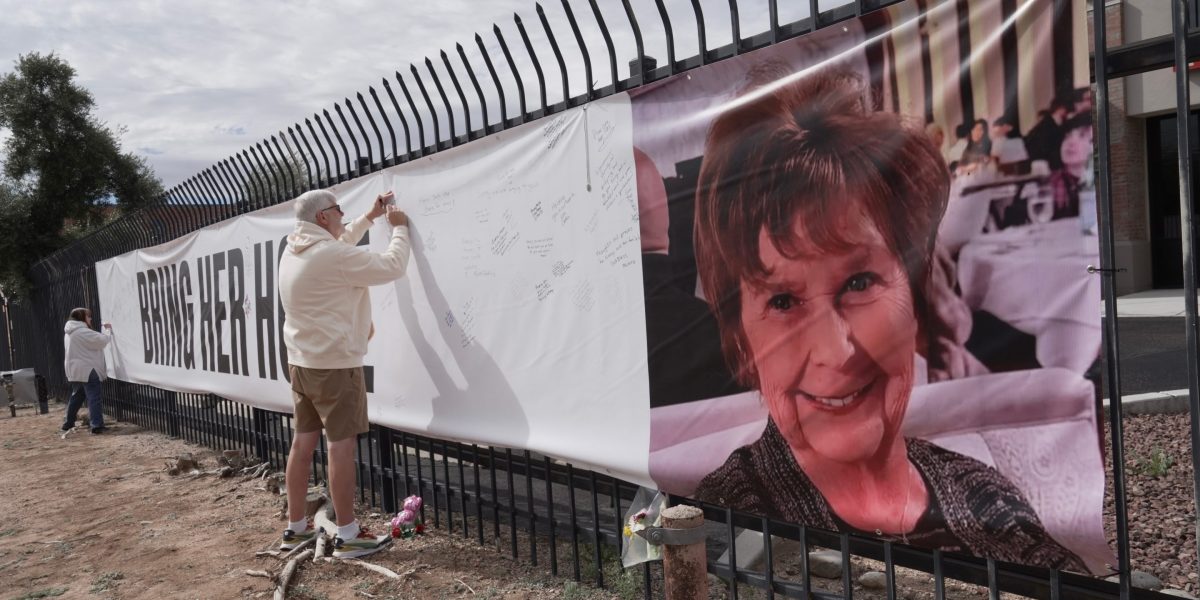
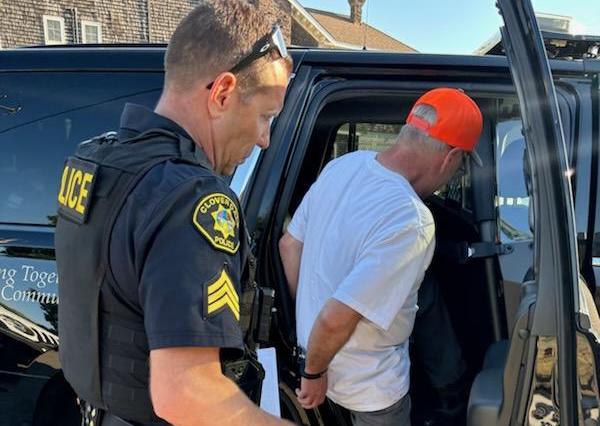
Investigators may use DNA genealogy databases to match DNA from Nancy Guthrie's case and potentially identify suspects or relatives when CODIS yields no matches.


Artificial intelligence
fromwww.scientificamerican.com
1 month agoCracking DNA's dark matter with AI, surviving two days without lungs, and uncovering a botanical mystery
AlphaGenome, an AI model, predicts DNA segment functions to expand understanding of genetic code and its links to proteins and disease.
fromAdvocate.com
2 months agoRenee Good's family shares independent autopsy results, says DOJ is withholding evidence
The 37-year-old poet and mother-of-three was killed by an ICE officer January 7 in Minneapolis, Minnesota during what Department of Homeland Security Secretary Kristi Noem called "targeted operations" near East 34th Street and Portland Avenue. Noem alleged that "rioters began blocking ICE officers," claiming that Good "weaponized" her vehicle by attempting to run over agents. Noem labeled Good's actions as "domestic terrorism" and those of the officers as "self defense," but multiple eyewitness accounts and video footage from the incident contradict this.
US politics
fromIndependent
2 months agoGardai investigating murder of Kerry farmer Mike Gaine hope for breakthrough from US DNA experts
Gardaí investigating the murder of Michael Gaine on his farm in Co Kerry almost a year ago are putting "enormous effort" into solving the crime, with hopes pinned on crime scene analysis by US forensic experts returning positive leads.
Miscellaneous


fromBoston.com
2 months agoGenealogists release image in attempt to identify child's skull found in N.H. store in the 1990s
Investigative genetic genealogists are asking for the public's help to identify a child whose skull was seized from a Seabrook, N.H., business more than 30 years ago. The DNA Doe Project, a California-based nonprofit that builds DNA profiles from unidentified human remains, released a new facial reconstruction on Monday. The group also announced that the skull - believed to belong to a girl between the ages of 7 and 9 - has ancestral roots on the Greek island of Chios.
US news
[ Load more ]