#durable-textiles
#durable-textiles
[ follow ]
Fashion & style
fromdesignboom | architecture & design magazine
1 day agocollagen from dinosaur shapes the designer handbag made with lab-grown leather
Enfin Levé introduces a handbag made from lab-grown T-Rex leather, utilizing collagen from fossilized dinosaur bones, showcased at Art Zoo Museum in Amsterdam.



Alternative transportation
fromSustainable Bus
3 days agoNew certified Ultrafabrics collections target durability and compliance in passenger transport interiors - Sustainable Bus
Ultrafabrics launches new certified collections for passenger transport, combining durability, aesthetics, and sustainability in high-performance upholstery fabrics.
fromBikerumor
1 day agoArc'teryx Enters the MTB World With the Rhoam Collection
"Our heritage is rooted in building gear for people who live and thrive in the mountains, and that includes our own team. Many of us ride; our athletes ride. Mountain biking is part of our culture," Ashley Anson, VP Design at Arc'teryx, said.
Bicycling
fromwww.theguardian.com
2 days agoThe dark side of the balloon boom is it time they were banned?
In 2019, scientists found that balloons eaten by seabirds are more likely to kill them than other kinds of plastic yet they do not seem to have been earmarked in the same way as, for example, plastic straws.
Public health
Design
fromYanko Design - Modern Industrial Design News
4 days agoBiomimetic Architecture Reaches New Heights With This Bird-of-Paradise Yoga Space - Yanko Design
Thilina Liyanage's architecture translates animal gestures into functional designs, exemplified by the Rifle Bird Yogashala inspired by the Victoria's riflebird's courtship display.
OMG science
fromYanko Design - Modern Industrial Design News
1 week agoResearchers turned Sawdust Waste and Watermelon Seeds into Recyclable Fire-resistant Panels - Yanko Design
Sawdust can be transformed into a strong, fire-retardant composite material using struvite and an enzyme from watermelon seeds.
Design
fromdesignboom | architecture & design magazine
4 days agoartwork uses floating fabric corridor and bodily movement to visualize climate change
Ryo Yamada's Perception Corridor is an immersive installation in Edinburgh that explores perception and environmental awareness through a 40-meter fabric corridor.
fromArchDaily
1 week agoDesigning for Obsolescence in an Age of Perpetual Upgrades
In the nineteenth century, entire railway networks became obsolete almost overnight, not due to physical deterioration, but because of changes in the technical standards that supported them. The expansion of railroads across Europe and North America adopted different track gauges, and as a dominant standard gradually emerged, these infrastructures became incompatible with one another.
Renovation
fromWIRED
2 weeks agoA New Generation of Big Water Filters-Without the Plastic
Most water filter pitchers are made of BPA-free plastic. But as new research shows that bottled-water drinkers ingest tens of thousands of excess microplastic particles, wellness lovers have begun to look askance at water filters that are themselves made of plastic.
Beer
Arts
fromTime Out New York
2 weeks agoThis company transforms discarded Broadway materials into limited-edition fashion and home items
Scenery Bags rescues discarded Broadway stage materials and transforms them into limited-edition handbags, accessories, and jewelry, preserving theatrical history while diverting waste from landfills.
#sustainable-fashion


Fashion & style
fromEarth911
2 weeks ago11 Sustainable Men's Clothing Brands for Spring & Summer Style
Clothing production consumes massive water resources and generates significant carbon emissions, but sustainable brands using organic, recycled fibers and repair services offer viable alternatives to fast fashion's environmental damage.
Fashion & style
fromBusiness Matters
3 weeks agoWhy Sustainable Fashion is More Than Just a Trend: Clothing, Bags, and Accessories for a Better Future
Sustainable fashion has moved from niche to mainstream as consumers increasingly demand transparency about production, labor practices, and environmental impact of clothing and accessories.
Fashion & style
fromYanko Design - Modern Industrial Design News
3 weeks agoOld Clothes Never Die, They Just Become Flower Pots - Yanko Design
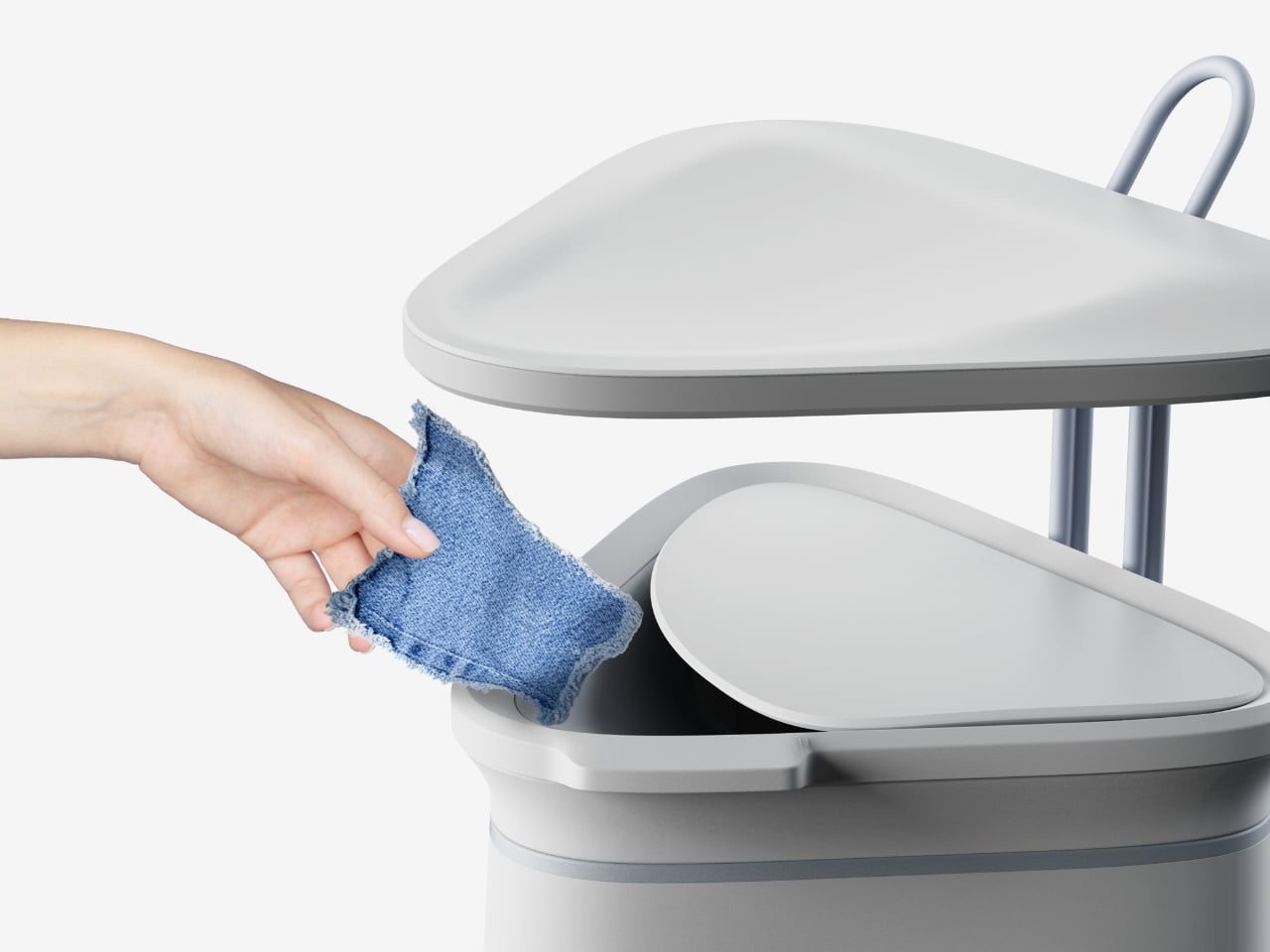
ByBye is a countertop machine that transforms worn clothing into usable flower pots through grinding, compression, and heat, reframing garment disposal as a system of reform rather than waste.


fromMindful
3 weeks agoClothing Designer Eileen Fisher Models Mindfulness
Despite having to haul a dozen dumpster-loads of damaged goods out of the offices and the nearby Lab Store, to the tune of $1.5 million, Eileen said at the time, 'It was just stuff.' You can only imagine the emotions that might arise in a chief executive if they saw their sewage-soaked products floating by. Eileen and her staff did not linger there. They mobilized quickly-organizing carpools, impromptu meeting spaces, and arranging interest-free loans for staff needing cash during the crisis.
Women
Miscellaneous
fromwww.theguardian.com
1 month agoA delightful day at the dump: The trick is not to leave with more stuff than I arrived with!'
A recycling centre's ReUse shop in London salvages discarded items including unusual specimens like embalmed animals, vintage furniture, and antiques to resell rather than send to landfill.
Fashion & style
fromEntrepreneur
2 weeks agoYour 'Organic' TShirt Still Hurts the Planet More Than You Think
Organic and sustainable fashion brands undermine their environmental messaging by packaging products in excessive single-use plastic, contradicting their eco-friendly positioning and contributing significantly to global plastic waste.


Design
fromdesignboom | architecture & design magazine
4 weeks agocompostable bicycle seat takes shape as mycelium grows around the wooden saddle
Myco Seat uses mycelium networks grown through agricultural waste to create a compostable, functional bicycle seat with a wooden saddle designed using computational mapping.
fromFortune
3 weeks agoPlastics, fertilizers, clothing, medicines and electronics: $100-a-barrel oil has huge downstream consequences | Fortune
Crude oil is a complex mixture of hydrocarbons - molecules made mainly of carbon and hydrogen. Refineries and chemical plants separate and transform these molecules into smaller chemical building blocks known as petrochemicals. Some of the most important petrochemical building blocks include chemicals such as ethylene, propylene and benzene.
Environment
fromEarth911
4 weeks agoWhat Can You Do With Your Old Electrical Wires and Cables?
According to the UN's Global E-waste Monitor 2024, a record 62 million metric tons of electronic waste was generated worldwide in 2022, an 82% increase since 2010. E-waste is projected to reach 82 million metric tons by 2030. In the U.S. alone, roughly 8 million tons of e-waste is discarded each year.
Environment
fromFast Company
1 month agoThese designers made a sustainable new building material from corn
This corn-based construction material was made by Manufactura, a Mexican sustainable materials company, and it imagines a second life for waste from the most widely produced grain in the world. The project started as an invitation by chef Jorge Armando, the founder of catering brand Taco Kween Berlin, to find ways he could reintegrate waste generated by his taqueria into architecture. A team led by designer Dinorah Schulte created corncretl during a residency last year in Massa Lombarda, Italy.
Science
fromwww.npr.org
2 months agoPolyester clothing has been causing a stir online. But how valid are the concerns?
Your eyes don't deceive you. The use of polyester has ballooned with time, according to Henry Navarro Delgado, an associate professor at Toronto Metropolitan University's school of fashion. It's partly because polyester can be quite useful, he said. It is a type of plastic made from petroleum compounds that are cooled and stretched into yarn, according to Michael Palladino, a fashion industry veteran and lecturer at Kingsborough Community College's business of fashion program in New York.
US news
fromDaily Coffee News by Roast Magazine
1 month agoReport: Sustainability Must Be Embedded Into Core Buying Practices to Drive Change
"Ironically, many if not most of these 'sustainability' projects remain disassociated from companies' core procurement strategies, meaning the coffee produced from these projects is not necessarily bought by the companies involved, or only in minimal quantities," the paper states. "And for the coffee that is purchased, prices do not factor into the project design, despite the fact that price is the single variable impacting farmer income that is in the direct control of companies."
Coffee
Design
fromdesignboom | architecture & design magazine
2 months agowearable collection repurposes leftover leather powder as translucent composite material
OBRO converts leather manufacturing offcuts into semi-transparent PVC composite by embedding finely ground leather powder to create visually layered, tactile, durable sheets.



fromdesignboom | architecture & design magazine
1 month agorecontextualizing human hair waste as potential raw material for design
This research-based design project by Laura Oliveira investigates discarded as a potential raw material for sustainable design applications. Human hair is produced continuously and in large quantities through everyday grooming practices, yet it is almost always treated as waste once separated from the body and typically disposed of in landfills. Despite its material properties, strength, flexibility, and durability as a keratin-based protein fiber, its remains uncommon within design and research contexts.
Design
fromDocumentjournal
1 month agoOnce upon a time, fashion got dirty
In the show, "dirty" extends to anything that breaks fashion's pact with propriety. Here are clothes caked in grime, blotted with makeup, stiffened by salt, pieced from trash, frayed, and faded. The garments span decades, from the 1980s through the mid-2000s, when the likes of Vivienne Westwood and Jean Paul Gaultier built their fame on defying convention, to today, when corporatization has made such daring increasingly rare. But forgoing practicality frees certain designers from the demands that the body be polite-and thereby policed.
Fashion & style
Fashion & style
fromdesignboom | architecture & design magazine
1 month agofour typologies explores decentralized upcycling fashion factories in digital space
Digital spatial systems enable decentralized Garden Factory typologies and nonlinear upcycling workflows that support iterative, small-batch fashion production across multiple scales.
Design
fromwww.archdaily.com
2 months agoFrom Material Intelligence to Circularity: Lessons from Architecture in 2025
Architects prioritize material innovation in 2025—agricultural waste, recycled plastics, and living materials—balancing tradition, circularity, and material intelligence for resilient, low-carbon construction.
fromDesign Milk
2 months agoDesigntex + nanimarquina Introduce New Textiles as Acts of Care
The collaboration brings together Designtex's deep expertise in high-performance contract textiles and nanimarquina's poetic command of craft, tactility, and the beauty of the imperfect. For both teams, the partnership emerged from an immediate sense of kinship - a shared language of material integrity, color sensitivity, and a respect for heritage techniques reinterpreted for contemporary spaces. "We did that by using performance yarns and intentionally embedding imperfections into the weaving process."
Design
fromEarth911
2 months agoGuest Idea: 7 Solutions to Give Your Old Sunglasses a Second Life
Just like that coffee cup, eyewear is a complex fusion of materials. Metal hinges are screwed into polymer frames, which hold chemically-coated lenses. This mix of metals, plastics, and coatings means standard sorting machines cannot process them. As a result, they are rejected as contamination and sent directly to landfills, where they contribute to non-biodegradable waste. Unlike a disposable paper cup, however, a pair of sunglasses is built for durability. Its high-quality components make it a perfect candidate for repair, reuse, or reinvention.
Environment
fromInsideHook
1 month agoCould Recycled Plastic Lead to More Housing?
When you think about building a house, what materials come to mind? Brick, wood and metal all come to mind; there are also some very distinctive glass houses out there. (Even if their occupants should refrain from throwing stones - though honestly, that's a good tip for indoor living in general.) A group of MIT researchers have come up with a very different way of making buildings, and it's one that also addresses an ongoing waste issue."We've estimated that the world needs about 1 billion new homes by 2050. If we try to make that many homes using wood, we would need to clear-cut the equivalent of the Amazon rainforest three times over," explained AJ Perez, who conducts his research in the MIT Office of Innovation. The title of a paper written by Perez and his colleagues - "Design, Manufacture and Testing of Structural Trusses Using Additively Manufactured Polymer Composites" - gives a sense of the solution that they have in mind.
Environment
fromEarth911
2 months agoRecycling Mystery: Black-Colored Plastic
Black plastic gets its color from carbon black pigment and is commonly used in food containers, such as meat or produce trays and take-out containers, as well as disposable coffee lids, plastic bags, and hard plastic items like DVD cases and planters. While plastic is one of the categories of things that we are encouraged to recycle - when we can't reuse or repurpose it - not all black plastic items can be recycled.
Environment
fromArchDaily
2 months agoCircular Composites: Designing for a Sustainable Future
One of the earliest large-scale examples of composite materials can be found in the Great Wall of China, where stone, clay bricks, and organic fibers such as reeds and willow branches were blended to create a resilient and lasting structure. These early techniques reveal a timeless intuition: distinct materials, when combined thoughtfully, produce properties unattainable by any single element.
Environment
fromwww.kaltblut-magazine.com
2 months agoThe Rural Cut
The Rural Cut places vintage fashion in Lebanon's Bekaa Valley, among vineyards, open fields, and the animals that inhabit the land. As a Beirut-based stylist, I worked with a fully Lebanese team to create a shoot that feels authentic, where each garment and every frame reflects the textures, history, and rhythm of the rural landscape. Photography by Angele Basile / Instagram: @angelebasile Styling by Rinad Saad / Instagram: @rinaaaaddd
Fashion & style
fromwww.theguardian.com
2 months agoRecycled plastic packaging claims are misleading, say experts
Europe's supermarket shelves are packed with brands billing their plastic packaging as sustainable, but often only a fraction of the materials are truly recovered from waste, with the rest made from petroleum. Brands using plastic packaging from Kraft's Heinz Beanz to Mondelez's Philadelphia use materials made by the plastic manufacturing arm of the oil company Saudi Aramco. The Saudi state-owned holding opposes production cuts under the UN plastic treaty and is the world's largest corporate greenhouse-gas emitter (over 70m tonnes up to 2023).
Environment

[ Load more ]