#dyslexia-support
#dyslexia-support
[ follow ]
#neurodiversity #autism #accessibility #adhd #education #mental-health #dyslexia #special-education #ai-in-education

#neurodiversity
Mental health
fromIndependent
1 day agoAsking for a friend: 'My son has just been diagnosed with autism and ADHD. My husband also got tested and has ADHD. How will all this affect our relationship?'
Navigating the challenges of neurodiversity in a family can be overwhelming, especially with multiple diagnoses affecting communication and relationships.


Mental health
fromIndependent
1 day agoAsking for a friend: 'My son has just been diagnosed with autism and ADHD. My husband also got tested and has ADHD. How will all this affect our relationship?'
Navigating the challenges of neurodiversity in a family can be overwhelming, especially with multiple diagnoses affecting communication and relationships.
fromDaily Mom magazine
5 days agoSpecial Needs Summer Camp For Children, Special Needs Camp
Special needs summer camps are specialized programs designed for children and young adults with a range of disabilities, including autism spectrum disorder (ASD), ADHD, Down syndrome, and other developmental or physical challenges.
Parenting




Higher education
fromPadailypost
3 months ago38% of Stanford undergrads claim a disability; many get extra time on tests
38% of Stanford undergraduates are registered as disabled, with 24% receiving accommodations, reflecting a national trend of expanded disability definitions and relaxed verification requirements since 2008.




Artificial intelligence
fromeLearning Industry
2 weeks agoAI-Assisted Instructional Design Without The Risk: A Practical QA Workflow That Prevents Hallucinations And Improves Learning
AI excels at structural tasks but hallucinates facts dangerously in compliance, safety, and technical training, requiring line-by-line verification before deployment.
Higher education
fromPsychology Today
4 weeks agoTeachers Are the Architects of Human Potential
Schools in 50 years will likely shift from knowledge transmission to developing human potential, with teachers as facilitators fostering creativity, resilience, and adaptive thinking rather than standardized achievement.
Online learning
fromeLearning Industry
2 weeks agoBarriers To Learning: Types, Causes And How To Overcome Them
Barriers to learning are internal or external factors preventing learners from engaging with, understanding, or applying knowledge, affecting learning outcomes across educational and workplace contexts.
fromPsychology Today
1 month agoManaging ADHD in the Workplace
Having ADHD affects executive functioning skills, those mental processes headquartered in the prefrontal cortex that are responsible for planning, prioritizing, regulating attention, managing time, and sustaining effort. In a fast-paced environment, demands on such skills can expose areas of vulnerability.
Miscellaneous
Online learning
fromeLearning Industry
2 weeks agoAccessible eLearning: How Inclusive Digital Education Improves Learning For Everyone
Accessible eLearning removes barriers for all learners by incorporating features like screen readers, captions, and keyboard navigation, enabling full participation in digital education regardless of disabilities or technical limitations.
Education
fromLos Angeles Times
2 weeks agoGamified math. Video read-alouds. Why parents are saying no to screens in class
Parents across California are organizing to reduce excessive screen time in schools, citing concerns that digital learning replaces hands-on instruction and peer interaction during critical developmental years.
fromTreehouse Blog
4 weeks agoUltimate Guide to Ethical AI Scalability in EdTech
Bias risks: AI can amplify inequalities, like mislabeling non-native English writing as AI-generated. Privacy concerns: Schools face rising cyberattacks, and data misuse risks are high. Accountability: Human oversight is crucial to prevent over-reliance on AI.
Higher education


Online learning
fromeLearning Industry
3 weeks agoMaking Video-Based Learning Accessible: A Practical Guide
Video-based learning dominates digital education but lacks accessibility features, creating barriers for 1.3 billion people with disabilities globally, requiring captions, transcripts, audio descriptions, and keyboard controls for inclusive design.
fromeLearning Industry
3 weeks agoBalancing Personalization nd Privacy n Adaptive Learning
Adaptive learning refers to educational systems that use data, algorithms, and Artificial Intelligence to tailor learning experiences to individual users. Unlike traditional one-size-fits-all instruction, adaptive models adjust content, pacing, assessments, and feedback based on learner performance, behavior, and preferences.
Online learning

fromPsychology Today
2 months agoHow to (and How Not to) Help People Who Are Blind
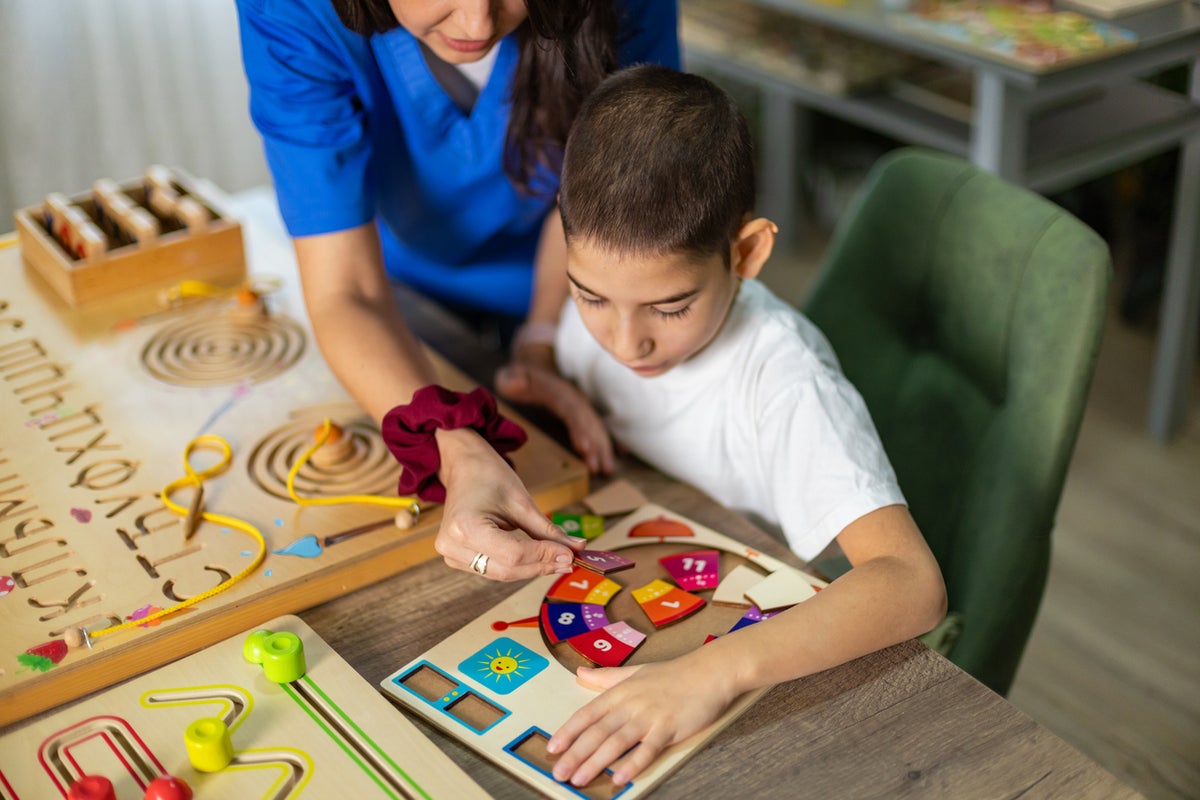
When I take a walk in my neighborhood, my white hair, dark glasses, and white cane shout to the world that I am an older blind man. Some passers-by assume that I am lost and ask if I need help. It is true that blind people sometimes need help when using a mobility aid (a white cane or guide dog) to navigate their physical environment. However, once a person becomes proficient at traveling with a mobility aid, they typically need much less help.
Social justice

fromwww.theguardian.com
1 month agoEnglish secondary schools must offer inclusion areas for neurodiverse and Send pupils
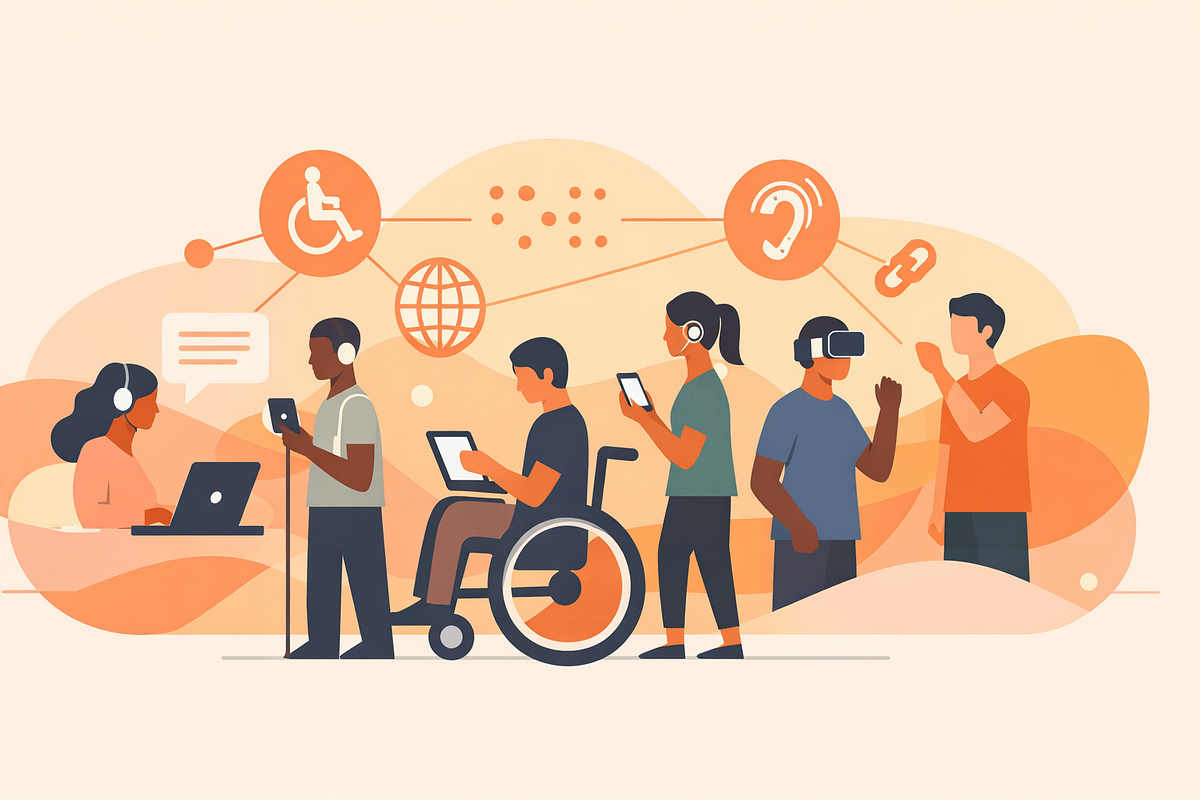
Universal inclusion bases are spaces away from classrooms where children with additional needs can get support for some lessons. They are seen as a key part of government plans to overhaul special educational needs and disabilities (Send) support. Ministers have been frantically promoting a vision of a more inclusive education system, ahead of the publication of a landmark schools white paper, widely seen as the most high-stakes policy reform the government has attempted since the welfare rebellion last year.
UK politics
fromPsychology Today
1 month agoThe Science of Belonging for People With IDD
Developmental disabilities are actually quite common. In the United States, about 1 in 6 children has a developmental disability (CDC, 2024). Intellectual and developmental disabilities (IDD) are a group of neurodevelopmental conditions usually present at birth that affect the trajectory of a person's physical, intellectual, and/or emotional development (National Institute of Child Health and Human Development, 2021). Conditions such as Down Syndrome, Autism, Fragile X, Cerebral Palsy, and others are examples of intellectual or developmental disabilities.
Public health


fromwww.theguardian.com
1 month agoReading and writing can lower dementia risk by almost 40%, study finds
US researchers found that engaging in intellectually stimulating activities throughout life, such as reading, writing or learning a new language, was associated with a lower risk of Alzheimer's disease, the most common form of dementia, and slower cognitive decline. The study author Andrea Zammit, of Rush University Medical Center in Chicago, said the discovery suggested cognitive health in later life was strongly influenced by lifelong exposure to intellectually stimulating environments.
Public health
Artificial intelligence
fromeLearning Industry
1 month agoThe Promise Of Personalized AI Education In A Country With Many Cultures
AI-driven learning platforms personalize instruction in Indian schools by analyzing student interactions to provide individualized support and expand equitable access to tailored education.
fromPsychology Today
1 month agoAI Can Help Solve the Reading Achievement Gap
During this Black History Month, let us attend for a moment to the reading achievement gap, as it affects all of us regardless of race. Here's why. Lack of literacy is linked to some of the biggest and costliest problems in society: spiralling special education spending, school dropouts, juvenile delinquency, incarceration, poverty, and mental health (NSBA, 2019; Vacca, 2008; Vacca, 2004; Nelson & Gregg, 2012). We all pay for these problems, at the very least in taxes.
Education
fromPsychology Today
2 months agoTech Tools for Spelling May Stunt Children's Literacy Growth
Rather than using the visual word form area in the reading brain, where images of correct spellings are stored in long-term memory for automatic proficient reading and composing, kids use technology tools, eliminating human thinking and making the machine do the work. These tools can circumvent cognitive processes, hindering elementary students from developing a large bank of correctly spelled words essential for automatic reading and literacy.
Education
fromBuzzFeed
2 months agoI Let My Neurodivergent 14-Year-Old Leave School. The Change In Her Has Been Extraordinary.
When I shared the reasoning behind this decision on Instagram, my DMs exploded with messages from thousands of parents quietly navigating the same issues. Watching their capable, intelligent children crumble and wondering if they're the only ones considering alternatives. Many of them told me they feel like failures for even thinking about stepping outside the system. But we're not failing ― the system is.
Education
Education
fromFuturism
2 months agoNew Study Finds AI in Schools Is Undermining Kids' Social and Intellectual Development
Generative AI in schools currently poses greater risks than benefits, undermining children's cognitive development, learning engagement, memory retention, and social skill formation.
[ Load more ]