#echizen-lacquerware
#echizen-lacquerware
[ follow ]

fromYanko Design - Modern Industrial Design News
2 weeks agoCasio's special edition calculator handcrafted using traditional Japanese lacquering technique - Yanko Design
The S100X Urushi Edition, also known as The Special One, is a limited edition desktop calculator designed using a century-old Japanese Urushi lacquer technique.
Gadgets
fromThe Verge
2 weeks agoCasio's new $600 calculator is a work of art
Casio's response to that question is its new S100X featuring a traditional Japanese hand-painted finish using sap from the lacquer tree, giving the calculator a glossy black finish with warm red highlights around the edges. It somehow looks even more luxurious than if Casio had simply gold-plated the S100X.
Wearables
fromColossal
2 weeks agoRestrained Emotions Simmer in Shinsuke Inoue's Tender Wood Sculptures
I have virtually no idea what the finished piece will look like until I actually begin working with the wood. As a result, the form often emerges as I carve, and I frequently change my plans midway through the process. Naturally, I keep the many failures a secret.
Arts
Typography
fromYanko Design - Modern Industrial Design News
3 weeks ago8 Best Japanese Stationery Finds So Clever You'll Question Why the Rest of the World Even Bothers - Yanko Design
Japanese stationery applies precision engineering to everyday writing tools, solving friction points others accept as normal through thoughtful design details.
Design
fromYanko Design - Modern Industrial Design News
2 weeks ago8 Best Japanese Spring Home Upgrades That Make Tiny Rooms Feel Like a Wabi-Sabi Sanctuary - Yanko Design
Japanese design philosophy emphasizes deliberate minimalism where less means intentional rather than empty, achieved through functional objects rooted in craft traditions and spatial intelligence.
Renovation
fromYanko Design - Modern Industrial Design News
2 weeks agoThis Crumbling Kyoto Home Was Rebuilt as a Wabi-Sabi Sanctuary - and Every Detail Is Intentional - Yanko Design
A Kyoto renovation restores a traditional Sukiya residence by removing decades of alterations, creating livable spaces that honor historical principles while serving contemporary needs.
Cooking
fromYanko Design - Modern Industrial Design News
4 weeks ago7 Best Japanese Kitchen Gadgets & Tools So Clever They Make Every Meal Feel Like a Ceremony - Yanko Design
Japanese kitchenware prioritizes single-purpose precision and minimalist design over multifunctionality, with tools refined through centuries of regional manufacturing expertise that create superior cooking performance.
Miscellaneous
fromArchDaily
1 month agoKumamoto Exhibition Explores Shoei Yoh's Pioneering Timber Structures and Computational Design
Shoei Yoh, a pioneering Japanese architect born in Kumamoto in 1940, revolutionized timber construction and computational design through rational methodology and elastic architecture principles.
fromdesignboom | architecture & design magazine
3 weeks agoYYAA rebuilds the eastern half of a prewar rowhouse in japan
The clients chose to remain in Yagi-cho while contributing to the continued use of its older building stock. With the support of a local non-profit organization involved in community development, they acquired the eastern portion of a large two-unit rowhouse that had remained vacant for nearly three decades.
Renovation
fromdesignboom | architecture & design magazine
4 weeks agosculptural steel ladder imitates the flowing geometries of brass musical instruments
SO KOIZUMI DESIGN has developed Resonique, a ladder that explores the relationship between functional structure and sculptural form. The project draws on the structural logic of ladders while referencing the flowing geometries associated with brass musical instruments. Through this combination, the object shifts from a purely utilitarian tool toward a design piece that engages both function and spatial presence.
Design
Graphic design
fromdesignboom | architecture & design magazine
1 month agoissey miyake crafts sunglasses with eight concave lenses inspired by japanese ceramic works
Issey Miyake Eyes releases UROKO sunglasses featuring eight concave lenses inspired by Japanese potter Shoji Kamoda's ceramic works, combining 3D printing with traditional craftsmanship aesthetics.
Coffee
fromYanko Design - Modern Industrial Design News
1 month ago6 Camping Mugs From Japan That Make Coffee Taste Better (Science Says So) - Yanko Design
Japanese ceramic mugs enhance coffee experience through superior heat retention, neutral flavor profiles, and handcrafted design that influences taste perception and creates intentional ritual.
fromYanko Design - Modern Industrial Design News
1 month agoThese Sculptural Japanese Lamps Come in 100 Colors for $150 - Yanko Design
Designed by Michael Kritzer, an industrial designer with Red Dot, iF, and Cannes Lions awards to his name, Dollights are inspired by creative Kokeshi dolls, those beautifully varied Japanese wooden figures that range from traditional to wildly expressive. The connection isn't literal. You won't mistake these for dolls on a shelf. But the DNA is there in the proportions, that satisfying relationship between a rounded head and a tapered body, the way each silhouette feels like it has its own quiet personality.
Design
Design
fromYanko Design - Modern Industrial Design News
1 month agoA 400-Year-Old Japanese Candleholder, Upgraded Again - Yanko Design
Dai Furuwatari's Pendulum Candleholder thoughtfully updates the traditional Japanese teshoku by adding a hanging hook and adjustable pendulum mechanism, making it both portable and versatile for modern use.
fromPsychology Today
2 months agoKintsugi: The Japanese Art of Being Remade
Kintsugi 金継ぎ is known as the Japanese art of putting broken things back together, like broken pottery, using materials mixed with powdered gold and other elements. Instead of hiding damage, this technique celebrates the restoration of an object once viewed as broken, flawed, or imperfect. This same process can be seen as a metaphor for addiction recovery. Even for people with addiction who willingly choose recovery, there's an element of being remade that can't be ignored. Addicts often go through a period of denial.
Mental health
Gadgets
fromYanko Design - Modern Industrial Design News
2 months agoPilot Just Turned a 400-Year-Old Japanese Craft Into Living Art - Yanko Design
Arita porcelain vases coated with Pilot's thermochromic ink reveal a celadon glaze when heated, creating unique, time-based color transformations that return as they cool.
fromOpen Culture
2 months agoDiscover Ichi-go Ichie, the Japanese Art of Savoring Every Moment
The Bud­dhis­ti­cal­ly inflect­ed " ichi-go ichi‑e" is just one in the vast library of yoji­juku­go, high­ly con­densed apho­ris­tic expres­sions writ­ten with just four char­ac­ters. (Oth­er coun­tries with Chi­nese-influ­enced lan­guages have their ver­sions, includ­ing sajaseon­geo in Korea and chéngyǔ in Chi­na itself.) It descends, as the sto­ry goes, from a slight­ly longer say­ing favored by the six­teenth-cen­tu­ry tea mas­ter Sen no Rikyū, " ichi-go ni ichi-do " (一期に一度).
Mindfulness
Design
fromYanko Design - Modern Industrial Design News
1 month agoJapan Just Solved Spring Home Refresh With 8 Minimalist Accessories That Make Your Space Feel New - Yanko Design
Small, restrained Japanese craft objects subtly reset and enrich interior spaces through texture, scent, sound, light, and purposeful minimalism.
fromOpen Culture
2 months agoThe Ancient Tool Used in Japan to Strengthen Memory & Focus: The Abacus
William Gib­son famous­ly observed that the future is already here, it's just not even­ly dis­trib­uted. That line is often thought to have been inspired by Japan, which was already pro­ject­ing a thor­ough­ly futur­is­tic image, at least in pop­u­lar cul­ture, by the time he made his debut with Neu­ro­mancer in 1984. But as any­one who's spent enough time in the coun­try under­stands - albeit not with­out frus­tra­tion - even twen­ty-first-cen­tu­ry Japan remains in many ways a pre-dig­i­tal soci­ety.
Education
fromYanko Design - Modern Industrial Design News
1 month agoThese Lace-Shade Lamps Transform Family Heirlooms Into Memorable Floor Lighting - Yanko Design
In Lana Launay's Kinship series, light does more than illuminate space. It acts as a living archivist, revealing, preserving, and narrating stories embedded within inherited textiles. Through works such as Kinship I and Kinship II, the artist transforms antique doilies, lace fragments, and stockings passed down through generations into sculptural lighting forms that do not simply display history but actively project it into the present.
Arts
fromdesignyoutrust.com
1 month agoThis Artist Creates Superhero and Comic Watercolors With Traditional Japanese Motifs
Justin Bieber for Calvin Klein Spring 2015 Ad Campaign In A Parallel Universe: Artist Exposes Sexism By Switching Up Gender Roles In Old-School Ads Russian Blogger Makes Parodies Out Of Celebrity Photos, And More Than 20,000 Followers On Instagram Approve 10 Famous Movie Titles Written Using Negative Space The World of Modern Graphic Design & Typography by Kyle Kemink Chinese Tech Companies Hiring 'Pretty' Girls to Motivate Male Employees by Chatting, Playing Ping Pong and Buying them Breakfast
Typography
Gadgets
fromYanko Design - Modern Industrial Design News
2 months ago8 Best Japanese Kitchen Gadgets & Tools That Make Cooking Feel Zen - Yanko Design
Japanese kitchen design prioritizes minimalist, intentional tools that transform cooking into a deliberate, satisfying ritual through refined form, material, and function.
fromThe Conversation
2 months agoHow tourism, a booming wellness culture and social media are transforming the age-old Japanese tea ceremony
One of Japan's most recognizable cultural practices - the Japanese tea ceremony, known as chanoyu, or chadō - is being reshaped by tourism, wellness culture and social media. Matcha, the Japanese powdered green tea that is used during the ceremony, has entered the global marketplace. Influencers post highly curated tearoom photos, wellness brands market matcha as a "superfood," and cafés worldwide present whisked green tea as a symbol of mindful living.
Philosophy
Arts
fromdesignboom | architecture & design magazine
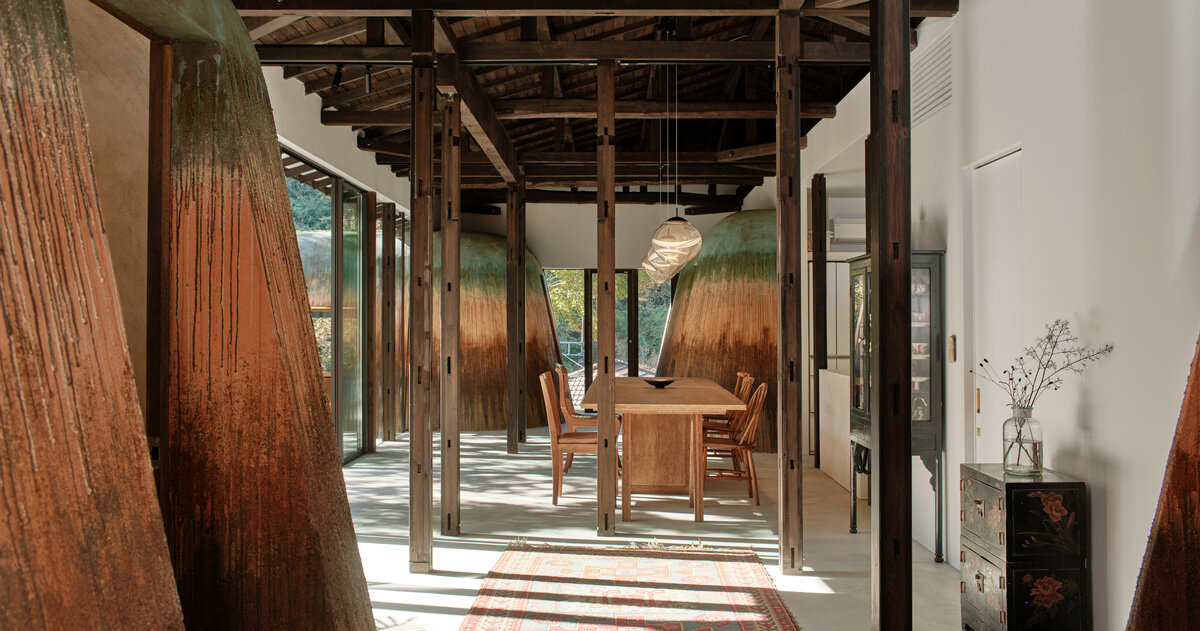
2 months agoirregular voids reveal cave-like, geological interior inside japanese residence
An existing house in Kannawa, Beppu, is transformed into a cavernous void resembling geological formations, creating an experience of architecture as perception rather than enclosure.
Design
fromdesignboom | architecture & design magazine
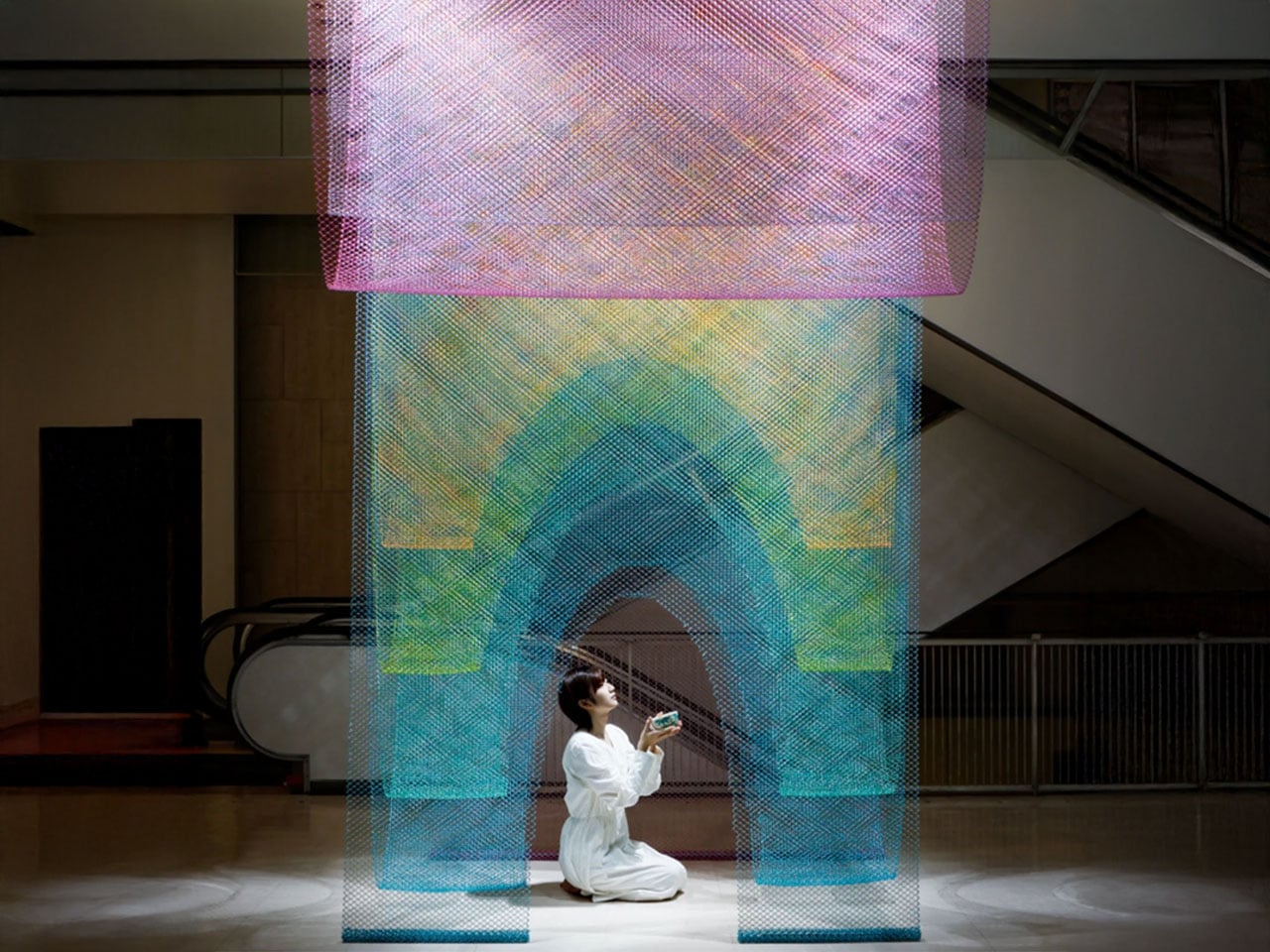
2 months agoluminous layers of colored wire mesh weave tea ceremony house by moriyuki ochiai
Layered wire mesh creates permeable tea house enclosures that modulate light, sightlines, airflow, and spatial perception through material, layering, and moiré effects.
Design
fromYanko Design - Modern Industrial Design News
2 months agoThis Japanese Cabinet Uses Real Forest Branches as Doors - Yanko Design
Adjustable cabinet uses sliding Japanese cypress branches to customize openness and privacy, combining reclaimed wood’s natural asymmetry with functional, responsive storage.
fromYanko Design - Modern Industrial Design News
2 months ago7 Best Japanese-Designed Valentine's Gifts That Look $1000+, But Cost Half That - Yanko Design
Japanese design has spent centuries perfecting the balance between restraint and richness. These seven gifts embody that philosophy, where every material choice and geometric decision carries intention. From transparent polycarbonate that frames music like sculpture to hand-planted bristles that honor century-old brush-making techniques, each piece reflects the considered craftsmanship that typically commands luxury prices. The precision is palpable, the materials exceptional, yet the cost remains accessible.
Design
Design
fromYanko Design - Modern Industrial Design News
1 month ago5 Sushi-Inspired Designs For Japanese Product Fans That Look So Realistic You'll Want to Eat Them - Yanko Design
Sushi exemplifies minimalist design—clarity, precision, and restraint guide creators to prioritize essential elements and function for lasting, purposeful aesthetics.
fromApartment Therapy
2 months ago"Instantly Calming": 8 Colors Designers Love in Trendy Japandi Interiors
If there was only one interior design style setting the tone in 2026, it would be Japandi. Apartment Therapy's State of Home Design survey identified Japandi style as one of the year's top design aesthetics, according to insights from 140 designers - and it's easy to see why. As more people strive to create spaces that feel calming, intentional, and grounded in nature, Japandi's blend of Japanese restraint and Scandinavian warmth feels especially timely.
Design
[ Load more ]