Artificial intelligence
fromThe Nation
2 days agoThe AI Boom Is a Climate Bust
AI is increasingly being used to spread climate change disinformation, complicating efforts to combat the climate crisis.
The findings confirm research that I conducted more than 20 years ago. Under the guise of the Comedy Research Project, Timandra Harkness and I performed a randomised clinical trial to assess whether or not science can be funny.
Bondi's official DOJ portrait was reportedly spotted in the trash mere minutes after Donald Trump gave her the boot. Just straight to the bin, like last week's takeout and this week's credibility.
Kamrooz Aram is everywhere this year, from Mumbai Art Week to the Whitney Biennial, and critic Aruna D'Souza is grateful. She pens a beautiful meditation on his work, reading his abstract paintings as not simply a denunciation of Western modernism nor a reassertion of Islamic visual motifs, but something else entirely - something gestural, exuberant, riotous, and incomparably his own.
On this site birthed in 1963 lays lain layed lies the location original whereabouts around here of the Berkeley Copywriter's Guild, A place where word geeks were often found with their smug understanding of grammar and their tiny worn-down blue pencils marking up all the fun words for boring ones.
Framing the 2026 festival with the theme 'Against the Current,' we see that there's no one way to interpret or contend with this present moment. From investigative documentaries to family-friendly animations to late-night eco-horror shorts, this year's slate of films celebrates those who build resilience and seek solutions.
Hoppers, like Pixar's pre-Disney films, is a delight. The beavers' world is immersive and richly realized, grounded in science but never dry. The plot zigs and zags between moments of absurdity and emotional heft to stirring effect; I cried multiple times, and not just because of the low-hanging fruit of grandma death.
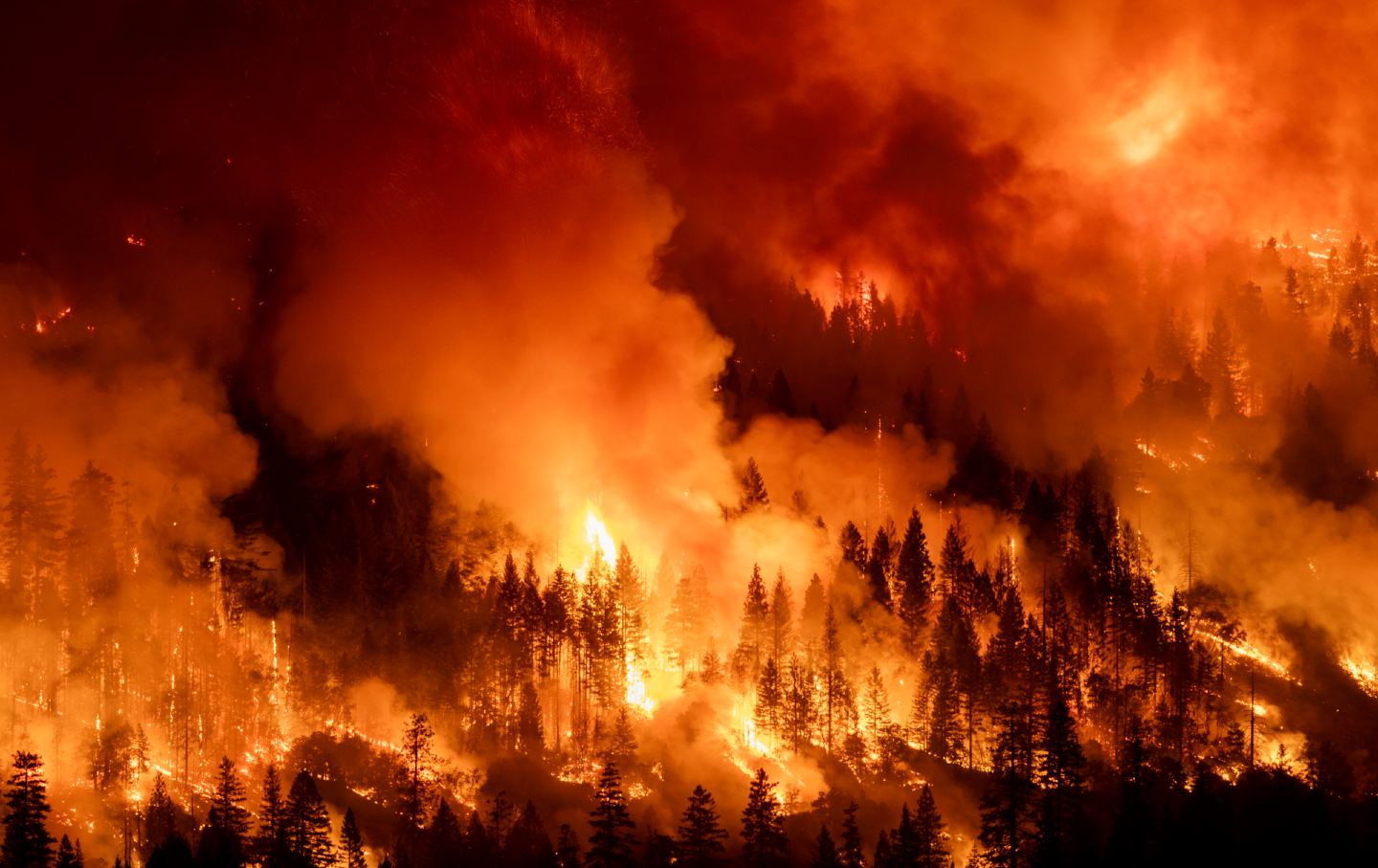
Wildfires have become an ever bigger problem in Canada. The 2018 wildfires were the biggest in British Columbia's history, but this record was broken in 2021, and then again in 2023, when fires consumed an area three times the size of the Canadian province of Nova Scotia and the smoke travelled as far as New York City.
You see wars and you think they're about types of Islam, or whether or not the US has access to oil. But underneath all of that there's this longer running thing that is becoming more and more important. It's like rising damp in your house—you don't know it's there, but it's changing everything.
I think that the most important feature of theater is the act itself. It's not actually what is said or what is done. It's not the plot or the storyline. It's the act of gathering human beings in space and time together to experience something.
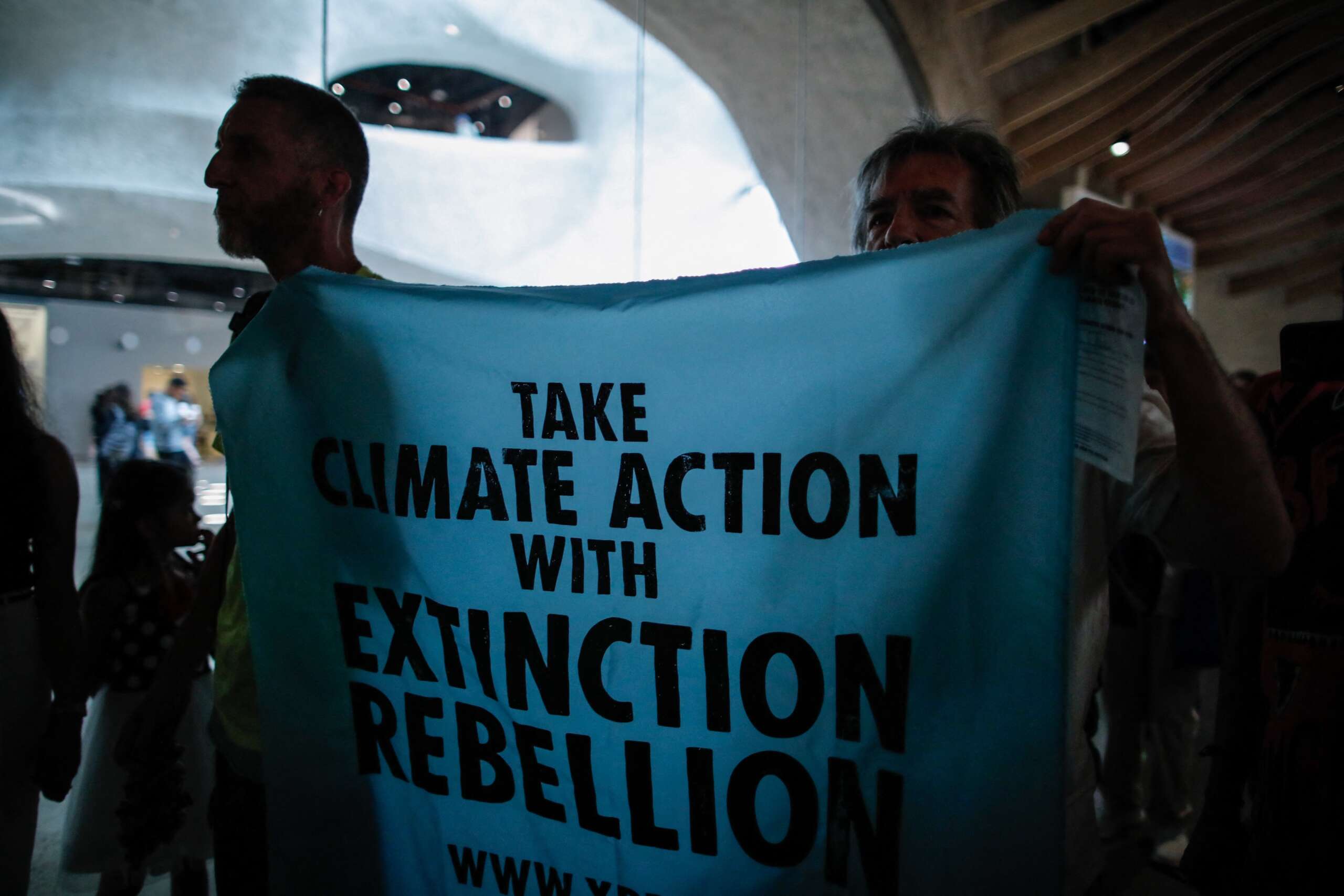
Covering Climate Now was formed in 2019 in response to the climate silence that then prevailed in much of the press, especially in the United States. Over the years that followed, hundreds of newsrooms joined our effort, and press coverage of the story began to reflect the scale of the crisis. Newsrooms beefed up their climate reporting teams; they confronted misinformation that sought to play down the problem; they thought creatively about how to find the climate connection on every beat.
We have an urgent responsibility. Our existing economic system is incapable of addressing the social and ecological crises we face in the 21st century. When we look around we see an extraordinary paradox. On the one hand, we have access to remarkable new technologies and a collective capacity to produce more food, more stuff than we need or that the planet can afford. Yet at the same time, millions of people suffer in conditions of severe deprivation. What explains this paradox? Capitalism.
Tech companies are conflating traditional artificial intelligence with generative AI when claiming the energy-hungry technology could help avert climate breakdown, according to a report. Most claims that AI can help avert climate breakdown refer to machine learning and not the energy-hungry chatbots and image generation tools driving the sector's explosive growth of gas-guzzling datacentres, the analysis of 154 statements found.
Climate breakdown is occurring more rapidly with the heating rate almost doubling, according to research that excludes the effect of natural factors behind the latest scorching temperatures. It found global heating accelerated from a steady rate of less than 0.2C per decade between 1970 and 2015 to about 0.35C per decade over the past 10 years.
There's a myth in our society that real change requires force, strength, and domination. We celebrate athletes, CEOs, and politicians who crush their opponents. But history tells a different story. Lasting social change has often been triggered by humble people whose weapons were passion, principle, and an unwavering commitment to justice and the truth - not the truth we see on TV or read in print media, but rather the truth that we feel deep inside ourselves.
When British author Karen Armstrong won the TED prize in 2008, she used the money to convene a group of religious thinkers from a wide range of faiths to craft an updated version of the Golden Rule for the 21st century. What emerged was the Charter for Compassion, which calls on people around the world "to work tirelessly to alleviate the suffering of our fellow creatures, to dethrone ourselves from the center of our world and put another there, and to honor the inviolable sanctity of every single human being, treating everybody, without exception, with absolute justice, equity and respect."
In Indra's Net of pearls and jewels, every gem reflects every other, a shimmering image of interdependence. This ancient Vedic metaphor for connection across the cosmos also illuminates what the environmental philosopher Glenn Albrecht first proposed in 2014as 'theSymbiocene': the era after the Anthropocene, in which human technologies take their cues from living systems and work in partnership rather than through dominance.
Then she read an article in this newspaper, just over eight years ago, and discovered that fossil fuel companies had ploughed more than $180bn (130bn) into plastic plants in the US since 2010. It was a kick in the teeth, says Gardiner. You're telling me that while I am beating myself up because I forgot to bring my water bottle, all these huge oil companies are pouring billions She looks appalled. It was just such a shock.
"Let's be realistic." That's the advice coming from a growing number of voices in climate circles in the United States. In October, billionaire Bill Gates argued that a global temperature rise of 2 degrees Celsius is unavoidable and not a " super bad outcome"-a view unlikely to be shared by the millions of people whose homes would be destroyed by the resulting killer storms and rising seas.
The physical nature of the project was inspiring and fun for everyone and also contained within it a kind of message. If we are going to change the direction of our climate we are going to have to do it for real too - in the real world, by doing real stuff.
There's no hand-waving about how 'We want to cooperate on climate,' " oil historian and S&P Global vice chairman Dan Yergin said in an interview. "It's, 'We're slamming the door on that issue.' " "We've gone from over-indexing it to zero-indexing it.