#edva-rocket-docket
#edva-rocket-docket
[ follow ]
#legal-technology #ai-in-law #ai #legal-tech #legal-ai #law-firms #automation #generative-ai #legaltech






#artificial-intelligence
Real estate
fromwww.housingwire.com
6 days agoAI can accelerate real estate transactions But it can't replace the professional work that protects property rights
Artificial intelligence is enhancing efficiency in the title industry, but professional expertise remains essential for ensuring clear property ownership.
Real estate
fromwww.housingwire.com
6 days agoAI can accelerate real estate transactions But it can't replace the professional work that protects property rights
Artificial intelligence is enhancing efficiency in the title industry, but professional expertise remains essential for ensuring clear property ownership.
Intellectual property law
fromIPWatchdog.com | Patents & Intellectual Property Law
2 weeks agoPatent Prosecution in the AI-Native Future: How IP Counselors Can Succeed
AI's impact on patent prosecution depends on how practitioners and enterprises choose to adapt, with potential for both empowerment and disruption based on strategic action.
fromBusiness Insider
3 weeks agoAI legal giant Legora lands its first acquisition, and the great legal-tech rollup continues
Legal tech is entering its consolidation era. In recent years, investors have poured billions of dollars into startups trying to win over law firms as customers. Firms are now coming out of those software pressure tests and are beginning to choose long-term vendors. Not all of the tools will survive the transition, and some are looking for buyers with distribution and balance sheets strong enough to carry them.
Miscellaneous
Intellectual property law
fromAbove the Law
3 weeks agoAI Contracts Are Moving Faster Than The Laws. In-House Counsel Can't Wait. - Above the Law
Legal teams must adapt rapidly to AI deployment pressures by drafting contracts for current conditions and anticipated regulatory changes within six to twelve months, as law moves slower than technology.
fromComputerWeekly.com
1 month agoRWS Global deploys Box's AI tools to streamline contract workflow | Computer Weekly
The end user types in the information that needs to go into a contract via Box Doc Gen, which is then sent over to Legal for approval. Once approved, the contract is sent out automatically and signed using Box Sign. The signed contract is then uploaded to the cloud. Given that RWS Global has contracts with thousands of performers, the automation of the contract approval workflow saves many hours in terms of manual processing.
Business intelligence




#legal-technology

Law
fromAbove the Law
3 weeks agoOpus 2 Steps Up Its AI Game With Acquisition Of A Legal Tech Startup - Above the Law
Opus 2 enhanced its litigation management software with AI capabilities from Uncover acquisition, offering both traditional detailed interface and new simplified AI-powered chatbot-like interface for document analysis and case preparation.

Law
fromAbove the Law
3 weeks agoOpus 2 Steps Up Its AI Game With Acquisition Of A Legal Tech Startup - Above the Law
Opus 2 enhanced its litigation management software with AI capabilities from Uncover acquisition, offering both traditional detailed interface and new simplified AI-powered chatbot-like interface for document analysis and case preparation.
#ai-in-legal-practice
Law
fromIPWatchdog.com | Patents & Intellectual Property Law
2 weeks agoIP Innovators: Writer's Block Is Dead: Drew McElligott on AI in Legal Practice
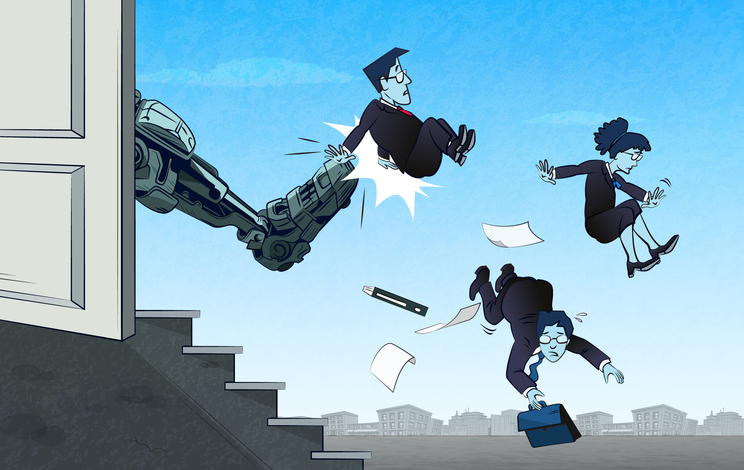
AI tools are transforming patent drafting by eliminating blank-page paralysis, enabling attorneys to generate structured outlines and draft language immediately, shifting legal work from initial creation to editing and refinement.
Law
fromIPWatchdog.com | Patents & Intellectual Property Law
2 weeks agoIP Innovators: Writer's Block Is Dead: Drew McElligott on AI in Legal Practice
AI tools are transforming patent drafting by eliminating blank-page paralysis, enabling attorneys to generate structured outlines and draft language immediately, shifting legal work from initial creation to editing and refinement.
Law
fromFuturism
2 weeks agoAbsurd AI-Powered Lawsuits Are Causing Chaos in Courts, Attorneys Say, "Clogging the System" and Driving Up Costs
A Florida couple used generative AI to file escalating legal claims in an HOA fee dispute, eventually invoking RICO conspiracy allegations in hundreds of pages of increasingly unhinged court documents.
Law
fromBusiness Insider
3 weeks agoI spent 17 hours at a legal conference. These were the two questions haunting lawyers about AI.
Despite AI being heavily promoted at Legalweek, lawyers remain skeptical about adoption due to job security concerns and inadequate training, while billions in legal-tech investments depend on faster implementation.
Law
fromAbove the Law
3 weeks agoSeven Essential Security Strategies For Law Firms And Legal Departments - Above the Law
Legal professionals must prioritize cybersecurity as a leadership imperative, with one in three law firms targeted by breaches costing over five million dollars annually, requiring proactive vendor management and transparent security practices.
Artificial intelligence
fromAbove the Law
2 months agoWhy Solo And Small Firm Lawyers Should Make Voice Their Choice For AI - Above the Law
Voice-based drafting, powered by modern AI transcription, is faster and increasingly accurate, offering a practical shift from keyboard to voice for solos and small firms.



fromAbove the Law
2 months agoSmall Frictions, Big Fixes: What Carl Davidson's Inbox Struggle Teaches Legal Tech - Above the Law
For all our talk of AI disruption, few legal teams are tackling the true productivity killer: tab switching. Email bloat. Scattered context. Carl Davidson noticed it while practicing immigration law. His clients needed answers. His inbox overflowed. His case files were always one click too far away. And somewhere between toggling screens and pasting notes, he realized the problem wasn't the complexity of the law it was the friction in the workflow.
Law
fromAbove the Law
2 months agoBuilding A Modern Solo Practice: How AI Is Changing What's Possible For Lawyers - Above the Law
The conversation was not about shortcuts or hype. It was about how thoughtful use of technology, strong decision making, and having the right support system can dramatically change what is possible for lawyers who want more control over their careers. Matthew's experience moving from Biglaw environments into solo practice offers a grounded perspective on how AI, education, and community now level the playing field for small firms.
Law
fromAbove the Law
2 months ago'Adventures In Legal Tech': Efficiency, AI, And Business Planning For The Solo Practitioner - Above the Law
With so many options out there, it's easy to feel overwhelmed and confused about where to begin. To help you make sense of it all, "Adventures in Legal Tech" welcomed Jess Birkin, a solo attorney who gets a heck of a lot done in her unique practice niche by leveraging AI and business planning. Goals Versus Themes It's been a decade of upheaval. For lawyers, this reality complicates setting specific goals, because they are likely to be upended by outside events.
Law
fromAbove the Law
2 months agoWhat, Exactly, Is 'Disruption,' And How Does This Affect Lawyers? - Above the Law
From law firms to in-house legal teams, the rules of value are being rewritten. The question is: Who's ready to lead the change? In the first episode of 2026 for the UpLevel View podcast, Stephanie Corey and Ken Callander sit down with Rita Gunther McGrath, Columbia Business School professor and Wall Street Journal columnist, to talk about how AI is forcing professional services to price outcomes instead of hours.
Law
fromAbove the Law
2 months agoStop Calling It Legal Support: Karl Seelbach Says Deposition Tech Is Mission-Critical Infrastructure - Above the Law
Karl Seelbach wants to change that. As a personal injury defense litigator and the co-founder of Skribe.ai, he is pushing the legal industry to rethink deposition tech not as an optional upgrade but as foundational infrastructure. What he is building may be aimed at courtroom practice, but the implications reach far beyond litigation. For in-house teams who want to improve trust, clarity, and speed across their legal stack, this conversation is your wake-up call.
Law
[ Load more ]