US Elections
fromwww.mediaite.com
1 day agoKatie Couric Claims Trump Trying to 'F*ck With' Midterms
Katie Couric expresses concerns about Trump's actions affecting election integrity ahead of the midterms.
I don't think you'll find a politician who hasn't had this done to them... to say it out loud makes me feel quite sad. Several Welsh politicians told the BBC about their experiences as victims of deepfakes, highlighting the widespread nature of AI-generated manipulated content targeting elected officials across the UK political landscape.
A group of researchers from Berkeley, Harvard, Oxford, Cambridge, and Yale warn that the rise of AI bots and AI agents could pose a serious threat to democracy. For example, power-hungry politicians around the world can relatively easily create swarms of AI bots that flood social media and messaging services with propaganda and disinformation. In this way, they can not only influence election results but also persuade parts of the population to replace parliamentary democracy with an authoritarian regime.
Most days, an email lands in my inbox with the promise to amplify my growth-my newsletter subscribers, the reach of my podcasts, the number of client leads, etc. I've gotten used to random people pitching me on their services, and some of the messages expertly prey on my insecurities as a business owner ("you're leaving so much on the table," et al.). I never answer any of them, but I sometimes wonder which ones might actually be legit.
Political leaders could soon launch swarms of human-imitating AI agents to reshape public opinion in a way that threatens to undermine democracy, a high profile group of experts in AI and online misinformation has warned. The Nobel peace prize-winning free-speech activist, Maria Ressa, and leading AI and social science researchers from Berkeley, Harvard, Oxford, Cambridge and Yale are among a global consortium flagging the new disruptive threat posed by hard-to-detect, malicious AI swarms infesting social media and messaging channels.
Generative models learn an executive's tone and syntax from public posts, press releases and meeting transcripts. Attackers then craft messages indistinguishable from authentic correspondence. But the real innovation isn't the text, it's the choreography. A fraudulent email may serve only as the opening move. Within minutes, the target receives a confirming voice message that sounds like the executive whose name appears in the signature block. A deepfaked video may follow, asking for "final authorization." Email opens the door; other channels walk through it.
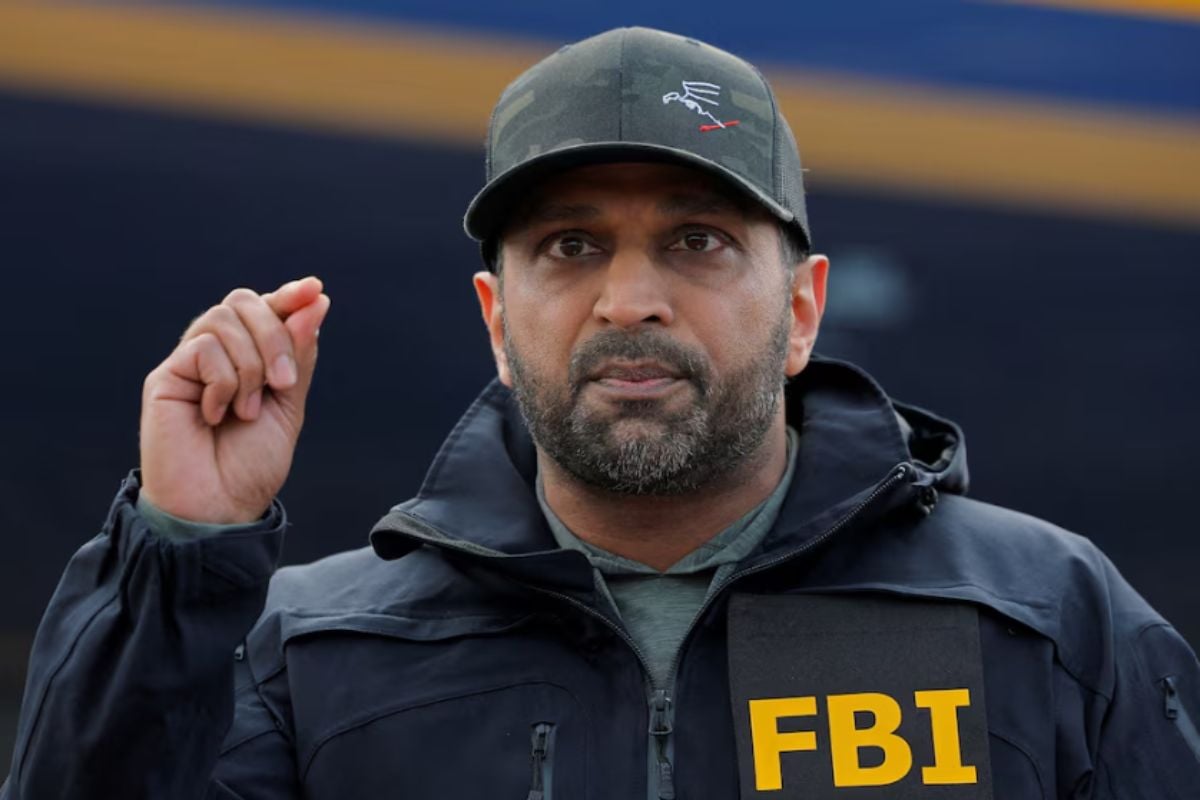
The Washington Roundtable discusses Donald Trump's threats to "nationalize" elections in fifteen states, the recent F.B.I. raid to seize 2020 voting records at an election facility in Fulton County, Georgia, and the ways in which the Administration might meddle with a free and fair vote in 2026. Their guest, Richard Hasen, is the director of the Safeguarding Democracy Project at U.C.L.A.'s School of Law.