#elephant-rampage
#elephant-rampage
[ follow ]
#conservation #wildlife-conservation #animal-welfare #climate-change #biodiversity-loss #wildlife-rescue
fromMail Online
4 days agoBritain has just 20 years to save its wildlife, experts warn
'Our results show that the next 20 years are critical,' lead author Dr Rob Cooke told the Daily Mail. 'By around 2050, we reach a point where the choices we make on emissions and land use will largely determine whether Britain moves towards a much more degraded or a much more nature‑positive future.'
Environment
Roam Research
fromMongabay Environmental News
2 weeks agoFacebook shuts Indonesia groups after Mongabay and Bellingcat report illegal wildlife trade
Mongabay and Bellingcat discovered Facebook groups in Indonesia illegally selling protected species, exploiting the country's biodiversity through social media platforms.
fromSFGATE
2 weeks agoThe race to save endangered mountain lions in the Calif. desert
Before state Route 62 was built, there was seamless 95-mile-long habitat connectivity between the San Bernardino and Little San Bernardino mountain ranges, extending from the I-10 south of Joshua Tree National Park to the I-15 near the Cajon Pass. Now, plans for two new wildlife crossings across the highway aim to bring back some of that connectivity, while potentially saving a local population on the brink of extinction in the process.
SF parents
European startups
fromTheregister
2 weeks agoIndia tests whether AI can stop trains hitting elephants
India's Ministry of Environment is implementing AI-based systems and infrastructure solutions to reduce elephant deaths on railway tracks, including thermal camera networks and acoustic intrusion detection systems.
Science
fromwww.theguardian.com
4 weeks agoMarsupials previously thought extinct for millennia discovered in New Guinea
Two marsupial species presumed extinct for 6,000 years were discovered alive in West Papua rainforests, representing rare Lazarus taxa that survived despite disappearing from fossil records.
fromwww.npr.org
1 month agoColossal Biosciences breeds controversy while trying to revive mammoths
Colossal has the audacious goal of resurrecting extinct species like the woolly mammoth, Tasmanian tiger and dodo bird. In the process, Colossal has been generating both excitement and disdain. Enthusiasts say the company could be creating invaluable tools not only to resurrect ancient species, but also to save creatures on the brink of extinction.
OMG science
Environment
fromABC7 San Francisco
3 weeks agoTrump proposals will weaken and limit protection by Endangered Species Act, environmentalists say
Trump administration proposals would restrict the Endangered Species Act by narrowing harm definitions to exclude habitat protection, potentially reducing wildlife protection effectiveness by 99%.
fromwww.scientificamerican.com
1 month agoHow a teen's AI model could help stop poaching in rainforests
Both species are under threat. But while African savanna elephants are endangered, forest elephants are critically endangered. They're also highly elusive. Living in dense tropical rainforests in central Africa and parts of West Africa they're very hard to find and study.
Science
fromwww.theguardian.com
1 month agoKyiv zoo braves blackouts and bombardment to keep animals warm
Kyiv zoo's most famous resident lays on his back watching television. On screen: a nature documentary. For a quarter of a century, Toni has been the zoo's star attraction, drawing tens of thousands of visitors. He is Ukraine's only gorilla. At 52 old by western gorilla standards he needs warm conditions similar to the lowlands of central Africa. In recent weeks, heating Toni's spacious enclosure has become a logistical headache.
Miscellaneous
fromwww.theguardian.com
1 month agoDisbelief as crocodile captured in Newcastle creek thousands of kilometres from natural habitat
I get there, I look and here's this little crocodile swimming around in the water. The sighting occurred at Federal Park in Wallsend, close to a local pool and primary school. Kirsop said she was met with initial disbelief when she contacted the wildlife rescue group Wires, and the Australian Reptile Park.
Pets
fromwww.theguardian.com
1 month agoOfficials race to contain virus outbreak after 72 captive tigers die in Thailand
A statement by the government's region 5 livestock office for Chiang Mai, said the animals had been infected with canine distemper virus, with veterinarians also identifying mycoplasma bacteria as a secondary infection. Earlier however, Somchuan Ratanamungklanon, director general of the department of livestock development within the Thai agricultural ministry, told the Thai outlet Matichon that the tigers had been infected with feline panleukopenia.
Science
Environment
fromwww.theguardian.com
1 month agoAustralian wildlife in harm's way' with volunteers left to pick up the pieces' amid climate crisis, fires and floods
Labor is urged to establish national wildlife protection standards for disaster response, with advocates warning biodiversity risks could become irreversible without coordinated government-funded rescue and rehabilitation services.
Arts
fromCN Traveller
2 months agoCentral Africa's rainforest wilderness is the back-to-nature safari destination we're dreaming of
Gabon is a sparsely populated Central African country dominated by rainforest, preserving rich traditional spiritual practices like Bwiti closely tied to nature and community life.
fromwww.theguardian.com
2 months agoBlack and white and sent back over: end of panda diplomacy as Japan returns bears to China
The panda house at Ueno Zoo in Tokyo is not due to open for several hours, but visitors are already milling around its entrance, pausing to pose for photographs in front of murals of the facility's most beloved residents. A short walk away the gift shop is doing a roaring trade in themed souvenirs from cuddly toys and stationery to T-shirts and biscuits. The visitors are here to say goodbye to Xiao Xiao and Lei Lei.
World news
fromYanko Design - Modern Industrial Design News
1 month agoWhen Zoo Design Tells the Story of Life Itself - Yanko Design
The House of Elements, set to become the crown jewel of Orientarium Zoo in Łódź, Poland, takes the classical elements (earth, ice, water, fire, and air) and transforms them into a 6,000-square-meter narrative experience. Rather than designing a building where you walk from exhibit to exhibit, VMA created a continuous downward-then-upward journey that mirrors the evolution of life itself. Designer: VMA Design Studio for Orientarium Zoo
Design
fromWashingtonian - The website that Washington lives by.
1 month agoLayoffs Are Likely to Hit the Washington Post Today, DC Tax Chaos Incoming, Baby Elephant Born in DC - Washingtonian
Partly sunny with a high around 34 today. A low near 18 overnight. The National Museum of African American History & Culture will be closed today due to "complications involving the recent winter storm." You can find me on Bluesky, I'm @abeaujon.87 on Signal, and there's a link to my email address below. This roundup is available as a morning email newsletter. Sign up here.
US politics
Environment
fromInsideHook
1 month agoGorillas, Michael Bay and Me: A Journey Through the Rewilded Rwanda
Rwanda's Kwita Izina gorilla-naming ceremony celebrates the recovery of mountain gorillas from near-extinction through successful conservation efforts, attracting global celebrities and thousands of participants to honor the species' survival.
fromFuturism
2 months agoTiny Deer Takes on 1.7-Ton Rhinoceros
In a naturalistic rendition of David vs. Goliath, a 28-pound Reeves's muntjac named Tata, a small deer species native to Asia, took on Maruśka, a 1.7-ton female rhinoceros, in a fierce head-to-head at the Wroclaw Zoo in Poland. A video that's gone viral on social media shows the miniature deer fiercely standing its ground and charging at the far more massive rhino, clashing into its horn-tipped snout with tiny antlers.
Miscellaneous
fromwww.scientificamerican.com
2 months agoHow zoos are preparing animals for this weekend's massive winter storm
In Texas, the Houston Zoo has prepared its buildings and barns with heaters designed to withstand extreme conditions, the zoo said in a blog post on Friday. Animals will have access to extra hay and bedding, and food was stocked in advance. Across the Zoo, sensitive plants are being protected with coverings, and generators are positioned to provide backup power if needed, the blog post said.
US news
Environment
fromwww.theguardian.com
1 month agoThat's a losing battle': baboon incursions cause tense human-wildlife standoff in Cape Town
Increasing baboon populations in Cape Town, driven by urban expansion and lack of predators, are causing frequent human-baboon conflicts and traumatic intrusions into communities.

fromArs Technica
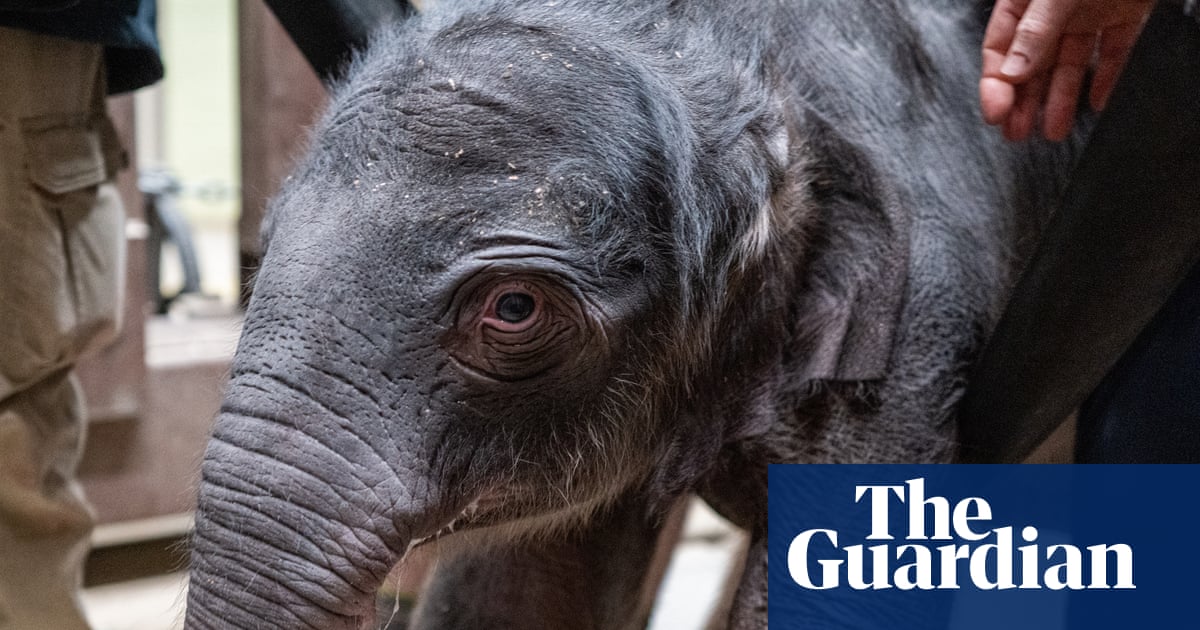
1 month agoUnique structure of elephant whiskers give them built-in sensing "intelligence"
An elephant's trunk is a marvelous thing, flexible enough to bend and stretch as it forages for food, but also stiff enough to grasp and maneuver even delicate objects like peanuts or a tortilla chip. That's because the trunk is highly sensitive when it comes to sensing touch. Scientists have determined that the whiskers lining the trunk are crucial for that sensitivity thanks to their unique structure, amounting to a kind of innate "material intelligence, according to a new paper published in the journal Science.
Science
Environment
fromwww.theguardian.com
2 months agoAfrica's great elephant divide: countries struggle with too many elephants or too few
Elephant numbers contrast sharply: catastrophic declines in South Sudan, with a lone collared bull in Badingilo, versus overabundance and human conflict in parts of Kaza.
Environment
fromFortune
1 month agoAnimal behavioralists saved a rhino with bleeding eyes by giving it eye drops, in a "ridiculous idea" gone right | Fortune
Voluntary training allowed caretakers to safely administer eyedrops to an endangered white rhino in Zimbabwe, preserving vision and protecting a community reintroduction program.
fromwww.theguardian.com
1 month agoCecil: The Lion and the Dentist review inside the horrific big cat killing that outraged the world
There are a lot of unanswered possibly unanswerable questions in the air at the moment. Questions such as what prompts a husband to drug his wife and, for a decade, invite strange men over to his house to rape her while she lies unconscious in the marital bed? Or: what kind of a person do you have to be to hang around with a convicted child sexual offender and billionaire who is exercising his perversions in plain sight,
Environment
fromLos Angeles Times
1 month agoSo close you can see elephant eyelashes? Welcome to San Diego's Elephant Valley
A long, winding path takes guests around and under felled trees. Aged gray tree hunks form arches, for instance, over bridges that tower over clay-colored paths with hoof prints. The design is meant to reorient us, to take us on a trail walked not by humans but traversed and carved by elephants, a creature still misunderstood, vilified and hunted for its cataclysmic-like ability to reshape land, and sometimes communities.
Environment
fromFast Company
1 month agoThese digital tools are stepping up the global fight against wildlife trafficking
In late 2025, Interpol coordinated a global operation across 134 nations, seizing roughly 30,000 live animals, confiscating illegal plant and timber products, and identifying about 1,100 suspected wildlife traffickers for national police to investigate. Wildlife trafficking is one of the most lucrative illicit industries worldwide. It nets between US$7 billion and $23 billion per year, according to the Global Environment Facility, a group of nearly 200 nations as well as businesses and nonprofits that fund environmental improvement and protection projects.
Environment
Environment
fromwww.theguardian.com
2 months agoIndonesia takes action against mining firms after floods devastate population of world's rarest ape
Indonesia revoked 28 company permits and sued six firms for environmental damage after floods and landslides devastated Batang Toru, killing 1,100 people and Tapanuli orangutans.
fromIndependent
2 months ago'It's not about ticking off the Big Five' - Booking a safari this year? Here's how to make sure it's ethical
Demand for safari holidays is growing, so how can you do it without harming animals, people or the landscape? Last summer, images were shared of a scene in Tanzania's Serengeti National Park - a large group of jeeps and dozens of tourists standing outside taking pictures of 'The Great Migration' and blocking wildebeests' traditional crossing point. Jeep traffic jams have also been widely reported in other parks, including Sri Lanka's Yala, known for its high density of leopards.
Environment
fromwww.theguardian.com
2 months agoAustralia's koala paradox: why is the beloved marsupial endangered in parts but overabundant in others?
On French Island in Victoria's Western Port Bay, koalas are dropping from trees. Eucalypts have been eaten bare by the marsupials, with local reports of some found starving and dead. Multiple koalas usually solitary animals can often be seen on a single gum. Koalas were first introduced to French Island from the mainland in the 1880s, a move that protected the species from extinction in the decades they were extensively hunted for their pelts.
Environment
fromwww.theguardian.com
2 months agoExperience: a bear moved into my house
The next morning, I checked the critter-cams and saw the bear again, now captured by a camera I'd placed by a little mesh-covered opening near the small basement under my house. I watched as a massive shape emerged from the hole. My brain refused to believe it. The bear looked too large to fit in that tiny gap. I watched it again, shocked. My hands started to sweat.
Environment
fromwww.dw.com
2 months agoThe business of saving nature
The world spends 30 times more money destroying nature than protecting it. That's according to a new report from the United Nations Environment Programme (UNEP) that exposes a massive gulf between so-called "harmful investments" and financing that promotes nature preservation. The global environment agency's latest "State of Finance for Nature" (SNF) report is calling to phase out the US$7.3 trillion (6.2 trillion) in global investments that damage nature including into high-emissions energy infrastructure and manufacturing, for example.
Environment
[ Load more ]