#emoji-meanings
#emoji-meanings
[ follow ]
#social-media #communication #ai #technology #relationships #user-experience #large-language-models #psychology

#communication
Psychology
fromSilicon Canals
19 hours agoPsychology says people who reply to messages within seconds aren't just efficient - they've built their sense of safety around being reachable, because somewhere in their past, being slow to respond had consequences - Silicon Canals
Instant responses to messages often stem from a psychological need to mitigate perceived threats rather than mere efficiency.
Relationships
fromSilicon Canals
2 days agoPsychology says people who are cold through text but warm in person aren't being inconsistent - they're showing you exactly where their warmth lives, which is in the room, in the eye contact, in the unrepeatable presence of another human being, and the medium that removes all of those things removes most of what they have to give - Silicon Canals
People's communication styles reflect their emotional energy, not their intentions or feelings towards others.
Relationships
fromSilicon Canals
1 day agoNobody tells you that expecting instant replies is a relatively new social norm - and that an entire generation learned to communicate in ways that never required it - Silicon Canals
Instant communication has created pressure that undermines meaningful relationships, which thrived in a slower-paced era of correspondence.
Psychology
fromSilicon Canals
19 hours agoPsychology says people who reply to messages within seconds aren't just efficient - they've built their sense of safety around being reachable, because somewhere in their past, being slow to respond had consequences - Silicon Canals
Instant responses to messages often stem from a psychological need to mitigate perceived threats rather than mere efficiency.
Relationships
fromSilicon Canals
2 days agoPsychology says people who are cold through text but warm in person aren't being inconsistent - they're showing you exactly where their warmth lives, which is in the room, in the eye contact, in the unrepeatable presence of another human being, and the medium that removes all of those things removes most of what they have to give - Silicon Canals
People's communication styles reflect their emotional energy, not their intentions or feelings towards others.

Psychology
fromSilicon Canals
4 days agoPsychology says if someone secretly dislikes you they'll almost never say it out loud - but their body will, in the microseconds before they've decided what their face is supposed to be doing, and learning to read those moments is one of the more uncomfortable social skills available to anyone willing to develop it - Silicon Canals
Microexpressions reveal true emotions faster than conscious control, providing insights into feelings that words may conceal.
Graphic design
fromItsnicethat
2 weeks agoThese emotionally charged illustrations are here to make your imagination wander
Xiao Hua Yang creates illustrations that blend digital and analogue techniques to suggest emotions through subtle imagery rather than explicit statements, prioritizing implication over explanation.
Social media marketing
fromAnimals Around The Globe
2 weeks agoThe Animal Personality That Captures Your Social Media Style
Social media usage patterns reflect animal personality archetypes, with traits like extraversion and neuroticism determining posting styles, engagement levels, and online presentation strategies.
Apple
fromMail Online
3 weeks agoRevealed: 163 new emojis available on iPhone - 'gonna break internet'
Apple released iOS 26.4 beta 4 with 163 new emojis, including 13 entirely new designs like a distorted face, hairy creature, orca, and trombone, with the distorted face generating the most user excitement.
fromFast Company
3 weeks agoThe uncomfortable valley: Microsoft Teams emoji faces have got to go
The uncomfortable valley is the effect one experiences when presented with some kind of image, and there's an uncomfortable gap between normal-looking and absolutely insane. Normal-looking is fine, like the classic typed emoji face (i.e., :), for the elderly and otherwise uninitiated). Insane-looking, like the Pixar Minions, is also fine, because the face is so weird you've accepted there's something purposely ironic, strange, or otherworldly being presented to you.
Digital life
Typography
fromItsnicethat
2 weeks agoEleanor Yang merges the synthetic and organic to make typography you can touch
Synthetic Nature presents three typefaces—DNA, Mesh, and Data—that metaphorically represent life through biological, network, and computational structures, exploring how biology, computation, and culture merge.
fromInsideHook
1 month agoWhere Have All the Good Memes Gone?
The lyrics have a rather annoying quality to them, similar to the way that other songs like "Call Me Maybe" by Carly Rae Jepsen, "Fireflies" by Owl City or even "Friday" by Rebecca Black did in their time - songs that gained rapid popularity and, just as quickly, sparked rapid backlash from many due to overexposure to them.
Humor
Digital life
fromSilicon Canals
4 weeks agoPsychology says the silent observer on social media isn't avoiding connection - they're protecting the version of themselves that exists before it's been formatted for an audience, and that protection, however invisible, is one of the more deliberate acts of self-preservation available in the current media environment - Silicon Canals
Silent social media observers protect their authentic selves by avoiding the performance and exhaustion of curating content for public audiences.
fromAlexharri
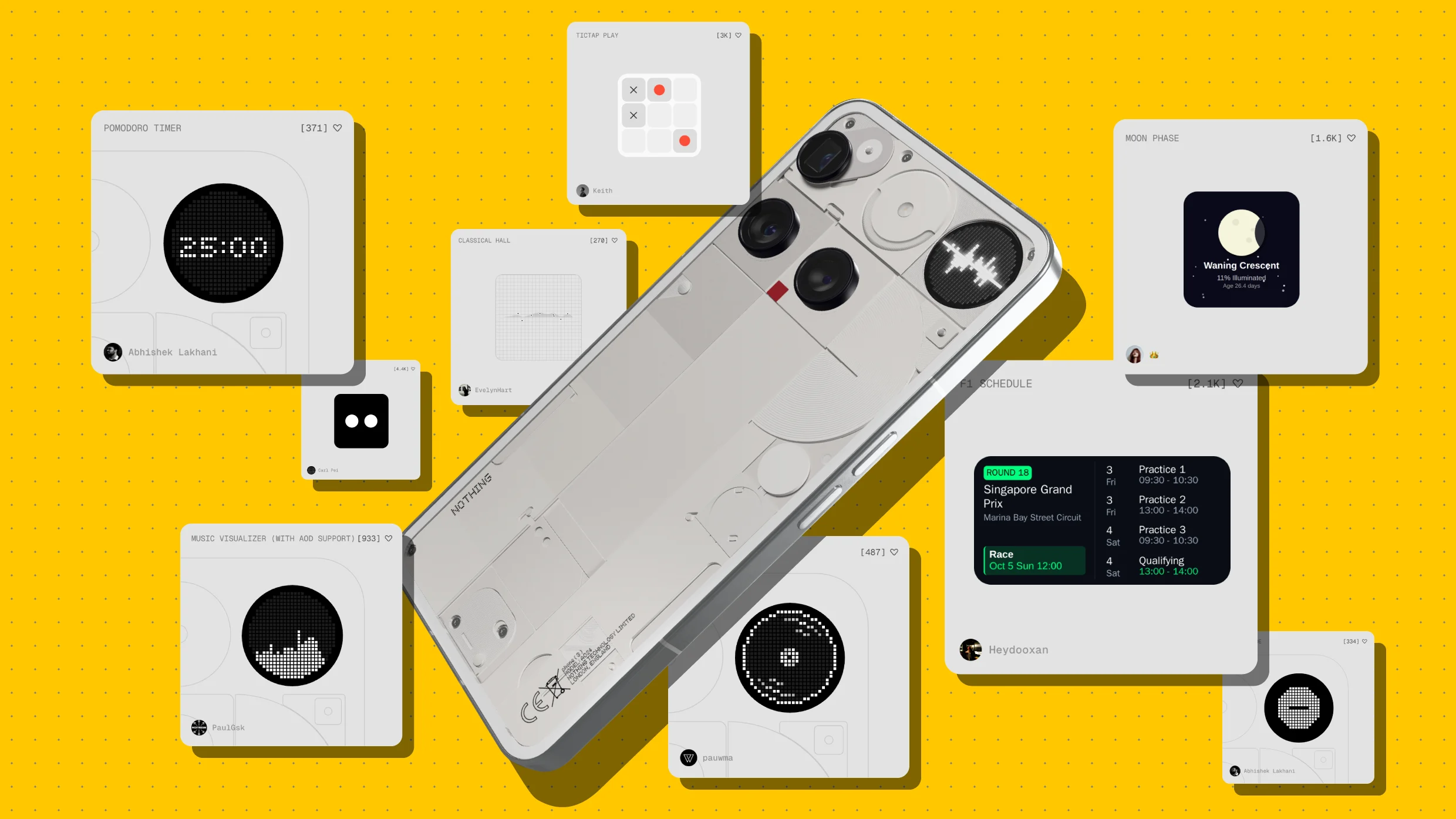
2 months agoASCII characters are not pixels: a deep dive into ASCII rendering
One thing I spent a lot of effort on is getting edges looking sharp. Take a look at this rotating cube example: Try opening the "split" view. Notice how well the characters follow the contour of the square. This renderer works well for animated scenes, like the ones above, but we can also use it to render static images: The image of Saturn was generated with ChatGPT.
Software development
Marketing
fromBuffer: All-you-need social media toolkit for small businesses
2 months agoThe Ultimate Guide to GIFs: How to Create Them, When to Use Them and Why They're Essential for Every Marketer -
GIFs are animated image files that enhance digital communication, easily created using tools like GIPHY, Canva, or Photoshop and useful for marketing.
fromenglish.elpais.com
2 months agoMemes mature to help us understand a world in flames
Memes have become the clearest and most direct language of digital culture: condensed fragments of reality that synthesize the complexity of the present and circulate at the same speed as a society surrendered to hyperstimulation. From the Dancing Baby of the 1990s to the endless templates of X, Instagram, or TikTok, memes have evolved from simple ephemeral jokes to veritable systems for decoding the world, semiotic capsules that allow us to process the political, the social, and the intimate.
Humor

fromMedium
1 month agoEmotional design: let's design for silence
I'm looking at the stage but I don't know what I saw, even though the message is somehow clear. I was invited into the self-reflection of a lost person, projected inward through an attempt to escape from the simulation of post-apocalyptic reality, which through our human stupidity has turned our world into a capitalist grey wasteland, where you can survive if you accept that you don't exist, and there is only us.
UX design
fromMedium
1 month agoDesigning useful ads
We've both fought against needless promotional content before and lamented that frontier AI platforms are falling into the same pattern. As designers and users, we've learned that "free" usually means putting up with interruptive, slightly creepy ads that feel more like a tax than a benefit - a frustration tax that now colors how we approach free‑tier services and now AI tools.
Artificial intelligence
fromMarsmag
2 months agoThe Hidden Psychological Price of Letting AI Write 'I Love You'
As Valentine's Day approaches, finding the perfect words to express your feelings for that special someone can seem like a daunting task - so much so that you may feel tempted to ask ChatGPT for an assist. After all, within seconds it can dash off a well-written, romantic message. Even a short, personalized limerick or poem is no sweat. But before you copy and paste that AI-generated love note, you might want to consider how it could make you feel about yourself.
Psychology
fromSilicon Canals
1 month agoPsychology says people who prefer texting over phone calls aren't antisocial-they typically have these 8 unique strengths - Silicon Canals
People who prefer texting over phone calls aren't broken or antisocial. In fact, they often possess unique strengths that phone-lovers might actually envy. I discovered this firsthand during my freelancing stint after getting laid off. Without the constant barrage of office calls and impromptu meetings, I found myself gravitating toward written communication. And something interesting happened: my work got better, my relationships became more intentional, and my anxiety levels dropped significantly.
Digital life
[ Load more ]