#eu-recovery-fund
#eu-recovery-fund
[ follow ]
#middle-east-conflict #fuel-prices #inflation #eu #energy-prices #germany #windfall-tax #iran-war #oil-prices
#windfall-tax
Europe news
fromFortune
1 day agoEuropean ministers urge EU to impose windfall taxes on energy companies as prices spike 'to ensure that this burden is distributed fairly' | Fortune
European finance ministers are urging a bloc-wide windfall tax on energy companies to address rising oil and gas prices and inflation concerns.
World news
fromIrish Independent
2 days agoEU warns it's 'preparing for worst scenarios' and assessing 'all possibilities' including fuel rationing as energy crisis deepens
Tehran plans to charge for passage through the Strait of Hormuz, aiming to ensure safe navigation amid rising tensions with the US.
#ai-infrastructure
European startups
fromTNW | Insider
3 weeks agoRecap: Europe's top 10 funding rounds this week (9 -15 March)
European venture capital reached record levels in March 2025, with AI infrastructure, cybersecurity, health tech, and defence securing major funding across diverse geographies from Vilnius to the Swiss Alps.
Europe politics
fromwww.theguardian.com
1 week agoThe Guardian view on a significant week for European politics: progressives have some reasons to be cheerful | Editorial
Denmark's snap election reflects shifting political dynamics amid domestic issues and international tensions, with the Social Democrats facing challenges despite remaining the largest party.
fromTechzine Global
1 month agoAdvancing Europe's public agenda through Open Source Software Foundations
Digital products & services shape almost every sector of modern life. They have become an important backbone of the world's economy and society. The balance of our digital economy depends on a delicate interplay between tech companies, startups, software developers, foundations, and other stakeholders - many of which have partly become autonomous in recent years.
Miscellaneous
World politics
fromLondon Business News | Londonlovesbusiness.com
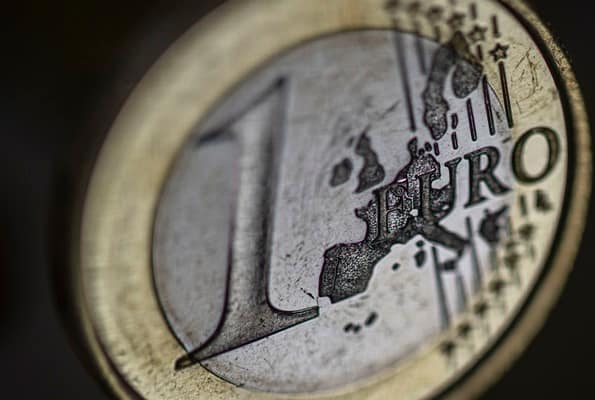
1 month agoThe Euro Could Head Closer to Unity with the Dollar - London Business News | Londonlovesbusiness.com
EUR/USD declines toward parity as energy crisis concerns and rising eurozone inflation pressure the euro while US Treasury yields support dollar strength.
Germany news
fromThe Local Germany
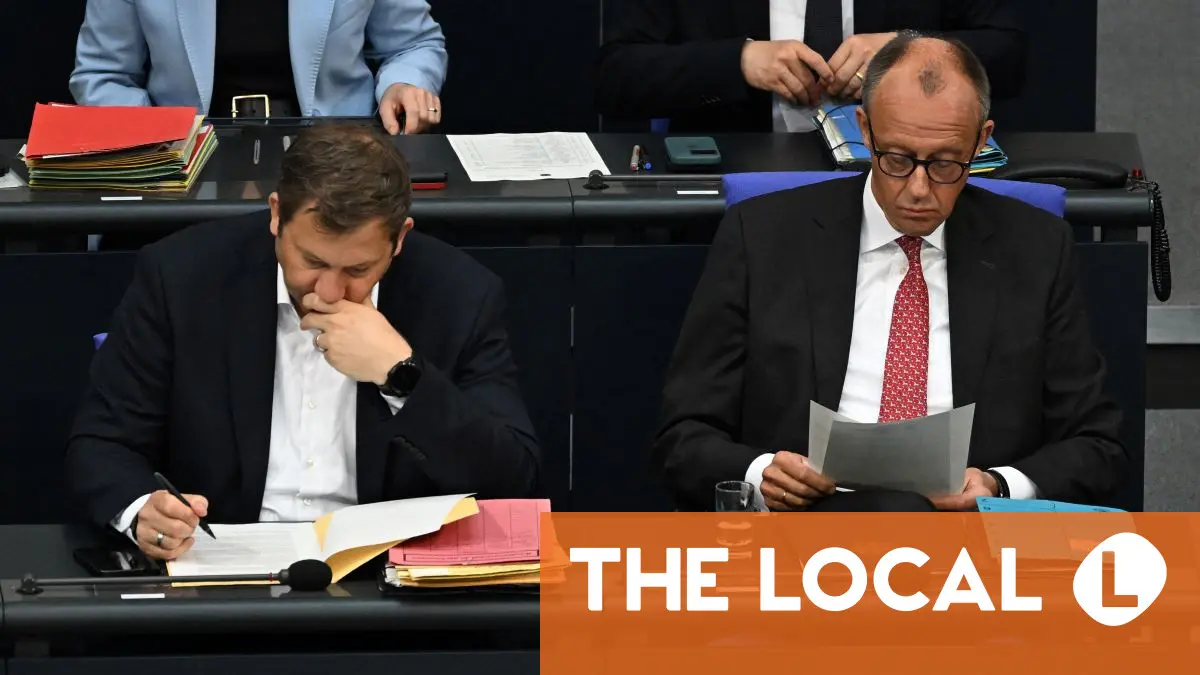
2 weeks agoEconomists warn German government is misusing investment spending
Germany's infrastructure spending fund is largely redirecting existing budget allocations rather than creating new investments, with 86-95% of borrowed money funding day-to-day expenses instead of infrastructure projects.
Europe politics
fromwww.thelocal.com
2 weeks agoWhat you should know about the EU's plan to tap your savings
The EU revives its decade-old Capital Markets Union plan, now called the Savings and Investments Union, to compete with the US and China by unifying fragmented national financial markets and redirecting €10 trillion in citizen savings from bank deposits into investments.
European startups
fromFortune
3 weeks agoEurope's second chance on AI: building an opportunity in factories, labs, and the real economy | Fortune
Europe's scientific talent, industrial strength, and multi-sector ecosystems position it to lead the next AI innovation wave focused on robotics, manufacturing, chemistry, and healthcare rather than large language models.
#eu-capital-markets-integration
Europe politics
fromThe Local France
2 weeks agoWhat you should know about the EU's plan to tap your savings
The EU revives its decade-old capital market integration plan, now called the Savings and Investments Union, to compete with the US and China while addressing market fragmentation and investment barriers.
Europe politics
fromThe Local Germany
2 weeks agoWhat you should know about the EU's plan to tap your savings
The EU revives its decade-old capital market integration plan, now called the Savings and Investments Union, to compete with the US and China while addressing market fragmentation and investment barriers.
EU data protection
fromwww.theguardian.com
1 month agoEU opens up funding to guarantee abortion rights across bloc
The EU established a social fund mechanism enabling member states to support citizens accessing safe abortions in countries where it is legal, addressing unsafe abortion practices across Europe.
fromLondon Business News | Londonlovesbusiness.com
2 weeks agoEurozone inflation edges up as ECB prepares for key rate decision - London Business News | Londonlovesbusiness.com
Services experienced the highest annual increase at 3.4%, followed by food, alcohol, and tobacco at 2.5%. Non-energy industrial goods saw a more modest increase of 0.7%. Meanwhile, energy prices fell by 3.1% over the month, which helped to temper overall inflation pressures.
Europe news
fromTechzine Global
3 weeks agoNscale sets European record: 2 billion raised in funding round
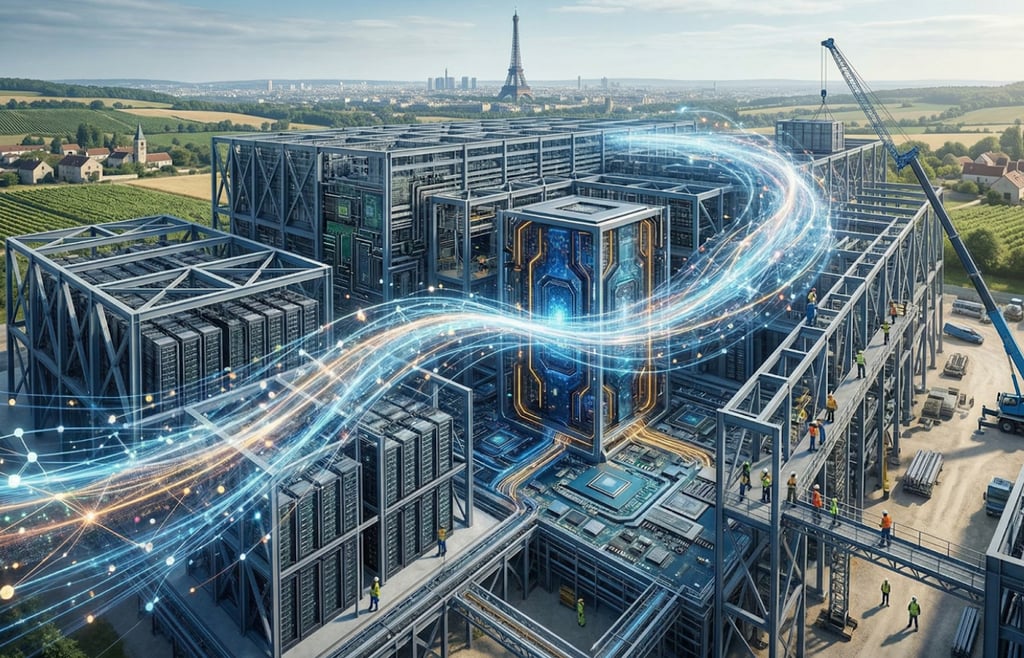
Nscale has now raised over $4.5 billion across equity rounds in less than six months. The capital funds Nscale's vertically integrated AI infrastructure, consisting of GPU compute, networking, data services, and orchestration software, with expansion planned across Europe, North America, and Asia.
European startups
European startups
fromComputerworld
4 weeks agoGov't IT spending seen as key to building Europe's tech ecosystem
European governments are shifting from US technology suppliers to open-source alternatives to achieve digital sovereignty and reduce dependency, with public sector IT spending driving this transition.
fromwww.npr.org
2 months agoWe've been hearing about the EU's economic 'bazooka.' Here's what it is
As tensions simmer between the European Union and the U.S. over the Trump administration's trade policies and its play for Greenland, we've been hearing about the EU's economic "bazooka." What is it? AILSA CHANG, HOST: Things are quite tense right now between the U.S. and the European Union. Sources of that tension include the Trump administration's trade policies and its play for Greenland, which, in turn, has led to talk about the EU's anticoercion mechanism, also known as its economic bazooka.
Miscellaneous
fromwww.dw.com
1 month agoThe economy's secret lifeline? Nature
A business model heavily focused on growth at the expense of nature is not only unsustainable, but threatens extinction if not reversed. That's according to a landmark "Business and Biodiversity Assessment Report" published by the Intergovernmental Platform on Biodiversity and Ecosystem Services (IPBES), a global independent research body comprising more than 150 member states' governments. Setting out to reframe the often-destructive relationship between nature and commerce, the first-time assessment shows how business both impacts and depends on biodiversity,
Environment
fromwww.dw.com
1 month ago'Made in EU' proposals put forward to boost manufacturing
The IAA covers several key sectors, including steel, cement, aluminum, cars and innovative technologies, such as batteries, solar, wind and nuclear. The new rules would set a minimum requirement for projects using public funds. For example, aluminum sector projects would require 25% of the aluminum to be produced in the EU and with low-carbon technologies. For cement, the equivalent rate would be 5%.
Europe politics
UK politics
fromLondon Business News | Londonlovesbusiness.com
1 month agoRejoining EU could restore billions in UK regional funding - London Business News | Londonlovesbusiness.com
Rejoining the EU could restore billions in ERDF/ESF+ funding to support UK housing, urban regeneration and youth-development projects.
Intellectual property law
fromIPWatchdog.com | Patents & Intellectual Property Law
2 months agoEUIPO-EPO Joint Report Finds IP-Driven Industries Contribute Nearly Half of EU GDP, One-Third of Total Jobs
IP-driven industries generate nearly half of EU GDP, employ one-third of workers, and pay an average 40.9% wage premium.
fromSilicon Canals
1 month agoEuropean startups raised 12.3 billion in Q2 2025, signaling a cautious but real recovery - Silicon Canals
The €12.3 billion figure, compiled from data tracked across major European venture databases and deal trackers, reveals a market that's concentrating capital rather than spraying it. Mega-rounds are returning - but only for companies with clear revenue trajectories and defensible technology. The spray-and-pray era of seed investing hasn't come back, and it probably shouldn't.
European startups
Business
fromLondon Business News | Londonlovesbusiness.com
2 months agoInflation cools, Europe stabilises, Asia reacts to politics and policy - London Business News | Londonlovesbusiness.com
Cooling core inflation and mixed earnings are driving a rotation into value and domestic stocks, supporting smaller-cap outperformance and sustaining hopes for eventual Fed rate cuts.
fromLondon Business News | Londonlovesbusiness.com
2 months agoEuropean stocks firmer after Wall St dips on banks - London Business News | Londonlovesbusiness.com
Gold keeps cranking higher with spot prices moving to a new all-time high a whisker off $4,640, while silver extended its parabolic rally to clear $90. Crude prices were at three-month highs with Brent (continuous) running into resistance at the 200-day moving average around $65.75, as flagged in yesterday's note. WTI spiked to $61.50 - as noted on Friday a clear break above $59 was likely to see a swift move toward the $60-61 area.
US politics
European startups
fromSilicon Canals
1 month agoEuropean startups raised 12.4 billion in Q2 2025 as investor confidence quietly rebounds - Silicon Canals
European startups raised €12.4 billion in Q2 2025, the strongest quarterly performance since late 2022, driven by investor shift from defensive caution to calibrated conviction and reactivation of growth-stage capital.
fromLondon Business News | Londonlovesbusiness.com
2 months agoEuropean markets rally on apparent Greenland deal - London Business News | Londonlovesbusiness.com
By now we have grown accustomed to Trumps strategy of threatening nations with tariffs in a bid to get what he wants, but this occasion appears to have taken it a step too far. For many of the European leaders, this is a warning sign that their US partners are no longer reliable for as long as Trump is in power.
World news
fromwww.dw.com
2 months agoFrance's 2026 budget finally gets passed
According to the text that has now been adopted, the budget deficit is to be reduced to 5% of gross domestic product. There will be higher taxes on some businesses, including an extra tax on large companies' profits, which is expected to bring in around 7.3 billion ($8.6 billion) in 2026. The plan also boosts military spending by 6.5 billion, a move the premier last week described as the "heart" of the budget.
France news
fromwww.thelocal.com
1 month agoReplacement for cash? How the new 'digital euro' would work for Europeans
The electronic version of the money used in the 21-nation currency area would be available to use free of charge in shops, online or from person to person. Supporters say it would let Europeans make online payments without relying on US payment systems -- as Europe ramps up efforts to break its dependence on foreign firms including US giants such as Visa and Mastercard. Critics fear it would allow governments to surveil citizens' payments or even cut them off from the money supply.
Miscellaneous
Miscellaneous
fromLondon Business News | Londonlovesbusiness.com
2 months agoInflation reaches target in the Eurozone as unemployment rate ticks down - London Business News | Londonlovesbusiness.com
Eurozone inflation returned to the ECB's 2.0% target in December; core inflation eased to 2.3% and unemployment fell to 6.3%.
fromwww.theguardian.com
1 month agoEU urged not to roll back green agenda in effort to revive faltering economy
Campaigners from the Climate Action Network, a pan-European group of NGOs, said European industry was under real pressure from high energy prices, ageing assets, global overcapacity and delayed investments, but these issues could not be solved by watering down climate and environmental policies. Deregulation is not an industrial strategy, the group wrote in an open letter, which argued that the problems facing energy-intensive industries, including steel, cement and chemicals, were driven by prices of fossil fuel-derived energy and global market dynamics, rather than environmental regulation.
Europe politics
Europe politics
fromwww.theguardian.com
2 months agoThe Guardian view on Europe's payments problem: sovereignty starts at the till | Editorial
Europe needs a sovereign, state-backed payment infrastructure like India's UPI to avoid dependence on US-controlled card networks and vulnerability to sanctions.
fromwww.thelocal.es
1 month agoInside Spain: The struggle to save up and the darkest January in 30 years
Do you remember a time in your city in Spain when bar and restaurant terraces were not packed with locals having fun (except for during the Covid-19 lockdown, of course)? No matter how tight finances are, Spaniards always seem to have the money for eating and drinking out. Some would say this carpe diem attitude is to be admired rather than sniffed at. After all, it goes hand in hand with the much-admired Spanish lifestyle - outdoors, in the company of others, enjoying the moment.
Miscellaneous
Europe politics
fromwww.theguardian.com
2 months agoEurope is at a turning point. Timid EU elites should take lessons from The Leopard
Europe faces potential absolute decline as geopolitical rivals press influence, domestic elites pursue managed decline, and cultural reflection may offer lessons for political renewal.
fromLondon Business News | Londonlovesbusiness.com
1 month agoECB keeps rates on hold despite below-target inflation - London Business News | Londonlovesbusiness.com
The European Central Bank (ECB) held its key interest rates unchanged following the February meeting of the Governing Council, in line with Cebr projections. This marks the fifth consecutive hold, despite a below-target inflation reading of 1.7% in January, the lowest level since 2021. The decision to hold rates also comes despite a recent Euro rally against the dollar, which is expected to add disinflationary pressure through cheaper imports and weigh on growth by making the bloc's exports more expensive.
Miscellaneous
fromwww.theguardian.com
2 months agoEurope must heed Mark Carney and embrace a painful emancipation from the US | Paul Taylor
In an incisive analysis of the new age of predatory great powers, where might is increasingly asserted as right, Carney not only accurately defined the coarsening of international relations as a rupture, not a transition. He also outlined how liberal democratic middle powers such as Canada but also European countries must build coalitions to counter coercion and defend as much as possible of the principles of territorial integrity, the rule of law, free trade, climate action and human rights.
Europe politics
fromwww.theguardian.com
1 month agoThe Guardian view on a Made in Europe' industrial strategy: an idea whose time has come | Editorial
Given the daunting nature of the challenges they face in the era of Donald Trump, it is perhaps understandable that European politicians should wish to get away from it all. This week, in what is being billed as a leaders' retreat, a remote castle in the Belgian countryside has been selected for an EU summit on competitiveness. The pastoral setting may soothe the spirits of attending heads of state; but it belies the urgency of the debate they need to have.
Europe politics
fromwww.dw.com
2 months agoCan Germany escape its economic slump in 2026? DW 01/05/2026
While many economists believe it will return to stronger growth in 2026, hopes of a quick recovery are fading amid doubts over Berlin's planned investment spree under Chancellor Friedrich Merz. Before Christmas, Germany's Bundesbank lowered its growth forecast for 2026 to 0.6%, down from its previous June forecast of 0.7%. However, the central bank raised the forecast for 2027 to 1.3%, predicting that the pace of economic activity would pick up from the second quarter of 2026.
Miscellaneous
Miscellaneous
fromLondon Business News | Londonlovesbusiness.com
2 months agoEuro under pressure as geopolitical risks and weak PMI data dent sentiment - London Business News | Londonlovesbusiness.com
Euro fell against major currencies as investors sought safe havens amid Latin American geopolitical escalation and weak euro-area macro data, risking ECB policy shifts.
fromwww.dw.com
2 months agoGermany news: Berlin, Rome sign cooperation agreement
Germany and Italy are deepening defense and economic cooperation with the leaders of the two countries signing an agreement in Rome. German Chancellor Friedrich Merz and Italian Prime Minister Giorgia Meloni agreed on closer cooperation in the production of drones, naval vessels, underwater systems and air and missile defense systems. The leaders are also looking to collaborate in the development of electronic warfare and aerial combat defense systems.
Miscellaneous
[ Load more ]