#factual-inaccuracies
#factual-inaccuracies
[ follow ]
#misinformation #fact-checking #media-literacy #social-media #artificial-intelligence #ai-generated-content





#meta



Online Community Development
fromPoynter
1 week agoIFCN Director Angie Drobnic Holan comments on Meta and community notes following the Oversight Board's recent advisory - Poynter
The Oversight Board cautioned Meta about expanding its community notes program, emphasizing the importance of fact-checking in combating misinformation.
#artificial-intelligence

Higher education
fromInside Higher Ed | Higher Education News, Events and Jobs
5 days agoStudents Embrace AI but Fear False Accusations
AI is reshaping student learning and work, with many students using it for academic shortcuts due to time constraints and lack of interest.
fromPinkNews | Latest lesbian, gay, bi and trans news | LGBTQ+ news
2 months agoMedia industry
AI fatigue may strengthen trust in news media
Widespread misinformation and AI-generated content are expected by most news leaders to increase audience support for human-produced journalism, though many audiences cannot tell the difference.



fromFast Company
5 days ago4 AI chatbots tried to fact-check Rubio on Iran. They couldn't agree
This operation is about a set of very specific objectives; the president laid them out on the very first night of operations. I'll repeat them to you now because I hear a lot of talk about we don't know what the clear objectives are.
World news
fromwww.mediaite.com
3 days agoMS NOW Host Torpedoes Blizzard of Trump Lies' Seconds After Speech
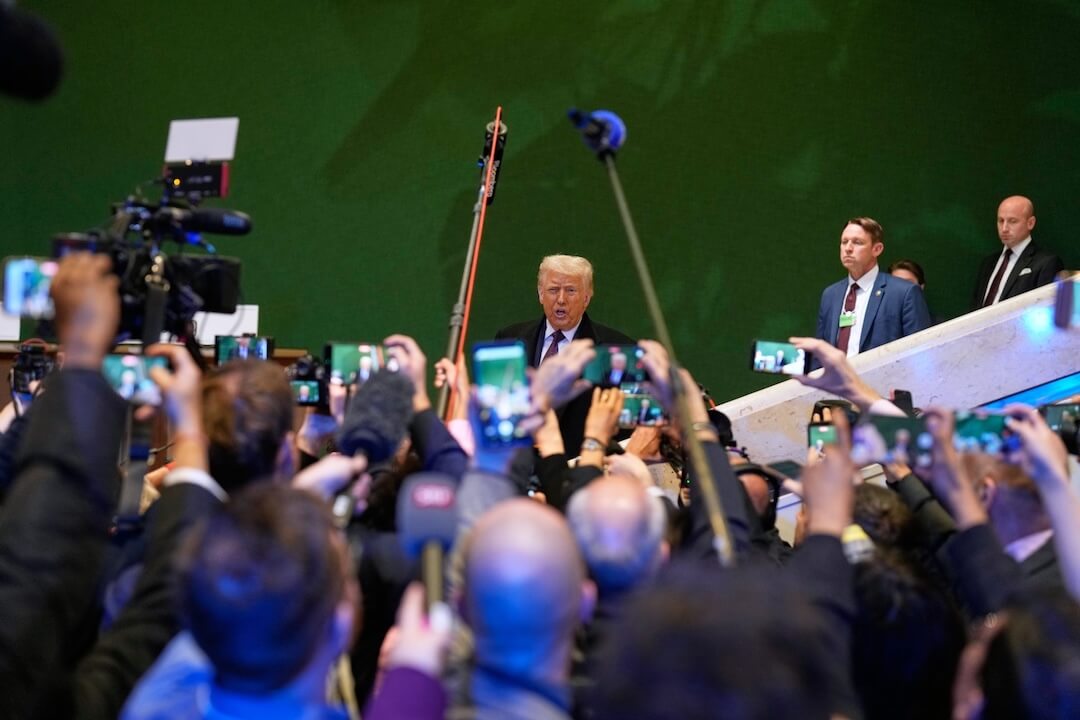
Chris Hayes stated, 'It was a litany of lies that he's told before about facts of the matter, that Barack Obama gave the Iranians billions of dollars. He didn't. It was repatriated assets that had been seized by the United States pursuant to that negotiated deal.'
US Elections
fromwww.theguardian.com
4 days agoEx-Alex Jones employee reflects on job at Infowars: It was nonsense. It was lies'
Owens described how Infowars aimed to create a cinematic experience, stating, 'We would go out there, we would shoot videos like we were in the weeds, we were showing what was really going on. But it was nonsense. It was lies.'
Media industry

Left-wing politics
fromemptywheel
1 month agoUntrustworthy - emptywheel
The Trump presidency undermines institutional trustworthiness through contradictory policies, selective law enforcement, and politicization of federal agencies, eroding confidence in U.S. government institutions domestically and internationally.



fromFast Company
2 months agoHow to build your deep reading and critical thinking skills to better resist misinformation
The average American checks their phone over 140 times a day, clocking an average of 4.5 hours of daily use, with 57% of people admitting they're "addicted" to their phone. Tech companies, influencers, and other content creators compete for all that attention, which has incentivized the rise of misinformation. Considering this challenging information landscape, strong critical reading skills are as relevant and necessary as they've ever been.
Education
fromFast Company
1 month agoMisinformation is scaling. We need to get better at countering it
Most days, an email lands in my inbox with the promise to amplify my growth-my newsletter subscribers, the reach of my podcasts, the number of client leads, etc. I've gotten used to random people pitching me on their services, and some of the messages expertly prey on my insecurities as a business owner ("you're leaving so much on the table," et al.). I never answer any of them, but I sometimes wonder which ones might actually be legit.
Artificial intelligence


fromJezebel
1 month agoWhen AI Tools Yield Bad Journalism, Who Is Held Accountable?
A reporter at Ars Technica, whose beat was specifically reporting on AI, was fired after it turned out that a piece he had co-authored contained quotes fabricated by the AI tools he was using. Ars Technica has subsequently retracted the original story entirely, publishing an editor's note, stating that it was 'a serious failure of our standards,' but that they believe it to be an 'isolated incident.'
Media industry
Artificial intelligence
fromFast Company
1 month agoAI can now fake the videos we trust most. How to tell the difference-and how newsrooms can respond
AI-generated videos now convincingly mimic trusted eyewitness formats, making fake footage indistinguishable from real and undermining information reliability.
fromFuturism
2 months agoNewspaper Makes Brain-Melting Error in AI-Generated Graphic
In the latest sign of the times, the Economic Times - the second most widely-read English-language newspaper in the world, as of 2012 - picked the word "Kafkaesque" as its "Word of the Day " earlier this week. But even the briefest glance at the accompanying illustration reveals that the piece involved little, if any, human oversight. The issue is the image at the top of the piece - which, to be fair, is labeled as being AI-generated - that attempts to write the word on a blackboard.
Artificial intelligence
fromPoynter
2 months agoDocumentary about Poynter's PolitiFact brings story of fact-checking to Japanese television - Poynter
"With the widespread use of social media, the global spread of 'fake news' has become a serious social issue," Masahiro Yamamoto, the documentary's director, said in an email. " In Japan as well, information of mixed accuracy is circulating widely, and the situation continues to worsen. Against this backdrop, we felt there was much to learn from PolitiFact, which has been conducting fact-checking for nearly two decades."
US politics
fromNieman Lab
1 month agoMany people who live in "local news deserts" don't feel deprived of local news, study finds
The industry's attempts to educate consumers "[seem] to largely have gone unheard," Amy Mitchell, then Pew's director of journalism research (she now heads the Center for News, Technology, and Innovation) said in a briefing at the time. "There's really a disconnect there between the public's knowledge and understanding about the industry and how it's functioning, compared with what we see in headlines day in and day out about budget cuts and revenue declines."
Media industry
fromwww.mediaite.com
1 month agoThe Washington Post Disaster is an Indictment of Both Publishers and Society
The shocking diminishment of The Washington Post, which has just announced it is cutting a third of its staff, is not just another story of a great paper succumbing to algorithms, social media, and the march to idiocracy. In their zeal to be seen as fair and evenhanded, journalists tend to accept the common criticism that they failed to adapt that, basically, they didn't produce enough viral TikTok videos. There's some truth to that, but the main problem lies elsewhere.
Media industry
[ Load more ]