Fundraising
fromFast Company
22 hours agoHow giving starts progress and leadership scales it
Volatility and accountability are transforming philanthropy, requiring leadership to drive impactful change.
I'm incredibly proud of the firm and what we've accomplished in the last year. We had certainly, the year before, a historic year financially, and this year was also historic in being one of our best financial years in history.
After worrying that he was somehow trying to scam me, I reluctantly sent him my address. A week later, the radiator arrived on my doorstop. A mate was able to help me install it and bingo the car worked again.
Devon Hase states, 'People are trying desperately to fix, optimize, or escape their way out of relationship difficulty - and suffering more for the effort. Social media has made this worse! We're surrounded by images of perfect partnerships while quietly drowning in our own ordinary struggles.' This highlights the pressure couples feel in the age of social media.
As a Muslim council member in a district that has a huge Muslim enclave and a huge diverse Jewish community, I came into this work doing interfaith work. So having this summit doesn't feel like we're doing something new, it's a continuation of what we've already been building.
The labor of this kind of organizing was invisible and deeply exhausting. In a precarious workplace, where a so-called 'performance review' could amount to job loss, organizing meant building a bridge while standing on it.
Most for-profit companies still confine nonprofit relationships to corporate philanthropy. Donations flow through foundations, annual reports highlight community contributions, and nonprofit engagement is framed as evidence of corporate responsibility.
Why do I get to be the runner, and these guys get to be the homeless guys on the corner? Why can't we all be runners? She didn't have an answer. It would've been easy to let that question dissolve with her footsteps. Most people would have. But Mahlum saw something in those men that others had missed.
Losing staff could be detrimental to the projects we worked on, and there was a growing dissatisfaction with how meetings were run. These mostly one-sided discussions left the quieter half of us feeling pushed aside, like our thoughts didn't matter much. If things stayed this way, I worried the good people on our team would start quitting one by one.
I've always thought it would be good to acquire an old warehouse in every town throughout the land and convert it into low-rent community workspaces for artists, local charities and small businesses getting off the ground. A kind of people's WeWork. What would others do with a humungous, but not unlimited, pile of dosh to benefit society? Roland Freeman, West Yorkshire Send new questions to nq@theguardian.com.
Catch up quick: President Trump created the White House Faith Office by executive order on Feb. 7, 2025, placing it within the Domestic Policy Council and moving it into the White House complex. The move was designed to signal a "direct line" between people of faith and the executive branch. Unlike the versions under prior administrations, which were often situated in agencies or outside the immediate West Wing orbit, this office is central to Trump's "religious freedom" agenda.
"I thought I was going to die in the street on this day." Moses describes the moment his health deteriorated to the point where he collapsed outside Victoria Station, having lived on the streets for several months. "I was there for maybe one hour on my knees with my suitcase, and crying in a lot of pain. I was broken." Moses now says he has found a "new family" at the Salvation Army church in Chalk Farm but is still trying to find a permanent home.
BBC Jodie was surrounded by smiling faces at her 21st birthday party, but most were people she had not known for more than a month. The party had been organised for her by the London International Christian Church - a Bible-based non-denominational church, according to their website - into which she had recently been baptised. She was told by her "discipler", or church mentor, she says, that she could not invite any friends from outside the church - only a handful of family members.
When you think about the goings-on inside an average church, you might envision a sermon, a reading from the Bible or a song or two. Something that's less expected would be, for instance, a guided group meditation - and yet meditation has been showing up in a growing number of religious contexts where you might not expect it. That, at least, is one of the big takeaways from a recent Associated Press investigation by Luis Andres Henao and Deepa Bharath.
In the aftermath of Alex Pretti's killing in Minneapolis, my Instagram algorithm served up a never-ending carousel of sizzling rage. Most of that rage was directed toward the country's immigration-enforcement agencies, while some, of course, was aimed at defending them. But I wasn't expecting the post from Blake Guichet. "There's a difference between compassion that is grounded and compassion that is hijacked," Guichet, a pro-Trump Christian influencer who posts on Instagram under the handle "thegirlnamedblake," had typed on butter-yellow slides.
A group of Buddhist monks is set to reach Washington, D.C., on foot Tuesday, capping a trek from Texas that has captivated the country. The monks in their saffron robes have become fixtures on social media, along with their rescue dog Aloka. They walk to advocate for peace. That simple message has resonated across the U.S. as a welcome respite from conflict and political divisions.
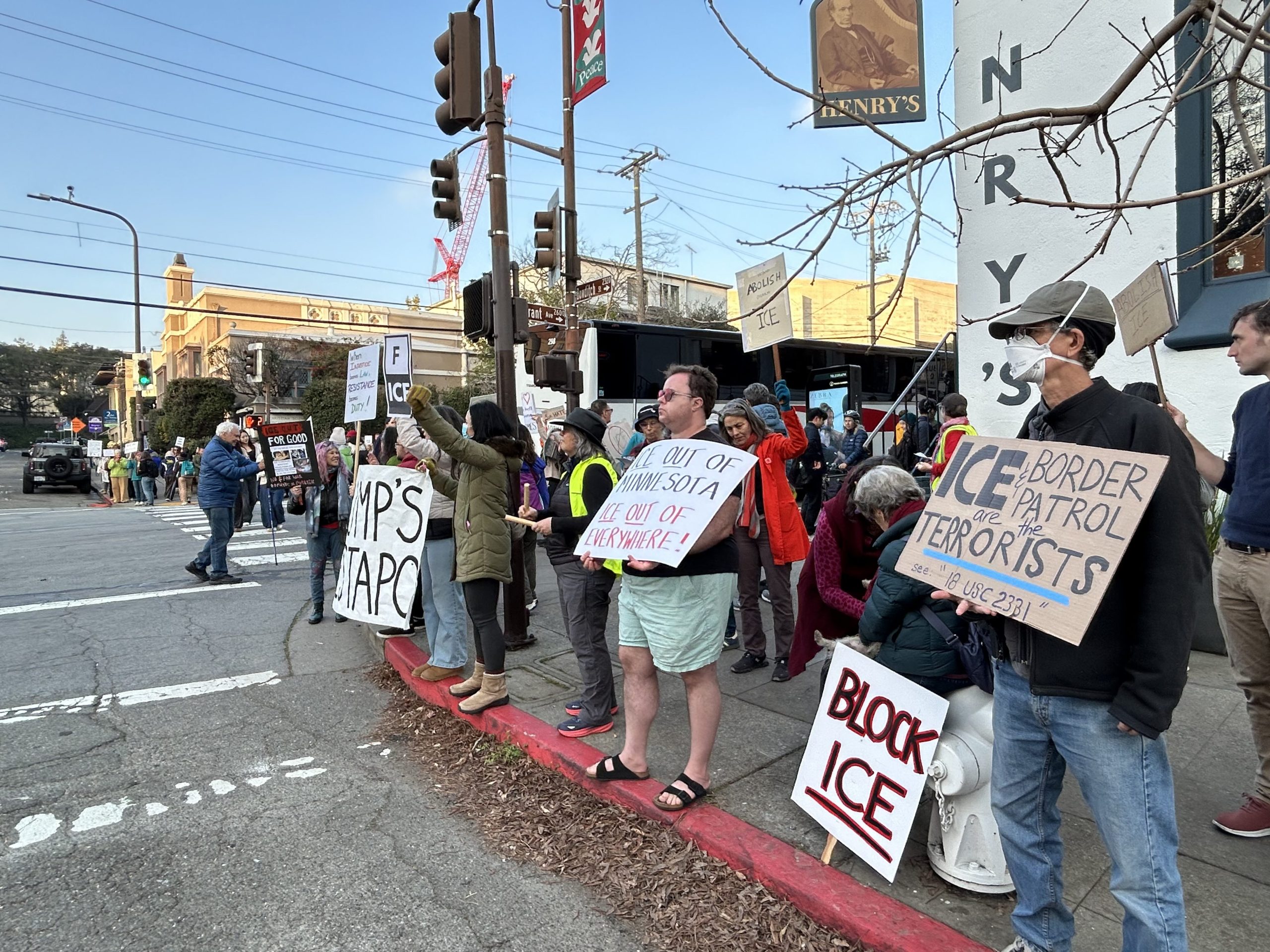
"Are you okay?" These were Alex Pretti's last words, said to a woman after ICE agents had tackled and pepper-sprayed her. Videos from bystanders show Pretti holding up a phone, attempting to document what was happening before he himself was pepper-sprayed, wrestled to the ground, and killed by those officers. He lost his life not for committing violence, but for documenting it, and stepping in to protect someone facing it.
I've seen this before-many times, in fact. What you're describing is not unheard of in the nonprofit sector. Founder energy is one of the most powerful forces driving new missions into the world. It can also be one of the riskiest. Many organizations, especially those built from lived experience, passion, and necessity, begin with little more than a vision, a problem to solve.
The change in the administration's tactics in Minneapolis is not a retreat. Instead, they are regrouping and planning another mode of attack, with the hopes that their repression might be met with resistance that is easier to control and contain. People who garner their relevancy and power through the dehumanization and oppression of others will do whatever it takes to cling to their soulless sense of self.
PITMAN, New Jersey -- Randy Van Osten knew he had a calling to serve in the church since he was a teenager. That path led him to become the pastor at First Baptist Church of Pitman. There, he wears many hats in addition to his tie-dye shirts and patchwork pants. He and a team of volunteers contribute to the Pitman Food Pantry, a project that brings several church communities together to feed the neighborhood.
There's a myth in our society that real change requires force, strength, and domination. We celebrate athletes, CEOs, and politicians who crush their opponents. But history tells a different story. Lasting social change has often been triggered by humble people whose weapons were passion, principle, and an unwavering commitment to justice and the truth - not the truth we see on TV or read in print media, but rather the truth that we feel deep inside ourselves.
I never met my immigrant ancestors, but I know my great-grandfather, Martin Huppert, would likely have been deported under President Trump. Immigrating to America from Hungary at the age of 18 in 1900, Huppert settled in Jersey City and made his living both distilling and selling liquors. When alcohol became illegal with the passage of the Eighteenth Amendment in 1919, Huppert's vocation transformed into a criminal enterprise, and thus Huppert became a bootlegger-at least until Prohibition ended in 1933 and Huppert's livelihood became legal again.
Matthew Marrero witnessed the emotional detainment inside of 26 Federal Plaza on Nov. 24. The pair had been attending what they thought would be a joyous Green Card appointment that would cement their life together; instead, it turned into a nightmare when the Marreros were separated by ICE, and Allan was transferred from facility to facility. After months of fighting for his husband's freedom, Matthew Marrero flew to the Magnolia State on Jan. 27 for Allan's bond hearing.