#family-portraits
#family-portraits
[ follow ]
#photography #family #parenting #family-dynamics #photojournalism #nature #masculinity #nostalgia #family-traditions
#photography


Photography
fromwww.theguardian.com
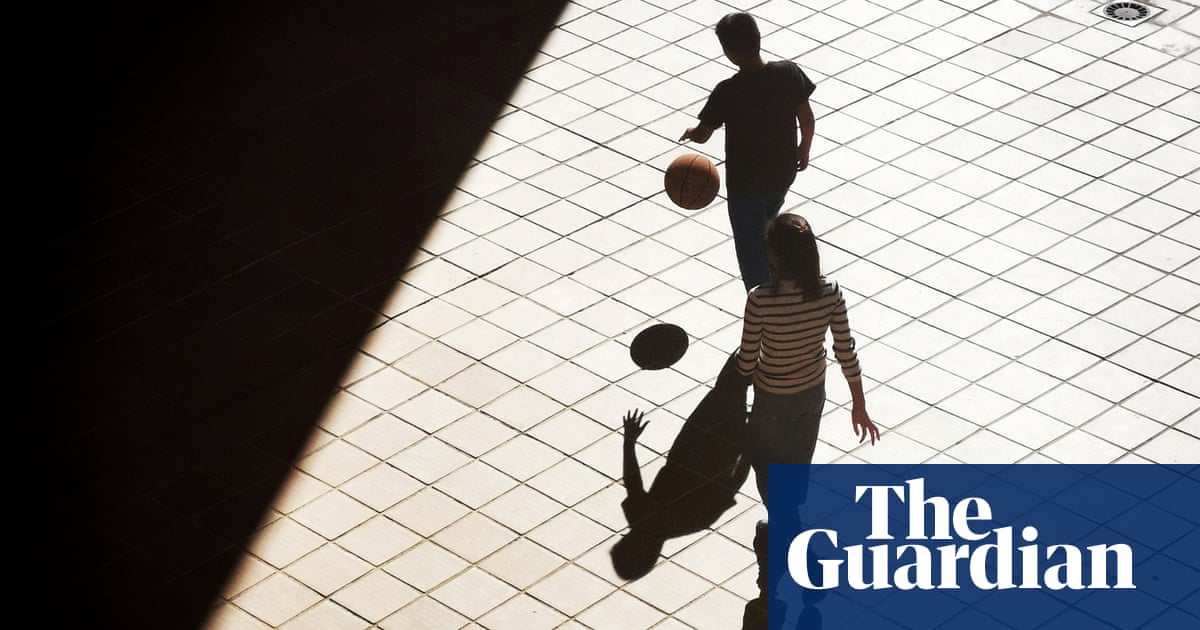
6 hours agoThe shadows, the figures playing basketball I waited for the magic to appear then it did': Jose Luis Morales Martin's best phone picture
Jose Luis Morales Martin captures the interplay of architecture and photography, emphasizing the emotional connection and artistry in both fields.
Photography
fromItsnicethat
2 days ago"What if everyone started making out?" Andrea Marti's horny photo series tackles Gen Z's lack of intimacy head on
Andrea's photographic series reimagines intimacy in a digitally isolated world, inspired by Raquel S. Benedict's essay and Tom Wood's nostalgic club scenes.
Relationships
fromSilicon Canals
10 hours agoThe most painful version of not belonging isn't being rejected by strangers. It's sitting at your own family's dinner table, surrounded by people who share your last name, and feeling like you're watching the evening through glass. - Silicon Canals
Belonging can exist alongside profound loneliness, where one feels unseen even in the presence of family and friends.
Mindfulness
fromSilicon Canals
1 week agoI asked my mother what she thinks about when she looks at old photographs of herself and she said "I think about how worried I was and how little of it mattered" - and the simplicity of that sentence from a woman who spent decades carrying everything has been sitting in my chest for three weeks because it contains a permission I'm not sure I'm brave enough to take yet - Silicon Canals
Worry often consumes energy without yielding significant outcomes, highlighting the importance of action over inaction.
#family-dynamics
fromSilicon Canals
4 weeks agoRelationships
My father spent thirty years telling me exactly what was wrong with my life and the one time I gently told him something true about his, he didn't speak to me for six weeks - and in that silence I finally understood that what he had always called honesty was never actually a conversation, it was a performance with no room for a second actor - Silicon Canals
Law
fromIndependent
1 week ago'Even the simple distribution of heirlooms can become contentious' - how to divide inheritance in blended families and avoid arguments
Estate planning in blended families requires careful consideration to avoid inheritance issues, especially regarding stepchildren and property ownership.
Writing
fromwww.theguardian.com
2 weeks agoThe moment I knew: I was enchanted by her painting but we never spoke. I wouldn't see her again for 55 years
A man reconnects with a childhood classmate whose exceptional artistic talent impressed him decades earlier, leading to an unexpected reunion after 55 years of separation.
fromSilicon Canals
3 weeks agoI'm 66 and my eight-year-old grandson looked at a photograph of me at thirty and said "Grandpa, were you handsome?" and the word "were" did something to me that I still can't explain to my wife three weeks later - Silicon Canals
In my head, I'm still that guy from the photo. Still strong, still capable, still got it. Then I catch my reflection in a store window and think, who's that old guy? The disconnect is wild. I'll go to lift something heavy and my brain says 'no problem,' but my shoulder reminds me about those thirty years of overhead work.
Miscellaneous

fromSilicon Canals
1 month agoPsychology says the reason boomers get emotional watching old home movies isn't the people in them - it's the background, the furniture nobody saved, the wallpaper nobody photographed, the ordinary details of a life that felt permanent until it wasn't - Silicon Canals
We photograph people obsessively, but we rarely capture the everyday spaces where life actually happens. And when those spaces disappear, something profound goes with them. The furniture was never just furniture—it was the stage where decades of family life played out. Every scratch, stain, and worn patch told a story.
Digital life

Parenting
fromSilicon Canals
1 month ago9 quiet things the best grandparents do that have nothing to do with spoiling-and the one their grandchildren remember most vividly as adults is always the smallest - Silicon Canals
Grandparents create lasting impact through presence, patience, and consistent rituals rather than material gifts or solutions.
fromBuzzFeed
1 month ago50 Historical Photos That Are So Shocking, They're Changing My Perception Of The Entire World
I recently gained a new obsession, and I'm ready to share it with the world: finding and analyzing rare vintage images. A picture speaks a thousand words, and these photographs tell us more about history than a textbook chapter ever could. So even if you think history is boring, I'm well-equipped to change your mind, and give you some delicious food for your brain to chew on today.
History
fromemptywheel
2 months agoHow Do You Want Your Family to Remember You? - emptywheel
The Stasi, the secret police, were legendary for their data files. Their work was based on instilling fear, and they induced stunningly amazing numbers of East Germans into informing on their neighbors. Something along the lines of 1 in 6 East Germans were informants, whether out of fear or out of approval of what the East German government was doing.
US politics
fromEmptywheel
2 months agoHow Do You Want Your Family to Remember You?
The Stasi, the secret police, were legendary for their data files. Their work was based on instilling fear, and they induced stunningly amazing numbers of East Germans into informing on their neighbors. Something along the lines of 1 in 6 East Germans were informants, whether out of fear or out of approval of what the East German government was doing.

E-Commerce
fromBuzzFeed
1 month ago12 Grandparent Memory Books And Journals To Chronicle Family Histories
BuzzFeed Shopping provides service-focused product recommendations prioritizing readers, vetting products, fact-checking claims, exposing fake deals, and offering authentic, inclusive choices across price points.
fromSlate Magazine
2 months agoHelp! I Thought I Knew an Important Part of My Family's History. Turns Out, I've Been Living a Lie.
When I was 4 years old, my parents divorced, and my father moved away. I grew up thinking that my biological father was "John," but recently discovered that my mother had an affair with another man, "Allen." Allen is my biological father. This was a surprise and filled with a lot of drama, but it's gotten weirder than you'd imagine.
Psychology
fromBuzzFeed
2 months ago50 Extremely Fascinating Pictures Of People Throughout History I Can Pretty Much Guarantee You've Never Heard Of
1. The very first iteration of Ronald McDonald was created by Willard Scott in 1963: 2. The two people depicted in Grant Wood's "American Gothic" actually exist. This is what they looked like: 3. This is Margaret Gorman, the woman who won the very first Miss America competition in 1921: 6. This is Conrad Veidt, the man whose performance in the 1928 film The Man Who Laughs inspired the look of the iconic villain the Joker:
Film
fromwww.theguardian.com
1 month agoIt helps with loneliness': grief, play and the power of lifelike dolls - photo essay
It's a doll, Ineke Schmelter, 71, often says as she walks down the street with a pram and someone peers fondly under the hood, asking: How old is the baby? Then she pulls back the blanket and reveals the doll. She points out the craftsmanship the little veins, the creases in the skin and explains that it can take as many as 20 layers of paint to achieve such a lifelike finish.
Arts
fromwww.theguardian.com
2 months agoMy favourite family photo: It's a snapshot of our goofy bond'
It was his aside that spoiled the secret identity of Santa Claus; he who laughingly revealed the mechanics of sex; he who gave me my first sip of beer. Yet, when he found out I was sneaking cigarettes from my dad's stale dinner party supply, he chastised me before either of my parents could, and when my mum was diagnosed with cancer and I was just 15, he was already a 22-year-old medical student.
Relationships
Relationships
fromwww.theguardian.com
2 months agoMy favourite family photo: I bucketed 30 years of tears that day then smiled my smiliest smile'
A long-term couple chose a civil partnership after 30 years together, valuing romance and legal protection, celebrated in a joyful ceremony just before COVID disrupted plans.
fromwww.aljazeera.com
2 months agoLooking for My Mum
Twenty-one-year-old Moez al Shreiti was given up by his Tunisian mother at birth but is absolutely determined to find out where he comes from. His search takes him on a roller-coaster journey to find answers to the question that's dominated his young life. This observational film follows his sometimes painful search with all its obstacles, going to courts and hospitals and trying to get hold of official records.
Film
Photography
fromThe Art Newspaper - International art news and events
1 month ago'Sometimes it would get physical': the photographer who captures humanity at close quarters
Mark Cohen's abrupt, close-cropped street photographs use confrontational, flash-driven techniques to capture ordinary people and scenes, predominantly in Wilkes-Barre, Pennsylvania.
Photography
fromwww.theguardian.com
2 months agoMy favourite family photo: My mother stares dreamily into the distance, looking like an extra from Mad Men'
Rediscovered Kodachrome slides revealed a rare, evocative family photo of a mother and child boarding a plane to Kolkata, reconnecting memory and photographic legacy.
fromPsychology Today
2 months agoShould You Include Former In-Laws in Family Celebrations?
You didn't just lose a husband-you also folded yourself into his family's grief and stood beside them through their darkest moments. Those ties don't simply disappear because life moves forward. Knowing that firsthand, I want to acknowledge the very human dilemma you are facing. You're balancing loyalty to someone who has been family for a long time with the commitment you are now making to a new partner. These are not simple emotional shifts. They require courage, clarity, empathy, and a whole lot of heart.
Relationships
fromSilicon Canals
1 month agoIf you remember these 8 weekend rituals from childhood, you grew up with stronger family bonds than most people have today - Silicon Canals
I was thinking about this the other day while scrolling through my phone on a Saturday morning, realizing I'd been working for two hours without even noticing. Growing up, my weekends looked nothing like this. There were unspoken rules, traditions that just happened without anyone scheduling them into a calendar app. These weren't grand gestures or expensive activities. They were simple rituals that, looking back now, built something most of us are desperately trying to recreate through therapy apps and self-help books: genuine connection.
Relationships
fromBusiness Insider
2 months agoMy family took a weekend trip with my parents. They're still full-time caretakers to my younger siblings, so the time with my kids was priceless.
I consider my mom the crème de la crème of mothers. She was the involved kind; always pulling out crafts, baking cookies, and making you feel deeply loved. But as a grandma, she's the first to admit things haven't unfolded the way she imagined. I can't think of a time when my three kids, ages 2, 8, and 13, had my parents entirely to themselves.
Parenting
Arts
fromBusiness Insider
2 months agoI became a tattoo artist with my dad's support. Tattooing my family was the most meaningful gift I've given.
A tattoo artist pursued an apprenticeship with strong family support and gifted personally meaningful tattoos to family members as expressions of her art and gratitude.
Photography
fromwww.theguardian.com
2 months agoThe boy's contented face, his red hair matching the pig's you couldn't plan for it': Kelli Radwanski's best phone picture
Remote-controlled iPhone photography captured a spontaneous morning portrait of five children and their pot-bellied pig, producing an unplanned, perfect shot.
[ Load more ]