Higher education
fromInside Higher Ed | Higher Education News, Events and Jobs
2 days agoWhen Employees Lose Jobs, Their Kids Lose Scholarships
Joe Behen's job loss raises concerns about his daughter's tuition-exchange scholarship at USC.
The One Big Beautiful Bill Act includes the largest overhaul to the federal student aid system in decades, limiting loan repayment and debt forgiveness options for borrowers.
As the Federal student aid portfolio soars to nearly $1.7 trillion and with nearly a quarter of student loan borrowers in default, Americans know that the Department of Education has failed to effectively manage and deliver these critical programs. By leveraging Treasury's world-renowned expertise in finance and economic policy, we are confident that American students, borrowers, and taxpayers will finally have functioning programs after decades of mismanagement.
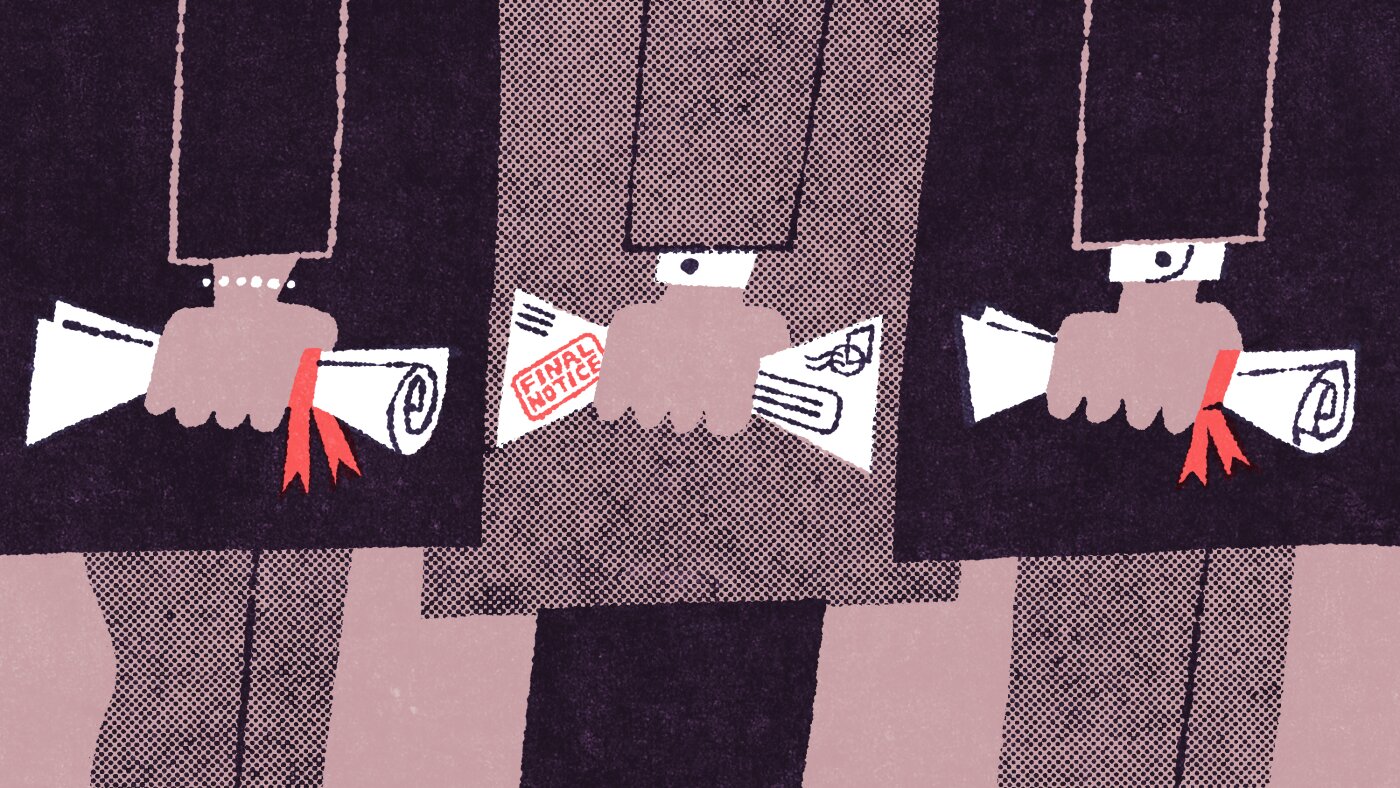
With roughly nine million student borrowers in default, the Treasury Department will "assume operational responsibility for collecting" on those loans, the Education Department announced Thursday. The move is ED's latest effort to render itself obsolete as part of the Trump administration's plan to eliminate the department. This is the 10th interagency agreement it has signed to share with or spin off functions to other federal agencies.
I was like, 'What do you mean, I can actually work and take some classes?' I didn't even know there were apprenticeships out there, because I thought it was something of the past. That was my dream-to go into some field of engineering-so it was great to find something like AT&T, which has an apprenticeship program where you can jump into it, which later becomes software engineering.
These actions further align the postsecondary and workforce education programs of ED and DOL and will position DOL as the central hub for America's postsecondary education and workforce development programs. Through the agreement, Labor is essentially administering ED grant programs, while ED continues to set the budget, criteria and priorities for the programs and manage hiring and other HR processes.
At the same time, children's development and families' needs do not end when the bell rings or when they enter kindergarten; continuous afterschool programming from early childhood through adolescence is critical. To fully realize the goals of universal childcaresupport working families, advance educational equity, and strengthen the economyNew York City must extend this vision to K12 students and make universal afterschool programming a core part of the solution.
The 13-member panel, comprised largely of state officials, think tank researchers and higher ed lawyers, spent the last four days negotiating the rules of a new college earnings test called Do No Harm-which applies to all degree programs-as well as changes to the existing gainful-employment rule, an accountability metric that only applies to certificate programs and for-profits. The department's proposal, which aligns the two accountability
Institutions want to be recognized for the great work they're doing. What [the recognition] would say to the public, to the students, to our community, is that we don't just enroll a certain percentage of students. We also produce successful outcomes for those students.
We are proud to begin implementing this historic partnership that will not only create a better coordinated federal approach to postsecondary education and workforce development, but will also ensure that students pursuing higher education pursue programs aligned with their career goals and workforce needs," Assistant Secretary for Postsecondary Education David Barker said in a statement.
At its best, police education and training prepare law enforcement officers with the knowledge and skills-including principles of constitutional law, active listening and verbal de-escalation techniques, implicit bias awareness, how to recognize signs of mental illness or substance abuse, use of force standards, and ethical decision-making and professional conduct-that they will need to protect and serve the public as safely and effectively as possible.
According to federal data, 24 percent of New York adults are at the lowest levels of literacy, defined by the advocacy organization Literacy New York as being either functionally illiterate (reading below a fifth grade level), lacking a high school diploma, or being unable to speak English. That same data shows Brooklyn and Queens rates are roughly ten percent higher than the state average, and in the Bronx, a whopping 50 percent of adults do not have basic literacy skills.
This idea was based on the parallel between the pluck and elan that are characteristic of both the early-college students I worked with and that of America's hardest-working founding father. Five years after I wrote the book, I had the opportunity to revisit the field for a revised edition, making it appropriate to ask, after Thomas Jefferson's song in the second act of Hamilton, "What'd I Miss": How has early college/dual enrollment changed over the past half decade?
Earlier this month, the U.S. Department of Education sent a letter to every college and university president with the goal of continuing its efforts to curb voting among college students. This latest letter threatens colleges and universities if they participate in or use the data from the National Study of Learning, Voting and Engagement, claiming that if they do so, they "could be at risk of being found in violation of FERPA."
"Here's the reality: When you come to the table prepared with smart and dedicated people that are focused on a clear goal, you can move quickly and intentionally without sacrificing the thoroughness and the careful deliberation that this process deserves,"
It can be scary to borrow large student loans to finance an expensive college degree. There is a market failure, however, every time a student does not attend their preferred college, study their preferred major, or pursue their preferred career because they are afraid of student loans. Students should be free to pursue their passions - not forced into second-best choices because of the cost of the degree or the prospect of a lower income in the future.
Young people are "experiencing higher education differently, and that is shaping much of what parents are saying," said Lammers. "[Parents] are reacting to the questions their children are asking and trying to find the best way to help them navigate the next steps."