Remodel
fromWIRED
3 days ago15 Design-Forward DIY Tools Worth Upgrading to This Year
DIY has evolved into a significant cultural force, with the global market nearing a trillion dollars, driven primarily by cost-saving motivations.
"This is absolutely a rare window for young workers because the demand is real, funded, and seemingly long-term," Fraser Patterson, CEO of Skillit, stated. "These are not speculative jobs. They are tied to multi-decade investment cycles, and they offer a path to strong earnings, skill development, and stability without requiring a traditional four-year degree."
CEO Peter Matt stated, 'The CMC team delivered another strong quarter, driving a more than two-fold increase in core EBITDA compared to a year ago.' This reflects the company's robust performance amid challenging market conditions.
In the nineteenth century, entire railway networks became obsolete almost overnight, not due to physical deterioration, but because of changes in the technical standards that supported them. The expansion of railroads across Europe and North America adopted different track gauges, and as a dominant standard gradually emerged, these infrastructures became incompatible with one another.
Most water filter pitchers are made of BPA-free plastic. But as new research shows that bottled-water drinkers ingest tens of thousands of excess microplastic particles, wellness lovers have begun to look askance at water filters that are themselves made of plastic.
Perforated metal has long been valued for its strength, versatility, and clean visual appeal. Created by punching patterns of holes into metal sheets, it offers a practical balance between airflow, light control, and structural support. Across industries such as architecture, construction, mining, and interior design, perforated metal has become a go-to material for projects that require both function and style.
Photovoltaic (PV) solar energy represents a modular technology that can be manufactured in large-scale facilities, generating economies of scale, while also being adaptable to small-scale applications. From residential rooftop systems to large-scale power generation installations, photovoltaic solar energy has established itself as a cost-effective option for electricity production in many countries around the world.
In the past, roof inspections mostly focused on what could be seen from the outside. Contractors looked for broken shingles, worn flashing, or areas where water might enter the roof. The problem is that roof damage does not always show clear signs right away. Water can move through roofing layers before it becomes visible inside the home.
The contemporary technology museum has emerged as a performative participant in the systems it seeks to document. The architecture of these institutions has become increasingly fluid and bold, often mirroring the velocity and complexity of the systems it houses. They operate as mediators between the human, the ecological, and the technological realms, transforming from encyclopedic warehouses into active educational engines.
Your coding apprentice can build, at your direction, pretty much anything now. The task becomes more like conducting an orchestra than playing in it. Not all members of the orchestra want to conduct, but given that is where things are headed, I think we all need to consider it at least.
Rather than representing a simple return to the past, this renewed interest reflects a broader reconsideration of how architecture engages with materials, local resources, and environmental conditions.
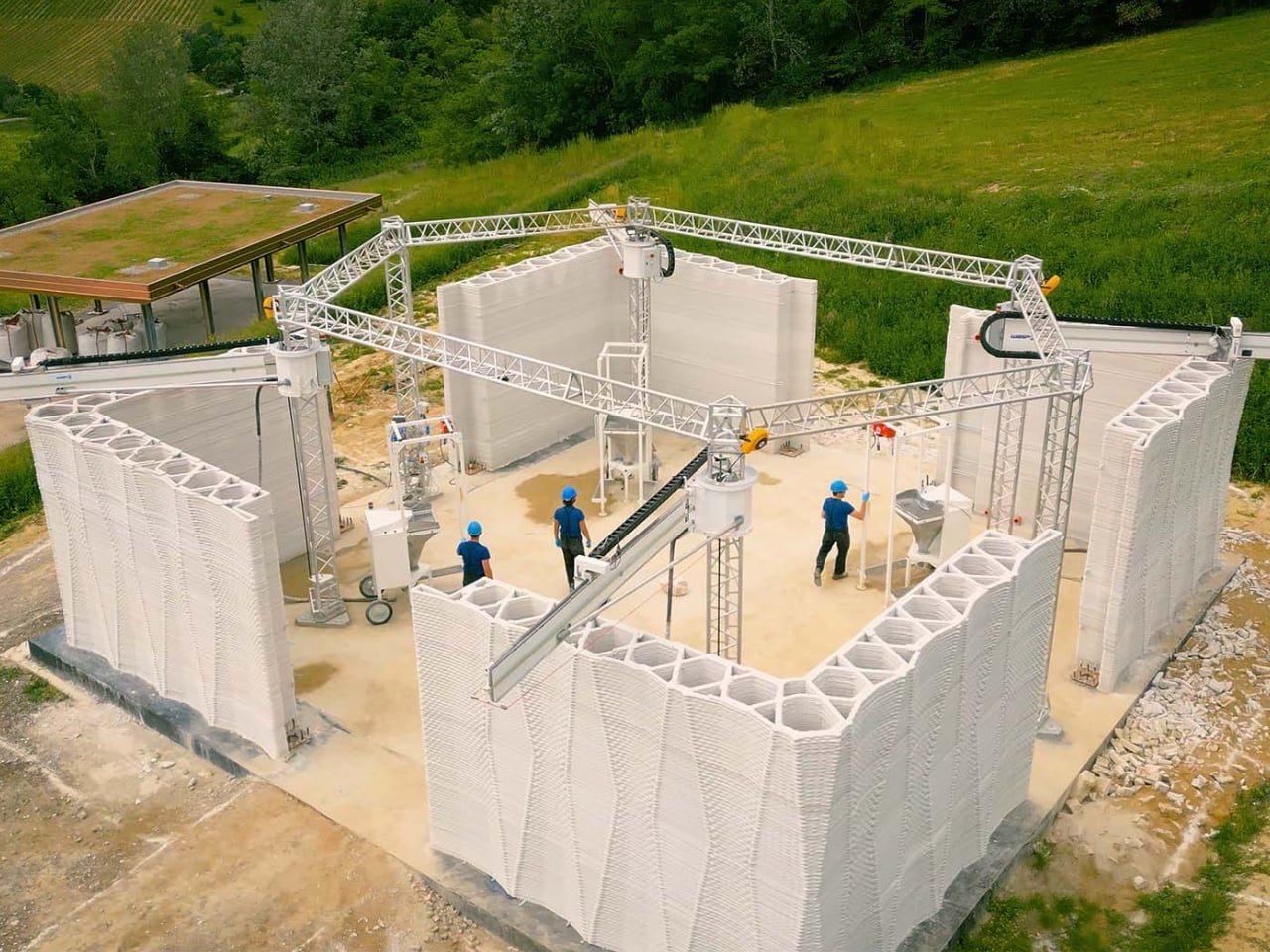
According to the outlet SlashGear, the neighborhood encompasses five 1,000-square-foot houses just north of Sacramento. Each domicile is produced by a hulking concrete printer worth about $1.5 million, which took about 24 days to spit out the first house. In the future, 4Dify expects the whole process to take about 10 days, but that isn't what's astonishing about the Yuba County neighborhood - it's the price tag.
Every architectural epoch has been defined by its instruments. The compass, the drawing board, the camera, and the computer have each altered how architects think and produce. Yet the current moment feels qualitatively different.
Mexico's construction sector faces significant environmental and social challenges. The widespread use of carbon-intensive materials has positioned the industry as a major contributor to national CO₂ emissions. At the same time, construction labor conditions remain unstable, with limited access to technical training and high occupational risk. CORNCRETL, developed by MANUFACTURA, proposes a circular material strategy that addresses both environmental impact and production models within the building industry.
the automation of heavy machinery enabled plants to operate continuously, increasing productivity and revenue. The downside was that any small hiccup was acutely felt, cascading through the production line. At first, it was assumed that inadequate lubrication of factory equipment was causing parts to seize up or break apart. And so, the Lubrication and Wear Group of the Institution of Mechanical Engineers, along with the Iron
Having explored adaptability at the city scale, we are now zooming in on the building itself-and, crucially, on practice. How can architects, developers, and consultants embed adaptability as a measurable, mainstream outcome? This question will be on the agenda at the Adaptable Building Conference (ABC) on January 22 at the Nieuwe Instituut in Rotterdam, where architects, engineers, policymakers, and industry leaders will explore the potential of adaptable buildings-and how to deliver them at scale.
We are now in a time of manufacturing where precision is more than a technical necessity; it's a business requirement. The more complex, globally dispersed and demanding things get, the less slack remains in the system. Under these circumstances tolerance management has become a decisive competence and affects competitiveness not only in terms of controlling costs, ensuring quality and improving production efficiency but also for long term market success.
One of the earliest large-scale examples of composite materials can be found in the Great Wall of China, where stone, clay bricks, and organic fibers such as reeds and willow branches were blended to create a resilient and lasting structure. These early techniques reveal a timeless intuition: distinct materials, when combined thoughtfully, produce properties unattainable by any single element.
How did a material conceived for bridges, factories, and large-scale structures make its way to the living room bench, the apartment bookshelf, the café table? For centuries, metal was associated with labor, machinery, and monumentality-from the exposed structures of 19th-century World's Fairs to the productive logic of modern industry. Its presence in domestic interiors is not self-evident but rather a cultural achievement: the transformation of an industrial material into an element of everyday, intimate use, in close proximity to the body.
'Polypropylene fibres are stretched and aligned for extreme tensile strength, then woven and heat-fused into a single composite sheet. No glues, no resins, no weak points,' Mous explained. 'This self-reinforced structure lets the shell flex under pressure instead of cracking, dispersing impact energy and rebounding to shape. 'It stays tough across extreme temperatures, resisting brittleness in the cold and softening in the heat.'
An exoskeleton is a relatively new class of wearable device designed to enhance, support, or assist human movement, strength, posture, or even physical activity. The main piece goes around your waist like a belt, and from it, a pair of hinged, mechanized splints extend down over the hips to strap onto each thigh, where they provide some robotic assistance to normal movements like walking, running, or squatting.
The vascular system and the brain are examples of physical networks that differ from the networks typically studied in network science owing to the tangible nature of their nodes and links, which are made of material resources and constrain their layout. The importance of these material factors has been noted in many disciplines: as early as 1899, Ramón y Cajal suggested that we must consider the laws conserving the 'wire' volume to explain neuronal design8
The site lies within the Petite Arche joint development zone, where design considerations include the town entrance, contextual integration, and alignment with natural elements. The building's form signals its position in an urbanized area and maintains visual dialogue with the surrounding landscape, including the protected Saint-Germain-En-Laye forest. A vegetated threshold along the northern edge reinforces landscape continuity, while the southern boundary engages with the urban character of the area.
In a balance of aesthetics, performance, and versatility, HIMACS shows a solid surface material of choice for many architects and designers. Taking a further step forward, the entire range of standard HIMACS sinks and basins is now officially SCS certified, containing a minimum of 8% pre-consumer recycled content. This certification enhances the material's technical and visual appeal by providing a more sustainable option without compromising quality or functionality.