#fomantis
#fomantis
[ follow ]
#pollinators #pest-management #soil-health #biodiversity #beekeeping #pest-control #synthetic-biology #fungi
fromTheregister
6 days agoBees and hummingbirds get trace alcohol from nectar
A study by researchers at the University of California Berkeley has found that ethanol is surprisingly common in floral nectar, the sugary fuel that keeps pollinators alive. Yeast feeding on those sugars produces trace amounts of alcohol, and in this study, it showed up in 26 of the 29 plant species sampled.
Beer
fromApartment Therapy
1 week agoI Love a DIY Fruit Fly Trap, but This Device Is a Great Alternative
The STEM Flying Insects Fan Trap uses blue light to attract bugs to come near the opening at the top and a whirring fan to suck the bugs inside, where they get stuck to a circle-shaped sticky glue trap.
Gadgets
London politics
fromwww.independent.co.uk
2 weeks agoMarket town pledges to save butterflies from shocking decline in UK first
Gillingham becomes the first UK local authority to commit to a nationwide challenge reversing butterfly population decline through habitat protection, pesticide elimination, and light pollution reduction.
fromNature
3 weeks agoUsing mosquitoes to vaccinate bats could curb the spread of deadly diseases
In a study published in Science Advances, researchers in China fed Aedes aegypti mosquitoes blood that contained either a vaccine against Nipah virus or the rabies virus. The viruses, contained in the vaccines, replicated inside the insects and reached their salivary glands, allowing them to pass on the vaccine when feeding on bats or when the bats ate the insects.
Coronavirus
fromdesignboom | architecture & design magazine
4 weeks agoEntoPedia magnetic camera turns insect encounters into digital specimens without capture
EntoPedia is a wearable digital collection system designed by Junfei Teng to reframe insect 'collecting' as documentation, turning everyday encounters into moments of observation, learning, and shared knowledge without physical capture. The project received the 2026 French Design Awards Gold (Professional) in Product Design, Educational Toys & Games, recognizing its approach to ecological education through wearable interaction and community-built datasets.
Wearables
fromwww.scientificamerican.com
3 weeks agoAI techniques speed up forensic analysis of crucial crime scene larvae
A maggot's age and species can give essential information to forensic entomologists investigating murders. Combing through these fly larvae, investigators can potentially learn when and where a crime happened, whether the body has been moved or whether toxins were involved. For example, blowflies are among the earliest insect colonizers of corpses; they typically sniff out and lay eggs on a dead body within minutes to hours.
Roam Research
fromwww.independent.co.uk
3 weeks agoBees can breathe underwater for a week, scientists discover
This study started from a discussion with my co-author and postdoctoral researcher, Sabrina Rondeau, whose recent findings showed that these queens can survive submersion for over a week, which is extraordinary for a terrestrial insect. We wanted to understand how that's even possible.
Science
Science
fromwww.scientificamerican.com
4 weeks agoScientists created a digital library full of ants
Researchers created Antscan, a digital library of 3D scans and morphological data from 2,193 ants across 212 genera, using particle accelerator technology to advance biodiversity research and understanding of ant anatomy.
fromwww.theguardian.com
1 month agoI love midges because I know what their hearts look like': is the passion for taxonomy in danger of dying out?
When Borkent stops working, biting midges risk becoming an orphan group, a term that taxonomists give for a branch of the web of life that is no longer being studied. It is a pattern playing out across the field, he says. I am one of the last few standing. It's crisis all around. As the taxonomic community ages, we are not being replaced.
OMG science
fromRealagriculture
3 weeks agoVive Crop Protection announces registration of foliar fungicide Phobos FC 360
Canadian growers are looking for solutions that deliver consistent disease control without adding complexity to their spray programs. Phobos FC 360 brings a clear application advantage, stronger on-leaf retention, even coverage, and proven performance across Canada. We're excited to provide growers with another tool that helps protect yield potential and maximize the value of every acre.
Agriculture
Artificial intelligence
fromwww.scientificamerican.com
2 months agoCracking DNA's dark matter with AI, surviving two days without lungs, and uncovering a botanical mystery
AlphaGenome, an AI model, predicts DNA segment functions to expand understanding of genetic code and its links to proteins and disease.
fromRealagriculture
1 month agoAg Policy Connection: Rethinking funding for plant breeding, with Jason Reinheimer
"If Canada wants generational change in agricultural innovation, we need to transform our policy around how we fund plant breeding," he says. The current system, heavily reliant on public funding and check-off dollars, is increasingly under pressure. Reinheimer points to signs that Agriculture and Agri-Food Canada (AAFC) is shrinking its breeding footprint-especially in wheat, where AAFC varieties still account for about 80 per cent of acres. The problem? There's no updated funding model to match that shift.
Canada news
fromKqed
1 month agoWhat an Insect View Really Looks Like | KQED
On a spring day in 1694, Antonie van Leeuwenhoek - the father of microbiology - used a magnifying lens to look at a candle through the dissected eye of a dragonfly. But instead of seeing 1 candle flame, he saw hundreds of tiny flames, repeated over and over. But spoiler alert - this is not how insects see. Hi, I'm Niba, and today we're going to explore how insects really see the world.
Science
fromwww.pressenterprise.com
2 months agoAre ants invading your home? Here are steps you can take to get rid of them
Native ants are beneficial to the environment. They will eat pest insects such as fleas and termites. They also aid in breaking down organic matter such as dead plants and animals. Native ants form distinct colonies that will battle each other, limiting their populations. They also tend to behave themselves and stay outdoors. Argentine ants tend to invade indoor spaces during hot, dry weather or after heavy rain.
Environment
fromRealagriculture
1 month agoThe strongest start: How seedcare innovation is shaping crop protection in Canada
"I've been with Syngenta for 28 years," Ramachandran says, noting that early travels across Canada shaped his passion for seed care. "What really stood out to me is seeing firsthand the passion, the resilience and the impact the growers made." Those experiences, combined with Canada's short growing season, continue to guide his work. "Everything that we have done... is around addressing those challenges, and how do we create solutions that are fit for purpose, for Canadian growers?"
Agriculture
fromNature
1 month agoBiodiversity conservation has an evidence problem - it's time to fix it
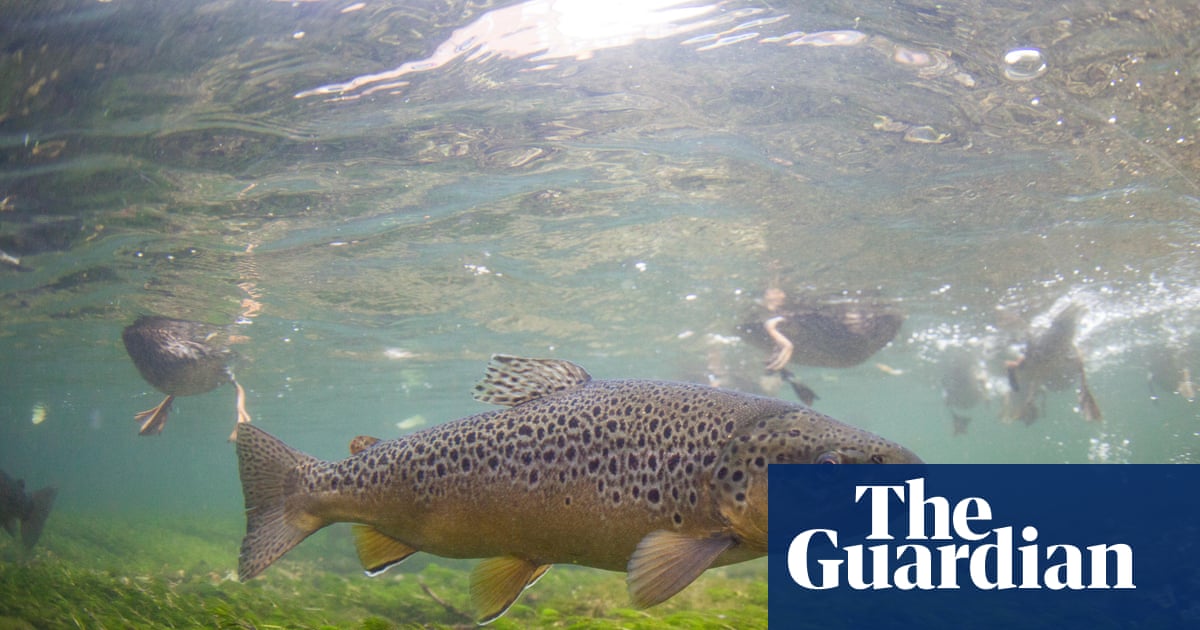
Biodiversity loss is continuing at an unprecedented rate, with species becoming extinct at between 100 and 1,000 times the average pre-human, or 'background', rate. Human activities are the main cause. Although there are hundreds of local, regional and international initiatives to conserve and sustainably use species and ecosystems, many conservation scientists worry that measures such as interventions to conserve individual species or incentives to create protected areas are not supported by strong evidence from research.
Environment
fromRealagriculture
1 month agoOMAFA looks to bolster field crop team
According to the job posting, the successful candidate will serve as the lead provincial specialist for edible beans and edible oilseeds, including Identity Preserved (IP) soybeans, spring and winter canola, flaxseed, and sunflower. The role centres on technology transfer - developing and implementing strategies, policies, and programs - while coordinating projects that assess new and existing practices for their suitability under Ontario conditions. The specialist will also prepare and deliver educational tools, act as a liaison between the research community and industry, support policy and program development, and manage high-priority or contentious issues in the sector.
Agriculture
fromDaily Coffee News by Roast Magazine
1 month agoIn Wake of India's "Green Revolution," Scientists Find Organic Soils Healthier
As concepts such as "regenerative" and "biodynamic" continue to enter the mainstream coffee lexicon, scientists continue to literally dig into the soil to give them meaning. A recent peer-reviewed study from India's Western Ghats argues that one of the clearest signals of healthy, sustainable coffee farms lies in the ground itself, with organic coffee soils performing better than soils from conventional farms treated with synthetic inputs.
Agriculture
fromInsideHook
2 months agoAn Essential Part of Farming Has Two Wings and a Beak
When you think of farming, what ingredients do you generally associate with a successful harvest? The basics certainly come to mind: fertile soil, plenty of sunlight and lots of water. But there are other variables that can also mean the difference between a crop of healthy fruits and vegetables and a large heap of organic waste. And it turns out that one of those variables is a very small hawk.
Agriculture
[ Load more ]