#fulbright-hays
#fulbright-hays
[ follow ]
#higher-education #department-of-education #higher-education-reform #academic-freedom #trump-administration
#higher-education




Higher education
fromInside Higher Ed | Higher Education News, Events and Jobs
2 months agoNew Accreditors, Civic Discourse Programs Win FIPSE Grants
Over 70 institutions received $169 million in grants to advance accreditation reform, civil discourse, Workforce Pell short-term training, and AI use in higher education.


fromThe New Yorker
1 month agoWhy Did ICE Take a Columbia Student?
This morning at approximately 6:30 a.m., federal agents from the Department of Homeland Security entered a Columbia Residential building and detained a student. Our understanding at this time is that the federal agents made misrepresentations to gain entry to the building to search for a 'missing person.'
US politics
Higher education
fromInside Higher Ed | Higher Education News, Events and Jobs
2 weeks agoNew Company Helps Community College Students Study Abroad
Transfer Abroad Network creates pathways for U.S. community college students to transfer to international universities, addressing a decades-long infrastructure gap that previously required starting as first-year students.
Education
fromArchDaily
1 month agoWhen the School Becomes the City: Community-Centered Projects in the Global South
School architecture functions as a catalyst for social transformation by creating multifunctional civic spaces that integrate education, culture, sports, and community engagement within urban territories.
fromInside Higher Ed | Higher Education News, Events and Jobs
2 weeks agoLabor Soliciting Applications for TRIO Grant on ED's Behalf
These actions further align the postsecondary and workforce education programs of ED and DOL and will position DOL as the central hub for America's postsecondary education and workforce development programs. Through the agreement, Labor is essentially administering ED grant programs, while ED continues to set the budget, criteria and priorities for the programs and manage hiring and other HR processes.
Higher education
Digital life
fromBusiness Insider
1 month agoWe wanted to freeze time with our daughters. So we rented out our house and sent them to school in 3 countries in one year.
A year living abroad with two young daughters, renting out their home and simplifying logistics, allowed the family to slow down and deepen connections.
Education
fromInside Higher Ed | Higher Education News, Events and Jobs
1 month agoED Releases Recommendations to Reimagine IES
The Education Department recommends restructuring the Institute of Education Sciences to focus on urgent challenges and eliminate redundant data collections rather than spreading resources across disconnected projects.
US politics
fromwww.nydailynews.com
1 month agoDHS agents detain Columbia University student inside school residence after making misrepresentations'
DHS agents misrepresented their identity and purpose to enter a Columbia University residence, detaining a student using false claims about a missing person.
Education
fromwww.npr.org
1 month agoA U.S. scholarship thrills a teacher in India. Then came the soul-crushing questions
A woman educator's achievement is questioned through domestic responsibilities rather than professional merit, revealing how patriarchy persists across cultures and educational systems.
Higher education
fromInside Higher Ed | Higher Education News, Events and Jobs
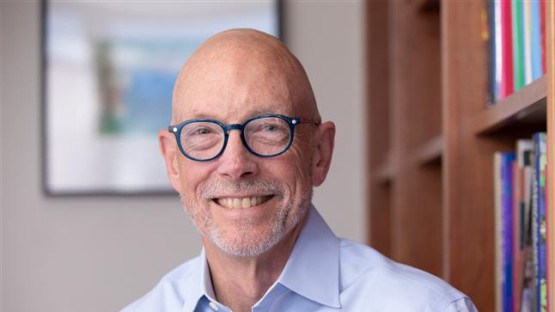
3 weeks agoNew Book Points Way Forward for Higher Education
Place-based learning rooted in community and shared purpose offers an alternative to transactional higher education models that have failed multiple generations of students.



Higher education
fromInside Higher Ed | Higher Education News, Events and Jobs
3 weeks agoNew Student Visas Dropped 35.6% Last Summer
Student visa issuances dropped by over 100,000 from summer 2024 to summer 2025, declining to 186,160 following a Trump administration freeze on visa interviews that included social media reviews for applicants.

fromInside Higher Ed | Higher Education News, Events and Jobs
3 weeks agoStates Step In to Support Minority-Serving Institutions
Institutions want to be recognized for the great work they're doing. What [the recognition] would say to the public, to the students, to our community, is that we don't just enroll a certain percentage of students. We also produce successful outcomes for those students.
Higher education
fromArs Technica
1 month agoMajor government research lab appears to be squeezing out foreign scientists
A NIST employee tells WIRED that some plans to bring on foreign workers through the agency's Professional Research and Experience Program have recently been canceled because of uncertainty about whether they would make it through the new security protocols. The staffer, who spoke on the condition of anonymity because they were not authorized to speak to the media, says the agency has yet to widely communicate what the new hurdles will be or why it believes they are justified.
US politics
Artificial intelligence
fromFortune
2 months agoWhile elites debate geopolitics, Americans are rethinking college in the search for economic mobility | Fortune
AI is actively transforming labor markets, prompting American workers to adapt as automation threatens roughly 25% of US and European work hours.
Mental health
fromInside Higher Ed | Higher Education News, Events and Jobs
2 months agoHow Colleges Are Tackling Loneliness With the Arts
Art Pharmacy applies social prescribing—referrals to arts and community activities—to improve college students' mental health, reduce loneliness, and integrate community resources into care pathways.


Education
fromIndependent
1 month ago'We are your nearest EU neighbour' - ambassador urges Irish primary schools to adopt French in new language drive
Primary schools in Ireland are urged to introduce French, supported by the French embassy supplying 90 language assistants and facilitating teacher exchanges.
fromInside Higher Ed | Higher Education News, Events and Jobs
1 month agoThe Case for Centers for Teaching and Learning (opinion)
This is a striking decision at a moment when public confidence in higher education is eroding. It is also puzzling because rigorous research and evaluation have demonstrated, over and over, the value of the work of centers for teaching and learning, including positive impacts on student learning outcomes, institutional effectiveness and faculty development.
Higher education
Higher education
fromInside Higher Ed | Higher Education News, Events and Jobs
1 month agoED's DEI Guidance Is Dead, but Trump's Crackdown Isn't
Despite courts blocking Education Secretary Linda McMahon's Dear Colleague letter on race-based programming, the Trump administration continues pursuing DEI elimination through alternative enforcement mechanisms including civil rights investigations, grant conditions, and executive orders.
fromInside Higher Ed | Higher Education News, Events and Jobs
2 months agoED Details Higher Ed Staff to Labor Department
We are proud to begin implementing this historic partnership that will not only create a better coordinated federal approach to postsecondary education and workforce development, but will also ensure that students pursuing higher education pursue programs aligned with their career goals and workforce needs," Assistant Secretary for Postsecondary Education David Barker said in a statement.
Education


fromwww.dw.com
1 month agoHow Philippines' schools embraced German language
A German lesson is starting in a public-school classroom in the Philippines, and it opens with a greeting: "Guten Morgen," the teacher says. Students respond carefully, shaping unfamiliar sounds before moving on to short dialogues about directions, food, family, and eventually, culture. German has a reputation of being a difficult language to learn, but this also makes it a valuable assetImage: Stanley Gajete/DW In a Philippine public school, that routine still feels unusual.
Education
fromInside Higher Ed | Higher Education News, Events and Jobs
1 month agoHow Dual Enrollment/Early College Has Changed (opinion)
This idea was based on the parallel between the pluck and elan that are characteristic of both the early-college students I worked with and that of America's hardest-working founding father. Five years after I wrote the book, I had the opportunity to revisit the field for a revised edition, making it appropriate to ask, after Thomas Jefferson's song in the second act of Hamilton, "What'd I Miss": How has early college/dual enrollment changed over the past half decade?
Higher education

fromInside Higher Ed | Higher Education News, Events and Jobs
2 months agoStrategies for Supporting International Scholars (opinion)
While everyone is subject to their individual situations, for many, the process begins with an F-1 student visa, which they hold as they complete a Ph.D. over five to six years. After graduation, they may choose to transition to Optional Practical Training (OPT), which provides a year of work authorization, with a two-year extension for STEM graduates. Some may then transition to a H-1B temporary work visa, which provides for three years of work authorization and is renewable for another three years.
Higher education

fromInside Higher Ed | Higher Education News, Events and Jobs
2 months agoHigh-Stakes Policy Talks Shed Light on ED's Playbook
"Here's the reality: When you come to the table prepared with smart and dedicated people that are focused on a clear goal, you can move quickly and intentionally without sacrificing the thoroughness and the careful deliberation that this process deserves,"
Higher education
Higher education
fromInside Higher Ed | Higher Education News, Events and Jobs
2 months agoHelping faculty build channels to audiences that matter
Higher-education communicators should enable faculty to publish directly via platforms like Substack and LinkedIn newsletters to expand reach, engagement, and institutional narratives.

fromInside Higher Ed | Higher Education News, Events and Jobs
2 months agoWe Need to Revitalize Area Studies (opinion)
Just before winter break, news broke that the University of North Carolina at Chapel Hill plans to close its centers for African, Asian, European, Middle Eastern, Latin American and Slavic, Eurasian and East European studies. Though UNC administrators said in a statement that decisions on closures are not finalized, they confirmed they are evaluating centers and institutes as part of a budget-cutting effort in response to state and federal funding changes.
Higher education
fromInside Higher Ed | Higher Education News, Events and Jobs
2 months agoPilot Program Supports Rural, Bilingual Students
The program introduces Cali, a "human-centered" AI tool designed to enhance-not replace-human support. Cali can converse in more than 140 languages and help students complete the Free Application for Federal Student Aid and the California Dream Act Application (CADAA). The tool is expected to reduce errors on the forms and help students stay on track toward enrollment and graduation.
Higher education
fromInside Higher Ed | Higher Education News, Events and Jobs
2 months agoCollege Costs, Accreditation Likely Top Focus for Congress
Lowering college costs, boosting accountability and reforming accreditation will likely be at the top of congressional Republicans' to-do list for 2026. But as public approval ratings for President Trump continue to decline and midterm elections loom, higher education policy experts across the political spectrum say congressional conservatives could be running out of time. The push for more affordable higher education has been gaining momentum for years,
Higher education


Higher education
fromInside Higher Ed | Higher Education News, Events and Jobs
1 month agoCUNY Trains Community in Constructive Dialogue
CUNY's Constructive Dialogue Initiative trains thousands across campuses in communication and conflict-navigation skills, teaching strategies like defusing the 'warrior's mindset' for respectful conversations.
Higher education
fromInside Higher Ed | Higher Education News, Events and Jobs
1 month agoThe Collective Impact of Higher Ed Is Its Best Story
An HBCU museum exhibit shows that colleges can demonstrate impact through cultural storytelling, community programs, and preserved artifacts instead of costly mass-media advertising.
Higher education
fromInside Higher Ed | Higher Education News, Events and Jobs
2 months agoFaculty Warn Against State Bans on H-1B Visas
State and federal actions—including a $100,000 H-1B fee and state visa freezes—threaten tens of thousands of university hires and could undermine research and academic freedom.
Higher education
fromCornell Chronicle
2 months agoThree Cornellians named Schwarzman Scholars for study in China | Cornell Chronicle
Three Cornell affiliates—Qiqi (Kiara) Shan ’26, Ruihao (Ray) Lin, J.D. ’24, and Isaac McCurdy ’21—were named Schwarzman Scholars to study a master’s in global affairs at Tsinghua University.
Higher education
fromInside Higher Ed | Higher Education News, Events and Jobs
1 month ago6 Takeaways From International Branch Campus Boom (opinion)
International branch campuses offer a complex alternative for U.S. universities seeking students and funding, with varied quality, political risks, and uncertain long-term prospects.
[ Load more ]