#galway-cathedral
#galway-cathedral
[ follow ]
#tourism #sagrada-familia #ireland #slow-travel #medieval-architecture #antoni-gaudi #dublin #dun-laoghaire


fromIndependent
2 weeks agoFinding Heimir - A journey to Iceland's remote Vestmannaeyjar islands to discover the origins of the Ireland manager
The flagpole at the front of a house, just a three-minute drive from the handful of shops and restaurants, has become an advertisement for the exploits of Heimaey's most famous son.
New York Islanders
London politics
fromIrish Independent
2 weeks ago'Appalling failure of judgment' - 'Epstein Files' float in Ballinrobe St Patrick's Day parade condemned
A St Patrick's Day parade float in Ballinrobe, Co Mayo depicted sexual violence incidents, prompting widespread condemnation from advocacy groups and the organizing committee.
fromIndependent
2 weeks ago'The parish were grieving for the loss of their beautiful church.' Fr Brian O Fearraigh on losing St Mary's in Donegal last year
A remote Donegal parish and its Gaeilgeoir priest became near household names last year when the nation awoke on Easter Monday to learn St Mary's Church in Derrybeg had burnt to the ground overnight.
Television
fromIrish Independent
2 weeks ago'Great people, great beer, it's very nice here' - Visitors from around the world descend on Dublin for St Patrick's Day parade
The theme of this year's festival was 'Roots' in celebration of the centuries-long facets of Irish identity woven into modern Irish society. Stretching from Parnell Square in the city's north side to Kevin Street on the south, 12 large floats and 10 marching bands consisting of 3,000 people in total meandered through the parade route flanked by onlookers from home and abroad.
London music
#st-patricks-day-celebrations
NYC LGBT
fromIrish Independent
2 weeks agoCrowds celebrate St Patrick's Day across Ireland
St Patrick's Day parades across Ireland celebrated Irish culture and achievements, with Dublin's parade featuring 12 floats and over 3,000 participants, while Killarney honored actress Jessie Buckley's Oscar win.
NYC LGBT
fromIrish Independent
2 weeks agoIn pictures: Crowds celebrate St Patrick's Day across Ireland
St Patrick's Day parades across Ireland celebrated Irish culture and achievements, with Dublin's parade featuring 12 floats and over 3,000 participants, while Killarney honored actress Jessie Buckley's Oscar win.


Barcelona
fromArchDaily
2 weeks agoBarcelona Architecture City Guide: 30 Buildings and Places from Gaudi to Today
Barcelona's architecture evolved from Gothic foundations through Modernist experimentation to contemporary design, each era reshaping urban form and establishing global architectural influence.
Film
fromIndependent
3 weeks ago'Culturally, we've always punched pretty hard, it makes me proud,' says Gleeson as Oscar Wildes' 'Irish' rally behind Jessie Buckley
Ireland's film industry celebrated its Hollywood achievements at the 20th anniversary Oscar Wilde Awards in Los Angeles, marking Irish-American film collaboration during Oscar season.
fromwww.amny.com
3 weeks agoA tale of two Manhattan churches: Landmarks Preservation Commission weighs landmarking one house of worship, demolishing another | amNewYork
The Catholic Church of Saint Mary at 440 Grand St. on the Lower East Side was built in 1833 with a Romanesque Revival facade designed by prolific architect Patrick Charles Keeley in 1864. Keeley, the church's architect, designed nearly 600 churches during his career, but this would mark the first of his works to be landmarked in New York City.
Upper West Side
Germany news
fromwww.theguardian.com
3 weeks agoCologne Cathedral's plans to charge for tickets spark outcry
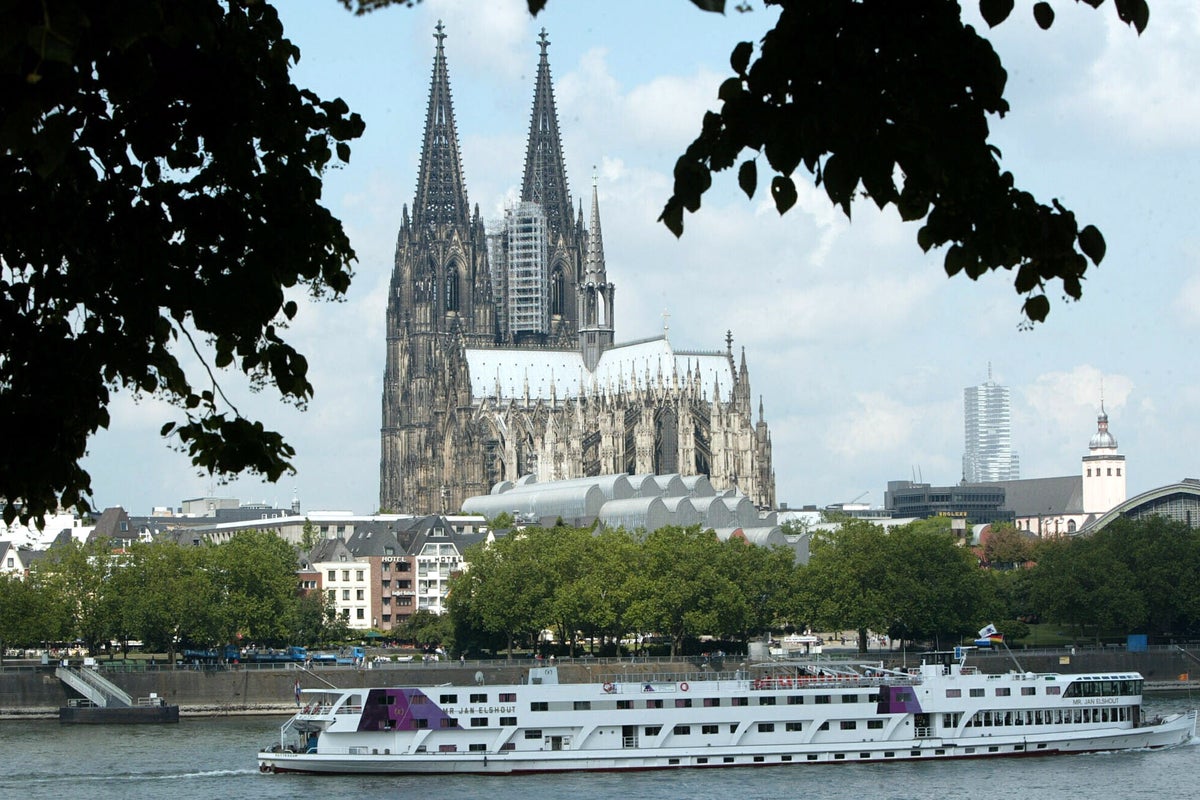
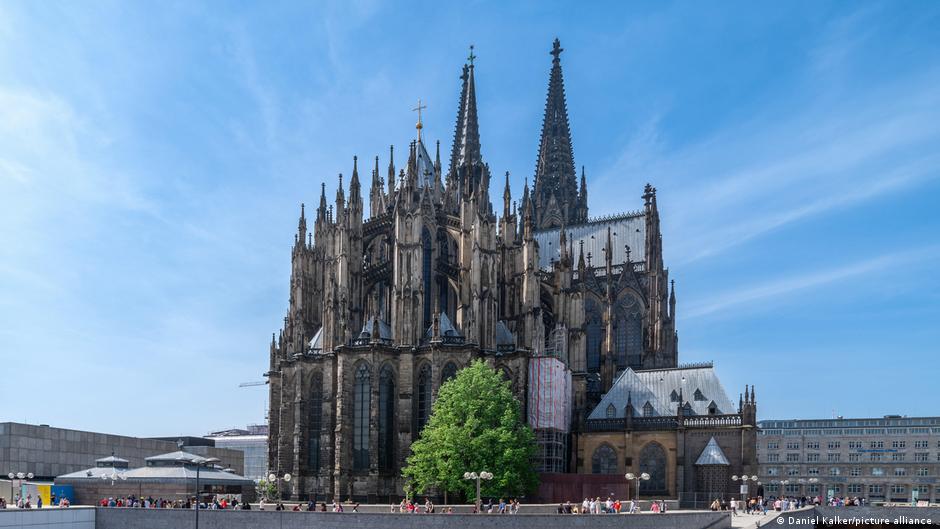
Cologne Cathedral plans to charge 12-15 euro admission fees starting July to cover 16 million euro annual maintenance costs, sparking criticism that high prices will exclude lower-income visitors from accessing the historic church.
Miscellaneous
fromTasting Table
3 weeks agoIreland's Pubs Have A Long History As Morgues - Tasting Table
Irish pubs historically served multiple community functions beyond drinking, including grocery stores, hardware shops, and funeral arrangement services, particularly during the Great Hunger when morgue facilities were needed.
Higher education
fromHarvard Gazette
3 weeks agoLike seeing art of Roman chapels in technicolor for first time - Harvard Gazette
Students learned centuries-old stucco sculpting techniques through hands-on practice, gaining deeper understanding of Renaissance and Baroque artists' material choices and creative processes.
Arts
fromArtnet News
2 weeks agoHow the Yeats Sisters Turned Ireland's Saints Into National Icons
Lily and Lollie Yeats were revolutionary artists who shaped Irish national identity and visual culture at the turn of the 20th century, collaborating with prominent women artists through enterprises like Dun Emer Industries.
Books
fromwww.theguardian.com
3 weeks agoPlan to turn Irish borderlands into Unesco region of literature'
A literary heritage initiative aims to rebrand the Ireland-Northern Ireland border as a Unesco region of literature, creating nine guided routes through 11 counties associated with major writers like Yeats, Beckett, and Heaney.
fromTasting Table
4 weeks ago15 Of The Oldest Pubs In Ireland - Tasting Table
Irish pubs have roots that go back to 10th-century Viking halls. And although we're talking about going so far back in time that precise dates and details can get a little sketchy, we do know there are a few pubs that opened not too long after that and are still in operation.
Food & drink
Travel
fromBusiness Insider
3 weeks agoI went to Ireland for St. Patrick's Day. I had a great time, but there are 5 things I wish I'd known before my trip.
St. Patrick's Day in Dublin requires advance planning for reservations, early arrival for parade viewing, and consideration of alternative locations due to extreme crowding.

fromIrish Independent
1 month agoPat's all, folks: Giant statue of St Patrick holding pint of Guinness removed from Temple Bar pub after complaint
I think somebody painted it black in transit, and we may have got in a little trouble for that. I'll let you figure that out yourself. The structure has been removed, as was agreed following discussions between Dublin City Council's Planning Enforcement Section and the owner of the premises.
London startup
fromIrish Independent
1 month ago'I just couldn't live in one of those bland houses - I simply love colour' - A home full of character in Phibsborough
I just couldn't live in one of those bland houses, but I didn't have a plan for the interior design here. I simply love colour and I wanted to make the house feel warm and vibrant. The trend for grey and black, or beige and white interiors, has led to a plethora of samey-themed rooms that can look dreary, lack personality, and are unlikely to age well.
Renovation


fromHyperallergic
1 month agoThe Irish Do It Best
The Irish government will give 2,000 artists unrestricted weekly stipends in a program officials described as a "recognition, at government level, of the important role of the arts in Irish society." After a successful three-year pilot, the Irish government made its basic income program for artists permanent. Similar pilots have been launched here in the United States, but they're supported primarily by the nonprofit sector.
Arts
Real estate
fromIrish Independent
1 month agoThis Castleknock family home comes with a blessed legacy - an Aga that may have fed Pope John Paul II in 1979
Five-bedroom 1980s detached Castleknock home with generous entertaining spaces, a storied Aga cooker linked to Pope John Paul II, asking price €2.495m.
fromianVisits
2 months agoToo hot to Handel: Pipe organs reveal the truth about warming churches
That is, if the church has a pipe organ. Most do, and pipe organs need periodic tuning as the seasons change. When organ tuners carry out that work, many will write down details of the ambient temperature and humidity at the time. Those observations are often recorded in small logbooks kept by the organ itself - and over time, they can build into a surprisingly detailed climate record.
Environment
London music
fromIndependent
2 months agoCork band Cardinals on faith, family and the scars of British violence: 'It's shocking to think that could have gone on in your city'
Cork rock band Cardinals, led by brothers Euan and Finn Manning, prepared to release their debut album and recalled a Churchill-related gig anecdote.
fromTasting Table
1 month agoThis McDonald's In Ireland Is In One Of The Most Unique Locations In The World - Tasting Table
McDonald's locations in the United States tend to be pretty staid and uniform in design, but head abroad and things start to change. While there are a few American McDonald's that don't feature the traditional golden arches aesthetic, in historic international cities, you'll frequently find the burger chain housed in beautiful old stone and masonry buildings - with only a small McDonald's sign offering any hint of what's inside.
Food & drink
Arts
fromwww.theguardian.com
1 month agoIt's not very French to change stuff': how Claire Tabouret's stained-glass windows cast Notre Dame in new light
Claire Tabouret's selection to design Notre Dame's stained-glass windows transformed her public profile, sparking acclaim, controversy, and expanded museum recognition.
Travel
fromCN Traveller
1 month agoMy favourite homestay: a contemporary take on a traditional cottage with spectacular views of the Connemara coast
Brandy & Soda House is a modernist, dog-friendly beach house by Dog's Bay offering panoramic sea views, hot tub, luxurious amenities, and spacious accommodation.
Arts
fromThe Art Newspaper - International art news and events
2 months agoAn expert's guide to the Gothic: five must-read books on the art and architecture style
Gothic art persisted beyond the Middle Ages and continued to influence restorations, modern and contemporary visual culture, and decorative arts across centuries.
History
fromMedievalists.net
2 months agoWinchester Cathedral Reburies Medieval Remains Linked to Royals and Bishops - Medievalists.net
Winchester Cathedral has reinterred scientifically tested medieval human remains in six mortuary chests, grouping individuals by radiocarbon dates, aiming to identify occupants by 2026–2027.
fromIrish Independent
1 month agoPlans revealed for pedestrianised College Green plaza in Dublin city centre
The sweeping changes include extensive greening and seating, two major water features, and a large paved events space in front of Trinity College. Early sketches for the space were revealed in June last year, but Dublin City Council (DCC) have refined them on foot of two rounds of public consultation and more than 2,800 written submissions. Extensive seating and a play space are also part of the project, with the council promising "an environment that encourages people to stop, relax and connect with the city around them."
Miscellaneous

:max_bytes(150000):strip_icc()/TAL-brooklyn-bridge-nyc-recirc-NYCTAX24-35d3ab840732461d85e714aa4dd00944.jpg)
fromwww.thehistoryblog.com
1 month agoRare Mithraic altars found in Scotland go on display for the first time
Two exceptionally rare and beautifully carved Mithraic altars found in Inveresk, East Lothian, Scotland, are going on display for the first time. They are not just the only Roman altars ever found in Scotland, but are among the finest examples of Roman sculpture in Roman Britain. They are also uniquely early in date, having been made in 140s A.D. during Antoninus Pius' reoccupation of southern Scotland, whereas most other archaeological materials related to the worship of Mithras in Britannia date to the 3rd century.
Travel
fromBusiness Insider
1 month agoI spent a year traveling across Ireland on a budget. There were 4 spots I loved, and 2 that didn't live up to the hype.
Four spots—including Howth and Kinsale—proved must-visit, while Blarney Gardens and the Cliffs of Moher felt underwhelming during year-long budget travel across Ireland.
Arts
fromThe Art Newspaper - International art news and events
2 months agoFifty-year restoration of Sainte-Chapelle's monumental stained glass inches closer to completion
Non-EU visitors to Sainte-Chapelle will pay €22 from January while EU tickets vary €13–€19; a €21.5m restoration of the chapel's windows and stonework is due by 2030.
fromwww.theguardian.com
2 months agoThe overlooked' saint: digitally recreated shrine marks 800th anniversary of William of York
The slab, found in a York drain in the 19th century, has gone on display at a new exhibition marking the 800th anniversary of Saint William a forgotten, once adored martyr said to be responsible for that miracle and others. At the centre of the exhibition is a cutting-edge, digital recreation of an imposing shrine to William that once stood in York Minster's nave but was broken up and buried to protect it from the ravages of Henry VIII's reformation.
History
[ Load more ]