#genetic-variants
#genetic-variants
[ follow ]
#genetics #genomics #synthetic-biology #gene-regulation #population-genetics #heritability #twin-studies #lifespan






Artificial intelligence
fromFortune
2 weeks agoCould data from 100 million species help cure disease? One startup is betting on it | Fortune
Basecamp Research launches the Trillion Gene Atlas to map genetic diversity across 100 million species, aiming to expand biological knowledge 100-fold through AI-powered genomic data collection.
Medicine
fromNature
1 month agoIdentical twins on trial: can DNA testing tell them apart?
Identical twins share identical DNA, making standard forensic DNA testing unable to distinguish which twin committed a crime, though whole-genome sequencing can identify rare post-birth mutations to differentiate them.
Left-wing politics
fromTruthout
1 month agoReproductive Tech That Promises Smart Babies Is Peddling Soft Eugenics
Reproductive tech companies now offer embryo genetic screening for intelligence and disease, raising concerns about eugenics, disability discrimination, and wealth-based genetic enhancement.
fromMail Online
3 weeks agoHow your FINGER LENGTH could reveal your sexuality
Their results revealed that women with lower 2D:4D are more likely to be lesbian. Meanwhile, men with higher 2D:4D are more likely to be gay. 'Bisexual women are more similar to heterosexual women in digit ratios, but there may be further nuance,' the researchers explained.
Science
fromwww.theguardian.com
1 month agoI clicked on a button and everything changed': how a DNA test turned my life upside-down
It was another detail that the rest of the family apparently knew but had never told me; they thought I already knew. The biology mattered less to me than the secret. Dad had been adopted, it turned out. A classic affliction of the 1950s, in which young, unmarried couples were forced to give away their newborn babies.
Books

Science
fromNature
1 month agoDaily briefing: How DNA testing can tell identical twins apart
Advanced forensic techniques including whole-genome sequencing and epigenetic analysis can differentiate between identical twins in criminal investigations, while GLP-1 drugs show potential in reducing addiction across multiple substances, and researchers have successfully synthesized hexagonal diamond.
fromwww.nature.com
1 month agoGenetically encoded assembly recorder temporally resolves cellular history
GEMINI leverages a computationally designed protein assembly as an intracellular memory device to record the history of individual cells. GEMINI grows predictably within live cells, capturing cellular events as tree-ring-like fluorescent patterns for imaging-based retrospective readout. Absolute chronological information of activity histories is attainable with hour-level accuracy.
fromNews Center
1 month agoAI Model May Improve RNA Sequencing Research - News Center
Scientists in the laboratory of Rendong Yang, PhD, associate professor of Urology, have developed a new large language model that can interpret transcriptomic data in cancer cell lines more accurately than conventional approaches, as detailed in a recent study published in Nature Communications. Long-read RNA sequencing technologies have transformed transcriptomics research by detecting complex RNA splicing and gene fusion events that have often been missed by conventional short-read RNA-sequencing methods.
Cancer
fromNature
1 month agoIs a 'selfish gene' making a Utah family have twice as many boys as girls?
Such sex 'distorters' have been discovered - and studied in great depth - in laboratory animals such as mice and flies, in which their effects can be detected through selective breeding. 'If you look, more often than not, you find them,' says Nitin Phadnis, an evolutionary geneticist at the University of Utah in Salt Lake City, who co-led the study.
Science
fromIrish Independent
1 month agoRisk of carrying the 'Celtic curse' gene varies across Ireland, new study finds
Targeting genetic screening for the condition to priority areas could help identify at-risk individuals earlier and avoid future health complications, experts say. Haemochromatosis symptoms can evolve over decades as high iron levels in the body cause damage to organs. Early diagnosis and treatment - such as regular blood donation to reduce iron levels - is key to prevent liver damage, liver cancer and arthritis.
Public health
Science
fromwww.scientificamerican.com
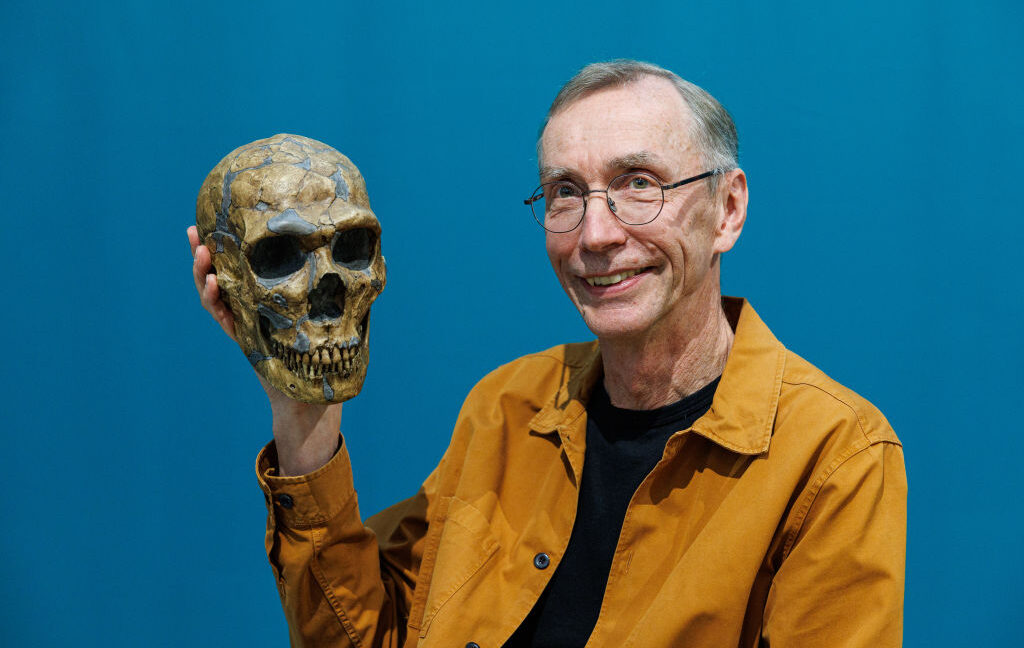
1 month agoSex between Neandertals and anatomically modern humans tended to follow a specific pattern
Neandertal-human interbreeding was primarily between male Neandertals and female humans, evidenced by the absence of Neandertal DNA on modern human X chromosomes.
fromNature
1 month agoAI tools can design genomes. Will they upend how life evolves?
Biology is undergoing a transformation. After centuries of studying life as it evolves naturally, researchers are now using a combination of computation and genome engineering to intervene, generating new proteins and even whole bacteria from scratch. The use of artificial-intelligence tools to design biological components, an approach known as generative biology, is set to turbocharge this area of research. Just last year, scientists used AI-assisted design to produce artificial genes that can be expressed in mammalian cells.
Science
fromArs Technica
1 month agoHave we leapt into commercial genetic testing without understanding it?
Martschenko's argument is largely that genetic research and data have almost always been used thus far as a justification to further entrench extant social inequalities. But we know the solutions to many of the injustices in our world-trying to lift people out of poverty, for example-and we certainly don't need more genetic research to implement them. Trejo's point is largely that more information is generally better than less.
Science
fromNature
2 months agoDaily briefing: The human cells in our bodies that aren't genetically ours
A virus that sickens marine mammals has been detected in Arctic waters for the first time. Scientists used drones armed with petri dishes to collect samples of blow - the air and mucus whales expel from their blowholes - from whales in northern Norway. The team identified cetacean morbillivirus in samples from humpback whales ( Megaptera novaeangliae) and one sperm whale ( Physeter macrocephalus), though the humpbacks showed no symptoms of disease.
Science
Science
fromNature
2 months agoDevelopmental convergence and divergence in human stem cell models of autism - Nature
Distinct rare mutations and common genetic variation jointly shape ASD risk, yet convergent molecular pathology and early fetal neurodevelopmental mechanisms can be studied using stem-cell models.
[ Load more ]