#global-exports
#global-exports
[ follow ]
#tariffs #trade-policy #global-economy #supreme-court #trade-war #global-trade #trade-agreements #supply-chains


#tariffs



Artificial intelligence
fromAbove the Law
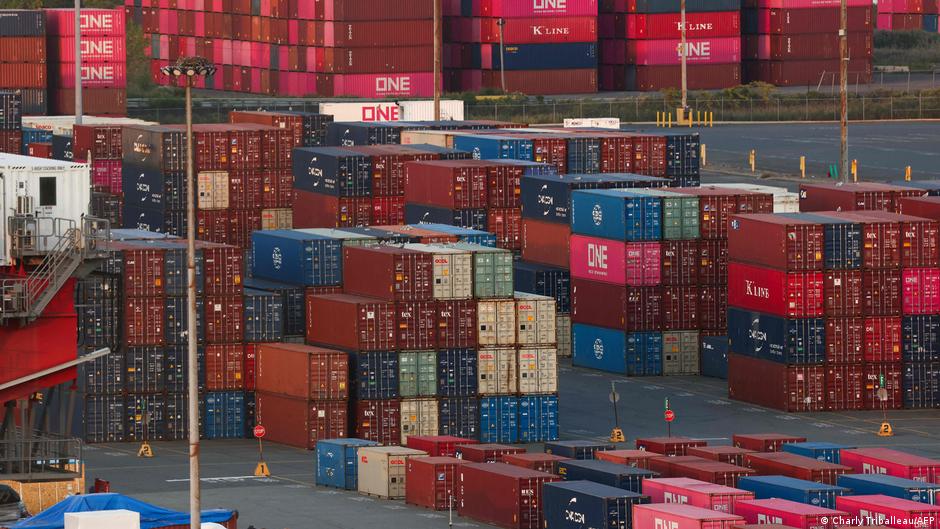
2 months agoWhat If Tariffs Go Away - Or Don't? How You Can Protect Your Bottom Line With Contract Intelligence - Above the Law
AI-powered contract visibility enables organizations to quickly locate tariff-related terms, manage price and renegotiation provisions, and mitigate supply-chain and cost volatility.


fromThe Cipher Brief
2 days agoTaking a Stand on Adversaries' Influence in the Western Hemisphere
The January 3rd Operation Absolute Resolve ousted Venezuelan Dictator Nicholas Maduro, marking a significant shift in US policy towards countering adversarial influence in the western hemisphere.
World politics
#china
European startups
fromFortune
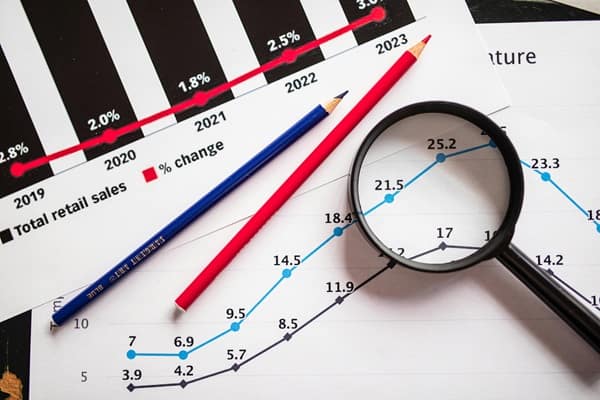
2 weeks agoChina is becoming a 'factory to the factories,' powering global manufacturing in places like Southeast Asia even as U.S. trade declines | Fortune
China is increasing exports of industrial components while consumer goods exports decline, reshaping global supply chains.
fromIPWatchdog.com | Patents & Intellectual Property Law
4 days agoWIPO in Focus: Beyond Treaties, Toward a Market-Driven IP System | IPWatchdog Unleashed
WIPO is not merely a distant UN bureaucracy; it is a dynamic, fee-driven organization that has been undergoing significant operational and cultural transformation in recent years.
Intellectual property law
#financial-markets
Business
fromLondon Business News | Londonlovesbusiness.com
5 days agoGlobal markets react to geopolitical tensions and rising energy costs - London Business News | Londonlovesbusiness.com
U.S. financial markets faced volatility due to geopolitical tensions and energy price fluctuations, with mixed performance across major stock indices.
fromwww.dw.com
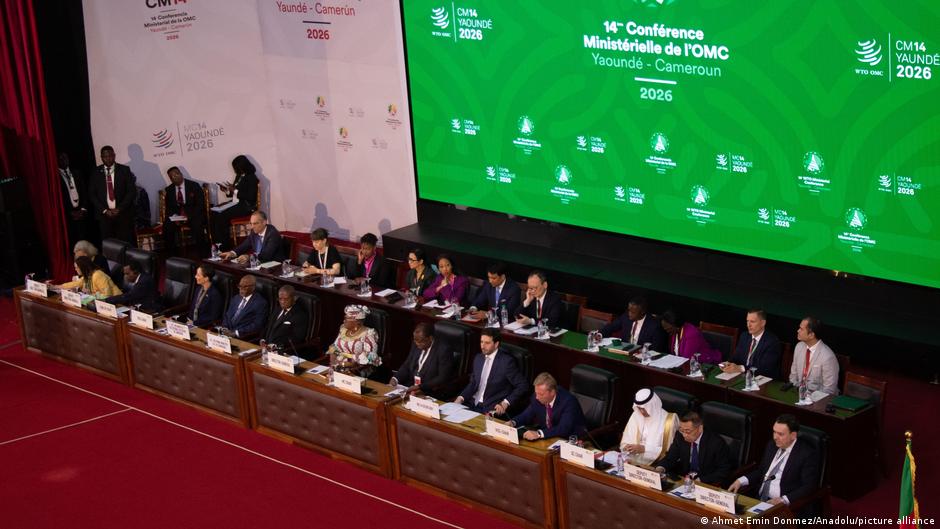
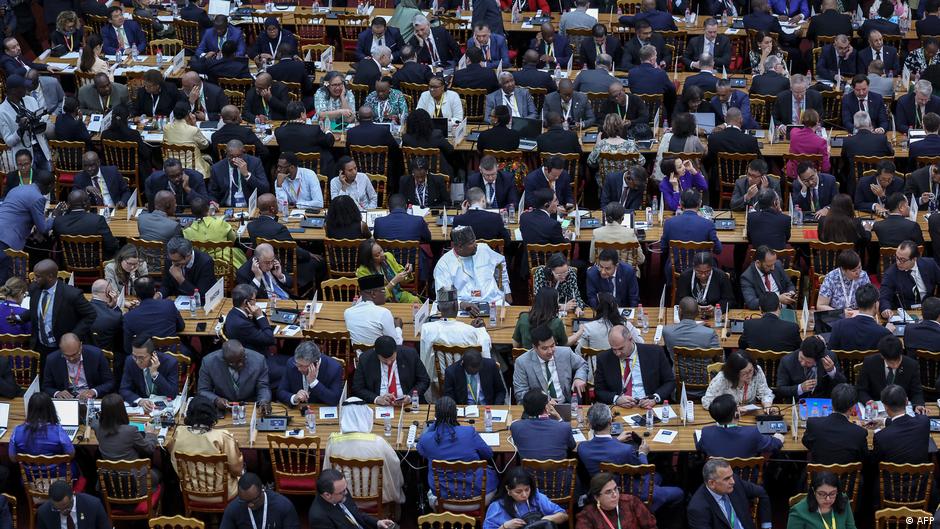
4 days agoAfter the Iran war, how fast could global trade recover?
The longer this conflict goes on, the more devastating its impact will be on the world's energy supplies, inflation and economic stability. Every extra week of disruption raises costs for consumers and businesses while growth slows.
World news
fromLondon Business News | Londonlovesbusiness.com
2 days agoUS dollar rose amid a rebound in geopolitical concerns - London Business News | Londonlovesbusiness.com
The US dollar returned to the upside as geopolitical fears rebounded after US President Trump's address to the nation. The rhetoric fuelled risk aversion and flows toward the dollar while oil prices surged.
US Elections
fromwww.aljazeera.com
5 days agoG7 ready to take necessary measures' to ensure energy market stability
We stand ready to take all necessary measures in close coordination with our partners, including to preserve the stability and security of the energy market, said the G7 in a statement after a teleconference.
World news
#us-china-trade-relations

World news
fromwww.dw.com
2 weeks agoUS-China trade talks 'stable' despite mutual accusations
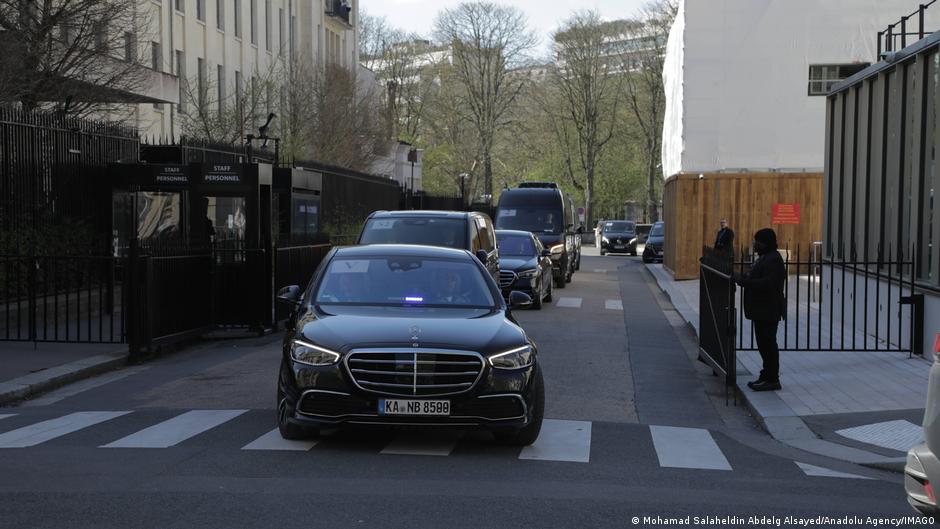
US and Chinese trade officials concluded a two-day Paris summit with stable discussions, agreeing on agricultural purchases and proposing new trade boards while disputes over forced labor investigations and Middle East tensions persist.
Europe news
fromLondon Business News | Londonlovesbusiness.com
3 weeks agoTrump Weighing Up Fresh Tariff Framework and Markets - London Business News | Londonlovesbusiness.com
European markets decline amid rising energy prices and stagflation concerns, while defence stocks gain on Iran conflict tensions and oil prices surge past $94 despite IEA's strategic reserve release.



European startups
fromwww.dw.com
3 weeks agoUS trade probes could lead to new tariffs for EU, China
The US launched two trade investigations targeting excess industrial capacity and forced labor imports, potentially leading to new tariffs on major trading partners after the Supreme Court limited Trump's tariff authority.
US politics
fromwww.theguardian.com
1 month agoThe real winners of Trump's global tariff war: law firms, hedge funds and AI
A US Supreme Court ruling invalidating Trump's tariffs triggered a $175 billion refund opportunity, creating unprecedented demand for trade lawyers and spawning a legal and financial services gold rush.
fromwww.dw.com
1 month agoChina overtakes US to become Germany's top trading partner
The sum of exports and imports between the two countries last year totalled 251.8 billion (roughly $296.6 billion), a 2.1% increase, according to Destatis. China was Germany's most important trading partner from 2016 all the way through to 2023. In 2024, the US briefly held the title. German Chancellor Friedrich Merz is also set to visit China next week, where he is set to discuss trade and other topics.
Miscellaneous
US politics
fromFortune
1 month agoTrump brags that America is 'winning so much.' Without tariffs, "we could have seen more of the good news," IMF director says. | Fortune
The U.S. economy shows strong growth and resilience, but chronic budget deficits and tariff-based trade policies threaten its long-term fiscal health.
fromwww.aljazeera.com
1 month agoHong Kong-linked company decries search of Panama Canal port offices
Panama Ports Company (PPC), part of the Hong Kong conglomerate CK Hutchison, said the Panamanian government acted in disregard for the rule of law. It decried what it called the latest steps to invade and take the property of PPC during a search on Thursday. It also accused authorities of entering a private storage site without notice and ignoring requests to safeguard sensitive corporate data.
World politics
fromEntrepreneur
1 month agoWhy Global Brands Struggle When Local Markets Push Back
Companies enter new markets with momentum. Press coverage looks promising. Campaigns launch on schedule. Local teams are hired. Early dashboards suggest traction. Then progress slows. Customer interest plateaus. Partnerships take longer than expected. Internally, the conversation almost always turns to execution. Messaging must not be clear enough. The market probably needs more education. What I have learned is that this conclusion is usually wrong. What looks like market resistance is more often a signal that the brand is communicating from the wrong position.
Venture

fromFortune
2 months ago'The Chinese have invaded us in terms of merchandise': Mexico and Argentina lead Latin America's struggles with flood of imports | Fortune
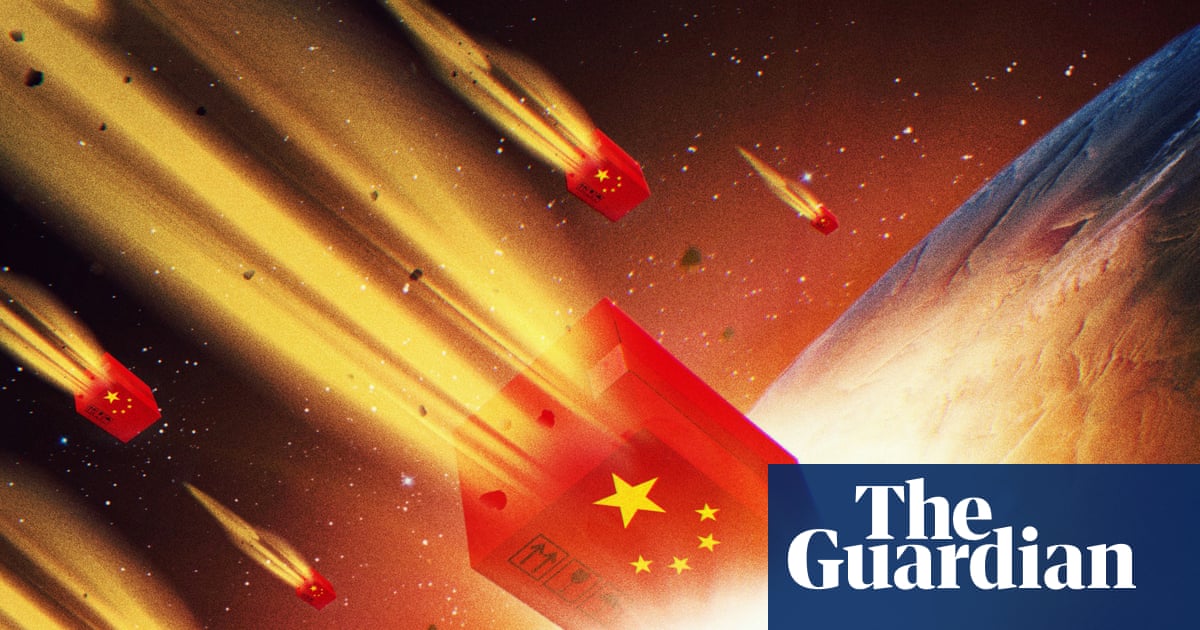
China has been flooding Latin American markets with low-priced exports, especially autos and e-commerce goods, as its exporters adjust to U.S. President Donald Trump's tariffs and geopolitical moves. The world's second-largest economy has become a major trading partner for many Latin American nations, seeking access to their abundant natural resources and growing markets while expanding its influence in a region Trump views as America's Backyard.
E-Commerce
fromwww.theguardian.com
2 months agoIMF warns tariffs and geopolitical tensions threaten markets and global growth
The International Monetary Fund has warned mounting geopolitical tensions and an escalation of Donald Trump's tariff war could hit global economic growth and trigger a backlash in financial markets. In an update as Trump threatens to impose tariffs on Nato allies opposed to his ambitions in Greenland, the Washington-based fund said a renewed eruption in trade tensions was among the biggest risks to global growth in 2026.
World news
fromFortune
2 months agoEU and Mercosur bloc of South American nations sign trade deal to end quarter-century of talks, just as Trump hits Europe with new tariffs | Fortune
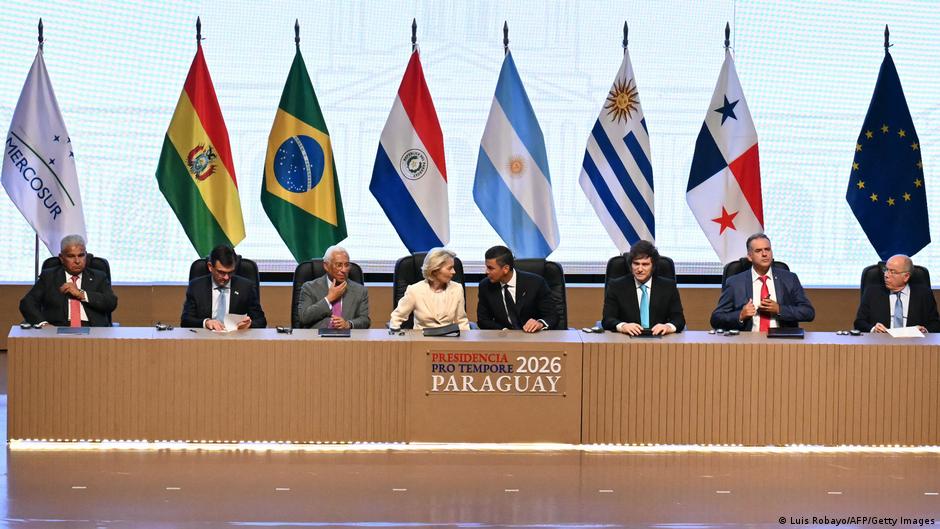
The European Union and the Mercosur bloc of South American countries formally signed a long-sought landmark free trade agreement on Saturday, capping more than a quarter-century of torturous negotiations to strengthen commercial ties in the face of rising protectionism and trade tensions around the world. The signing ceremony in Paraguay's capital, Asunción, marks a major geopolitical victory for the EU in an age of American tariffs and surging Chinese exports, expanding the bloc's foothold in a resource-rich region increasingly contested by Washington and Beijing.
Miscellaneous
fromFortune
2 months agoA spectre is haunting Europe - the spectre of Trump. Cue the Asian trade deals | Fortune
Stability. Consistency. Ever-changing complexity. With language like that, deployed in separate meetings in three Asian capitals this week, government leaders forged closer ties driven in part by a figure halfway around the world: the president of the United States. And much of the time, they didn't even mention Donald Trump's name. IN BEIJING: The U.K. and Chinese leaders called Thursday for a "long-term, stable, and comprehensive strategic partnership" between their two countries. The important words are long-term and stable. The two countries committed a decade ago to building a comprehensive strategic partnership but progress has been halting at best.
World politics
fromwww.dw.com
2 months agoChina stays resilient in first year of Trump 2.0
[The Trump administration] may have entered the office thinking that they could use their economic leverage to push China in certain policy directions," said Amanda Hsiao, a China studies director at the Eurasia Group consultancy.
World news
World news
fromFortune
2 months agoBRICS could become a new pillar of global governance-if its rapid growth doesn't erode its newfound clout | Fortune
BRICS' rapid expansion risks internal incohesion and failure to reform global governance despite its vast population, resources, and strategic potential.
fromwww.dw.com
2 months agoUS, Taiwan reach trade deal with lower tariffs
The agreement will "drive a massive reshoring of America's semiconductor sector," the US Commerce Department said. In an interview to news channel CNBC, US Commerce Secretary Howard Lutnick said the objective was to bring 40% of Taiwan's entire chip supply chain and production to the United States. Had Taipei not agreed to manufacture in the US, the tariffs would likely be 100%, Lutnick added.
World news
[ Load more ]