History
fromOpen Culture
3 days agoHow Everything in a Medieval Castle Worked, from Its Moats to Its Dungeons
Medieval castles were complex structures designed for defense, featuring elements like barbicans, moats, and parapets.
The Aubusson Tapestry Museum is situated in an exceptional context shaped by a rich history and a powerful natural environment. The Creuse capital of tapestry has been marked by its history since the royal manufactory of the 14th century.
The most arresting is a dramatic circular void carved into the ceiling, a spatial echo of St Paul's dome, translated from the sacred to the everyday. Below it, a monolithic espresso counter holds the room together, its weight and material language borrowed from Tate Modern's industrial character and the infrastructural logic of the riverbanks themselves.
Gropius, who from 1919 to 1928 directed the Bauhaus in Weimar and Dessau, designed the house in 1921-22 for lawyer Fritz Otte. The property is considered a dramatic evolution of Gropius's earlier seminal Haus Sommerfeld, which was also located in Berlin, but destroyed in World War II. The Bauhaus founder embraced a forward-looking approach with an unadorned, sharp-edged structure that rejected the heaviness of 19th-century historicism.
That is, if the church has a pipe organ. Most do, and pipe organs need periodic tuning as the seasons change. When organ tuners carry out that work, many will write down details of the ambient temperature and humidity at the time. Those observations are often recorded in small logbooks kept by the organ itself - and over time, they can build into a surprisingly detailed climate record.
From reproductive rights to climate change to Big Tech, The Independent is on the ground when the story is developing. Whether it's investigating the financials of Elon Musk's pro-Trump PAC or producing our latest documentary, 'The A Word', which shines a light on the American women fighting for reproductive rights, we know how important it is to parse out the facts from the messaging.
Travelers often overlook tiny European countries, but, as I discovered on a recent trip to Luxembourg-Europe's seventh-smallest nation, with a population of just 699,000-there's much to discover in these hidden gems. Last summer, I visited my aunt, who has lived in Europe for over 20 years, with stints in Paris, Vienna, Zug, Switzerland, and now, Luxembourg. We spent three days touring the historic city nestled between Belgium, Germany, and France. It's built on a rocky plateau overlooking deep gorges, a sweeping canyon, and surrounding countryside.
In this book of moons, I am writing for people for whom the medieval world and its literatures and arts may be unfamiliar. I hope that in telling the stories of medieval moons, I also introduce these readers to the wonderful, mesmerising realm of medieval texts and images. But I also hope that this book may be useful to those with greater familiarity with medieval languages, literatures, and arts.
Renais­sance artist Albrecht Dür­er (1471-1528) nev­er saw a rhi­no him­self, but by rely­ing on eye­wit­ness descrip­tions of the one King Manuel I of Por­tu­gal intend­ed as a gift to the Pope, he man­aged to ren­der a fair­ly real­is­tic one, all things con­sid­ered.
The slab, found in a York drain in the 19th century, has gone on display at a new exhibition marking the 800th anniversary of Saint William a forgotten, once adored martyr said to be responsible for that miracle and others. At the centre of the exhibition is a cutting-edge, digital recreation of an imposing shrine to William that once stood in York Minster's nave but was broken up and buried to protect it from the ravages of Henry VIII's reformation.
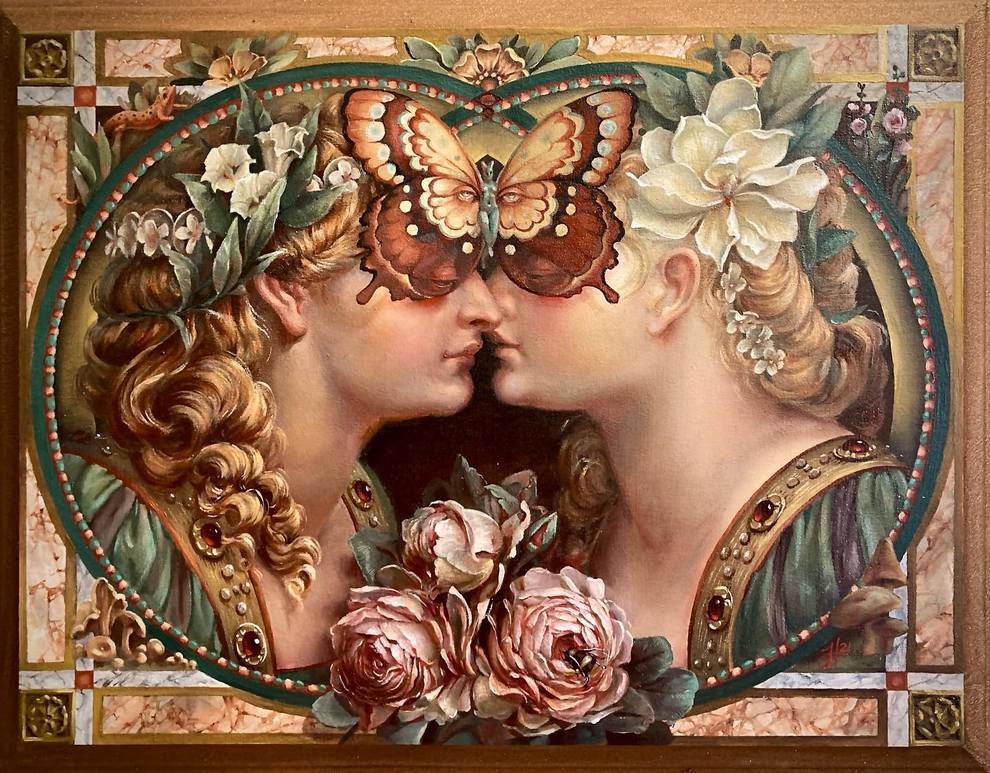
Looking to the Middle Ages for answers to the perennial puzzles of life can seem quaint, even artificial, a long reach across centuries marked by violence, hierarchy, and exclusion. And yet medieval culture offers a way of thinking about love that still speaks to the present. If love is most urgently tested in moments of strain and upheaval, then it is in those moments - where care is stressed or obscured - that its meaning comes most clearly into view.
Picture Book of the Life of St John and the Apocalypse is a unique and visually striking example of the picture-book Apocalypse - a distinctive group of medieval manuscripts that present the apocalyptic visions of the Book of Revelation primarily through images. Centred on the visions of St John and often framed by episodes from his legendary life, these manuscripts transform the biblical text into a continuous pictorial narrative.