Relationships
fromPsychology Today
5 hours agoThe Dangers of 'Tolyamory' in a Relationship
Tolyamory is tolerating a partner's infidelity without taking action against it.
For one human being to love another: that is perhaps the most difficult of all our tasks, the ultimate, the last test and proof, the work for which all other work is but preparation.
Awareness has become a kind of emotional currency in relationships. We name our attachment styles with ease, and we can explain exactly why conflict feels activating. We can trace our reactions back to our childhoods and reference therapy language fluently, sometimes impressively so. On paper, this should make relationships smoother, kinder, and more resilient. And yet, many of these same couples feel strangely stuck.
The first program, " Dealing with Conflict " teaches the basics of communication in conflict. You will learn which of the problems your relationship faces are solvable, and which you may continue to encounter. If any of these perpetual problems have you stuck, the Gottmans can help you get "unstuck" and understand each other's perspectives. "Dealing with Conflict" helps prepare you for the regular, inevitable moments of friction that are bound to arise in any relationship.
Physical touch is widely believed to be one of the primary, most important means of intimacy and bonding in a romantic relationship. Without frequent hugs, kisses, or sex, couples need to get creative in order to communicate their affection for one another. Most popular relationship advice also reinforces this idea; it's widely assumed that more physical closeness naturally equates to a stronger, healthier relationship.
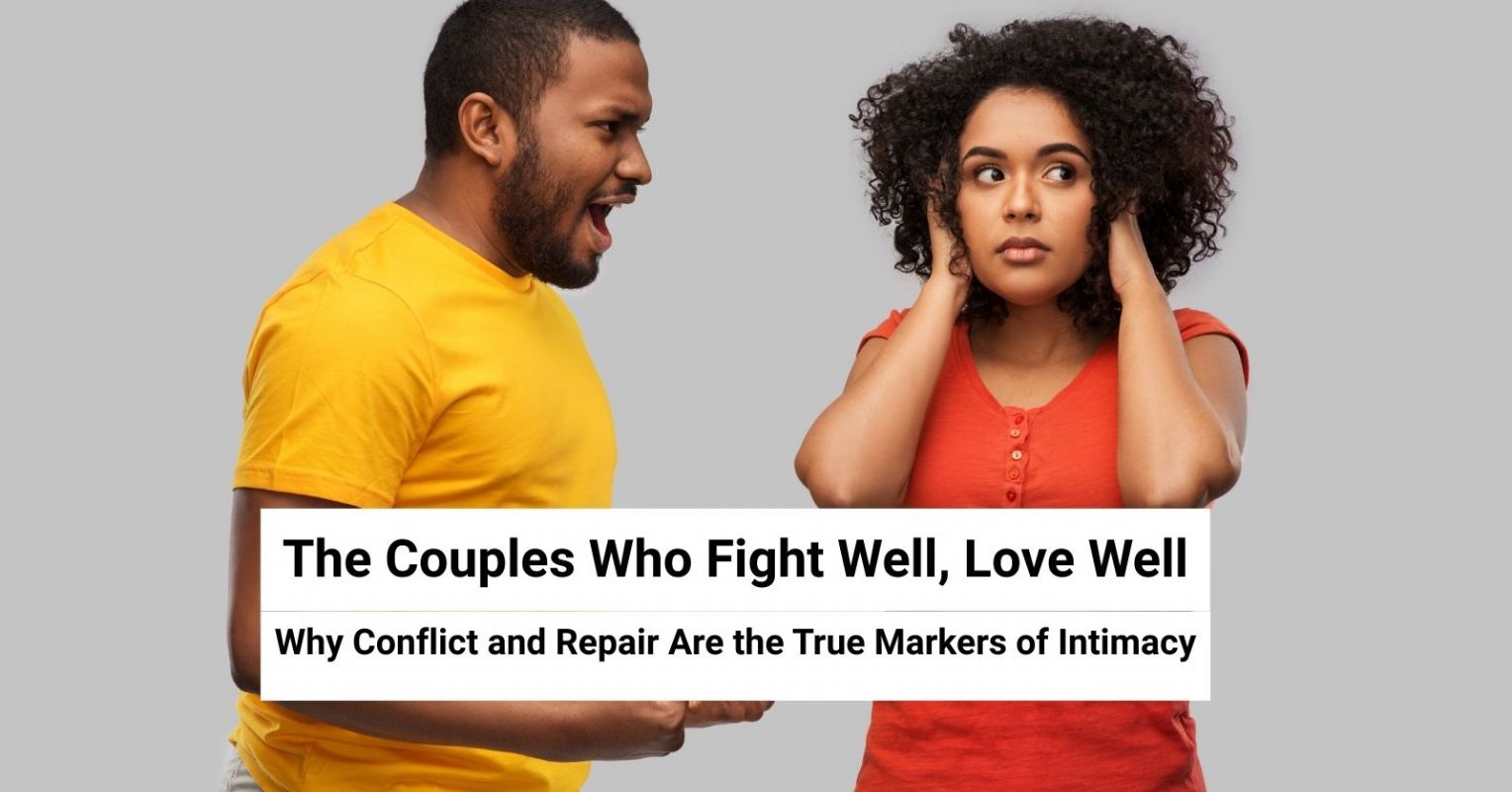
More often than not, however, the problem is not a lack of love. Instead, it is the absence of a far more specific and demanding skill: the ability to metabolize a rupture without rushing to resolution. This skill is a decisive factor in the fate of our relationships. It determines whether conflict deepens intimacy or corrodes it, whether repair restores trust or merely papers over harm, and, most important, whether love matures or slowly folds under the weight of unresolved emotional residue.
But psychologists studying long-term couples have discovered something surprising: compatibility isn't the strongest predictor of whether relationships last. Instead, research points to a specific communication style that distinguishes couples who go the distance from those who don't. It's not about how often you communicate, how well you express love, or even how skillfully you resolve conflicts. It's about something more fundamental-a pattern of interaction that either strengthens your bond over time or slowly erodes it.
First, here's something many people (even some therapists) don't know and is counterintuitive: not everyone who has an affair believes his or her marriage is unhappy. In fact, data suggest that many cheating spouses report that their marriages are good, and that leaving their spouse was never a consideration. There are many other reasons people decide to have an affair besides unhappiness with their partner.
Relationship research has made it distinctively clear that most relationships don't fail because of singular, isolated, catastrophic events. More often, they disintegrate because of our patterns-the ones that once felt safe and protective, but have turned corrosive and misaligned with our relationship over time. We might keep asking ourselves, "Why do I keep ending up here?"without any good answer coming to mind, or assume that we always "attract the wrong partners."
"Oh, no," lamented Sarah, "Is it going to happen again?" She was responding to the possibility that her partner, Joshua, would lose his temper once again, which was a frequent occurrence. She did not trust him, and the result was anxiety, leading to sleeplessness, worry, and irritability. Research reviewed by Tomlinson and Mayer (2009) supports the view that mistrust can be accompanied by anger and fear. Joshua's temper and Sarah's response of anxiety were affecting their relationship.
To have a good relationship, you have to put in effort. Your effort should go towards communicating well, for example, learning to bring up concerns in a considerate way and working on listening rather than getting defensive. You should also have the necessary, but uncomfortable, conversations that help a relationship thrive, such as conflict repair discussions and talks that help you work as a team to meet each other's needs.