#government-id
#government-id
[ follow ]
#data-breach
Privacy professionals
fromSilicon Canals
22 hours agoA fintech app asked users for their passports - then left 360,000 files unprotected for five years - Silicon Canals
A money transfer app exposed over 360,000 sensitive files on a public server for nearly five years, including unencrypted personal documents.

fromComputerworld
14 hours agoA core infrastructure engineer pleads guilty to federal charges in insider attack
Rhyne's attack involved unauthorized remote desktop sessions, deletion of network administrator accounts, and changing of passwords, showcasing significant security vulnerabilities.
Information security


fromSecurityWeek
2 days agoLinx Security Raises $50 Million for Identity Security and Governance
Linx has built an AI-native platform that maps, monitors, and governs human, non-human, and agentic identities across the entire enterprise environment, relying on real-time detection and automated remediation to reduce identity-related risks.
Venture

Privacy professionals
fromSilicon Canals
1 day agoA money-transfer app stored customer passports on an unencrypted, publicly accessible server for nearly five years - Silicon Canals
Fintech companies face regulatory pressure to collect identity documents but lack enforceable obligations to protect them, leading to data breaches.
fromWIRED
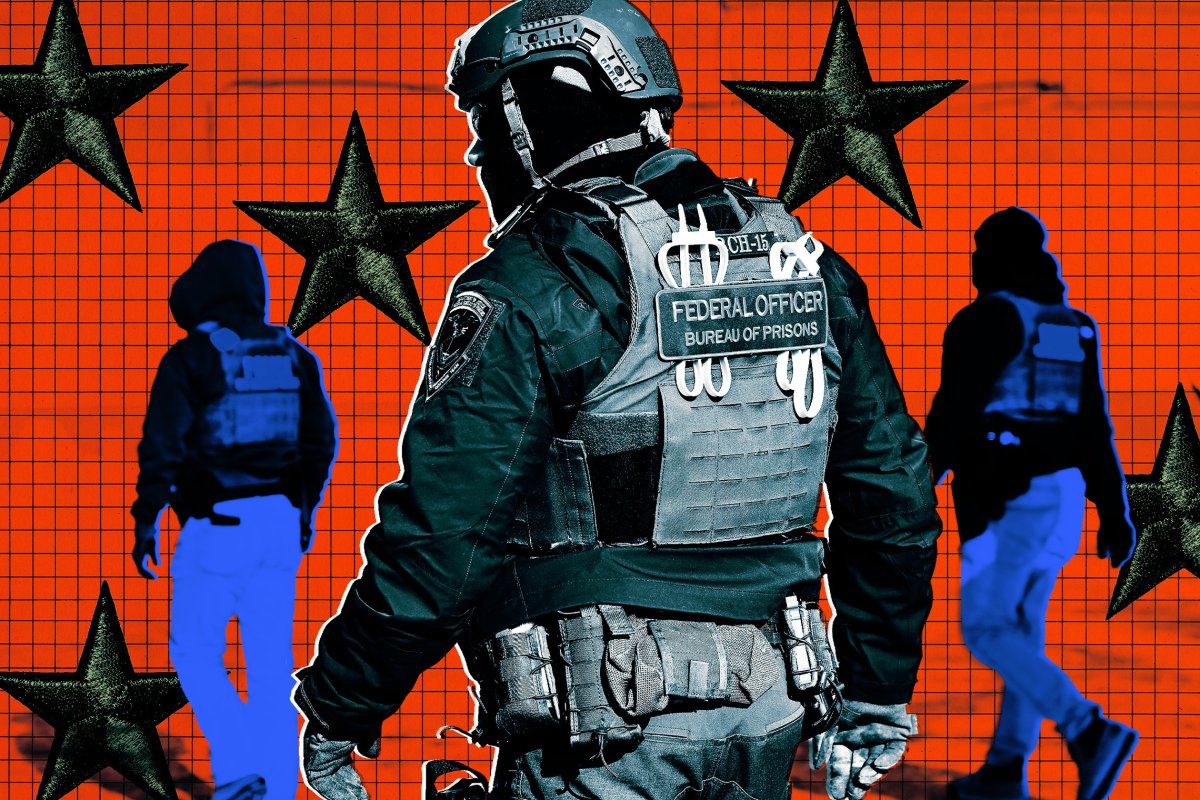
1 day agoCBP Facility Codes Sure Seem to Have Leaked Via Online Flashcards
The public Quizlet set contained information about alleged codes for specific facility entrances. 'Checkpoint doors code?' asked one card, with a specific four-digit combination listed in response.
Privacy professionals
Healthcare
fromNextgov.com
3 weeks agoCMS touts early uses of new biometric verification tools for Medicare.gov
CMS launched modern identity verification options (Login.gov, ID.me, CLEAR) on Medicare.gov, with 25% of users adopting them within five to six days and 60% of new accounts using these credentials.
#digital-id
UK politics
fromPinkNews | Latest lesbian, gay, bi and trans news | LGBTQ+ news
3 weeks agoDigital IDs won't require sex and gender data, government confirms
The UK government's relaunched voluntary digital ID scheme will not collect sex or gender information, addressing concerns that it could out trans people.
UK politics
fromwww.theguardian.com
3 weeks agoUK digital ID scheme to have limited use before next general election, minister says
Britain's £1.8bn digital ID scheme will initially offer limited functionality including vehicle tax payments and right-to-work checks by the next election, with broader services like benefits and pensions planned for the following parliament.


UK politics
fromPinkNews | Latest lesbian, gay, bi and trans news | LGBTQ+ news
3 weeks agoDigital IDs won't require sex and gender data, government confirms
The UK government's relaunched voluntary digital ID scheme will not collect sex or gender information, addressing concerns that it could out trans people.
UK politics
fromwww.theguardian.com
3 weeks agoUK digital ID scheme to have limited use before next general election, minister says
Britain's £1.8bn digital ID scheme will initially offer limited functionality including vehicle tax payments and right-to-work checks by the next election, with broader services like benefits and pensions planned for the following parliament.
Privacy technologies
fromArs Technica
2 weeks agoWorld ID wants you to put a cryptographically unique human identity behind your AI agents
World ID's Agent Kit enables AI agents to prove human authorization through iris-verified identity tokens, allowing websites to distinguish legitimate automated requests from malicious Sybil attacks.
fromTheregister
1 month agoBrit dual nationals grounded by border digitization drive
However, the government bans British citizens, including those with another nationality, from ETAs, meaning they either need to apply for a British passport if they don't have one or spend £589 on a certificate of entitlement. Both options take several weeks.
UK news
fromTheregister
3 weeks agoWhitehall still won't say what digital ID scheme will cost
At this stage of development, it is not possible to definitively estimate the cost to government from developing and running the digital ID system, adding that yet-to-be-taken policy decisions will materially impact the costs involved.
UK politics
EU data protection
fromPrivacy International
3 weeks agoPrivacy International's response to the UK Home Office consultation on facial recognition technology
Privacy International advocates for strict safeguards on law enforcement biometric and facial recognition technology use, including prohibitions on live facial recognition, operator-initiated systems, and protest surveillance.
Privacy professionals
fromMedCity News
2 weeks agoThe Evolving Landscape of Privacy and Cybersecurity: Essential Strategies for Legal and Compliance Professionals - MedCity News
Organizations must combine strong controls with comprehensive employee training and accountability culture to effectively protect sensitive data and comply with evolving privacy laws.
Privacy professionals
fromTheregister
2 weeks agoAge verification isn't sage verification inside OSes
California's Digital Age Assurance Act attempts age verification for minors but is vague, incoherent, and creates liability risks without clearly defining compliance requirements or addressing practical implementation across diverse computing devices.
fromSilicon Canals
1 month agoThe global infrastructure of digital ID is being built right now - and nobody voted for it - Silicon Canals
What I walked through wasn't just an immigration gate. It was a node in a rapidly expanding global infrastructure of digital identity, one being constructed at extraordinary speed, across dozens of countries, by a mix of governments, multilateral organizations, and private technology vendors. The people building it believe they are solving real problems: fraud, statelessness, inefficient public services, financial exclusion.
Privacy technologies
US politics
fromenglish.elpais.com
1 month agoThe White House is considering requiring banks to verify the citizenship of their customers
The Trump administration is considering an executive order requiring U.S. banks to collect citizenship documentation from customers, potentially blocking undocumented migrants from the banking system.




fromWIRED
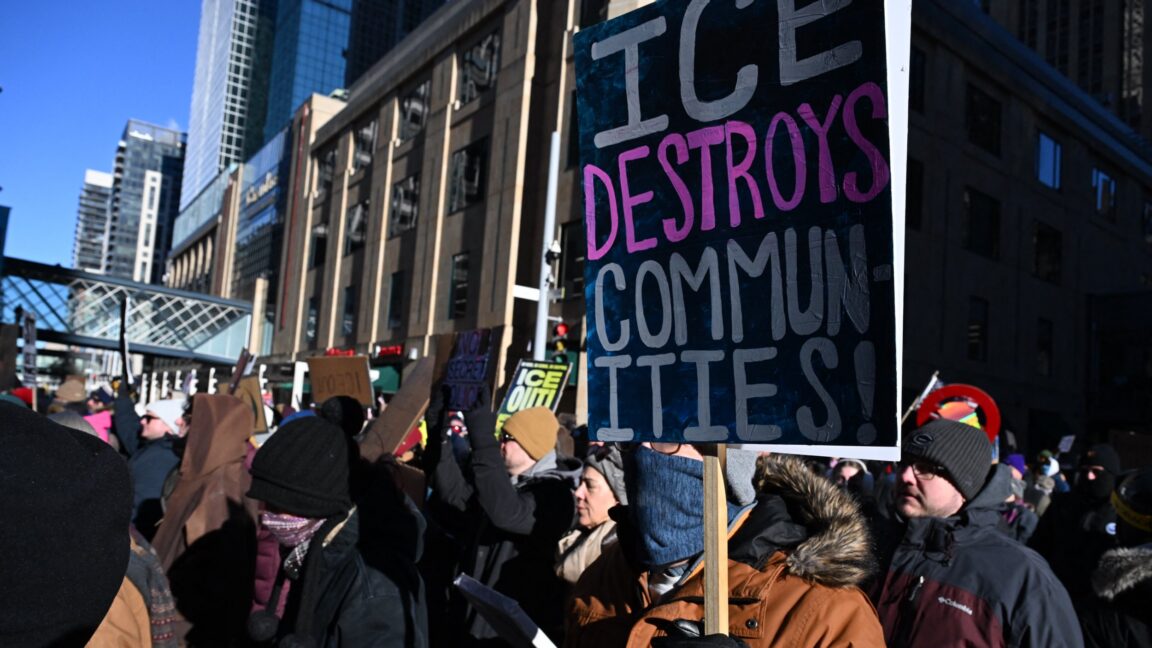
1 month agoICE and CBP's Face-Recognition App Can't Actually Verify Who People Are
Mobile Fortify, now used by United States immigration agents in towns and cities across the US, is not designed to reliably identify people in the streets and was deployed without the scrutiny that has historically governed the rollout of technologies that impact people's privacy, according to records reviewed by WIRED. The Department of Homeland Security launched Mobile Fortify in the spring of 2025 to "determine or verify" the identities of individuals stopped or detained by DHS officers during federal operations, records show.
Privacy technologies
fromWIRED
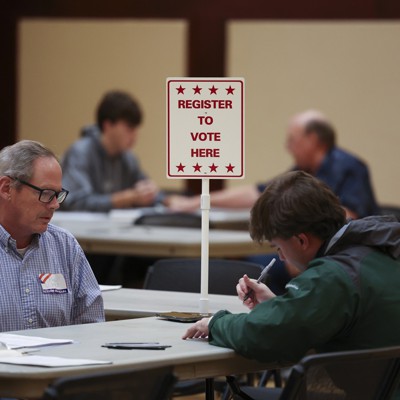
2 months agoDHS's Data Grab Is Getting Citizens Kicked Off Voter Rolls, New Complaint Says
The Trump administration has since poured billions of dollars into immigration enforcement, and in March, Trump issued an executive order requiring the Department of Homeland Security to ensure that states have "access to appropriate systems for verifying the citizenship or immigration status of individuals registering to vote or who are already registered." In May, DHS began encouraging states to check their voter rolls against immigration data with the Systematic Alien Verification for Entitlements (SAVE) program, run by US Citizenship and Immigration Services (USCIS). SAVE now has access to data from across the federal government, not just on immigrants but on citizens as well.
US politics
Privacy technologies
fromTechCrunch
1 month agoIndia makes Aadhaar more ubiquitous, but critics say security and privacy concerns remain | TechCrunch
India is expanding Aadhaar's everyday use via a new app, offline verification, and mobile-wallet integration, raising security, consent, and database-use concerns.
fromDataBreaches.Net
2 months agoPersonal Details of Thousands of Border Patrol and ICE Agents Allegedly Leaked in Huge Data Breach - DataBreaches.Net
Sensitive details of around 4,500 ICE and Border Patrol employees-including almost 2,000 agents working in frontline enforcement-have allegedly been released by a Department of Homeland Security whistleblower following last week's fatal shooting of Renee Nicole Good. The Jan. 7 killing of the mother by ICE agent Jonathan Ross in Minneapolis, Minnesota, has sparked nationwide protests and worldwide outrage, including among some DHS employees.
US politics
Privacy professionals
fromPinkNews | Latest lesbian, gay, bi and trans news | LGBTQ+ news
1 month agoDiscord users must complete face or ID scans by next month
Discord will require face or government ID age verification by the end of the month, restricting access to graphic or sensitive content for unverified users.
fromwww.ocregister.com
1 month agoA privacy breach at the IRS: Taxpayer data wrongly shared with DHS, court filing says
The revelation stems from a data-sharing agreement signed last April by Treasury Secretary Scott Bessent and Homeland Security Secretary Kristi Noem, which allows U.S. Immigration and Customs Enforcement to submit names and addresses of immigrants inside the U.S. illegally to the IRS for cross-verification against tax records. A declaration filed Wednesday by IRS Chief Risk and Control Officer Dottie Romo stated that the IRS was only able to verify roughly 47,000 of the 1.28 million names ICE requested.
Privacy professionals
[ Load more ]