#grace-for-the-world
#grace-for-the-world
[ follow ]
#compassion #iran-protests #leadership #legacy #clergy-activism #sustainability #munich-security-conference
fromwww.theguardian.com
1 month agoReaders reply: what would be the most socially useful way to spend a billion dollars?
I've always thought it would be good to acquire an old warehouse in every town throughout the land and convert it into low-rent community workspaces for artists, local charities and small businesses getting off the ground. A kind of people's WeWork. What would others do with a humungous, but not unlimited, pile of dosh to benefit society? Roland Freeman, West Yorkshire Send new questions to nq@theguardian.com.
Left-wing politics
fromPrx
1 month agoThe World
The US Supreme Court has struck down much of the Trump administration's tariffs on foreign goods, which have been a cornerstone of its trade and foreign policies. Also, Iran prepares for a possible US military strike. And, the International Energy Agency has removed climate change from its list of priorities for the next two years, following threats from the US
World news
fromHyperallergic
2 months agoArt for Dignity
As if demolishing the East Wing, gutting arts agencies, and slapping his name and face on several federal buildings weren't enough, the US president now wants to do away with a DC building known as the "Sistine Chapel of New Deal art." This week, we reported on a burgeoning campaign to save the Wilbur J. Cohen Federal Building, which houses murals by Ben Shahn, Philip Guston, Seymour Fogel, and other major American artists. We will continue to follow this story.
Arts


Marketing
fromBuffer: All-you-need social media toolkit for small businesses
2 months agoWe Should All Be Building People-First Communities in the Age of AI
Human connection and community-driven trust outperform synthetic signals; prioritize building real relationships because people, not AI, scale lasting trust for brands and creators.

fromNonprofit Quarterly | Civic News. Empowering Nonprofits. Advancing Justice.
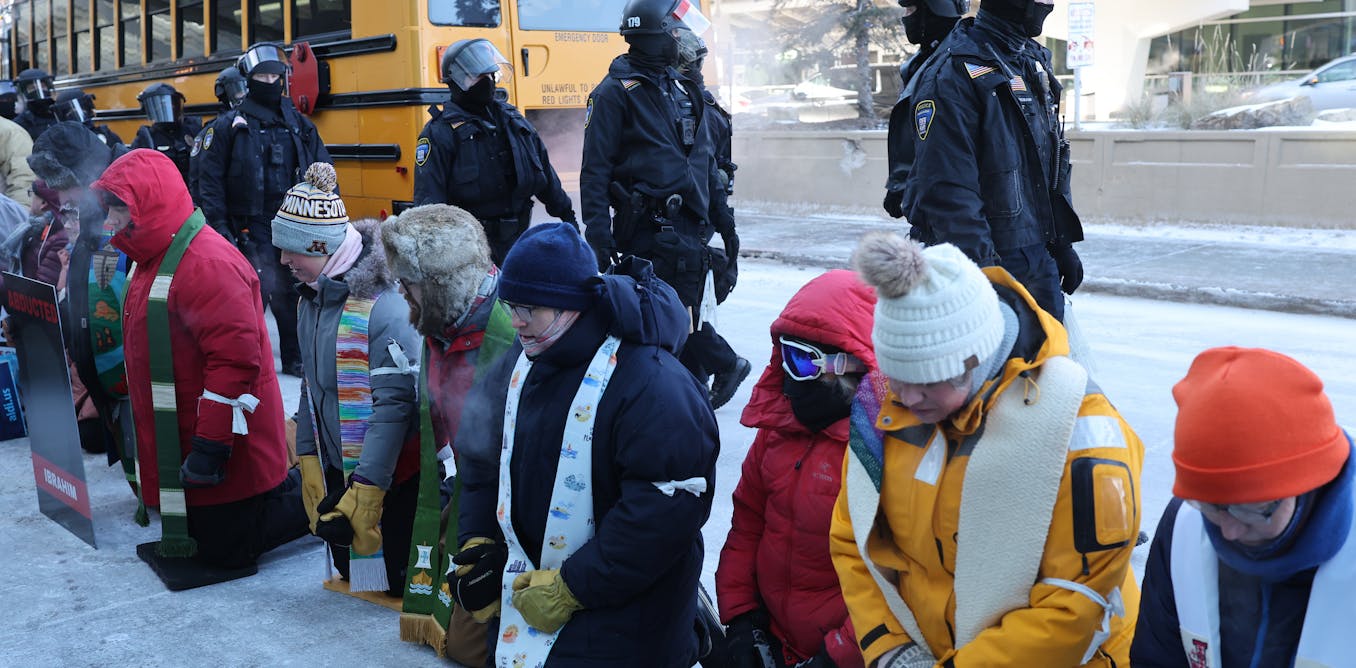
1 month agoPhilanthropy Must Defend the Right to Bear Witness | Nonprofit Quarterly | Civic News. Empowering Nonprofits. Advancing Justice.
"Are you okay?" These were Alex Pretti's last words, said to a woman after ICE agents had tackled and pepper-sprayed her. Videos from bystanders show Pretti holding up a phone, attempting to document what was happening before he himself was pepper-sprayed, wrestled to the ground, and killed by those officers. He lost his life not for committing violence, but for documenting it, and stepping in to protect someone facing it.
US politics
fromPsychology Today
2 months agoHow Can We Change the World?
There's a myth in our society that real change requires force, strength, and domination. We celebrate athletes, CEOs, and politicians who crush their opponents. But history tells a different story. Lasting social change has often been triggered by humble people whose weapons were passion, principle, and an unwavering commitment to justice and the truth - not the truth we see on TV or read in print media, but rather the truth that we feel deep inside ourselves.
Social justice
fromFast Company
2 months agoOur embrace of individuals over institutions isn't serving us well
In the early 20th century, sociologist Max Weber noted that sweeping industrialization would transform how societies worked. As small, informal operations gave way to large, complex organizations with clearly defined roles and responsibilities, leaders would need to rely less on tradition and charisma, and more on organization and rationality. He also foresaw that jobs would need to be broken down into specialized tasks and governed by a system of hierarchy,
History
fromPrx
1 month agoThe World
The American civil rights icon, Rev. Jesse Jackson, died today at the age of 84. His advisor James Zogby, who traveled with him throughout the Middle East, discusses his legacy. Also, at this week's India AI Impact Summit, Delhi brings together leaders of nations and tech for what it's calling the first major summit on AI hosted in the Global South.
World news
fromDefector
1 month agoHow Do I Be Nice To A Jesus Freak? | Defector
I grew up fervently anti-religion, like Don up there. "The opiate of the masses," and all that other shit. To me, every public Christian was either a shitbag televangelist or, even worse, a politician. My favorite comedian was Sam Kinison, a former preacher who turned on his church. I didn't simply disagree with religious people, I looked down on them, like a Ricky Gervais-type would. I thought this made me more rock-and-roll or whatever.
Philosophy
fromFast Company
2 months agoWhy inclusion is the new standard for economic growth
In places where inclusion is part of the infrastructure of their economy-supply chains, procurement processes, capital access, or business ownership-people thrive. Inclusive economies create more resilience by expanding the base of potential business owners who can build, own, innovate, and hire. They allow more opportunities for homeownership and investing in the longevity of communities. As our economy becomes increasingly stratified and volatile, we need as much resiliency as we can get.
Social justice
Fundraising
fromwww.theguardian.com
2 months agoActionAid to rethink child sponsorship as part of plan to decolonise' its work
Child sponsorship models can be racialised and paternalistic; ActionAid UK will transform funding toward community-shaped, decolonised partnerships emphasizing solidarity and women's rights funding.
fromLGBTQ Nation
1 month agoPolitical pragmatism is not a moral failing. It may be the only thing that can save us. - LGBTQ Nation
He is not worthy of the presidency. He takes bribes blatantly. And now he's being a racist, blatantly. They were supposed to deport the dangerous criminals. They were not supposed to go after small children, storm schools, bring terror upon, you know, the little kids and the women and children, not just the immigrants in the school. All the children are scared.
US politics
fromPrx
2 months agoThe World
As bitter cold descends on Ukraine, so has a fresh barrage of Russian drone and missile strikes. Recent attacks on transformer substations and power plants have plunged Kyiv into its worst wartime heating and power outage. Also, as opposition leader and Nobel Peace Prize winner María Corina Machado meets US President Donald Trump in Washington, Venezuelans are watching with a mix of hope and unease.
World news
fromBusiness Matters
2 months agoWhat Changes When You Start Thinking Beyond Your Own Lifetime
Often, people make financial decisions based on what they need for themselves in the future. However, those who think about their families beyond their own lifetimes have a better chance not only of leaving wealth behind but also of ensuring it grows. It's never too late, either. A good way to give loved ones a head start, whether they are taking on a business or just needing to pay for a funeral, is with a good life insurance policy.
Philosophy
fromLGBTQ Nation
2 months agoAs cynicism takes over the world, Alex Pretti could teach us all about hope - LGBTQ Nation
One political conversation with a gay friend that I'll never forget occurred the night before Election Day in 2016, where my friend told me that he hoped Donald Trump would win so that "The Revolution" would finally happen. The idea, I suppose, was that Trump would make things so bad that it would finally wake up the proletariat of the world, and it would unite in the ultimate class war to overthrow the messed-up liberal world order,
US politics

fromThe Conversation
1 month agoHow business students learn to make ethical decisions by studying a soup kitchen in one of America's toughest neighborhoods
Kensington, for those not from Philly, has long had a reputation for potent but affordable street drugs. Interstate 95 and the Market-Frankford elevated commuter train line provide easy access to the neighborhood for buyers and sellers, and abandoned buildings offer havens for drug use and other illicit activity. St. Francis Inn Ministries, which was founded by two Franciscan friars in 1979, serves sit-down breakfast and dinner for thousands of people each year, many of whom suffer from poverty, homelessness and substance use disorder.
Philosophy
fromPrx
2 months agoThe World
Militias are patrolling the streets of Venezuela and independent journalists have been detained. It's all part of a crackdown signaling the country's authoritarian leaders are not relinquishing power, despite the capture of President Nicolás Maduro. Also, a garbage workers' strike in the UK has led to tens of thousands of tons of rubbish piling up in the streets, attracting vermin.
World news
fromPrx
2 months agoThe World
With votes tallied from about 50% of polling places, incumbent President Yoweri Museveni is projected to win reelection in Uganda. Also, Indian authorities continue searching for an elephant that's already killed 22 people in the first two weeks of 2026. And, Sara Mardini, who was arrested for helping rescue migrants from the sea in 2018, is acquitted of her charges in Greece. Plus, searching for the best mıhlama for breakfast in Turkey.
World news
fromPrx
1 month agoThe World
A month after US forces captured former Venezuelan President Nicolás Maduro, some signs of change have emerged. Acting President Delcy Rodríguez has proposed a sweeping amnesty law that could free hundreds of political prisoners, but families and human rights groups remain wary. Also, the son of former Libyan leader Moammar Gadhafi, Seif al-Islam Gadhafi, has been killed.
World news
[ Load more ]