#handcrafted-synthesizer
#handcrafted-synthesizer
[ follow ]
#music-production #electronic-music #music #ai-music #music-generation #mpc-sample #intentional-listening





fromwww.metrosiliconvalley.com
3 days agoSan Jose's Ton Freq Studios continues indie analog tradition | Metro Silicon Valley | Silicon Valley's Leading Weekly
Tone Freq Studios captures pristine acoustics and emphasizes analog warmth, creating a tactile space that values collective experiences over the convenience of digital recording methods.
Music production


fromdesignboom | architecture & design magazine
2 weeks agoplayful electric guitars by jacques averna take the form of foot, cloud, fried egg and padlock
Designer Jacques Averna recreates the bodies of electric guitars into the shapes of a foot, a fried egg, a padlock, and a pattern of clouds. Still functional, the musical instruments wear bright colors that make them more alluring to look at, capturing the full form of the shape they're borrowing. Each model starts from a pun, a personal reference, or a structural problem the designer wants to solve in a reimagined, creative, and familiar way.
Design
Music
fromYanko Design - Modern Industrial Design News
3 weeks agoForget Spotify: These 5 Designer Turntables Are the Real Reason Vinyl Is Having a Moment - Yanko Design
Vinyl's resurgence stems from listeners seeking intentional engagement with music through physical ritual rather than streaming's frictionless convenience.
fromDesign Milk
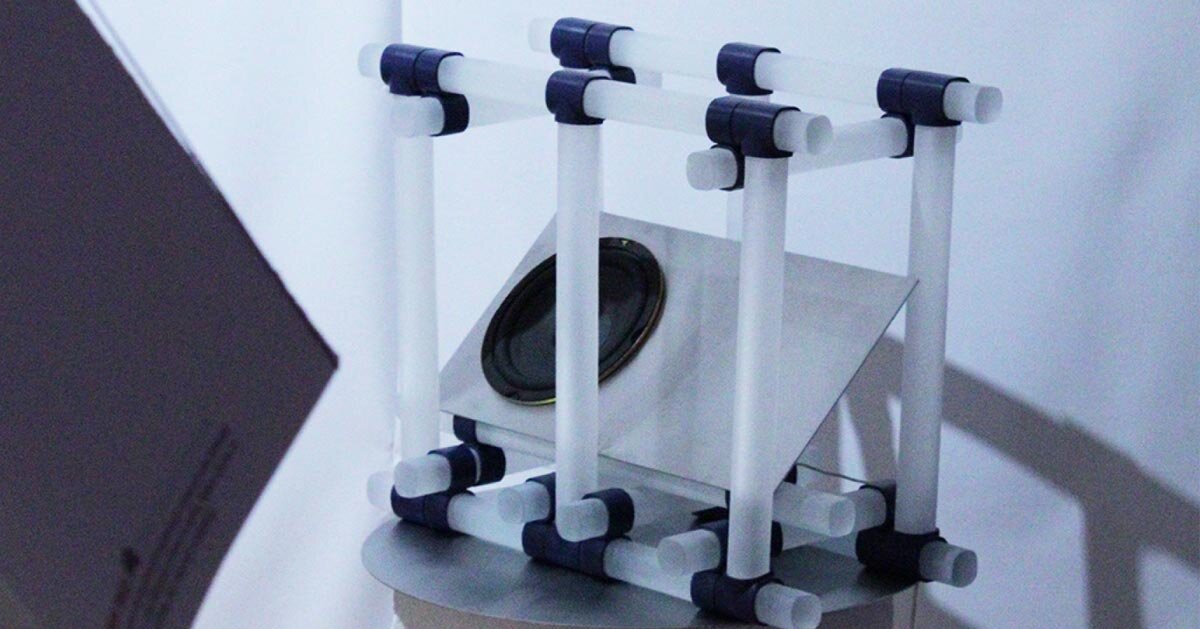
3 weeks agoThis Pared Down Stereo System Takes-on Cubist Dimensions
In Braque's paintings, collages, and prints, the polymath set out to distill bucolic landscapes and rural village scenes as broken up and then re-assembled geometric compositions; decidedly abstract yet still slightly recognizable representations. Through this revolutionary approach, he examined how objects could be depicted from multiple perspectives-multiple sources of light-as if superimposed portrayals of the same setting rendered at different times of day.
Design
Gadgets
fromYanko Design - Modern Industrial Design News
2 weeks agoGen Z Is Obsessed With These 5 Cassette-Era Gadgets & They Just Got a Full Design Upgrade for 2026 - Yanko Design
Streaming's abundance created a thinner listening experience; cassette-era design principles combined with modern technology offer a solution through intentional, tactile music consumption products.
fromThe Verge
1 week agoThe secret story of the vocoder, the military tech that changed music forever
The vocoder was never supposed to be a revolution in music. Its development began a century ago, when an engineer at Bell Labs was looking for a simpler way to send phone calls across copper telephone lines.
Music production
fromYanko Design - Modern Industrial Design News
3 weeks agoThis Foldable DIY Cyberdeck Has Breadboards Built In and Runs Doom - Yanko Design
What separates this from a standard Raspberry Pi build is the pair of breadboards soldered directly to the GPIO pins, seated inside the case, and accessible through a removable back panel. Connecting a sensor no longer means hunting for a separate breadboard and a tangle of jumper wires. PickentCode plugged in a temperature and humidity sensor and had it reading live data within minutes.
Gadgets
#drum-machine

Music production
fromEngadget
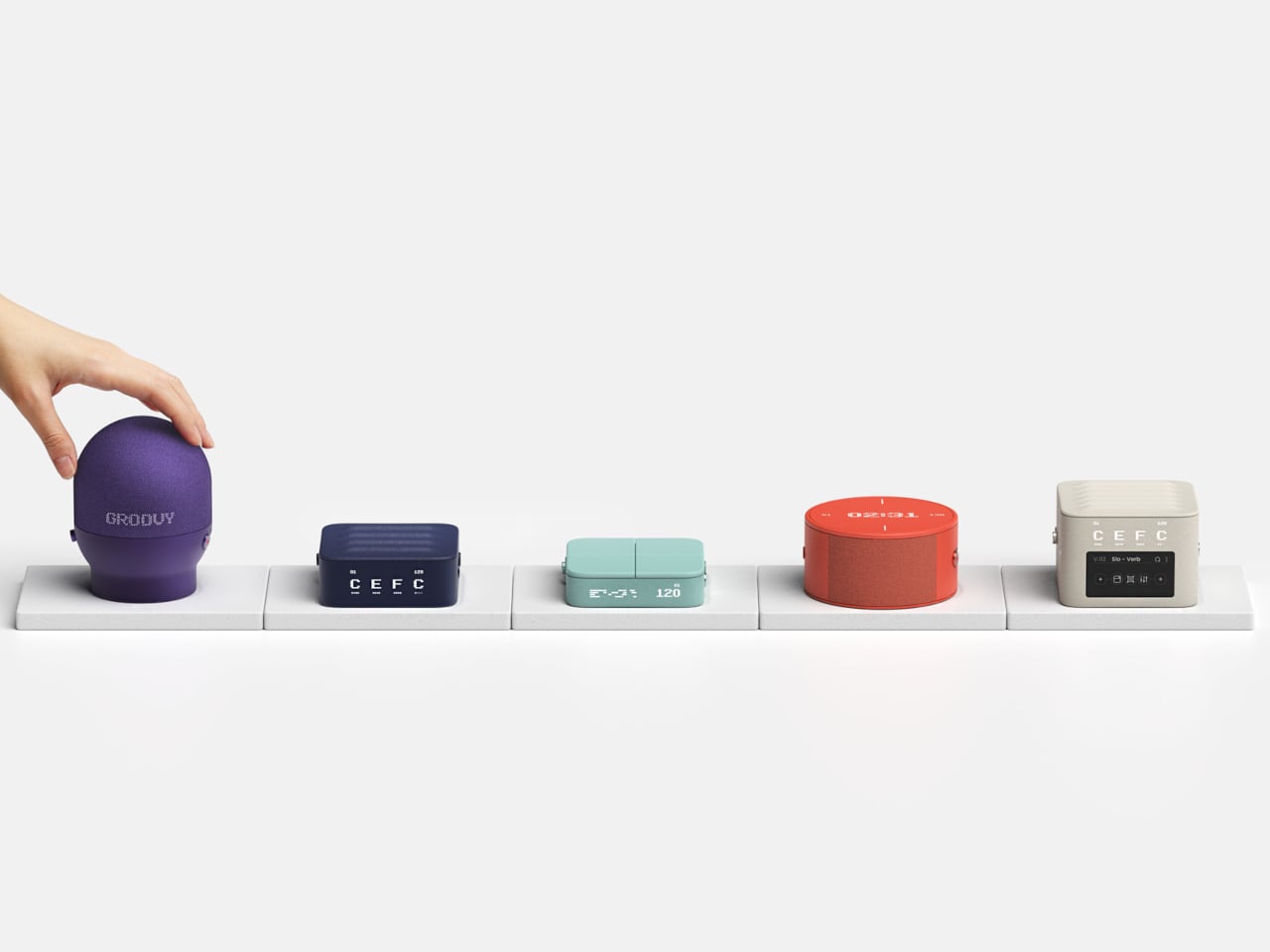
3 weeks agoTembo might just be the world's cutest drum machine
Musical Beings unveiled Tembo, a drum machine using magnetic pucks for tactile beat sequencing, designed to make music creation accessible to beginners while offering professional features for experienced musicians.
Gadgets
fromWIRED
3 weeks agoThese Fender Mix Headphones Come With Modular Parts for Easy Repairs
Fender's Audio Mix headphones feature fully replaceable and swappable parts, including the battery, with customizable colors and materials, offering a modular alternative to disposable wireless headphones.
Music production
fromdesignboom | architecture & design magazine
3 weeks agochess-like instrument mixes drum machine, sequencer and sampler in one wooden device
Tembo is a wooden drum machine, sequencer, and sampler that uses magnetic pieces placed on a grid to create and manipulate rhythmic patterns and sounds.
Music
fromYanko Design - Modern Industrial Design News
1 month agoThese $40-$299 Cassette Players Just Crushed Spotify's Algorithm - Yanko Design
Cassette player searches have surged over 1,281%, driven by millennials and Gen Z seeking deliberate listening experiences away from algorithmic playlists and infinite streaming options.
Music
fromYanko Design - Modern Industrial Design News
1 month agoSynth Modular Controller Treats Music Making Like Building with Blocks - Yanko Design
A modular synth system uses snap-together physical blocks for each function, making synthesis tangible, teachable, and scalable from beginner toy to serious performance instrument.
fromWIRED
1 month agoThis Weird Little Synthesizer Makes Me Happy
The unit can run on three AA batteries (a set is included) or on the included USB-A to DC adapter (you'll need your own wall charger). The included instruction manual helps you make sense of what the heck all the knobs, levers, buttons, and lights mean.
Gadgets
Design
fromdesignboom | architecture & design magazine
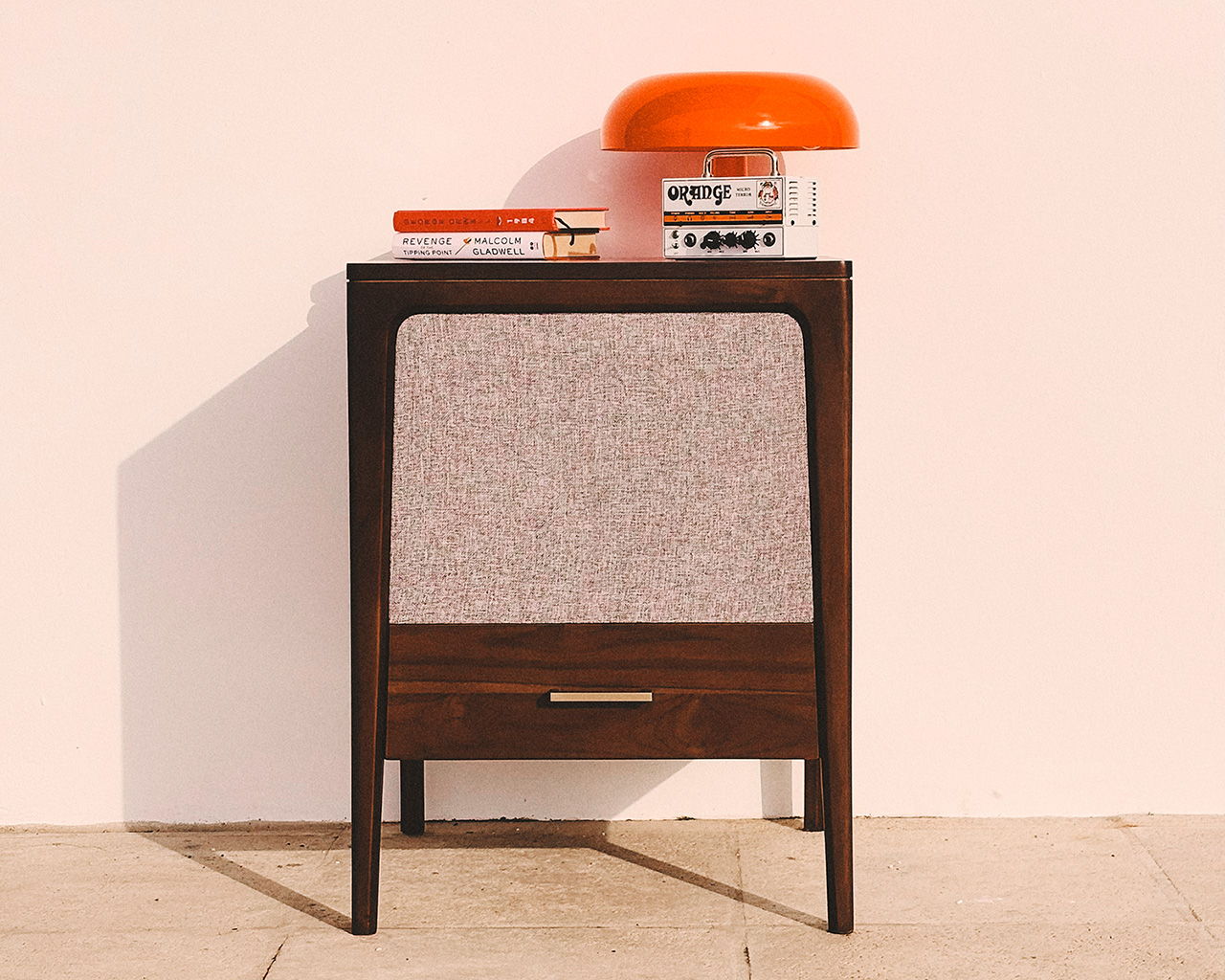
1 month agowooden music cabinet by love hulten plays vertical vinyl and casette tapes in one device
A handcrafted wooden cabinet plays vinyl vertically and stores vertically stacked cassette tapes with color-coded modern controls and retro-modern styling.
fromWIRED
1 month agoThe Marshall Kilburn III Is a Rocking Brick of Sound
What's wild about this jump in stamina is that it's disproportionate to the battery's capacity. The Kilburn II ships with a 5,200 mAh cell, while the new model is only about 5% bigger: 5,500 mAh. Clearly, some big efficiencies have been gained.
Gadgets
fromDeep House London
1 month agoJohn Monkman unleashes his menacing new single 'Signal' on Vapour Records | Music | Deep House London
This release is about connection. Not in a strategic sense, but in terms of feeling part of a scene rather than orbiting around it. There's a lot of really strong music coming out of Australia right now, especially in the underground, and this felt like the right moment to place something there.
Music production
fromThe Verge
1 month agoArturia's FX Collection 6 adds two new effects and a $99 intro version
Pitch Shifter-910 is based on the iconic Eventide H910 Harmonizer from 1974, an early digital pitchshifter and delay with a very unique character. Arturia does an admirable job preserving its glitchy quirks. Pitch Shifter-910 is not a transparent effect that lets you create natural-sounding harmonies with yourself. Instead, it relishes in its weirdness, delivering chipmunk vocals at the higher ranges. There is also a more modern mode that cleans up some artifacts while preserving what makes the 910 so special.
Music
fromEntrepreneur
1 month agoAI Is Changing Music Production - But It Can't Fill Creative Gaps
We tend to think AI music tools are just gimmicks for social media creators, or that they're limited to basic beats. But it's hard to dismiss them when companies like Google, Meta and Stability AI are pouring resources into generative audio models that can produce full compositions in seconds.
Music production
fromEngadget
2 months agoKorg's new experimental synthesizer combines acoustic sounds with electronic control
The Phase8 uses a new form of "acoustic synthesis" that combines acoustic sound generation with electronic control. Takahashi says the synthesizer is "beyond analog vs. digital" and "beyond electronics" altogether. It features chromatically tuned steel resonators, which creates an acoustic sound similar to that of a kalimba. These signals can be manipulated via onboard effects and sequenced like a traditional synthesizer. Here's a video of the synth in action.
Music
Gadgets
fromYanko Design - Modern Industrial Design News
1 month agoRoland's $299 Pocket-Sized Audio Interface Was Designed Specifically For TikTok and Instagram Music Creators - Yanko Design
Portable mixer delivers studio-grade 24-bit/192kHz recording, onboard EQ, compression, reverb, battery power, and compact design tailored for livestreaming creators.
fromThe Verge
2 months agoCasio teased a retro gaming-inspired sampler
Casio showed up to NAMM (CES for music gear nerds) this year with a prototype sampler called the SX-C1 that looks every bit the lovechild of a Game Boy and an SP-404. The top has a directional pad and four buttons just like you'd find on a game controller, flanking a 1.3-inch OLED screen. But at the bottom, there are 16 rubberized pads for triggering samples with crunchy pixelated number labels on them.
Music
Gadgets
fromdesignboom | architecture & design magazine
1 month agocloudbeat proposes a fully user-repairable concept speaker for on sportswear
Cloudbeat is a repairable, adhesive-free Bluetooth speaker using recyclable materials and user-friendly disassembly to reduce e-waste and enable circular lifecycle management.
Music
fromdesignboom | architecture & design magazine
1 month agovintage reel-to-reel tape player returns as modern wooden synthesizer by love hulten
A wooden RGB synthesizer combines vintage reel-to-reel visual cues with stepper-motor-driven red, green, and blue rotating discs and three stacked keyboard rows.
Design
fromYanko Design - Modern Industrial Design News
2 months agoWhen Your Speaker Is Also a Statement: The Tresound Mini - Yanko Design
Tresound Mini is a cone-shaped, minimalist desktop Bluetooth speaker prioritizing refined design, brand-product integration, and high-fidelity audio that blends into workspaces.
fromEngadget
2 months agoAkai's MPC XL groovebox is the most powerful device the company has ever made
First of all, it offers four times the processing power of previous MPCs, which is enough to load up to 32 virtual instruments at the same time. This is assisted by a full 16GB of RAM, which is a whole lot in this era of AI tomfoolery. The XL can handle 16 audio tracks simultaneously. In my experience with previous units, this is more than enough for a full song.
Music
Music
fromYanko Design - Modern Industrial Design News
2 months agoKorg Phase8 Is a Cyberpunk Kalimba for Producers Who Are Bored of Regular Synths - Yanko Design
Korg Phase8 is a tactile tabletop instrument using electromagnetic hammers and acoustic pickups to enable 'Acoustic Synthesis' and encourage physical interaction to shape sound.
fromYanko Design - Modern Industrial Design News
2 months agoTeenage Engineering-inspired Music Sampler Uses AI In The Nerdiest Way Possible - Yanko Design
Junho Park's graduation concept borrows all the right cues from TE's playbook, that modular control layout, the single bold color, the mix of knobs and buttons that practically beg to be touched, but redirects them toward a gap in the market. Where Teenage Engineering designs for people who already understand synthesis and sampling, the T.M-4 targets people who have ideas but no vocabulary to express them.
Gadgets
fromYanko Design - Modern Industrial Design News
2 months agoThis retro-modern music player revives the hypnotic spin of cassette tapes - Yanko Design
For this time around, however, the concept player here stays within the audio listening gear domain; nonetheless, has clear signs of a TE-inspired design. The retro Bluetooth player is a music accessory that's reminiscent of the classic cassette tape player design, but on the inside, it's a modern music player that plays music wired or wireless. The aesthetics are purely for arousing the nostalgic feel of listening to music on a cassette player, while the audio is digitally played via a DAC for high-resolution output.
Music
Music production
fromEngadget
2 months agoNative Instruments enters into insolvency proceedings, leaving its future uncertain
Native Instruments has entered preliminary insolvency proceedings with an administrator appointed to restructure or sell assets, leaving employees and product futures uncertain.
Music
fromdesignboom | architecture & design magazine
2 months agokalimba-like acoustic synthesizer produces sounds by touching, plucking or strumming it
Korg's phase8 is an eight-voice, touch-interactive acoustic synthesizer with steel resonators that can be plucked, tapped, and modulated for customizable layered sounds.
fromYanko Design - Modern Industrial Design News
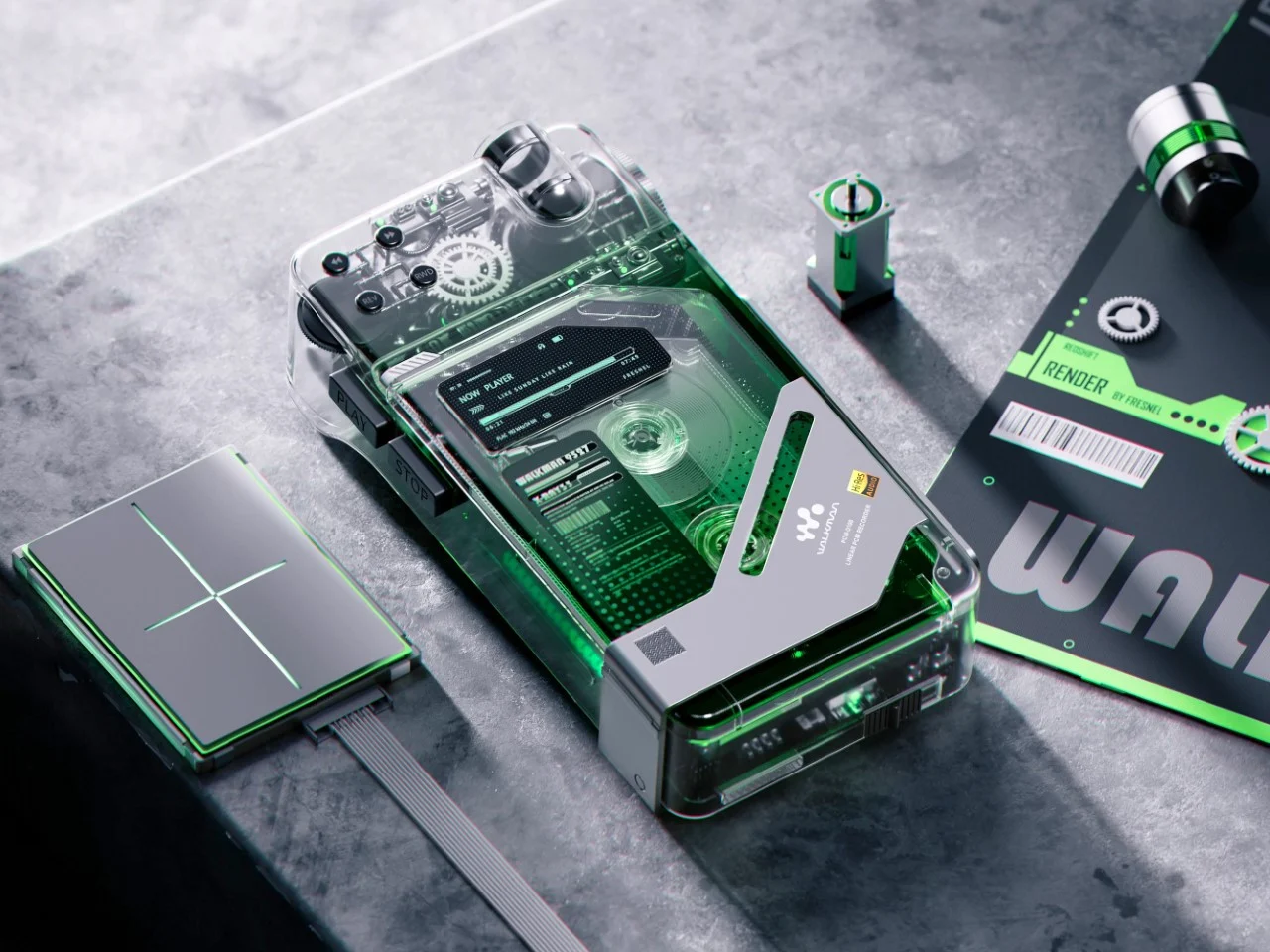
2 months agoMP-1 Reimagines a Modern Walkman Through a Teenage Engineering Lens - Yanko Design
Listening to music has mostly collapsed into phones and streaming apps, buried between notifications and multitasking. Some people still crave a single-purpose device that treats listening as the main event, not background noise. The MP-1 is an independent concept study that asks what a modern Walkman could look like if it borrowed Teenage Engineering's design language, without being affiliated with the company or trying to become an official product at all.
Music
Gadgets
fromdesignboom | architecture & design magazine
1 month agoold typewriter comes back as functional 'gaming' computer that slides to the side
An old mechanical typewriter is converted into a functional gaming computer that physically slides to the side with each keystroke while preserving vintage mechanisms.
fromYanko Design - Modern Industrial Design News
1 month ago3D-Printed Guitar Amp Desk Organizer Brings Concert Energy to Your Boring Monday Morning - Yanko Design
The contrast between Sunday night at a concert and Monday morning at your desk is brutal. One moment you're lost in the music, feeling every guitar riff vibrate through your chest. The next, you're answering emails and pretending last night's euphoria wasn't real. The transition back to routine work feels especially cruel when the weekend gave you a taste of something electric.
Gadgets
Gadgets
fromYanko Design - Modern Industrial Design News
2 months agoFender ELIE 6 Hands-on at CES 2026: Minimalist Nordic Design, 60W Of Serious Sound - Yanko Design
Fender's ELIE 6 blends minimalist Nordic design, real fretboard wood handle, and a three-driver audio system for surprisingly deep, tactile portable sound.
fromThe Verge
2 months agoSony announces its first turntables in years
Both turntables include one-button automatic playback - which starts the turntable, raises and lowers the tonearm on the vinyl, and returns the tonearm to its resting position once the record ends - a transparent dust cover to keep colored vinyl printings visible as the record plays, and a built-in switchable EQ to select between phono and line-level output. A USB output allows you to convert your vinyl to a digital file and has a three-level output gain selector with low, mid, and high settings. The two turntables also support 96kHz/24-bit wireless aptX Adaptive hi-res Bluetooth audio.
Gadgets
fromEsquire
2 months agoThese Portable CD Players Combine Modern Tech and Retro Tactility
Chances are this does exactly what you need. It will play your old CDs, your new CDs, your homemade mixtapes, the whole nine yards. You can even listen wirelessly thanks to onboard Bluetooth. It's got a decent battery life that can last you up to six hours, and it uses a USB-C to recharge. We usually have one of those on hand.
Gadgets
fromYanko Design - Modern Industrial Design News
1 month agoThis $400 Wooden Keyboard Goes Through Over 15 Hand-Finishing Steps Before You Can Type On It - Yanko Design
Tech moves fast, breaks things, ships updates, iterates. The entire industry is built on the assumption that this year's product will be obsolete by next year, and that's fine because next year's version will be better anyway. Then you see someone in Fukui Prefecture spending twenty minutes hand-sanding a single wooden keyboard key, checking it by touch, and the whole paradigm feels suddenly optional.
Gadgets
Music
fromKALTBLUT Magazine
1 month agoChoosing the Artificial Over the Real in Dash Hammerstein's "Noise Machine" - KALTBLUT Magazine
Dash Hammerstein blends Americana songwriting and filmmaking to create intimate, melody-driven songs and film scores that mix folk-pop sensibility with subtle production flourishes.
[ Load more ]