#harvester
#harvester
[ follow ]
#agriculture #precision-agriculture #agronomy #canadian-agriculture #crop-protection #crop-management
fromThe Verge
1 week agoJohn Deere, Garmin, and Philips may have undermined military right to repair
Companies such as John Deere, Garmin, and Philips have collectively spent millions on lobbying efforts related to the National Defense Authorization Act, particularly concerning repair issues.
SF politics


Women in technology
fromRealagriculture
3 weeks agoChanging conversations highlight evolving role of women in agriculture
The Advancing Women in Agriculture Conference has evolved to address mental health, resiliency, and workplace challenges, reflecting decades of progress in recognizing women's contributions to agriculture.
Intellectual property law
fromIPWatchdog.com | Patents & Intellectual Property Law
3 weeks agoCAFC Reverses Judgment of Indefiniteness in Crop Harvester Patent Dispute
A means-plus-function claim is valid if at least one embodiment discloses corresponding structure, even if that structure differs from the accused device's implementation.
#canadian-agriculture
Agriculture
fromRealagriculture
1 month agoRealAg Radio: Canadian innovation, unleashing the economy, and farm management, Mar 3, 2026
RealAg Radio features industry experts discussing capital investment in Canadian agriculture, seed products, economic growth strategies, and farm management practices linked to financial performance.
Business intelligence
from24/7 Wall St.
1 month agoCaterpillar vs Deere: Heavy Machinery Legends Post Opposite Earnings Stories and the Gap Is Widening Fast
Caterpillar achieves record revenue driven by data center power demand, while Deere signals agricultural cycle recovery despite margin compression and tariff headwinds affecting both companies differently.
fromRealagriculture
1 week agoBranValt builds global presence with Deere partnership and new concave system
"What started as a basement hobby is now trusted in 45 different countries worldwide. We became a global company... bringing all the companies that we now have in our lineup together under one brand name."
Agriculture
fromRealagriculture
1 week agoHigher horsepower and versatility drive new Optum series tractors
"This tractor really is designed to do a little bit of everything," says Cadle, pointing to applications ranging from planting and tillage to haulage, forage work, and PTO-driven tasks such as mowing or snow removal.
Agriculture
fromRealagriculture
1 week agoManitoba farm equipment dealer genAG to open CLAAS dealerships in North and South Dakota
"These new dealerships represent an important investment for CLAAS customers and is a commitment to agriculture in the Dakotas," says Torey Hadland, vice president, CLAAS of America.
Agriculture

fromRealagriculture
2 weeks agoTerraScout brings robot agronomic scouting to the farm
It can drive through the field and look at every square inch. We really honed our craft on model performance and detection with rocks, and now we've transitioned that into weeds. The robot uses a boom-mounted camera system to capture detailed imagery across the field. With eight cameras operating at 1 millimetre resolution, TerraScout can generate billions of data points per acre, allowing it to identify specific objects, including individual weeds.
Agriculture
fromRealagriculture
2 weeks agoSeven-bar tine harrow featured in Schulte's newest SoilStar model
This is the latest addition to the SoilStar family... it's using the same tried and true frame as our previous model... but this eliminates the coulter discs... and it's a seven bar tine harrow. The combination allows for increased agitation up front and more flexibility at the back, helping to achieve a more even spread of material.
Agriculture
fromRealagriculture
2 months agoAg Policy Connection: Rethinking funding for plant breeding, with Jason Reinheimer
"If Canada wants generational change in agricultural innovation, we need to transform our policy around how we fund plant breeding," he says. The current system, heavily reliant on public funding and check-off dollars, is increasingly under pressure. Reinheimer points to signs that Agriculture and Agri-Food Canada (AAFC) is shrinking its breeding footprint-especially in wheat, where AAFC varieties still account for about 80 per cent of acres. The problem? There's no updated funding model to match that shift.
Canada news
Agriculture
fromRealagriculture
2 weeks agoProfitable Practices: Robotics and automation help Greenview Holsteins tackle labour challenges
Canadian dairy farms use robotic milking and feeding systems to overcome labour shortages while enabling scalable, sustainable operations with improved cow-level management.
Agriculture
fromRealagriculture
2 weeks agoRealAg Radio: Weed pressure before emergence, sulphur by drone, and corn standability, Mar 16, 2026
Early weed pressure reduces crop yield before plant emergence, while drone applications for fertilizer and sulphur on fall-seeded cereals are emerging agricultural practices, alongside concerns about corn standability.
fromRealagriculture
3 weeks agoeKonomics input planning calculator: Helping you optimize crop management decisions
The input planning calculator is a robust tool that can help farmers and agronomists better understand on-farm finances while helping uncover which crops make the most sense to plant from a cost perspective. By inputting key on-farm financial and agronomic data, including seed and agronomy service costs, growers can compare each crop on their farm and explore their true cost of production.
Agriculture
Agriculture
fromRealagriculture
2 weeks agoClearCost puts fertilizer price comparisons in farmers' pockets
ClearCost is a free mobile platform that aggregates fertilizer pricing from multiple dealers across North America, enabling farmers to compare quotes and secure better deals through a single application.
fromRealagriculture
3 weeks agoRealAg on the Weekend: Women in ag, diesel prices, & future plant breeding options, Mar 14 & 15/26
If we did that today, it would be a hundred percent, because right now, without question, 2026 is riskier than 2025. So farmers really [face significant challenges]. The war in Iran continues and it works back to the world of agriculture. It's had an impact on fertiliser and diesel prices and commodity markets, as well as currency.
Agriculture
Agriculture
fromFortune
3 weeks agoThe 2026 farm bill quietly hands big tech control over American farmland. Here's the fine print | Fortune
The 2026 Farm Bill includes a provision offering 90% reimbursement for AI and precision agriculture adoption, with private tech industry standards replacing USDA oversight, potentially concentrating food system control among large technology firms.
Agriculture
fromRealagriculture
3 weeks agoWheat Pete's Word, March 11: The next generation of ag, ponded wheat, potash power, and a rust watch
Ontario winter wheat shows strong spring conditions with minimal ponding, while high-tillering wheat in Idaho presents lodging risks and leaf rust emerges unexpectedly in the southern U.S.
Agriculture
fromRealagriculture
3 weeks agoRhizoSorb tops one million acres as growers seek improved phosphate efficiency
Phospholutions' RhizoSorb technology reached one million commercial acres in 2025, driven by growers seeking phosphorus efficiency and cost savings through controlled-release fertilizer innovation.
fromRealagriculture
1 month agoVaderstad expands digital tools for seeding management
You can go onto your cloud account either through the iPad or your desktop computer and pre-plan all your jobs... when your hired man goes into the field he can just pick the job... and then hit start and you can go.
Agriculture
Agriculture
fromwww.theguardian.com
1 month agoTech firms and AI farming tools playing with the food system', warns thinktank
Tech companies use AI and algorithms with industrial agriculture to control global food systems, pushing farmers toward five profitable crops while undermining locally adapted varieties and food security.
Agriculture
fromRealagriculture
1 month agoFarmers say improving financial decisions boosts profitability more than new tech or government programming
Seventy-three percent of Canadian farmers believe improving financial decision-making impacts profitability more than technology or government programs, with younger farmers showing strongest agreement.
fromRealagriculture
1 month agoBourgault adds one-to-one contour to dual knife opener offering
This is the only one to one opener out there right now. The design allows the opener to better follow field terrain and work through washouts compared to previous models, enabling improved contourability and performance in challenging field conditions.
Agriculture
Agriculture
fromRealagriculture
1 month agoRhizoSorb delivers on higher phosphorous fertilizer ROI
RhizoSorb is a phosphate efficiency technology that doubles phosphate feeding efficiency, requiring one-third less product than traditional MAP while delivering 10% cost savings per acre and approximately $20 ROI.
Agriculture
fromRealagriculture
1 month agoDon't cut the science that pays the bills
Closing AAFC research stations undermines Canada's agricultural competitiveness by eliminating the only coordinated system for validating crop genetics across diverse agro-ecological zones, despite wheat breeding generating a 32:1 benefit-cost ratio.
Agriculture
fromRealagriculture
1 month agoWheat Pete's Word, Feb 25: Compaction consequences, manure on snow warnings, and S surprises
Small management details like manure timing, sulphur application, and soil compaction create multi-year consequences affecting farm productivity and environmental outcomes.
fromRealagriculture
1 month agoThe strongest start: How seedcare innovation is shaping crop protection in Canada
"I've been with Syngenta for 28 years," Ramachandran says, noting that early travels across Canada shaped his passion for seed care. "What really stood out to me is seeing firsthand the passion, the resilience and the impact the growers made." Those experiences, combined with Canada's short growing season, continue to guide his work. "Everything that we have done... is around addressing those challenges, and how do we create solutions that are fit for purpose, for Canadian growers?"
Agriculture
fromRealagriculture
1 month agoThe Final Mile, Ep 2: Finding agriculture's real AI advantage, with Mohamed Yaghi
Yaghi describes AI not as a silver bullet, but as an advanced form of statistical pattern recognition-tools that can identify trends in data that may be difficult or time-consuming for people to uncover on their own. The real opportunity, he says, depends heavily on what farms are already doing. Operations that are consistently collecting and digitizing high-quality data are better positioned to benefit, whether the goal is lowering per-cow costs in a dairy, improving financial analysis, or identifying operational efficiencies.
Agriculture
fromRealagriculture
2 months agoUpdated CLAAS Lexion combines offer new engine and cab features
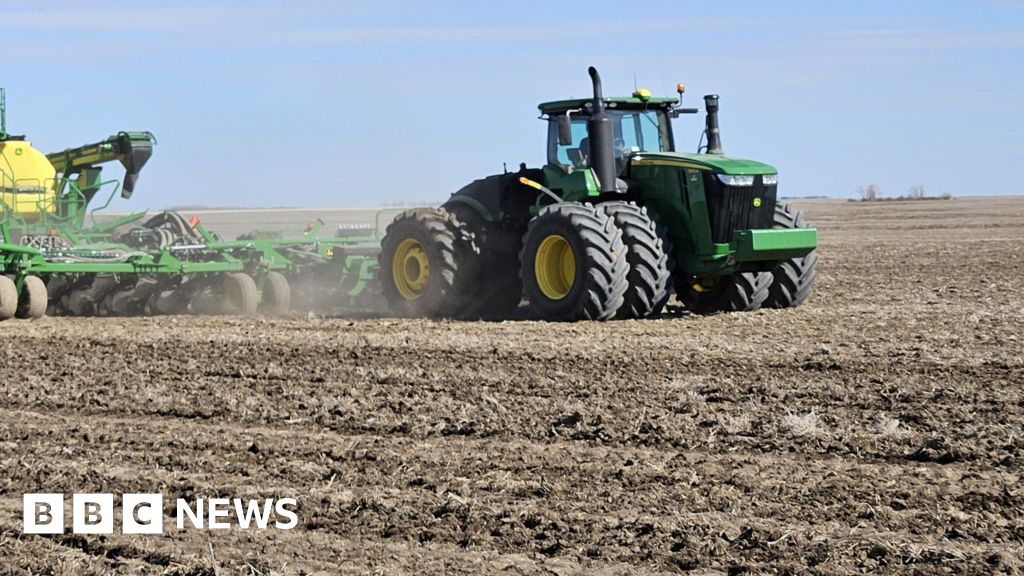
Speaking with RealAgriculture at the Western Canadian Crop Production Show at Saskatoon, Terry Siebert, regional product supervisor of CLAAS, says the company is expanding its portfolio by adding the Lexion 8500 as the new bottom-end machine. The updated lineup now includes the 8500, 8600, 8700, 8800, and 8900. Siebert says the new model broadens the range of options available heading into the 2026 season.
Agriculture
Agriculture
fromRealagriculture
1 month agoWithout a coordinated approach, Canada is falling behind on ag tech and drone adoption
Canada requires a coordinated national ag tech innovation and adoption framework plus aligned drone and AI regulations to maintain farm competitiveness and global market access.
Agriculture
fromRealagriculture
2 months agoRealAg Radio: 7 traits of successful farms, subsoiling soybeans, and the polar vortex, Jan 27, 2026
Seven traits define successful farms; subsoiling improves field performance; agronomy and weather (polar vortex) significantly influence farm management decisions.
fromRealagriculture
2 months agoRealAg Radio: Productivity challenges, local growth, and Nutrien moves to unify wholesale and retail, Feb 3, 2026
Welcome and thanks for joining us for today's edition of RealAg Radio with your host Shaun Haney. On today's show, Haney is joined by: Darrell Bricker of IPSOS on income, productivity and domestic challenges; Chad Garrod of Corteva Canada for a spotlight interview for Corteva Luxe Chris Reynolds of Nutrien on Nutrien Ltd. unifying its wholesale and retail sales operations.
Agriculture
[ Load more ]