#healthcare-right
#healthcare-right
[ follow ]
#healthcare #nhs #patient-care #public-health #healthcare-costs #bma #hivaids #global-health #reproductive-rights #hiv


fromwww.bbc.com
1 day agoNHS staff star in musical on antibiotic resistance
Prof Ashley Brown, a consultant at St Mary's, expressed the challenges of balancing clinical responsibilities with rehearsals, stating, 'singing is good for the heart.' He believes that 'everyone should sing more often' and suggested that singing could be prescribed on the NHS to cure various ills.
London music

fromNews Center
2 days agoPolicy Intervention Linked to Increase in Kidney Transplants in Black Patients - News Center
"This argues for the need to sustain such policies and shows that it is possible to right the wrongs retroactively, which is a powerful idea," said Kenneth Michelson, MD, MPH, associate professor of Pediatrics in the Division of Emergency Medicine and a co-author of the study.
Medicine
fromwww.bbc.com
4 days agoDoctors lose new jobs package as strike to go ahead
The government has withdrawn an offer of creating 1,000 more doctor training posts in England after the British Medical Association (BMA) refused to call off a six-day strike next week. The extra posts were part of a wider package of measures put forward by ministers earlier this year to resolve the long-running dispute with resident doctors.
UK politics
fromwww.aljazeera.com
4 days agoMinerals for aid: Are new US health deals exploiting' African countries?
In late 2025, the United States shocked the world by suspending global health aid, leading experts to predict 700,000 additional deaths annually, primarily among children. This prompted the US to propose unusual bilateral health agreements with developing countries, which have drawn criticism for being exploitative.
Public health
fromTruthout
3 weeks agoStates Tighten HIV Drug Assistance, Raising Access Concerns
Congress has kept key drug assistance funding at $900.3 million annually since 2014. New enrollments for state programs jumped 30% from 2022 to 2024, in part because states cut off pandemic-era Medicaid assistance. As of January, at least 18 states have pulled back their Ryan White AIDS Drug Assistance Programs, known as ADAPs, in some way.
NYC LGBT
US news
fromTruthout
3 weeks agoGlobal Health Workers Describe Impact a Year After Trump Admin Shut Down USAID
USAID's dissolution in 2025 has caused avoidable deaths and increased suffering among vulnerable populations globally, with malaria spikes, food assistance cuts, and disrupted medical supply chains already documented.
fromAdvocate.com
4 days agoDoctors' group says American Medical Association didn't retreat on gender-affirming care for minors
"We knew right away that any shift in policy that was being reported was a grave exaggeration," Sheldon said, pointing to GLMA's role within the AMA's House of Delegates, where it has a voting seat and direct visibility into policymaking.
Healthcare
US politics
fromwww.theguardian.com
1 month agoRising anger over lop-sided' and immoral' US health funding pacts with African countries
African countries are rejecting US bilateral health agreements as exploitative, with demands for biological resources, data sharing, and mineral access violating national sovereignty.


fromThe Nation
3 weeks agoA Motto for All Health Workers: Resist, Resist, Resist
What are scientists, clinicians, and public health practitioners supposed to do in this moment? What use is research when our patients might be deported tomorrow? Why try to stem the tide of outbreaks when the world has fallen apart? This is why: because even in these times, enlarging the scope of human knowledge matters. The search for cures still matters. The fate of individual patients still matters.
Public health
fromInside Higher Ed | Higher Education News, Events and Jobs
1 month agoHealth Care Groups Form Coalition to Fight Loan Caps
The loan limits-which were prompted by congressional legislation and fleshed out through a contentious rule-making process -cap the amount a graduate student can borrow based on the type of program they enroll in. If their program is deemed "professional," they can borrow up to $50,000 a year or $200,000 total; meanwhile, students in programs labeled "graduate" can only take out half that-$20,500 a year or $100,000 total. Under the proposed regulations, only 11 degree programs are considered professional.
Higher education
fromNextgov.com
5 days agoHHS reverses Biden-era restructuring of its IT and tech operations
HHS Chief Information Officer Clark Minor stated that consolidating the CTO, CDO, and CAIO roles within his office allows the department to move faster on shared platforms and protect systems more effectively.
Healthcare
Public health
fromAdvocate.com
1 month agoBudget cuts and ignorance of history are racing us towards another HIV & AIDS epidemic
The Trump administration is cutting HIV/AIDS funding across CDC, research, state grants, and global programs, threatening decades of progress against a disease that devastated communities in the 1980s.
fromwww.cbc.ca
2 months agoProvince on track to connect all Ontarians to primary care provider by 2029: health minister | CBC News
Health Minister Sylvia Jones says about 275,000 people have been attached to primary care so far in the first year of the government's plan. More than half of that progress is due to moving people off the Health Care Connect wait list.
Canada news
Public health
fromLGBTQ Nation
1 month ago17 states consider cutting assistance for HIV meds as prices increase - LGBTQ Nation
Seventeen states and D.C. have cut AIDS Drug Assistance Program costs while federal funding stagnates, threatening medication access for low-income HIV patients and risking public health crises.
New York Islanders
fromwww.amny.com
2 months agoOp-Ed | As healthcare costs surge, lawmakers should focus on reforming rather than expanding costly government programs amNewYork
Expanding 340B program and rising healthcare costs are exacerbating unaffordability, harming minority-owned businesses, and lacking transparency and oversight.
fromThe Nation
1 month agoThe Red State-Blue State Healthcare Divide Is Dangerous for Everyone
In light of the systemic dismantling of America's public health agencies, these moves essentially create a shadow infrastructure to maintain some of what is being lost. While this is a promising development, it does nothing to stop a troubling trend that has been emerging for some time: The country is quickly becoming fragmented along partisan lines when it comes to public health.
Public health



Healthcare
fromBusiness Insider
1 month agoWaiting for Medicare and skipping prescriptions: Meet the Americans on the brink of losing health insurance
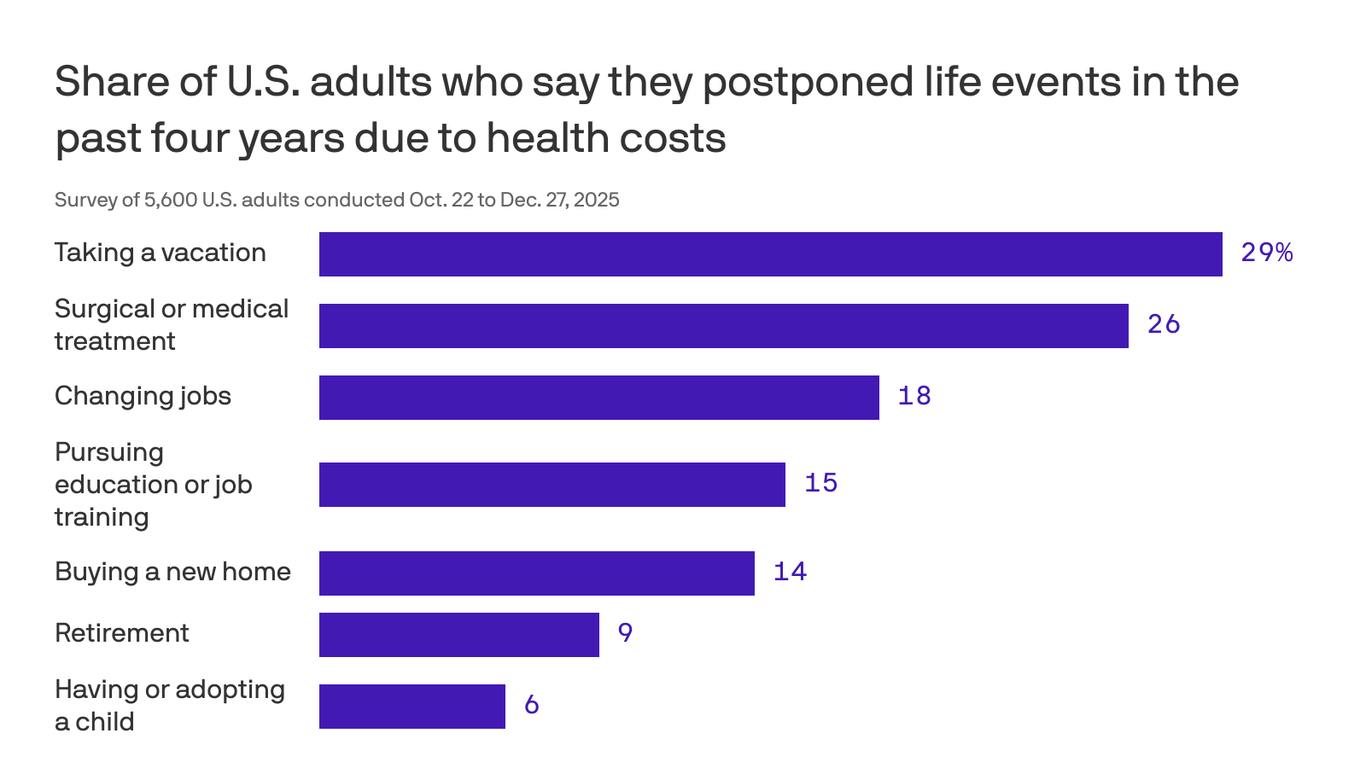
Expiration of enhanced ACA subsidies on December 31 caused monthly premiums to spike hundreds of dollars, forcing over 1 million Americans to cancel marketplace plans between early 2025 and 2026.
fromwww.aljazeera.com
2 months agoGlobal health's defining test
Perhaps the most significant milestone was the adoption by WHO Member States of the Pandemic Agreement, a landmark step towards making the world safer from future pandemics. Alongside this, amendments to the International Health Regulations came into force, including a new pandemic emergency alert level designed to trigger stronger global cooperation. And to sustainably finance the WHO's work, governments in a historic show of support increased their contributions to our core budget.
Public health
from48 hills
2 months agoThe US fails again to fix the real causes underlying poor health - 48 hills
If you're smoking three packs of cigarettes a day, should you expect society to pay when you get sick?" He added that while Americans would always have the right to "eat donuts all day," nevertheless, "should you then expect society to care for you when you predictably get very sick at the same level as somebody who was born with a congenital illness?
Public health
Public health
fromkffhealthnews.org
2 months agoMedical bills can be vexing and perplexing. Here's important advice for patients
High and confusing medical bills affect insured and uninsured due to coverage gaps, unexpected plan restrictions, billing practices, and complex retroactive policies like COBRA.
fromThe Nation
2 months agoHealthcare Workers Must Continue Alex Pretti's Fight
One might ask why an epidemiologist like me would be interested in Latin American history at this moment. What drew me to that era was the key role that clinicians and public health workers played in the resistance against the dictatorship; their simultaneous push for a national healthcare program; and the ways in which this sector organized, even as more conservative physicians sided with the putschists, happy to see their more progressive colleagues jailed and persecuted.
Public health
fromBusiness Insider
2 months agoWe want to hear your story about healthcare access
In 2026, the US healthcare system is changing. Enhanced Affordable Care Act subsidies have expired, causing premiums for marketplace plans to spike - and pricing some families out of health insurance entirely. President Donald Trump's One Big Beautiful Bill Act will reduce coverage for some patients with Medicaid and funding for hospitals, especially those in rural areas. Costs for Medicare and private insurance are also rising: Employer-based healthcare premiums have increased by 9%, the largest rise in more than a decade.
Healthcare
[ Load more ]