#heat-retention-rating
#heat-retention-rating
[ follow ]
#energy-efficiency




Remodel
fromEarth911
1 month agoGuest Idea: Map Appliance Power to Identify and Tame Your Home's Top Electricity Consumers
Appliance power mapping identifies individual device energy consumption, revealing phantom loads and inefficiencies that waste up to $183 annually per household through targeted, low-cost solutions.


Boston real estate
fromRedfin | Real Estate Tips for Home Buying, Selling & More
1 week agoHow Much Does it Cost to Build a House in 2026?
Building a house involves various costs beyond construction, including land, site preparation, utilities, and permits, which can significantly increase total expenses.
#ai-infrastructure



Environment
fromFortune
4 days agoData centers are so hot, their 'heat island' effect is raising temperatures up to 6 miles away and impacting 343 million people worldwide, study finds | Fortune
AI infrastructure is creating a 'data heat island effect' that raises local temperatures and impacts millions of people.

fromLondon Business News | Londonlovesbusiness.com
1 month agoHow to maintain efficient heat recovery ventilation in modern commercial spaces - London Business News | Londonlovesbusiness.com
Checking your equipment once a month helps catch small issues before they turn into expensive repairs. A routine keeps everything running smoothly and extends the life of the hardware. Managers should create a simple checklist for their maintenance staff to follow.
Business
fromBusiness Matters
3 weeks agoIndoor air quality is becoming a business priority
MVHR (Mechanical Ventilation with Heat Recovery) systems are designed to continuously replace stale indoor air with fresh outdoor air while recovering heat that would otherwise be lost. In commercial and residential buildings, this technology provides several important advantages. First, it allows buildings to remain energy efficient without sacrificing airflow.
Real estate
fromLos Angeles Times
35 years agoStress-Skin Paneling Makes Airtight House
Stress-skin panel construction is probably the most energy-efficient and cost-effective building method available today. With super-high insulation levels and airtightness, a stress-skin panel house should have extremely low heating and cooling costs. A reduction of 50% on utility bills as compared to a typically constructed house is reasonable.
Remodel
Renovation
fromArchDaily
1 month agoUnderstanding U-Value: The Foundation of Energy-Efficient Envelopes
Building envelope thermal transmittance (U-value) is the fundamental metric determining energy efficiency, calculated by dividing heat flow by surface area and temperature difference to assess insulation performance.
fromArchDaily
3 weeks agoHow Architecture Is Learning to Generate Its Own Energy
Photovoltaic (PV) solar energy represents a modular technology that can be manufactured in large-scale facilities, generating economies of scale, while also being adaptable to small-scale applications. From residential rooftop systems to large-scale power generation installations, photovoltaic solar energy has established itself as a cost-effective option for electricity production in many countries around the world.
Environment
Gadgets
fromYanko Design - Modern Industrial Design News
1 month agoA Water Heater That Doubles as a Data Center - and Cuts Your Energy Bill - Yanko Design
Superheat H1 replaces traditional heating elements with processors that simultaneously compute and heat water, using a single electricity input twice to reduce hot water energy consumption by up to 80 percent.
fromArchDaily
1 month agoThermal Memory: How Climate Shapes Architectural Heritage
Heritage is usually catalogued by what can be drawn, not by what changed temperature. In heat, buildings are learned first through skin, only later through sight. Generations learn, through their bodies, what works. Shade reduces glare and radiant heat. Air movement shifts perception by several degrees. Thick walls slow temperature swings.
Miscellaneous
#heat-pump-technology
Environment
fromwww.dw.com
1 month agoDo heat pumps work in cold weather?
Heat pumps function effectively in extreme cold temperatures, with refrigerants operating below minus 40°C and air-source models working reliably at minus 25°C, making them viable alternatives to fossil fuel heating systems even in harsh climates.
fromLondon Business News | Londonlovesbusiness.com
1 month agoHow the right windows can lift your London property's EPC rating - and its value - London Business News | Londonlovesbusiness.com
If you own a property in London, you have almost certainly thought about your EPC rating in the past twelve months. Mortgage lenders are paying closer attention to energy performance. Tenants are factoring running costs into rental decisions. And with the government signalling stricter minimum EPC thresholds for rented properties, a poor rating is no longer just a line on a certificate - it is a financial liability.
Real estate
Startup companies
fromTechCrunch
2 months agoHow Quilt solved the heat pump's biggest challenge | TechCrunch
Quilt's three-zone heat pump uses sensor-rich, data-driven control to maintain efficiency under demanding conditions while simplifying multi-zone installations and enabling over-the-air performance upgrades.
fromwww.theguardian.com
1 month agoCalls to move England's home insulation scheme into council workers' hands
Common Wealth cited the example of the Warmer Homes consortium, led by Portsmouth city council, which was allocated 22m among 31 authorities over three years. This breaks down to about 450-650 homes per year, or 15-20 homes per local authority per year.
Environment
fromArchDaily
1 month agoWhen Light Meets Energy in Glass Ceilings
From the large industrial roofs and galleries of the 19th century to the contemporary atriums of museums and public buildings, glass has been a recurring material in shaping large and monumental interior spaces. More than a technological or engineering solution, these horizontal glazed planes introduce a distinct luminous quality: light that comes from above. Unlike lateral daylight entering through façades, zenithal light is more evenly distributed, reduces harsh shadows, and lends spaces a sense of continuity and openness that is difficult to achieve otherwise.
Design
Environment
fromArchDaily
1 month agoCan Shading Become Energy? From Passive Facades to Productive Envelopes
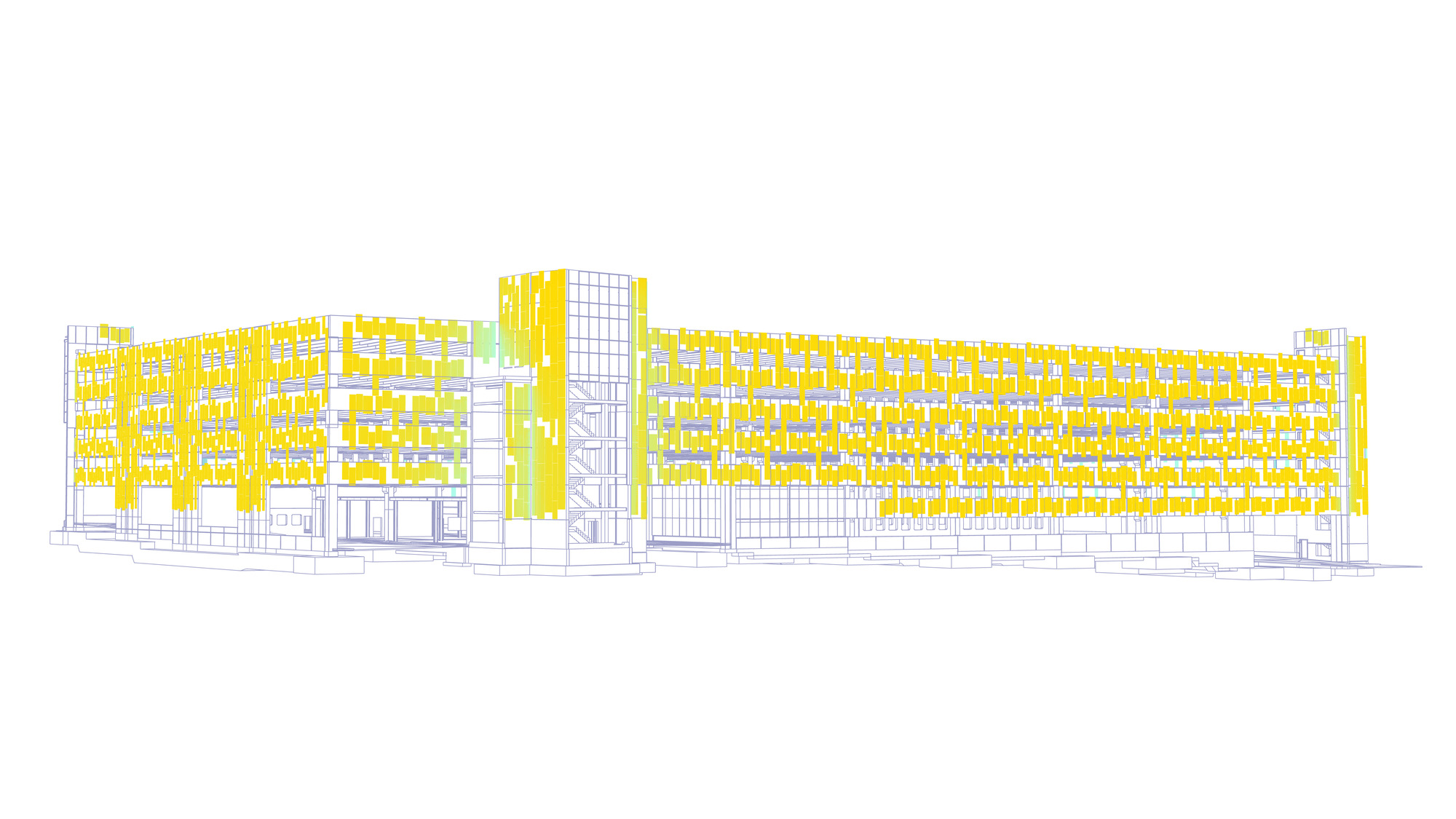
Facades can generate significant renewable energy by integrating colored photovoltaic shutters that combine shading, daylight control, and electricity production without adding envelope complexity.





fromIrish Independent
2 months agoEnergy-efficient homes worth almost 100,000 more on second-hand market, new report reveals
There is a premium of close to €100,000 for a home with a high energy rating compared with one which is less efficient to heat. The average sale price for all types of homes was €390,000 in the last three months of last year. This was up €20,000 on the same period in 2024, according to the data obtained from the State's property price register by Dublin-based data and home valuation company Geowox.
Real estate
fromZDNET
2 months agoThese unassuming devices promised to lower my electricity bills - only this one was legit
They do nothing to save you power Scam "power saving" devices are rampant online. These devices plug into an outlet and promise to "improve the use of energy," "extend the life of electrical equipment," and even "avoid illegal electrical waste." Sounds great, right? Also: This USB power meter I tested is shockingly accurate - especially for how cheap it is Well, despite the bold claims and the sticker on the front of the unit, they are too good to be true.
Gadgets
fromArchDaily
2 months agoSelf-Sufficient Facades: Where Solar Protection Meets Renewable Energy
Spaces of light and darkness are conceived to enhance circulation and spatial directionality, as well as to highlight the colors, textures, and forms of specific architectural elements. That said, the impact of natural light on building facades reveals the need to develop strategies that support energy savings, improve the thermal and visual comfort of interior spaces, and promote the reduction of carbon emissions.
Design
fromBusiness Matters
2 months agoWhy Thermally Modified Timber Has Moved Into the Construction Mainstream
Thermal modification is not a new invention, but its relevance has increased as expectations around performance, sustainability, and predictability have tightened. Developers, architects, and contractors are no longer just asking whether timber looks good or performs well initially. They want to know how it behaves after ten, twenty, or thirty years, and how much risk it introduces into a project once the scaffolding is gone.
Remodel
fromArchDaily
2 months agoA Responsible Addition: HIMACS Shapes Achieve SCS Certification for Recycled Content
In a balance of aesthetics, performance, and versatility, HIMACS shows a solid surface material of choice for many architects and designers. Taking a further step forward, the entire range of standard HIMACS sinks and basins is now officially SCS certified, containing a minimum of 8% pre-consumer recycled content. This certification enhances the material's technical and visual appeal by providing a more sustainable option without compromising quality or functionality.
Design
fromLondon Business News | Londonlovesbusiness.com
2 months agoTimber cladding in the UK: Materials, performance, and regulatory reality - London Business News | Londonlovesbusiness.com
Timber cladding has become a defining feature of contemporary construction across the UK. Once associated mainly with rural housing and architectural one-offs, it is now widely used across residential developments, commercial buildings, education projects, and urban regeneration schemes. Its appeal is often described in visual terms, but appearance alone does not explain its continued growth. Timber offers flexibility in design, a lower embodied carbon profile than many alternatives, and the ability to integrate effectively within modern wall systems when specified correctly.
Renovation
fromSocial Media Explorer
2 months agoMetal VS Shingle Roofing - Social Media Explorer
When it comes to protecting your home, the roof is your first line of defense against the elements. For decades, asphalt shingles have been the go-to choice for homeowners due to their low upfront cost and ease of installation. However, as building technology has advanced and extreme weather events become more frequent, many are starting to look at their roof as a long-term investment rather than a recurring expense.
Remodel
fromArchitectural Digest
2 months agoSustainable Architecture Is More Needed Than Ever-Here's What It Actually Means
According to the UN, the "buildings and construction sector is by far the largest emitter of greenhouse gases." Sustainable architecture, in essence, tries to change that-and is more needed than ever. As climate change intensifies, it challenges architects and designers to consider the impact of their work in every step of the building process, from raw materials to site impact to future maintenance, decades down the line.
Environment
fromwww.berkeleyside.org
1 month agoNew laws make heat pump installers a hot commodity
The updated Building Emissions Saving Ordinance (BESO) requires sellers of single family homes or duplexes to complete at least six credits worth of upgrades before final sale or pay $2,500 to the city, which is then funneled to the buyer upon completion of the upgrades. For many sellers, installing a heat pump is the easiest and most efficient way to earn all six credits in one fell swoop, while also significantly increasing the appeal of the property, notes Grimsich, CEO of 1-888-Heat-Pumps.
Environment
[ Load more ]