Higher education
fromInside Higher Ed | Higher Education News, Events and Jobs
1 hour agoFinancial Strain Shapes Student Experience
Many students face financial insecurity, impacting their academic performance and overall well-being.
The One Big Beautiful Bill Act includes the largest overhaul to the federal student aid system in decades, limiting loan repayment and debt forgiveness options for borrowers.
Growing up, I struggled to figure out what made sense for me, what made me me. When I joined the drum line and felt that community, everything clicked. It made me a better person. It gave me something to fight for.
Because everything there reminds me of Johnny," she said. My reaction was silence and determination to make sure common sense prevailed to make sure her senior son, Jake, a top pitcher who transferred from Palm Desert to Rancho Christian, had this continuing stress resolved after an already awful ordeal engulfed him and his parents for months.
Maya Duckworth-Pilkington spent the first two weeks of January buried in her textbooks, studying. Until she submitted her final advanced functions exam, the Rosedale Heights School of the Arts senior didn't realize how much time and effort she was putting into her studies. The pressure is higher than ever to do well, she explained over text message. People aren't sleeping well, eating well or getting leisure time.
Practical physics classes were competing with the allure of sports in the 1800s, and top tips for the best-smelling garden, in this week's peek at the Nature archives. 100 years ago doi: https://doi.org/10.1038/d41586-026-00297-2 This article features text from Nature's archive. By its historical nature, the archive includes some images, articles and language that by twenty-first-century standards are offensive and harmful. Find out more.
Additionally, since 2022, 12 states have implemented requirements for high schools to teach financial literacy, with some also incorporating the fundamentals of free-market capitalism. Nearly a dozen high school teachers told Business Insider that they've noticed their students are increasingly engaged in lessons on capitalism - and are skeptical toward the model. That's largely because they're more aware of economic conditions, such as the persistent wealth gap.
Whether it's executive coaching or life coaching, people understand the concept and know that there is value to it in higher ed. However, what's been missing is this foundational research that really explains why coaching works in this context and how you can then leverage it to have the most impact on student success. What does a coach need to know, and at what skill level do they need to operate in order to have the impact on students that we want to see?
This idea was based on the parallel between the pluck and elan that are characteristic of both the early-college students I worked with and that of America's hardest-working founding father. Five years after I wrote the book, I had the opportunity to revisit the field for a revised edition, making it appropriate to ask, after Thomas Jefferson's song in the second act of Hamilton, "What'd I Miss": How has early college/dual enrollment changed over the past half decade?
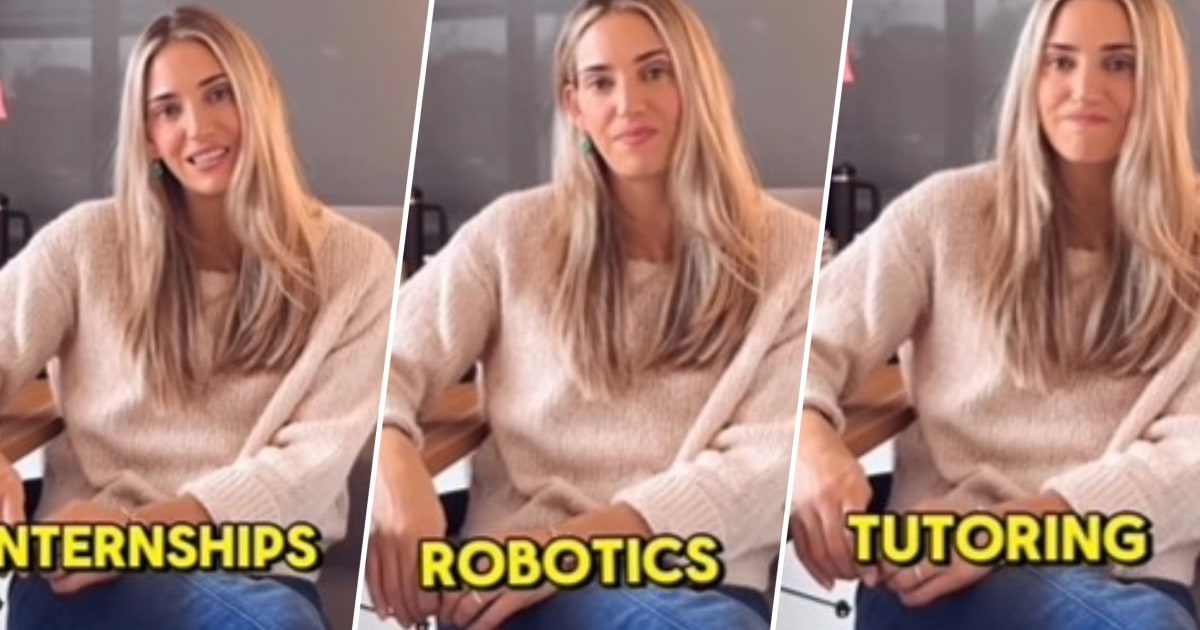
After stitching a clip of Economic Liberties Senior Legal Fellow Katherine Van Dyck testifying in front of the U.S. House Committee on Education and the Workforce Subcommittee on Early Childhood, Elementary, and Secondary Education, where she dropped the unfortunate data that while almost 50% of parents believe they are going to help their kid get that college scholarship for sports, only 2% of kids actually end up getting them.
It can be scary to borrow large student loans to finance an expensive college degree. There is a market failure, however, every time a student does not attend their preferred college, study their preferred major, or pursue their preferred career because they are afraid of student loans. Students should be free to pursue their passions - not forced into second-best choices because of the cost of the degree or the prospect of a lower income in the future.
For many students, vertical transfer (transfer from an associate's to a bachelor's program) is less a bridge than a maze. Typically, about 80 percent of community college students say they intend to earn a bachelor's degree, yet only about 30 percent ever transfer and roughly 16 percent complete a bachelor's within six years. Yet under these topline numbers, outcomes vary widely. And figuring out which combinations of student actions and background factors matter, and which pathways are most promising, can be a complicated mess.