London politics
fromwww.bbc.com
3 days ago'Ship disaster victims deserve to have story told'
The sinking of the Princess Alice in 1878 resulted in over 700 deaths, yet remains largely forgotten despite its significance in maritime safety reforms.
In a country deeply conscious of its own history, the party, now riding high in the polls, has to decide whether it rejects or embraces Hitler as an ideological antecedent. Rather than answering definitively, the party is deliberately opaque. It flirts with the Nazi legacy without explicitly committing to it. Far from putting voters off, this strategic ambiguity cultivates a surprisingly powerful mix of outrage and plausible deniability.
It's the latest and dumbest chapter of the assumption of the figure of Columbus into the right-vs-left American culture war, in which the reactive American right has been compelled to champion and obsess over the historical and cultural validity of an Italian explorer born in 1451, who never even physically set foot on the land that would become the continental U.S.A., because the left dared to add context to the historical record.
During the bicentennial celebrations in 1976, President Gerald Ford declared that February should be dedicated to highlighting the achievements of and challenges faced by Black Americans. The roots of the celebration, however, can be traced back through five decades of activism before Ford's proclamation. In 1926, historian Carter G. Woodson launched "Negro History Week," alarmed that Black Americans' contributions were either being distorted or erased entirely from the nation's story.
Generative AI tools have created a flood of fake, sometimes misleading, content about the Holocaust that experts warn are distorting the realities of the history of Nazi Germany for young audiences. An emaciated and apparently blind man stands in the snow at the Nazi concentration camp of Flossenbuerg: the image seems real at first but is part of a wave of AI-generated content about the Holocaust.
Hit me like, as my high school English teacher liked to say, "like a MAC truck." The episode starts with the tale of Icarus. You know, the kid who flew too close to the sun with his wax wings and plummeted into the sea. Or the little cherub NES character. Either way. And I'm sitting there thinking: has anyone in Washington actually read this story? Played the game?
The truth is that as a country we have often found one reason or another to let the powerful escape the consequences of their actions. Consider Jefferson Davis, the first and only president of the Confederate States of America, commander in chief of a rebellion that killed hundreds of thousands of people. Davis spent two years in federal custody after the end of the war. The indictment against him was dismissed following his release, and he spent the rest of his life a free man.
I have chosen to paint many elements incompletely, in fragmented splatters, drips, and glazes to emphasize their lack of solidity and definitiveness. From these fragments, our cultural needs and desires are often revealed: movement, disposability, convenience. While not majestic or inherently aesthetic, I try to paint these banal places with a degree of sympathy. In some sense, it is an attempt to try to love this strange world we have created. The views in these paintings were selected because they have historical roots.
Love him or hate him, it's hard to take one step into the medieval world without running into the larger-than-life figure of Richard the Lionheart. Rebel, crusader, prisoner, castle-builder Richard is one of the most colourful and quotable kings of the Middle Ages. This week, Danièle speaks with Heather Blurton about how Richard's contemporaries saw him, the wild stories told about him in the later Middle Ages, and why we still just can't get enough of this controversial king.
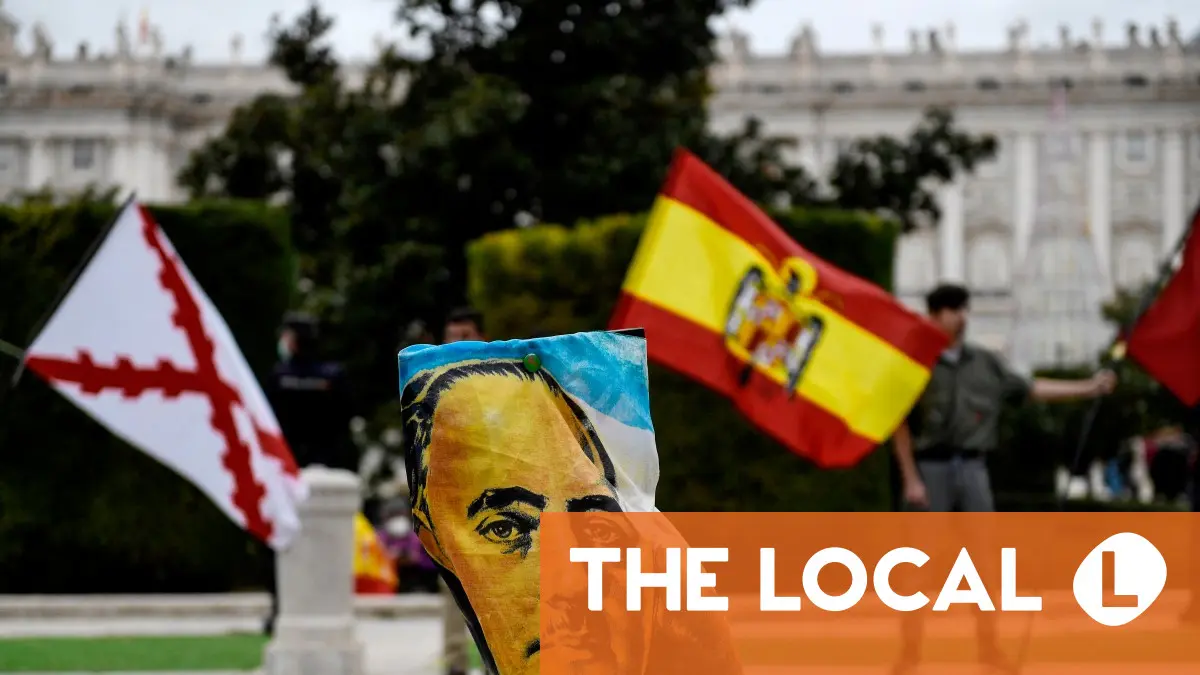
Mingorrubio municipal cemetery, which sits where the suburbs of north-west Madrid fade out into the countryside, must have been something of a comedown for a man who was originally laid to rest with a 150-metre-high cross for a headstone and four enormous bronze archangels to watch over him. But six years after his remains were disinterred from the grotesque splendour of the Valley of the Fallen and flown by helicopter to Mingorrubio for reburial, Francisco Franco is at least in good company.
Potter was trying to establish a narrative for the State of Texas, and the reports of Crockett surrendering, or being taken captive and then executed, did not fit his vision. Reports of Alamo defenders surrendering, however, were circulating as early as 11 March 1836, less than a week after the battle, and the news that Crockett had been one of these was being repeated by 27 March 1836.
Vanderbilt'svision of the trial for 22 of the surviving Nazi leaders-21 were in fact in the dock-by the United Sates, the USSR, Britain, and France telegraphs its anxieties across the 80 years from the trial's opening to today. At Nuremberg's first public session, on November 20, 1945, journalists heralded the opening of "the trial of the century." Nuremberg's message to the law and politics of the previous century was the way claiming to be "just following orders" shouldn't cancel individual responsibility for widespread atrocities.
Hank Willis Thomas knows how to hold a paradox in his arms and make it shine. Jack Shainman Gallery's newly opened Tribeca flagship presents I AM MANY, Thomas' eighth exhibition with the gallery, bringing together large-scale sculptures; retroreflective, lenticular, and textile works; and a group of mixed-media assemblages. Across these forms, Thomas continues his investigation into the myriad ways the past and present remain interwovenhow legacies of exploitation and oppression echo alongside emergent architectures of community and solidarity.
For nearly 20 years, Diane Williams has seethed whenever she walked by a street mural depicting the genocide of Ohlone people by Spanish colonizers artwork she finds demeaning because the Native American men are depicted as fully nude. Just this week, plans to remove the wall art were halted at the last minute, after tenants of the building's apartments at 41st Street and Piedmont Avenue demanded that the history on display be left alone.
Lea Ypi was scrolling through social media when she stumbled across a black-and-white image of two glamorous newlyweds honeymooning at a luxury hotel in the Italian Alps. In the picture - taken in 1941, as World War II raged - a man reclines beside a woman, draped in fur and smiling warmly. Ypi recognised her instantly: it was her grandmother, Leman Leskoviku.
At first glance, these photos are nothing out of the ordinary, considering that a total of 17 million men were called up to fight in the Nazi army between 1939 and 1945. But these photos are unusual because they show citizens of Nazi-occupied Poland wearing the military uniform of the hated enemy's army.
It was underground here that, 80 years ago, one of the world's most infamous villains swallowed a cyanide capsule and fired a bullet into his brain. It was here that Adolf Hitler spent his last living moments. The site is known in German as the Fuhrerbunker, a subterranean bomb shelter that the Nazis built to protect their leader and his top henchmen from air raids during World War II.
The intensely close but complex relationship between Britain and Ireland is one that a British ambassador to Ireland observed in a 1977 dispatch: the British "take the Irish for granted, whereas (the Irish) are obsessed with us. We don't remember the past and they cannot forget it." If we think a lot about that relationship, one might think that there would be no need for a book like Philip Stephens's These Divided Isles. Too often we don't think deeply about our relationship with Britain.
In this episode of Centre Stage, our guest is a Jewish historian of Palestine, Zach Foster. He joins us to discuss his work on preserving Palestinian maps and archival materials, despite the deliberate destruction of archives by Israel. Foster explains his journey from growing up in a Zionist household to advocating for the rights and history of Palestinians. Phil Lavelle is a TV news correspondent at Al Jazeera.