#homologous-recombination
#homologous-recombination
[ follow ]
#synthetic-biology #genetics #cloning #genetic-engineering #dna-repair #genomics #crispr #gene-editing


fromNature
4 days agoThe 1000 Chinese Pangenome empowers medical and population genetics - Nature
Recent advancements in long-read sequencing technology and assembly algorithms have enabled the generation of high-quality diploid genome assemblies, which provide a more comprehensive view of complex variants and enhance our understanding of their formation mechanisms and functional consequences.
Science



fromNature
2 weeks agoIn vivo site-specific engineering to reprogram T cells - Nature
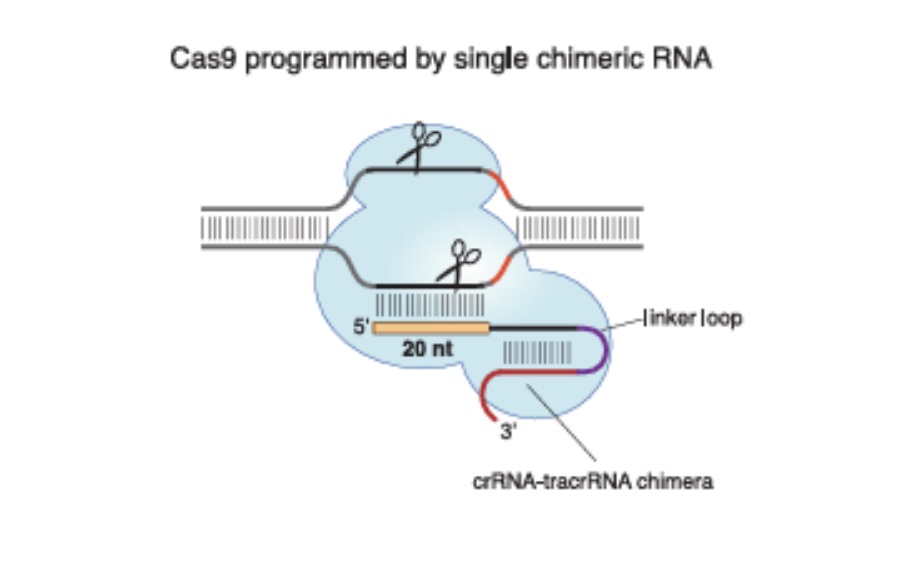
Using CRISPR-Cas9 and adeno-associated virus (AAV)-mediated homology-directed repair, we targeted CAR integration into the endogenous human TCR alpha locus (TRAC). TRAC-CAR T cells display dynamic CAR expression that delays exhaustion and improves tumour control in xenograft and immunocompetent models. This work has been critical for the development of allogeneic CAR T cell therapy, as it disrupts the TCR after transgene insertion—a necessary step to limit graft-versus-host disease.
Cancer
Artificial intelligence
fromFortune
2 weeks agoCould data from 100 million species help cure disease? One startup is betting on it | Fortune
Basecamp Research launches the Trillion Gene Atlas to map genetic diversity across 100 million species, aiming to expand biological knowledge 100-fold through AI-powered genomic data collection.
fromwww.theguardian.com
3 weeks agoCan scientists really resurrect the dodo? Inside the company that says they can
Colossal Biosciences, valued at $10.2bn after raising hundreds of millions of dollars in funding from investors including celebrities spanning from Tiger Woods to Paris Hilton, has provoked a stampede of acclaim as well as denunciation after announcing last year it had made the dire wolf, a species lost from the world for more than 10,000 years, de-extinct via the birth of three new pups.
OMG science
fromwww.nature.com
1 month agoBCDX2CX3 and DX2CX3 complexes assemble and stabilize RAD51 filaments
Central to HR is the RAD51 recombinase, whose assembly into a nucleoprotein filament is governed by five RAD51 paralogs (RAD51B, RAD51C, RAD51D, XRCC2, XRCC3). Mutations in any of these proteins predispose individuals to multiple cancers or genetic disorders. These paralogs are thought to form two functionally separate complexes, BCDX2 and CX3, that act independently at different stages of HR.
Left-wing politics
fromTruthout
1 month agoReproductive Tech That Promises Smart Babies Is Peddling Soft Eugenics
Reproductive tech companies now offer embryo genetic screening for intelligence and disease, raising concerns about eugenics, disability discrimination, and wealth-based genetic enhancement.
Science
fromNature
1 month agoDaily briefing: How DNA testing can tell identical twins apart
Advanced forensic techniques including whole-genome sequencing and epigenetic analysis can differentiate between identical twins in criminal investigations, while GLP-1 drugs show potential in reducing addiction across multiple substances, and researchers have successfully synthesized hexagonal diamond.
fromwww.nature.com
1 month agoGenetically encoded assembly recorder temporally resolves cellular history
GEMINI leverages a computationally designed protein assembly as an intracellular memory device to record the history of individual cells. GEMINI grows predictably within live cells, capturing cellular events as tree-ring-like fluorescent patterns for imaging-based retrospective readout. Absolute chronological information of activity histories is attainable with hour-level accuracy.
Medicine
fromwww.nature.com
1 month agoPre-incision structures reveal principles of DNA nucleotide excision repair
Nucleotide excision repair removes bulky DNA lesions via coordinated recognition, verification, excision, and resynthesis to maintain genome stability and prevent cancer and premature ageing.
Artificial intelligence
fromwww.scientificamerican.com
2 months agoCracking DNA's dark matter with AI, surviving two days without lungs, and uncovering a botanical mystery
AlphaGenome, an AI model, predicts DNA segment functions to expand understanding of genetic code and its links to proteins and disease.
fromNews Center
1 month agoAI Model May Improve RNA Sequencing Research - News Center
Scientists in the laboratory of Rendong Yang, PhD, associate professor of Urology, have developed a new large language model that can interpret transcriptomic data in cancer cell lines more accurately than conventional approaches, as detailed in a recent study published in Nature Communications. Long-read RNA sequencing technologies have transformed transcriptomics research by detecting complex RNA splicing and gene fusion events that have often been missed by conventional short-read RNA-sequencing methods.
Cancer
fromNature
1 month agoAI tools can design genomes. Will they upend how life evolves?
Biology is undergoing a transformation. After centuries of studying life as it evolves naturally, researchers are now using a combination of computation and genome engineering to intervene, generating new proteins and even whole bacteria from scratch. The use of artificial-intelligence tools to design biological components, an approach known as generative biology, is set to turbocharge this area of research. Just last year, scientists used AI-assisted design to produce artificial genes that can be expressed in mammalian cells.
Science
Science
fromNature
1 month agoA membrane-bound nuclease directly cleaves phage DNA during genome injection - Nature
SNIPE is a membrane-bound nuclease defense system in bacteria that directly targets foreign nucleic acids to prevent phage infection through a novel mechanism distinct from established defense pathways.
fromArs Technica
1 month agoHave we leapt into commercial genetic testing without understanding it?
Martschenko's argument is largely that genetic research and data have almost always been used thus far as a justification to further entrench extant social inequalities. But we know the solutions to many of the injustices in our world-trying to lift people out of poverty, for example-and we certainly don't need more genetic research to implement them. Trejo's point is largely that more information is generally better than less.
Science
Science
fromwww.nature.com
2 months agoAuthor Correction: Structural insights into BCDX2 complex function in homologous recombination
Figure kymographs and several Source Data columns were duplicated during preparation; the figures and Source Data have been corrected and relabelled, with main conclusions unchanged.
fromNature
2 months agoDaily briefing: The human cells in our bodies that aren't genetically ours
A virus that sickens marine mammals has been detected in Arctic waters for the first time. Scientists used drones armed with petri dishes to collect samples of blow - the air and mucus whales expel from their blowholes - from whales in northern Norway. The team identified cetacean morbillivirus in samples from humpback whales ( Megaptera novaeangliae) and one sperm whale ( Physeter macrocephalus), though the humpbacks showed no symptoms of disease.
Science
Science
fromNature
2 months agoDevelopmental convergence and divergence in human stem cell models of autism - Nature
Distinct rare mutations and common genetic variation jointly shape ASD risk, yet convergent molecular pathology and early fetal neurodevelopmental mechanisms can be studied using stem-cell models.
[ Load more ]