UK politics
fromwww.bbc.com
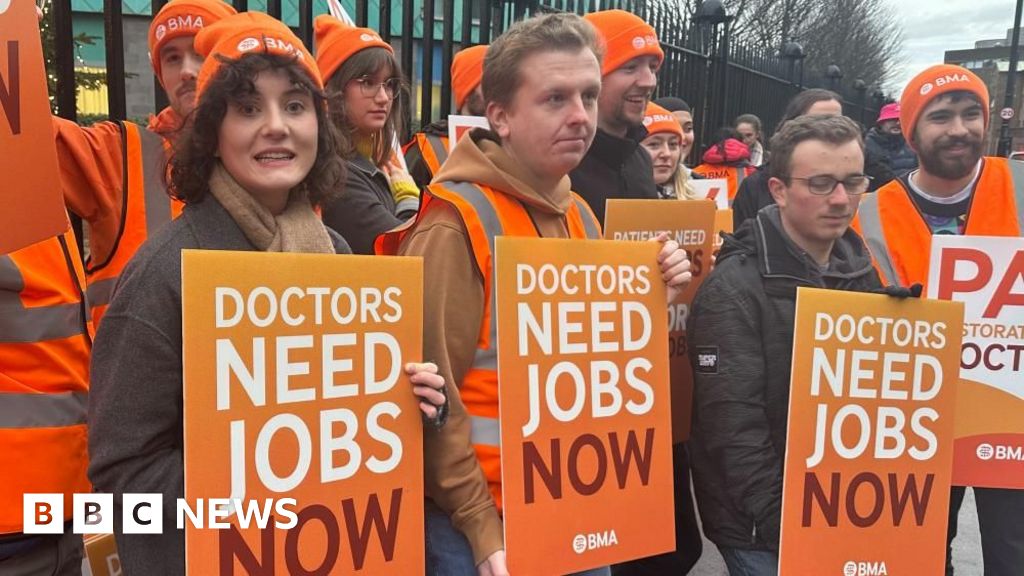
46 minutes agoResident doctors 'want pay we think we're worth'
Resident doctors in England are striking for fair pay restoration, claiming significant pay reductions since 2008 and facing training post shortages.
Prof Ashley Brown, a consultant at St Mary's, expressed the challenges of balancing clinical responsibilities with rehearsals, stating, 'singing is good for the heart.' He believes that 'everyone should sing more often' and suggested that singing could be prescribed on the NHS to cure various ills.
Product knowledge training is about methodically educating employees, partners, and customers about the ins and outs of a company's products or services. For employees and partners, it's the essential working knowledge they need to confidently sell, support, and deliver the product. For customers, it's the know-how they need to adopt it smoothly and get the most value from it.
From its first breath, it aspired to become more than a place: a world-class academic pole, a living ecosystem of knowledge, where learning, innovation, and an exemplary ecological lifestyle would grow side by side.
Debridement is a medical procedure that removes dead, damaged, or infected tissue from wounds to promote healing. Healthcare professionals use various methods including surgical, mechanical, enzymatic, or biological techniques depending on the wound's severity and location.
Members of the New York State Nurses Association (NYSNA), affiliated with National Nurses United, AFL-CIO, went out on a strike to protect their health insurance and pension benefits. Dania Muñoz, a nurse practitioner at Mount Sinai Hospital in New York City, explained that the private hospitals she and others were taking on are 'some of the top paid hospital systems in the country.'
"Hello, how are you doing? Good to see you," says Honor Cousens, as she pushes a trolley loaded with cold drinks, sweets, biscuits, toiletries, newspapers and magazines. The volunteer at the Royal London Hospital is a familiar face on the wards, and has been supporting staff and patients for many years. She is part of the Friends of the Royal London Hospital, a charity that has been running at the Whitechapel site since 1979.
You get sick from staying inside, breathing the same germ-filled air. Open your windows, even for five minutes, to circulate the old air out and let in fresh air. Also, if you're taking your child to the doctor, don't wait to treat their fever because you want 'the provider to see the fever.' Your child might wait two hours to be seen, meanwhile their temperature goes up, and they might have a seizure. If you say they've been having fevers, we believe you.
"If you or someone you love is going to give birth in a hospital, there is a question you need to ask before you go that can determine whether you are likely to have safe care or not," said labor and delivery nurse Jen Hamilton. Her multi-part TikTok videos amassed a combined 300,000 views their first 24 hours. "You need to know whether the hospital you are going to give birth in follows AWHONN's safe staffing standards," she continued.
In season two of "The Pitt," the Emmy-winning drama that returned to HBO Max on Thursday, a middle-aged man named Orlando Diaz wakes up in the Pittsburgh Trauma Medical Center. His wife and daughter are at his side; a cannula is delivering oxygen into his nose. "How'd I get here?" he asks softly.
Without us treating them, they're not getting care and they're not getting better, so it allows us to really make an impact in somebody's life. [The clinic] really allows us to work with a wide variety of patients from many different backgrounds.
Now, in a twist to the age-old story that even the writing room of "Grey's Anatomy" couldn't have come up with, a man in France was rushed to the operating room after staffers at the Rangueil Hospital in Toulouse found out he had shoved a 37mm brass-and-copper "collectible shell" that was used by the Imperial German Army during World War 1 up his rectum.
Hamilton makes it very clear that she and her fellow nurses are endlessly grateful for the gifts they have received from patients (like energy drinks, mints, donuts and hair ties). But at the same time, they don't expect them. And most importantly, the service they provide to their patients remains the same regardless of whether or not you give them a gift.
AI plays an important role-but not by fixing fragmented data on its own. The work of organizing, connecting, and interpreting healthcare information still belongs to people and the systems they build. Where AI helps is after that foundation is in place: by bringing the right information forward at the right time, reducing the effort it takes to find what matters, and supporting better decisions in the moment of care.
NYC Health + Hospitals announced that three of its acute care hospitals have been named as recipients of the Level 2 Special Pathogen Treatment and Network Development (STAND) Award from the National Special Pathogen System (NSPS) on Thursday, Jan. 15. The three locations to earn this award were NYC Health + Hospitals/Elmhurst in Queens, NYC Health + Hospitals/Jacobi in the Bronx and NYC Health + Hospitals/Harlem in Manhattan.
After losing both of his parents to cancer, Tom set out to challenge a healthcare system that often waits for symptoms instead of identifying risk early. What began in Deerfield Beach, Florida, has grown into a multi-location preventative imaging company serving communities across the state. Life Imaging Fla focuses on preventative heart and full-body screenings. These services give people access to advanced imaging that is typically only approved once symptoms appear. The goal is straightforward: identify disease earlier, when people still have time, options, and control.
Nearly a quarter of hospitals in England have seen waiting times worsen since the government published its plan to tackle the backlog a year ago, BBC analysis shows. Hitting the 18-week waiting target for treatments such as knee and hip operations was Labour's key manifesto pledge for the health service, and last January it set out how it would get hospitals on track.
The University of California Irvine's new healthcare campus has a long list of innovative features, from its combined inpatient-outpatient surgical suite to its outdoor chemotherapy infusion terrace to an entire floor dedicated to staff only. The one thing it doesn't have is a gas line.
If you are choking and are alone, try to get yourself into a high-traffic area, such as a hallway in a building or outside your house. If you pass out, you're way more likely to be found as opposed to being in a room in a building or your house. Call 911 even though you can't speak. Someone will be sent to your location by dispatch.
But these studies typically require large numbers of patients, huge amounts of data, and thorough follow-ups, none of which comes easy or free. The upshot is fewer investigations into scenarios that are clinically important but unlikely to yield a profit for the firms funding them. Accordingly, researchers have been developing an option that uses real-world data from insurers to save patients from falling through the cracks.
Balancing a nursing career with family life means thinking a few steps ahead, without blowing everything up in the process. Many experienced nurses reach a stage where growth needs to be practical, not disruptive. The appeal lies in finding ways to widen responsibility and keep doors open while staying employable across different settings, all while working around real-world schedules and family commitments. It is less about chasing status and more about building a future that still works on a Tuesday afternoon.
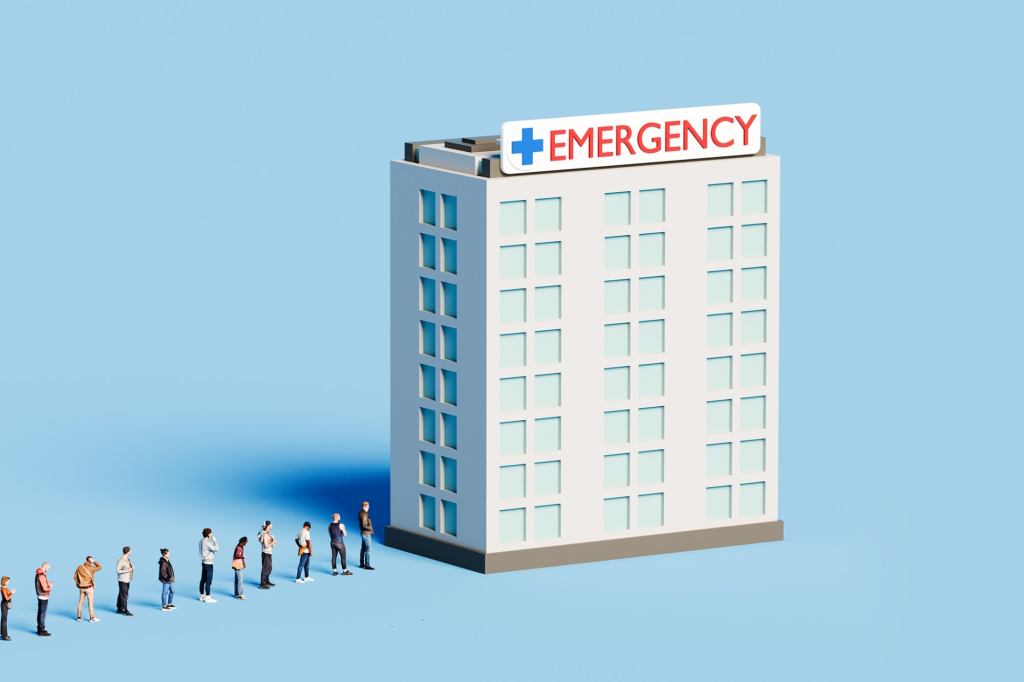
It concludes that there will be one additional death for every 69 patients who experience more than a four-hour wait in ED after the decision to admit has been made. This is consistent with previous studies. It's appalling in and of itself. Crucially, the study also demonstrated that for every four hours a person waited for a bed, their length of stay, once they got into that bed, increased by 8.6 hours.
Public health consultant Dr Ross Keat said supporting people earlier to make small preventative changes would make "a big difference later on". Some 3,500 people in the north of the island within that age bracket are eligible for the checks. The checks will be carried out by two pre-existing nurses that support GP staff and would not replace GP appointments, Keat explained, adding that the cost would be minimal and absorbed by Ramsey Group Practice.
The world of medical practice management is changing faster than ever, driven by two simultaneous forces: escalating patient expectations and crushing administrative complexity. In my years working with healthcare organizations, I've seen these challenges evolve from nuisances into crises. Research by Bain & Company found that 65% of healthcare consumers want more convenient experiences, and 70% want more responsiveness from providers. They want instant answers to routine questions, immediate scheduling access and minimal friction.
Denise Kvapil has built her career in environments where decisions are immediate, outcomes are measurable, and accountability is non‑negotiable. From emergency departments to senior executive roles, she has led with a singular conviction: results matter more than rhetoric. "I define success by patient outcomes," she says. "If patients do better and teams grow stronger, then the leadership is working." That philosophy has guided her ascent through clinical practice, hospital operations, and executive leadership across complex healthcare systems.