#household-germs
#household-germs
[ follow ]
#public-health #vaccination #kitchen-hygiene #indoor-air-quality #mental-health #public-health-policy
fromTODAY.com
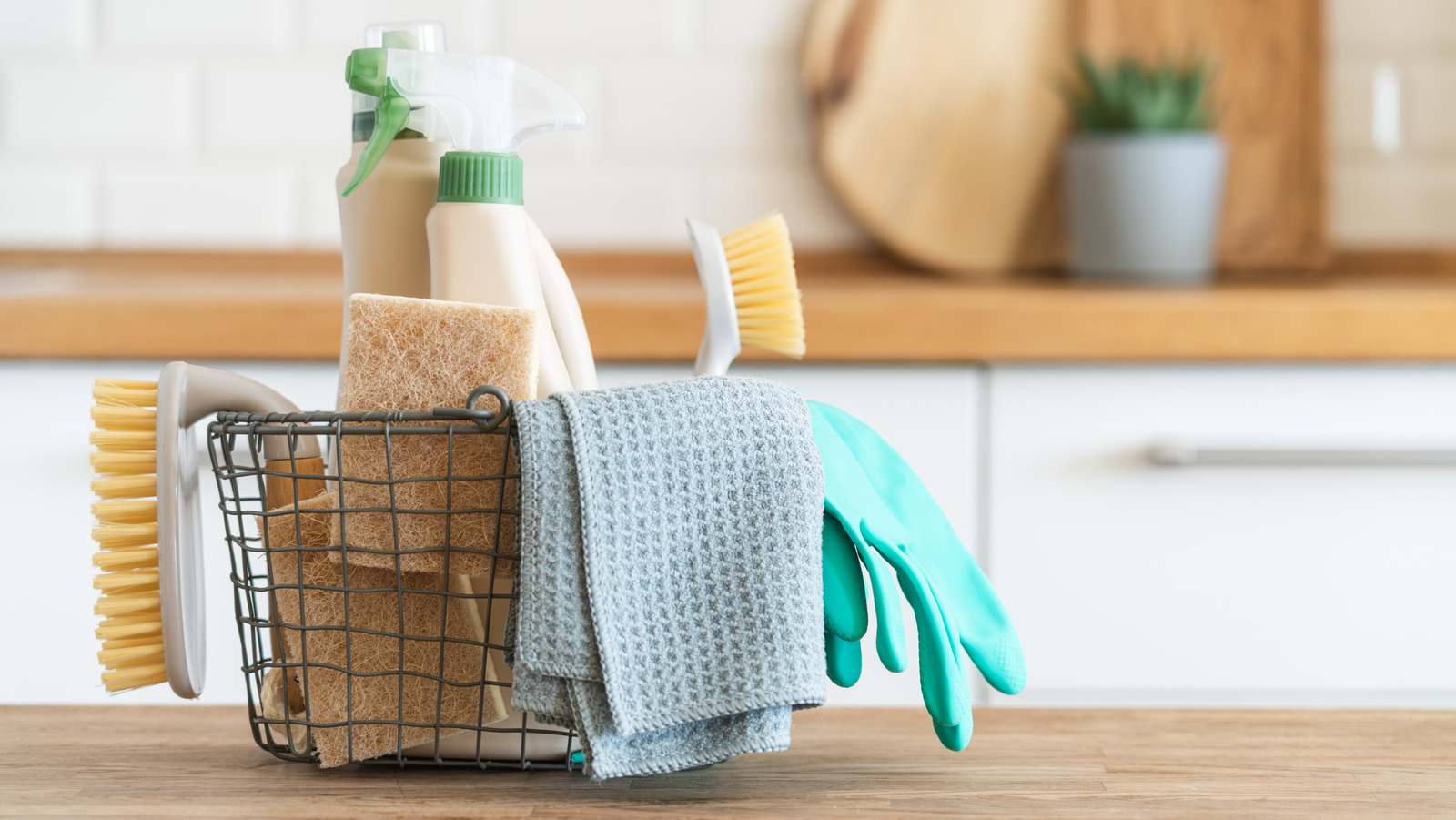
2 days agoThese Are the 2 Most Dangerous Home Cleaning Products to Have Around Kids, New Research Shows
"What surprised me is we are still seeing so many visits to emergency departments associated with very common household cleaning products," Lara McKenzie, Ph.D., stated, emphasizing the ongoing issue despite safety advancements.
Public health
fromMail Online
3 days agoGrim reason you should NEVER use shampoo and conditioner from hotels
'Never ever use these three things in a hotel room,' she warned in a video. Her first tip was to avoid using the 'wall-mounted refillable containers with soap and shampoo' now commonly found in hotel bathrooms.
Berlin
Psychology
fromSilicon Canals
4 days agoThe people who keep their home impossibly clean aren't necessarily organized. Some of them grew up in chaos and the only variable they could control was their physical space, and they've never stopped trying to create order in the one domain that actually responds to effort. - Silicon Canals
Compulsive tidiness often stems from childhood adversity, serving as a coping mechanism for control in unpredictable environments.
fromwww.theguardian.com
1 day agoWhy reducing air pollution deaths isn't just about reducing air pollution
Air pollution is the second-largest risk factor for early death globally. Traditionally, our response has focused on reducing the levels of pollution people breathe, but this is only part of the story.
Public health
fromApartment Therapy
3 days agoI Always Start Here When Dusting My Home, and I'll Never Do It Another Way
One of the most effective ways to clean your home is to work from top to bottom. This ensures that whatever dirt or dust is lurking above falls down first, so you're not forced to redo any of the hard work you've already done below.
Remodel
fromTasting Table
2 weeks agoDirty Kitchen Walls? Look For These Types Of Sponges To Get The Job Done Right - Tasting Table
Cleaning pros say that this is a kitchen cleaning task you should do every one to three months to prevent a buildup of food splatters, grease, oil, and dust - all of which could damage the walls, cause foul odors, and attract pests like flies and roaches.
Everyday cooking
Environment
fromJezebel
3 weeks agoImagine If the Trump EPA Cared Enough to REDUCE Our Daily Exposure to Carcinogens
The EPA has shifted from environmental protection to facilitating increased carcinogen emissions, including weakening ethylene oxide regulations despite evidence of severe health risks to children.
Health
fromwww.theguardian.com
2 weeks agoReduced physical activity due to global heating will lead to rise in health issues, study says
Rising temperatures reduce physical activity globally, with each month above 27.8°C increasing inactivity by 1.5 percentage points, projecting half a million additional premature deaths annually by 2050.
Psychology
fromSilicon Canals
2 weeks agoNot everyone who keeps a clean house is organized. Some of them learned as children that mess attracted criticism, and now they live in spotless apartments that feel more like evidence of vigilance than peace. - Silicon Canals
Compulsive cleaning often stems from childhood trauma where disorder triggered parental emotional responses, creating a surveillance system disguised as discipline rather than genuine preference for order.
Everyday cooking
fromTasting Table
3 weeks agoThe Kitchen Cleaning Product It's Time To Ditch - Tasting Table
Strongly scented cleaning products mask odors that signal bacterial contamination, leave residue that attracts dust, and can trigger allergies, making unscented natural cleaners a safer, more effective alternative.

fromwww.ocregister.com
1 month agoBoy at center of California hazmat probe: I'm just a kid trying to go home'
In a calm, thoughtful voice, he explained that though the equipment in his home lab was simple—including items such as a hot plate, scales and standard glassware found in a school science classroom—the experiment itself was more advanced. Fritz said the work focused on molecular structures used in pharmaceuticals and how they might be adapted to improve treatments for various diseases.
OMG science
Psychology
fromSilicon Canals
4 weeks agoPeople who always clean up their space before they leave-a hotel room, a restaurant table, a friend's house-almost always display these 7 traits - Silicon Canals
People who habitually leave spaces better than they found them demonstrate deep respect for others and personal responsibility, revealing seven remarkable character traits that distinguish grounded, successful individuals.


fromTODAY.com
1 month agoShe Hired a Babysitter and Came Home to a Mess. Should Sitters Tidy Up?
It's late. I want to go to bed, but instead I'm picking up popsicle sticks and wrappers. I was always taught to leave the place better than I found it. I'm not expecting anyone to fold laundry or scrub floors. But I do expect the mess made during the evening to be taken care of, especially when my kids have been asleep for over two hours.
Parenting
Public health
fromwww.theguardian.com
3 weeks agoTrump policies set to increase rates of lung disease and death, study finds
Trump administration policies across healthcare, environment, workplace, and vaccines are projected to significantly increase lung disease rates and premature deaths among Americans.
fromNature
3 weeks agoPrevent pandemics through One Health commitments
Risks of outbreaks with pandemic potential rise with increasing land-use change, biodiversity loss and climate change. The Pandemic Agreement adopted by the World Health Assembly in 2025 marks a historic shift that establishes the One Health approach as a legally binding obligation for pandemic prevention.
Public health
fromTasting Table
2 months agoHow Long You Can Safely Soak Dirty Dishes Before Germs Take Over - Tasting Table
Actually, no. It's best not to let dishes soak for more than an hour or two; and if the dishes have dairy, eggs, or meat, that should be more like 30 to 60 minutes. Edmund "Ed" McCormick, food science and formulation consultant and CEO of Cape Crystal Brands told our sister site, Chowhound, ""It only takes minutes for the dissolved nutrients of the submerged food to break down, releasing carbs, proteins, and lipids, which comprise a bacteria diet.""
Food & drink
fromCurbed
2 months agoMy Neighbor Has a Hoarding Problem and I'm Freaking Out About Mice
Living in New York City requires a constant negotiation between what we owe our neighbors and what our neighbors owe us. In an ideal world, you and your neighbor would have a mutual understanding about why it's good for everyone to keep a clean building, but if she is indeed hoarding then it's hard to imagine she's able to give you what she can't even give herself. This is a pickle.
NYC real estate
Public health
fromTruthout
1 month agoPublic Health Agencies Struggle to Keep Up With Rising Tuberculosis Cases
Tuberculosis cases and containment costs are rising nationwide, with Johnson County, Iowa experiencing a tripling of latent infections and costs surging from $17,000 to $65,000 annually, while state funding for contact tracing has been withdrawn.
fromNature
2 months agoDaily briefing: Why 'harmless' germs can be deadly for some people
DNA variants near a gene called MSRB3 - which is important for hearing in humans - could determine whether a dog's ears are pendulous like a basset hound's or stubby like a rottweiler's. Researchers analysed the genomes of thousands of canines and found that small, single-letter changes to DNA in a region of the genome near MSRB3 could boost the gene's activity. The boost can increase the rate at which ear cells proliferate, resulting in longer ears.
Science


fromwww.aljazeera.com
1 month agoIs our food making us sick?
From ultra-processed foods to hidden chemicals, we ask whether what's on our plates is making us ill. From ultra-processed foods to chemicals linked to cancer and chronic disease, this episode unpacks what's really inside everyday supermarket products. We examine how mass production and convenience culture reshaped our diets, why some ingredients are banned in parts of the world but legal elsewhere, and what FDA-approved actually means.
Food & drink
fromwww.theguardian.com
2 months agoHousehold burning of plastic waste in developing world is hidden health threat, study shows
The household burning of plastic for heating and cooking is widespread in developing countries, suggests a global study that raises concerns about its health and environmental impacts. The research, published in the journal Nature Communications, surveyed more than 1,000 respondents across 26 countries. One in three people reported being aware of households burning plastic, while 16% said they had burned plastic themselves.
Environment
fromTravel + Leisure
2 months agoTravelers Often Reach For This Common First Aid Treatment-but Doctors Say It Could Be Doing More Harm Than Good
When it comes to first aid on the road, many travelers have been there: a small nick or cut in a new place, followed by a quick reach for hydrogen peroxide in hopes of preventing infection. The fizzing bubbles can feel reassuring, as if germs are being wiped out on contact. But medical guidance has shifted in recent years-and according to research from personal injury claims support site Claims.co.uk, that long-held belief may actually be doing more harm than good.
Medicine
fromTravel + Leisure
1 month agoWhy You Should Never Take Your Shoes Off on a Plane, According to a Flight Attendant
"There are hygienic considerations. I always compare taking off your shoes on a plane to going shoeless on a public bus," Natalia Yepes, an ex-flight attendant and owner of Adventuresque Travel Boutique, shared with Travel + Leisure. "Think about how many people ride it a day. At each stop, the cleaners only have 10 minutes-sometimes less. They are not focusing on germs, but just on keeping the plane looking aesthetically clean (free of crumbs and big debris)."
Public health
fromSilicon Canals
1 month agoWhy your house is dustier than your neighbor's and the airflow mistake causing it - Silicon Canals
I was that person who only changed their HVAC filter when it looked like it had grown its own ecosystem. Richie Drew, Vice President of Operations at One Hour Heating & Air Conditioning, puts it bluntly: "Dirty filters can reduce airflow, increase dust in your home and strain your heating system." Think about it this way: your HVAC filter is like the bouncer at an exclusive club, except instead of keeping out people without the right shoes, it's blocking dust particles from circulating through your home.
Remodel
fromwww.theguardian.com
1 month agoThe sneeze secret: how much should you worry about this explosive reflex?
Alongside the obvious nasal hairs that a few people choose to trim, all of us have cilia, or microscopic hairs in our noses that can move and sense things of their own accord. And so if anything gets trapped by the cilia, that triggers a reaction to your nerve endings that says: Right, let's get rid of this.' And that triggers a sneeze.
Science
fromApartment Therapy
2 months agoI'll Never Do Laundry When It's Raining - and Here's Why
When it's dreary outside, I usually hunker down and do household chores - running the dishwasher, catching up on laundry, maybe even taking a long shower and shaving my legs. These days, though, I take the opposite approach: I never do chores that require water use when it's raining outside. That's because I recently learned that my city, Milwaukee, has a shared sewer system - which means rainwater runoff, domestic sewage, and industrial wastewater collect in the same pipes.
Environment
fromTasting Table
2 months ago10 Ways To Use Hydrogen Peroxide To Keep Your Kitchen Spotless - Tasting Table
If you were a child of the '70s or '80s, you may remember the bubbling sound of hydrogen peroxide fizzing on an open wound. Back then, it was the go-to for parents who were looking to disinfect the cuts and scrapes that their kids would come home with. Since then, science has shown that it's actually not all that great for a wound, but there's no need to throw out that bottle if you do find one.
Science



fromABC7 Los Angeles
2 months agoCA seeing surge in norovirus cases. The unexpected way it can spread through your household
"If you are actively sick with diarrhea or some kind of a GI-related condition, go ahead and separate those clothes from other healthy people in the household," said Emergency Medicine specialist Dr. Ali Jamehdor with Dignity Health St. Mary's Hospital in Long Beach. Some people let clothes sit in the hamper for weeks. He said that diarrhea-causing E. coli and salmonella can live that long in your laundry bin.
Public health


Public health
fromIndependent
2 months ago'Just because you did it before and didn't die, doesn't mean you won't next time' - frontline doctor's 'chroming' warning as hospitalisations rise
More children are inhaling toxic chemical fumes like aerosol deodorants and hairspray due to social-media 'chroming' challenges, posing potentially lethal risks.
fromInsideHook
1 month agoWhat Happens When the CDC Issues Fewer Alerts?
If you're based in the United States, you've probably gotten used to government bodies issuing nationwide alerts - including ones that relate to public health. These have, historically, been good ways for health-conscious people to know what to look out for and for regional public health experts to develop strategies to help keep potential outbreaks contained.Unfortunately, now both individuals and institutions are reckoning with a big question: what to do when those warnings are much smaller in number?
Public health
[ Load more ]