Startup companies
fromFast Company
17 hours agoRana el Kaliouby on why AI needs a more human future
Human-centric AI is essential for social, economic, and emotional thriving, not just a safety measure.
Qi Sun's DrayEasy platform exemplifies a significant advancement in logistics, merging quoting, booking, and real-time tracking into a seamless automated experience for shippers.
Four terabytes of data have reportedly been stolen, including database records and source code. Allegedly stolen data has been published on a leak site, containing Slack information, internal ticketing data, and videos of conversations between Mercor's AI systems and contractors.
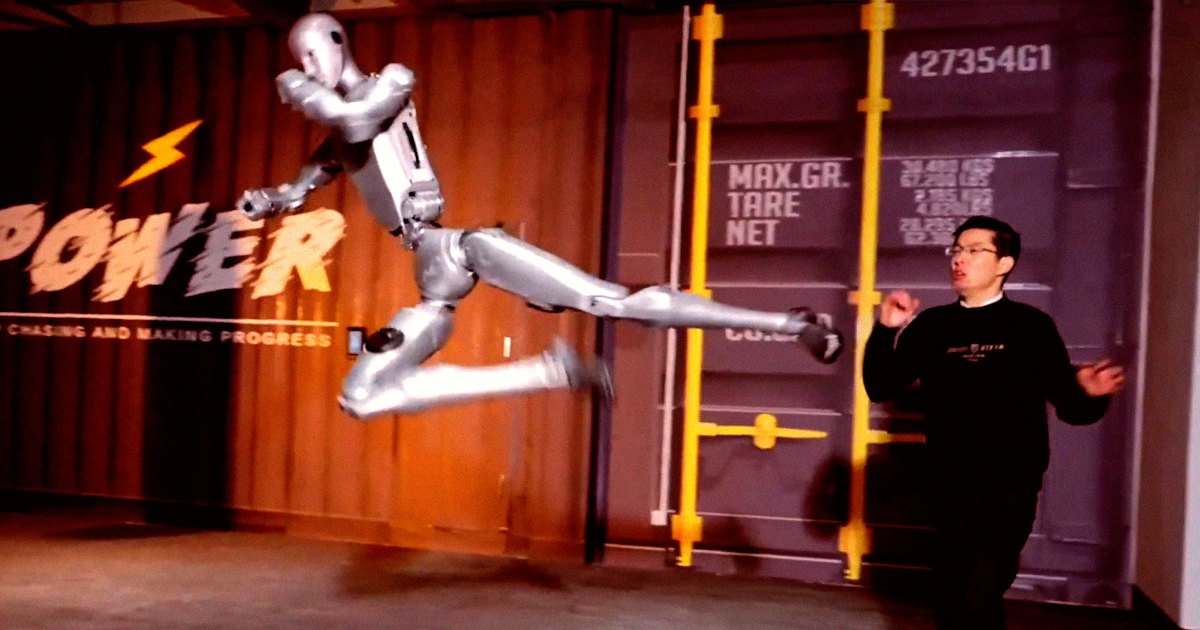
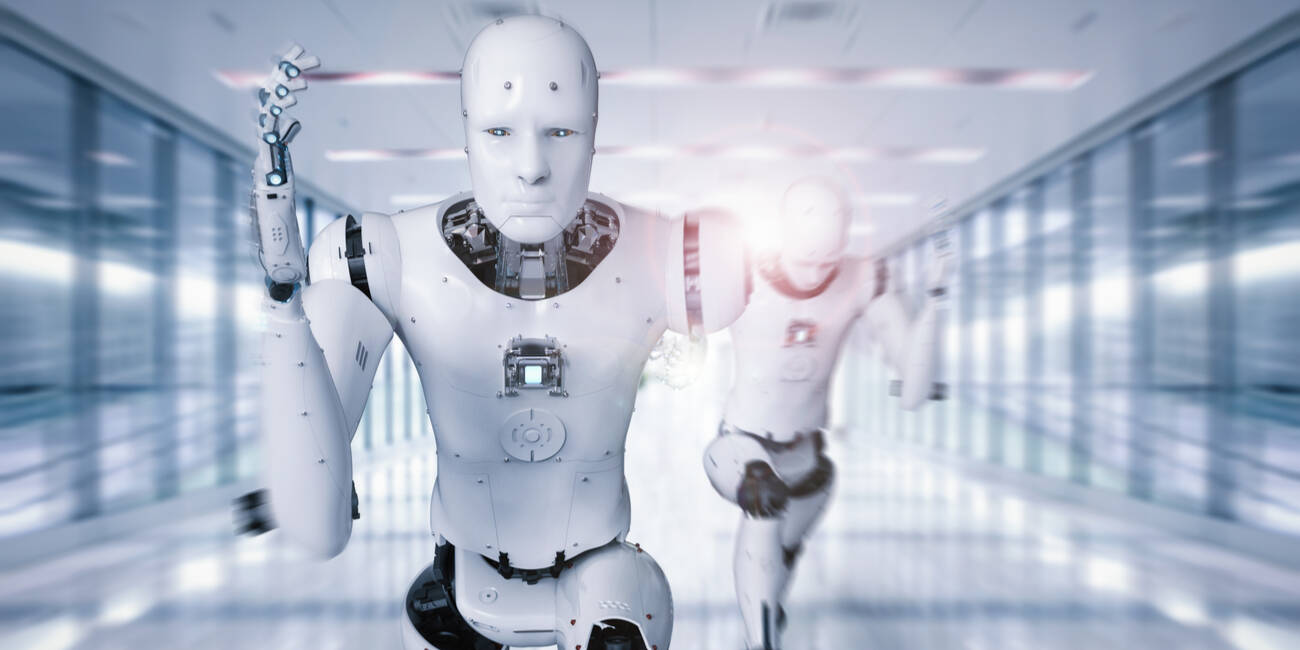
Not everybody agrees that replicating the four-limbed, bipedal shape of a human should be replicated in robot form. For one, walking with two feet is inherently less stable than four, nevermind a set of wheels. Replicating the dexterity and fine motor skills of human hands also remains a major challenge. In a modified approach, Boston Dynamics has clearly decided to loosen up some of the restrictions of the human form.
Human hands are incredibly dexterous tools - but they have their limits. They are asymmetric, they have only a single thumb and, fundamentally, they're connected to our arms. But none of that poses a problem for this robot claw. Its symmetrical design means it can seamlessly approach different tasks without having to twist to find the right angle, six-fingers mean the design can juggle multiple objects at the same time and, if needed, it can simply leave its arm behind, perfect for dangerous or hard to reach places.
The savings disappear the moment you hit real-world complexity. Disparate data sources and messy inputs, ambiguous situations without clear rule sets, or actually any domain where the rules aren't already obvious. And someone still has to write all those rules.
Recently, an open-source project called OpenClaw surfaced on a maker community platform. Built on affordable edge-computing hardware, the project demonstrated a local AI agent controlling a physical robotic arm. It wasn't just predicting text; it was moving motors, reading sensors, and interacting with its physical environment in real-time. From a psychological and sociological perspective, this transition from abstract AI to embodied local AI forces us to re-evaluate trust, privacy, and the sanctity of our personal space.