#hybrid-binding-systems

[ follow ]
Science
fromFuturism
1 week ago

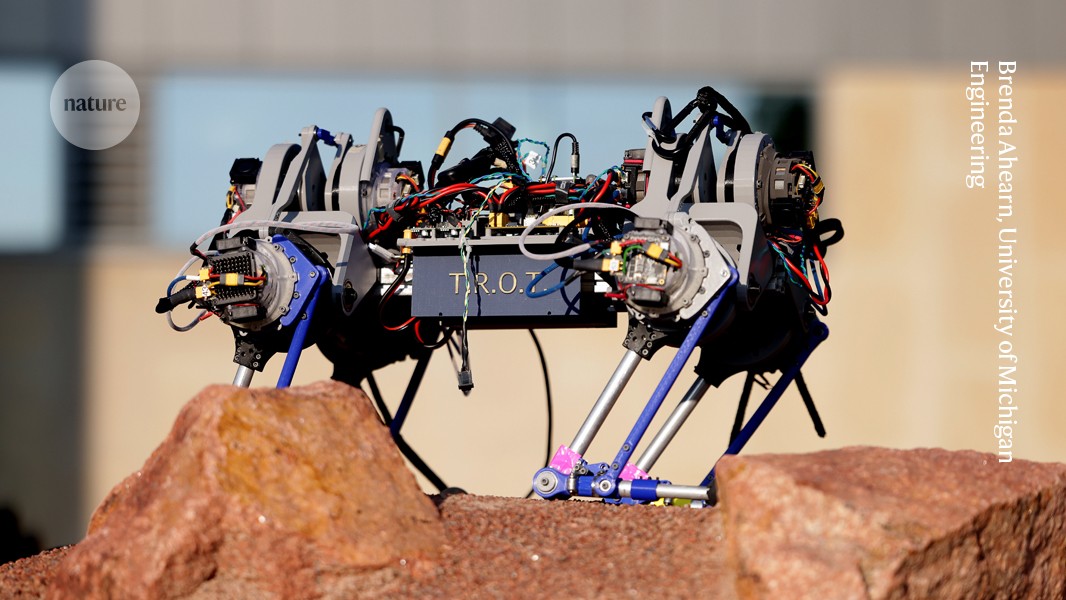
Strange Modular Robots Are Writhing Across Landscapes

Metamachines are modular robots that can adapt to damage and navigate challenging terrains, showcasing resilience through their unique design.
Design
fromArchDaily
1 week ago

Designing with Living Matter: 5 Installations Using Bio-Based Materials and Digital Fabrication

Architecture must integrate ecological considerations and material intelligence to transform design practices and reduce environmental impact.
fromdesignboom | architecture & design magazine
1 week ago

explore WINT design lab's regenerative futures where humans connect with their bodies

WINT Design Lab envisions regenerative futures through devices and biotextiles that allow humans to connect with their bodies more and free themselves from fossil materials that harm them and the environment.
Wearables
DevOps
fromMedium
2 weeks ago

The Bridge to Bulletproof: Connecting Alloy, Synthetics, and IRM for ShopFast

Integrate infrastructure monitoring, global synthetic probes, and centralized alerting into a comprehensive 24/7 production system that maintains revenue protection while preventing team burnout.
fromBusiness Matters
2 weeks ago

How to Select the Right Industrial Adhesive for Manufacturing

Industrial adhesives play a key role in modern assembly because they help manufacturers create secure connections while maintaining efficient production. When used correctly, they can improve product quality, support cleaner assembly, and contribute to more consistent manufacturing outcomes.
Angular
fromdesignboom | architecture & design magazine
2 weeks ago

stretchable robotic fingers for surgery decomposes in soil and becomes fertilizer

The body of the robotic fingers is built from polyglycerol sebacate, a synthetic elastomer made from glycerol and sebacic acid. Glycerol is a byproduct of biodiesel production while sebacic acid is derived from castor oil, and both of them are plant-based. Polyglycerol sebacate is safe since it is already used in medical implants because the body can absorb it without a toxic response.
Science
OMG science
fromwww.nature.com
3 weeks ago

Polymers with purpose: molecules can squirm free of the pack

Densely packed long molecular chains like chromosomes can move past neighboring molecules through crawling motion, according to computer simulations and theoretical modeling.
Design
fromArchDaily
2 weeks ago

Rethinking Architecture at the Scale of Planetary Systems

Contemporary architecture operates within interconnected technological systems—energy networks, data infrastructures, and global logistics—that fundamentally shape what can be built, its affordability, performance, and waste production.
Design
fromArchDaily
3 weeks ago

Facing the Age of Robots? Material Innovation in Architectural Structures

Robotic technology in construction extends beyond automation and cost reduction to fundamentally reshape architectural design, material experimentation, and construction methodologies through collaborative human-robot workflows.
#3d-printing
Science
fromFuturism
1 month ago

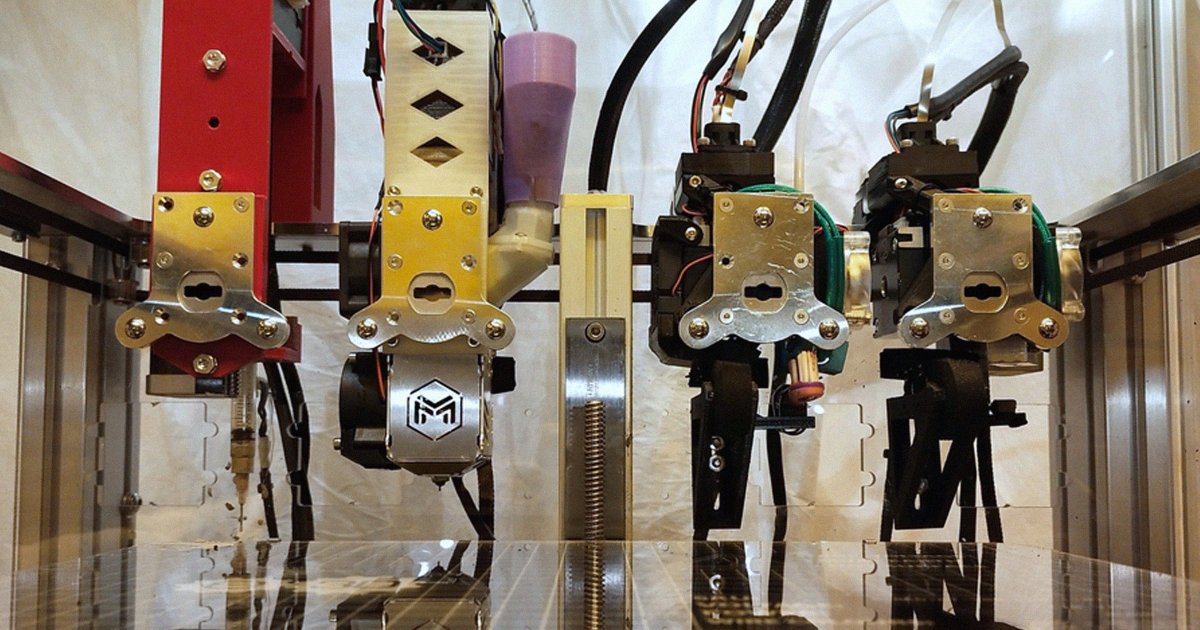
MIT's New 3D Printer Can Print a Working Motor, Complete With Moving Parts

MIT researchers developed a multi-material 3D printer capable of fabricating complete electric motors with moving parts in three hours for 50 cents using five different materials.
Design
fromYanko Design - Modern Industrial Design News
3 weeks ago

This Bio-mimicking Safari Deck Is Designed to Look Exactly Like a Rhino - Yanko Design

Thilina Liyanage designs a rhino-shaped wildlife observation deck that merges biomimetic architecture with functional safari infrastructure, creating a viewing platform whose form reflects the landscape and animals it observes.
Science
fromNature
1 month ago

First 'half Mobius' carbon chain wows chemists

Chemists synthesized a half-Möbius carbon molecule with a 90° twist instead of 180°, creating a novel molecular structure with distinct left and right-handed forms.
fromdesignboom | architecture & design magazine
1 month ago

manufactura blends corn and lime composites for robotic 3d printed construction

Mexico's construction sector faces significant environmental and social challenges. The widespread use of carbon-intensive materials has positioned the industry as a major contributor to national CO₂ emissions. At the same time, construction labor conditions remain unstable, with limited access to technical training and high occupational risk. CORNCRETL, developed by MANUFACTURA, proposes a circular material strategy that addresses both environmental impact and production models within the building industry.
Environment
fromWIRED
2 months ago

We Strapped on Exoskeletons and Raced. There's One Clear Winner

An exoskeleton is a relatively new class of wearable device designed to enhance, support, or assist human movement, strength, posture, or even physical activity. The main piece goes around your waist like a belt, and from it, a pair of hinged, mechanized splints extend down over the hips to strap onto each thigh, where they provide some robotic assistance to normal movements like walking, running, or squatting.
UX design
fromCarlbarenbrug
2 months ago

Friction by Design

Intentional friction preserves user awareness and reflection, trading pure speed for more considered decisions and preventing autopilot interactions.
#generative-ai
Real estate
fromwww.housingwire.com
2 months ago

How hybrid operations are elevating builder performance

AI-enabled sales support closes the digital engagement gap by improving response speed, conversion rates, and OSC productivity while enabling scalable, trust-building sales operations.
fromAeon
1 month ago

In solarpunk cities of the future, tech follows nature's lead | Aeon Essays

In Indra's Net of pearls and jewels, every gem reflects every other, a shimmering image of interdependence. This ancient Vedic metaphor for connection across the cosmos also illuminates what the environmental philosopher Glenn Albrecht first proposed in 2014as 'theSymbiocene': the era after the Anthropocene, in which human technologies take their cues from living systems and work in partnership rather than through dominance.
Philosophy
fromInfoQ
2 months ago

Holistic Engineering: Organic Problem Solving for Complex Evolving Systems

I'll be talking about holistic engineering or the practice of factoring in your technical decisions, designs, strategies, all the non-technical factors that are actually forces that influence your organic socio-technical problem space. As much as you can see in this canyon how natural forces have influenced the shape of the earth, so you can see the color. You can see all the different layers.
Software development
fromYanko Design - Modern Industrial Design News
2 months ago

This Kevlar Medical Brace Folds Flat Like Origami and Might Finally Kill the Plaster Cast - Yanko Design

Bracesys sidesteps all these limitations with an adjustable framework of segmented units, articulating connectors, and tension dials. The entire system weighs just 150 grams and folds flat into an envelope, yet provides rigid support comparable to traditional casts. More remarkably, clinicians can customize it to each patient's anatomy in real time, adjusting the fit as swelling decreases and healing progresses.
Medicine
Venture
fromTechCrunch
2 months ago

Flapping Airplanes and the promise of research-driven AI | TechCrunch

Flapping Airplanes aims to train large models with much less data, pursuing a research-first approach that favors long-term research over compute-driven scaling.
fromPsychology Today
2 months ago

We Do Not Have the Luxury to Be Bystanders in a Hybrid World

Meanwhile, signs that the planet's health is worsening are unmistakable. Last year was among the warmest on record globally, with average temperatures far above long-term baselines and heat driving more extreme weather worldwide. In 2025, brutal heatwaves baked much of the Indian subcontinent with temperatures near 48 °C, stressing health systems and agriculture across India and Pakistan. Europe and the Mediterranean faced record wildfires and prolonged heat, forcing tens of thousands to evacuate and worsening drought conditions.
World news
Environment
fromEarth911
2 months ago

Guest Idea: The Cradle to Cradle Mindset Is A Call for Bold Leadership

Cradle-to-cradle leadership transforms wastewater into recoverable energy, nutrients, and reusable water, enabling renewable energy, fertilizer production, and expanded water reuse.
fromwww.nature.com
2 months ago

Collective intelligence for AI-assisted chemical synthesis

The exponential growth of scientific literature presents an increasingly acute challenge across disciplines. Hundreds of thousands of new chemical reactions are reported annually, yet translating them into actionable experiments becomes an obstacle1,2. Recent applications of large language models (LLMs) have shown promise3,4,5,6, but systems that reliably work for diverse transformations across de novo compounds have remained elusive. Here we introduce MOSAIC (Multiple Optimized Specialists for AI-assisted Chemical Prediction), a computational framework that enables chemists to harness the collective knowledge of millions of reaction protocols.
fromArchDaily
2 months ago

Circular Composites: Designing for a Sustainable Future

One of the earliest large-scale examples of composite materials can be found in the Great Wall of China, where stone, clay bricks, and organic fibers such as reeds and willow branches were blended to create a resilient and lasting structure. These early techniques reveal a timeless intuition: distinct materials, when combined thoughtfully, produce properties unattainable by any single element.
Environment
Design
fromYanko Design - Modern Industrial Design News
1 month ago

5 Biomimicry-based Architectural Designs That Copy Nature's Best Ideas - Yanko Design

Design in the Amazon embraces layered, adaptive systems prioritizing resilient materials, natural ventilation, and environmental harmony to create comfortable, low-impact interiors and products.
Science
fromFast Company
2 months ago

These molecules are remaking manufacturing

Advances in catalysts and enzymes are transforming plant-based processing into precise, energy-efficient, foundational infrastructure for lower-carbon manufacturing.
Design
fromwww.archdaily.com
2 months ago

From Material Intelligence to Circularity: Lessons from Architecture in 2025

Architects prioritize material innovation in 2025—agricultural waste, recycled plastics, and living materials—balancing tradition, circularity, and material intelligence for resilient, low-carbon construction.
fromNature
3 months ago

Random heteropolymers as enzyme mimics - Nature

Despite successes in replicating the primary-secondary-tertiary structure hierarchy of protein, it remains elusive to synthetically materialize protein functions that are deeply rooted in their chemical, structural and dynamic heterogeneities1,2,3,4,5,6,7,8,9,10,11,12. We propose that for polymers with backbone chemistries different from that of proteins, programming spatial and temporal projections of sidechains at the segmental level can be effective in replicating protein behaviours13,14; and leveraging the rotational freedom of polymer can mitigate deficiencies in monomeric sequence specificity and achieve behaviour uniformity at the ensemble level2,3,15,16,17,18,19,20. Here, guided by the active site analysis of about 1,300 metalloproteins, we design random heteropolymers (RHPs) as enzyme mimics based on one-pot synthesis.
Science
fromBig Think
2 months ago

How "tribology" became a new industrial science

the automation of heavy machinery enabled plants to operate continuously, increasing productivity and revenue. The downside was that any small hiccup was acutely felt, cascading through the production line. At first, it was assumed that inadequate lubrication of factory equipment was causing parts to seize up or break apart. And so, the Lubrication and Wear Group of the Institution of Mechanical Engineers, along with the Iron
Science
Design
fromYanko Design - Modern Industrial Design News
2 months ago

Students Just Built a Pavilion That Robots Can Rebuild Forever - Yanko Design

A modular timber pavilion assembled with reversible joinery and robotic precision demonstrates waste-free, reusable construction through adaptable components and disassembly-friendly design.
Science
fromNature
2 months ago

Daily briefing: Octopus-inspired synthetic 'skin' changes appearance on demand

A synthetic polymer skin can reversibly change color and texture on demand, while ancient hunter-gatherers used plant-derived poisons on arrowheads 60,000 years ago.
fromNature
2 months ago

Octopus-inspired 'synthetic skin' changes colour and texture on demand

Bumps or grooves of a range of sizes - from the sub-micrometre scales of visible-light wavelengths up to millimetres - affect how a surface scatters light. This can make a material more or less dull, or change its colour when observed from different angles. Molluscs, such as octopuses and cuttlefish, use tiny muscles embedded in their skin to produce these effects for camouflage or communication.
Science
fromNature
2 months ago

Surface optimization governs the local design of physical networks - Nature

The vascular system and the brain are examples of physical networks that differ from the networks typically studied in network science owing to the tangible nature of their nodes and links, which are made of material resources and constrain their layout. The importance of these material factors has been noted in many disciplines: as early as 1899, Ramón y Cajal suggested that we must consider the laws conserving the 'wire' volume to explain neuronal design8

Science
Science
fromwww.nature.com
2 months ago

Author Correction: An autonomous laboratory for the accelerated synthesis of inorganic materials

Prediction platform correctly identified 36 of 40 synthesized compounds; four were inconclusive, and novelty claims were clarified as 'new to the prediction platform', not new to science.
Science
fromArs Technica
2 months ago

Watch a robot swarm "bloom" like a garden

Interconnected mini-robot swarms can bloom responsively to light, enabling adaptive building facades that change shape for climate adaptation and human interaction.
[ Load more ]