#hyde-park-south-la
#hyde-park-south-la
[ follow ]
Renovation
fromYanko Design - Modern Industrial Design News
1 hour agoHow Architects Turned a Postwar London Terrace Into an Open-Plan Home Without Touching the Facade - Yanko Design
Islington houses are redesigned to create open, continuous spaces while maintaining the original facade and architectural integrity.
NYC real estate
fromwww.businessinsider.com
2 days agoWe bought a house that's too small so we could afford our dream neighborhood. A $300,000 third-party loan will help us renovate.
The Feinbergs purchased a small home in Wayne, Pennsylvania, and planned to expand it using RenoFi financing based on future value.
fromLos Angeles Times
2 days agoFor the derelict Wadsworth Chapel, a 125-year-old landmark in West L.A., is a rehab in the works?
"When I see this, I'm thinking hallelujah. It's the first real indicator that the VA is willing to step up and get that chapel restored, which frankly I think is their responsibility."
Non-profit organizations


fromLos Angeles Times
7 years agoNeighborhood Spotlight: Panorama City is slowly shaking off its postindustrial trauma
In its scope, scale and ambition, Panorama City outstripped Greater L.A.'s prewar attempts at creating master-planned neighborhoods. It was the brainchild of Henry Kaiser, a shipbuilder keen to put his formidable industrial might, which had manufactured the famous Liberty cargo ships that transported U.S. goods around the world during World War II, to equally lucrative peacetime uses.
Silicon Valley real estate
Arts
fromThe Art Newspaper - International art news and events
1 month agoLos Angeles's next generation of dealers forges new paths
Recent gallery closures in Los Angeles reflect unrealistic expectations about the market rather than fundamental decline, with younger galleries thriving through community engagement and local commitment.
#los-angeles-history


LA real estate
fromLos Angeles Times
39 years agoA First-Class Dwelling : A New Owner Discovers the Lively History of His House--and Los Angeles--in a Search of the Public Records
A 1903 Los Angeles house serves as a historical record of the city's transformation from 100,000 residents to over 3 million, surviving earthquakes, fires, and urban development while facing modern gentrification pressures.
LA real estate
fromLos Angeles Times
39 years agoA First-Class Dwelling : A New Owner Discovers the Lively History of His House--and Los Angeles--in a Search of the Public Records
A 1903 Los Angeles house serves as a historical record of the city's transformation from 100,000 residents to over 3 million, surviving earthquakes, fires, and urban development while facing modern gentrification pressures.

fromLos Angeles Times
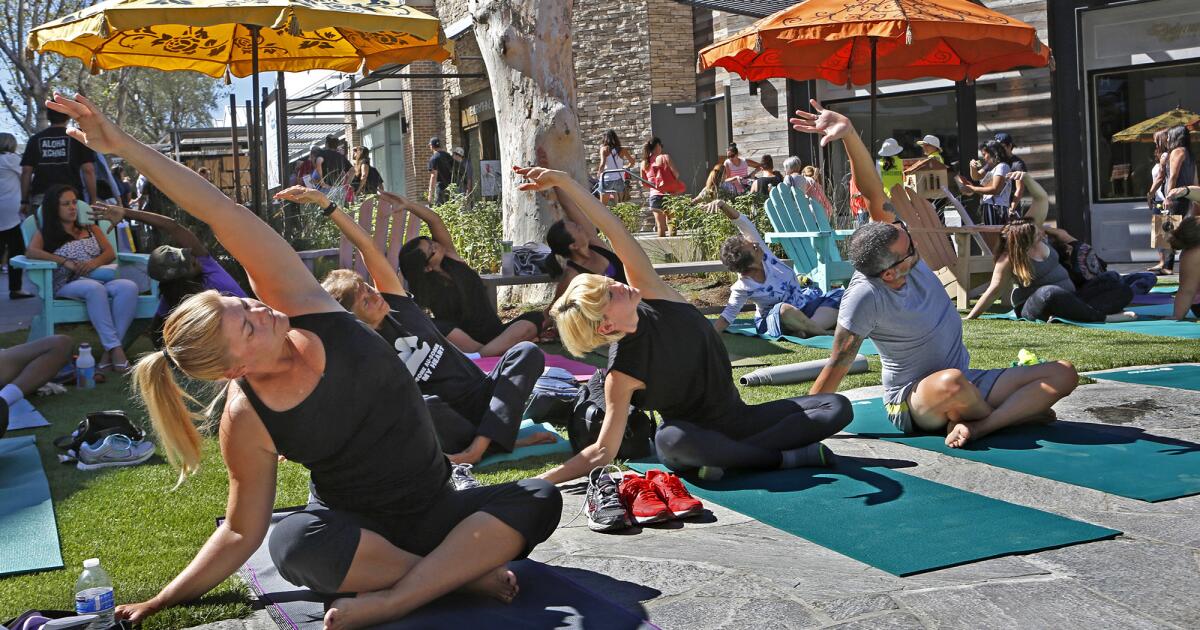
9 years agoNeighborhood Spotlight: Mid-Wilshire is alive with culture and ancient history
He would buy up land on Wilshire Boulevard between La Brea and Fairfax avenues and build the retail hub of the future, one centered around the automobile. Though critics scoffed, he believed he could draw customers from Beverly Hills and Hollywood to what was then the unfashionable hinterland of the city simply by combining luxury department store shopping with plenty of free parking.
Los Angeles
fromLos Angeles Times
7 years agoNeighborhood Spotlight: Shadow Hills has no plans to ride away from its semirural lifestyle
Relics of L.A.'s agricultural past, when the city was more renowned as a producer of lima beans than of movie stars, these outposts provide direct links to the days when the region was knit together by a network of dusty bridle paths that have long since been paved to make way for our latest beast of burden, the car.
Los Angeles
LA real estate
fromLos Angeles Times
37 years agoSubdivision Claims Beverly Hills Style--in Sherman Oaks
Mulholland Estates, a luxury gated community in Sherman Oaks near Beverly Hills, features 95 homes priced between $2.3 million and $5.1 million with extensive amenities and Beverly Hills postal service.
#residential-development
LA real estate
fromLos Angeles Times
8 years agoNeighborhood Spotlight: Close-knit Leimert Park is primed to be well-connected again
Leimert Park transformed from a segregated white planned community in 1923 to a major African-American cultural center by the 1960s despite violent white resistance to integration.
LA real estate
fromLos Angeles Times
8 years agoNeighborhood Spotlight: Close-knit Leimert Park is primed to be well-connected again
Leimert Park transformed from a segregated white planned community in 1923 to a major African-American cultural center by the 1960s despite violent white resistance to integration.
fromLos Angeles Times
9 years agoNeighborhood Spotlight: Eagle Rock offers small-town vibe within the big city
This dramatic natural formation inspired the name of the town that would grow to fill that isolated valley, which in the early 1900s was 10 rugged miles of axle-breaking country road away from the thronging crowds and bright lights of downtown Los Angeles. Eagle Rock was a farming community at first, but the trolley soon snaked its way up from Los Angeles, with a line that ran along Eagle Rock Boulevard.
Los Angeles
Real estate
fromLos Angeles Times
2 months agoIn pricey Santa Monica neighborhood, a battle rages over supportive housing
An unpermitted sober-living operation placed about 50 residents in vacant Ocean Avenue buildings leased by developer Leo Pustilnikov, sparking neighbor outrage and regulatory conflict.
fromHyperallergic
1 month agoThis Is Not My LA Art World
We're just a week away from Frieze LA, when East Coast dealers and local artists alike descend upon the Santa Monica Airport, but this isn't Renée Reizman's first rodeo. Since the critic and artist moved to the area almost 15 years ago, she's witnessed blue-chip New York galleries set up shop and sideline the irreverent, DIY spaces that shape the local art scene. Without these spaces, Reizman writes, she would not have discovered what art can be outside of the white cube.
Arts


fromLos Angeles Times
14 years agoWest Hollywood Craftsman no longer shows its age
I believe in reusing and preserving anything you can. Why throw out beautiful windows and replace them with ugly vinyl? The long windows that open onto the frontyard from the living room and master bedroom retain their thick, leaded glass. And built-in drawers and shelves throughout the house have been smartly incorporated in the home's reconfigured open floor plan.
LA real estate
LA real estate
fromLos Angeles Times
36 years agoHuge Rent-Controlled Complex in San Pedro to Be Razed for Condos
Southwinds Apartments, San Pedro's largest rent-controlled complex with 174 units, is being demolished to build luxury condominiums, eliminating affordable housing for long-term moderate-income tenants.
fromLos Angeles Times
38 years agoLongtime Residents of Canoga Park Say They Stand by Their Community Despite the Stinging Defection of Affluent West Hills : Pride and Prejudice
I'm proud to live in Canoga Park. What's wrong with it? Perhaps it's not as elegant as Woodland Hills or Sherman Oaks, but I've produced two wonderful children from Canoga Park. The markets have fed my family. The shops have clothed my children. It will always be Canoga Park to me.
Los Angeles
#luxury-real-estate


LA real estate
fromLos Angeles Times
11 years agoHome of the Day: Sunset Park Traditional offers new ideas
A newly built 2014 Traditional home in Santa Monica's Sunset Park features modern luxury finishes including Carrera marble and French oak flooring, priced at $2.795 million with five bedrooms across 3,747 square feet.
LA real estate
fromLos Angeles Times
10 years agoHome of the Day: Quiet West Hollywood contemporary pumps up the volume
A recently remodeled 1941 West Hollywood home features an eight-zone Elan entertainment system with distributed audio, smartphone control, and high-end speakers throughout, priced at $1.395 million.
fromLos Angeles Times
9 years ago1930s home in Highland Park gets a revival of its own
Updated for modern living, this remodeled home in Highland Park has stayed true to its 1930s Spanish Revival beginnings. The open living and dining room features a brick fireplace and the original hardwood floors. A courtyard sits off the master bedroom.
LA real estate
fromLos Angeles Times
9 years agoNeighborhood Spotlight: Hancock Park
Architects including Wallace Neff and Lloyd Wright built in a variety of styles while preserving the essential character of the neighborhood - an upscale charm that survives to this day. Every popular style of the 1920s can be found in Hancock Park, which makes it one of those magical L.A. places where movies that are set around the world can be filmed, all without leaving the 30-mile zone.
LA real estate
LA real estate
fromLos Angeles Times
10 years agoNew owners plan $30-million face lift for Promenade at Howard Hughes Center
Laurus Corp. acquired The Promenade at Howard Hughes Center for a $30-million renovation to transform it from a car-centric mall into a pedestrian-friendly destination with enhanced food and entertainment offerings.
LA real estate
fromLos Angeles Times
8 years agoNeighborhood Spotlight: Glassell Park's future looks greener and livelier
Rancho San Rafael, a 36,000-acre Spanish land grant from 1784, became the foundation for Northeast Los Angeles neighborhoods including Atwater Village, Highland Park, Eagle Rock, and Glassell Park after being partitioned in 1871.
fromLos Angeles Times
11 years agoWork gets underway on stalled Fig Central complex near L.A. Live
Since purchasing the land last year, Oceanwide has reworked the design for the Fig Central development, adding a third tower in the process. The $1-billion project now consists of two 40-story high-rises and another high-rise at 49 stories. In all, 504 condos, 183 hotel rooms and nearly 450,000 square feet of retail space are planned.
LA real estate
fromLos Angeles Times
2 months agoThe Valley, the South Bay and beyond: These are L.A.'s newest million-dollar neighborhoods
In 2021, during the peak of the pandemic housing market that saw L.A. home prices skyrocket, The Times compiled a list of the newest neighborhoods to join the proverbial "million-dollar club," where the typical single-family home value is above $1 million. Five years later, plenty more have made the cut. Whereas the previous group featured trendy L.A. neighborhoods (Echo Park, Highland Park), South L.A. enclaves (Crenshaw, Leimert Park) and slices of the San Fernando Valley (Porter Ranch, Woodland Hills),
LA real estate
[ Load more ]