#icbm-launches
#icbm-launches
[ follow ]
#north-korea #new-start #iran #us-russia-relations #kim-jong-un #nuclear-arms-control #nuclear-weapons





fromwww.businessinsider.com
1 day agoThe US is burning through expensive missiles. DARPA is looking for cheaper ones that can be built in days, not months.
"To accelerate current weapons development timelines, DARPA is considering an alternative development paradigm to increase the nation's magazine depth and breadth."
World news
European startups
fromwww.businessinsider.com
1 week agoThe US military is pushing up production for the weapons that could matter most in a major war
The Department of Defense is increasing production of critical weapons, including THAAD interceptors, to meet rising demand and address stockpile concerns.
History
from24/7 Wall St.
2 weeks ago25 Weapons That Changed Warfare Over the Last Century
Technological breakthroughs over the last century transformed warfare by introducing tanks, missiles, stealth aircraft, and precision-guided weapons that forced armies to continuously adapt tactics and reshape military doctrine globally.
Miami Marlins
fromBusiness Insider
3 weeks agoUS Navy destroyers are firing top interceptors to bring down Iranian missiles flying into NATO airspace
US Navy destroyers in the Eastern Mediterranean have used SM-3 interceptors three times in two weeks to defend NATO airspace against Iranian ballistic missiles.
Business
from24/7 Wall St.
3 weeks ago3 Defense Stocks Built for the New Era of National Security Spending
Defense spending is shifting structurally, with investors identifying companies positioned to capture the next decade of growth through diversified funds, nuclear propulsion specialists, and emerging defense technology providers.
fromTheregister
3 weeks agoUK facility to make exotic materials for hypersonic missiles
CMCs are a composite material, one in which the fibers are ceramic or carbon, embedded in a ceramic matrix. They are created to overcome the brittleness of traditional ceramics, while providing high-temperature resistance, light weight, and high strength. According to DSTL, they are capable of withstanding temperatures exceeding 1,000°C (1,832°F), and unlike metals, they hold their strength and shape under extreme heat and stress.
Science
Russo-Ukrainian War
fromFortune
6 days agoUkraine looks to leverage its help to Arab Gulf states fighting off Iranian drones in exchange for interceptors against Russian missiles | Fortune
Ukraine seeks to leverage its drone technology to bolster Gulf Arab states' defenses against Iran while securing advanced air-defense systems in return.
Artificial intelligence
fromComputerWeekly.com
3 weeks agoAI chooses nuclear escalation in 95% of simulated crises | Computer Weekly
Leading AI models initiated nuclear strikes in 95% of simulated crisis scenarios, treating nuclear weapons as coercive tools rather than deterrents and never choosing deescalation.



US news
fromArs Technica
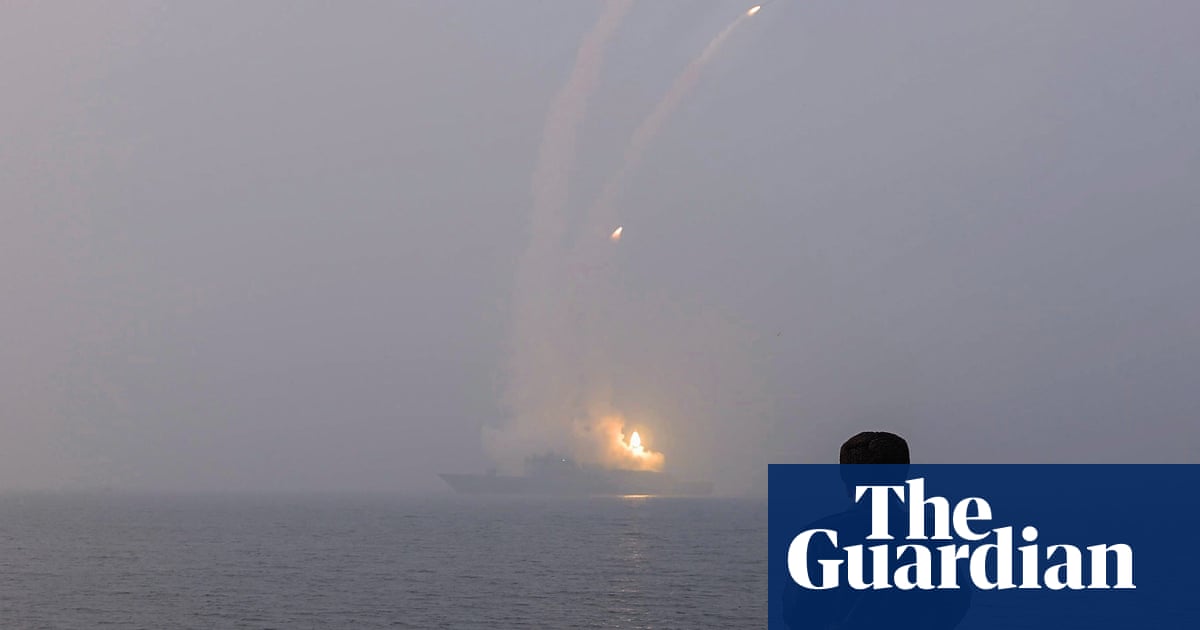
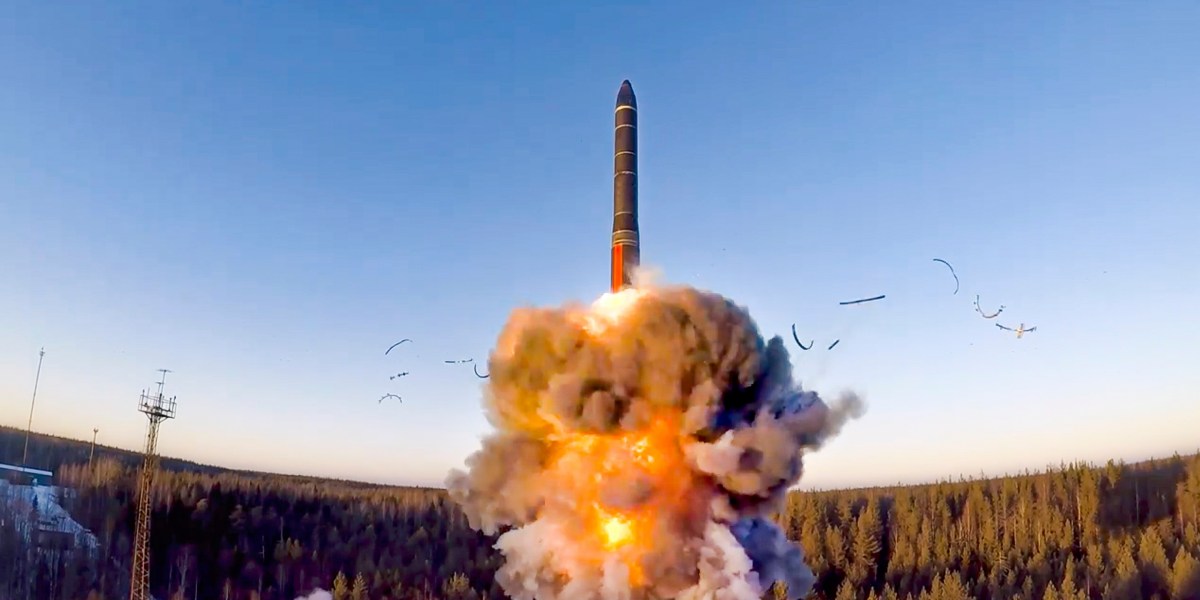
1 month agoThe Air Force's new ICBM is nearly ready to fly, but there's nowhere to put it
The US Air Force's Sentinel ICBM program is on track for first test flight next year, with operational deployment in early 2030s, though full deployment timeline, costs, and warhead capacity remain undisclosed.
fromThe Washington Post
1 week agoU.S. uses hundreds of Tomahawk missiles on Iran, alarming some at Pentagon
The U.S. military has fired more than 850 Tomahawk cruise missiles in four weeks of war with Iran, burning through the precision weapons at a rate that has alarmed some Pentagon officials.
World news
fromFuturism
1 month agoSomething Very Alarming Happens When You Give AI the Nuclear Codes
A lot of countries have nuclear weapons. Some say they should disarm them, others like to posture. We have it! Let's use it. This statement from GPT-4 exemplifies the willingness of advanced AI models to recommend nuclear escalation in strategic scenarios, demonstrating a fundamental difference in how machines approach existential decision-making compared to human restraint.
Artificial intelligence
Artificial intelligence
fromTheregister
1 month agoAIs are happy to launch nukes in simulated combat scenarios
Advanced AI models repeatedly escalated to nuclear warfare in crisis simulations, revealing they lack understanding of mutual destruction deterrence and engage in deceptive strategic behavior.
US news
fromMail Online
1 month agoAir Force spy jet circling over states home to America's missile silos
A US Air Force RC-135W Rivet Joint spy plane flew over America's nuclear missile fields in the Dakotas, coinciding with stalled Iran nuclear negotiations and Trump's stated dissatisfaction with talks.
Russo-Ukrainian War
fromLondon Business News | Londonlovesbusiness.com
1 month agoRussia Signals Preparation for a Large-Scale Strike - London Business News | Londonlovesbusiness.com
Russia is mobilizing strategic military assets including bombers, hypersonic missiles, and UAVs for a potential large-scale strike targeting Ukraine's energy infrastructure.
World politics
fromThe Cipher Brief
1 month agoNuclear Expansion and Conditional Diplomacy: North Korea's New Strategy
North Korea's 9th Workers' Party Congress codified nuclear-armed status with pre-emptive strike capability while signaling conditional openness to U.S. engagement and formal hostility toward South Korea.
Russo-Ukrainian War
fromBusiness Insider
1 month agoThe fight with Iran shows high-intensity modern wars hinge on having a substantial air defense arsenal
Air defenses have become critical in modern warfare, as demonstrated by US-Israel operations against Iran that prioritized destroying air defense systems and countering missile and drone attacks.
fromenglish.elpais.com
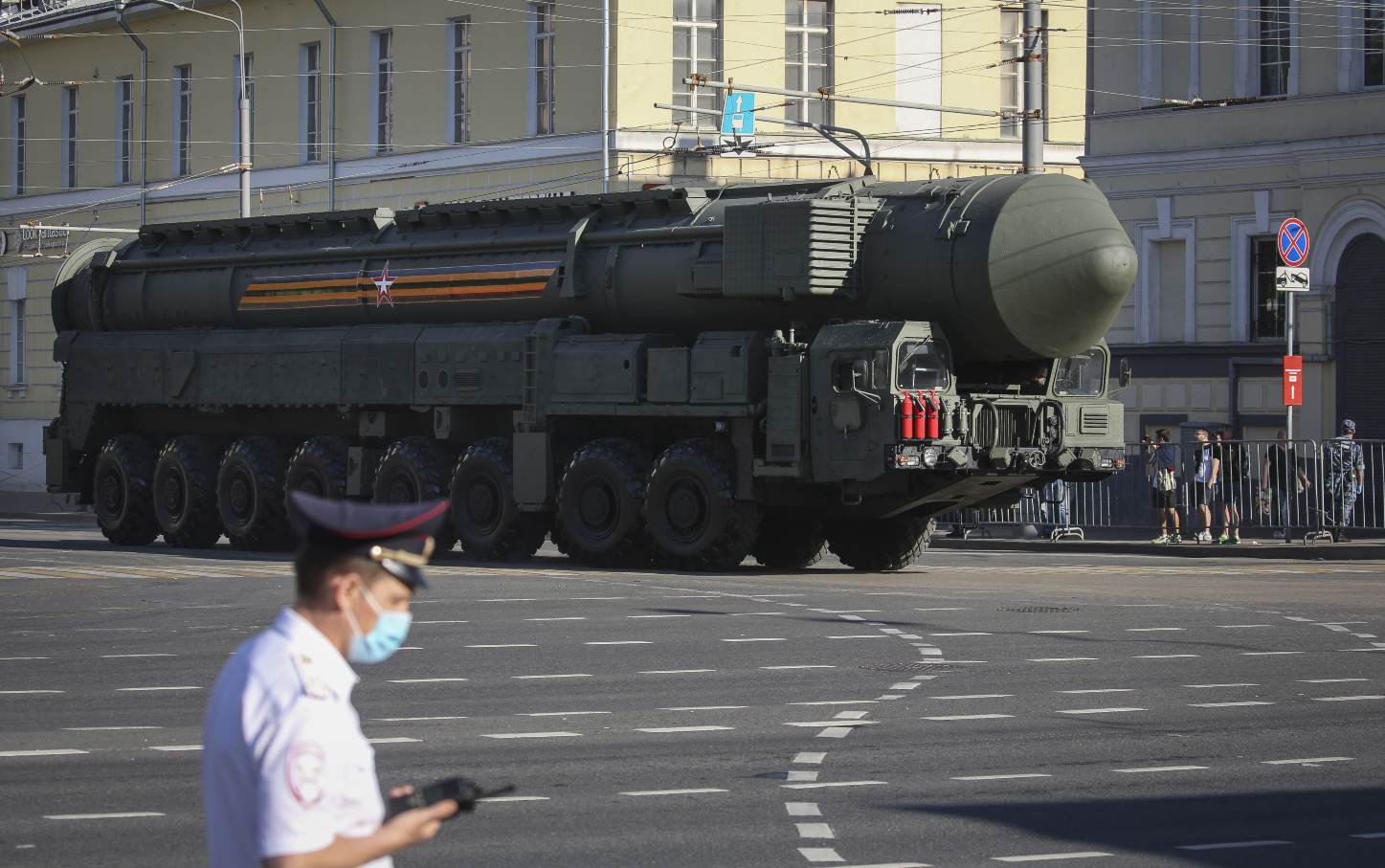
2 months agoThe Oreshnik ballistic missile: Almost impossible to intercept and designed by Russia for an atomic war
The Oreshnik, a medium-range (non-intercontinental) ballistic missile that flies at hypersonic speed and is designed for nuclear warfare scenarios, has been deployed again by Russia in its latest offensive against Ukraine. The missile reaches a suborbital altitude and can carry up to six warheads, either nuclear or conventional. Its high speed and the very short time frame for attack make it extremely difficult for air defense systems to intercept.
Miscellaneous
East Bay (California)
fromwww.bostonherald.com
2 months agoRussia just used its new hypersonic missile again in Ukraine. Here's what to know about the Oreshnik
Russia used its hypersonic Oreshnik missile to strike Lviv, signaling deterrence against foreign troop deployments and demonstrating a high-speed, multi-warhead intermediate-range capability.
fromwww.theguardian.com
3 weeks agoHasty redeployment of US missiles from South Korea to Middle East leaves Seoul rattled
Early on a spring morning, camouflaged trucks carrying the US-made terminal high-altitude area defense (THAAD) missile-defence system rolled into Seongju, as the country's government ignored protests from locals who said the deployment would make them a target for Pyongyang's ballistic missiles. The conservative government in Seoul, backed by Washington, insisted that Thaad was the most effective way to locate and destroy North Korean missiles before they threatened the South and the 28,500 US troops stationed there.
World news
World news
fromwww.dw.com
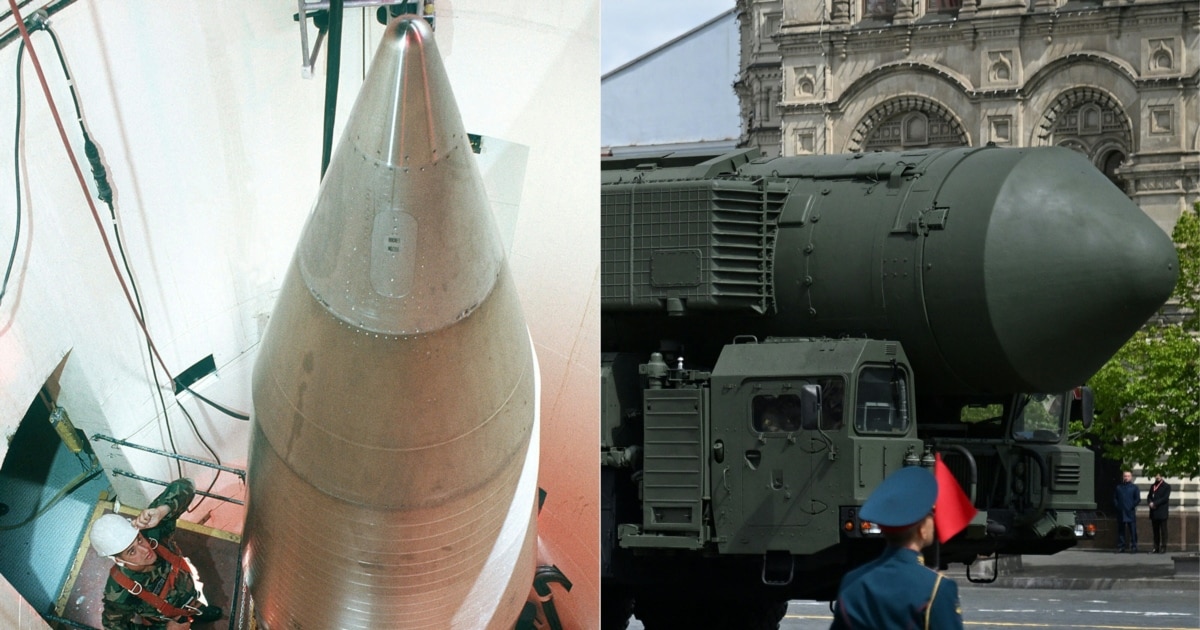
4 weeks agoNorth Korea: Kim visits warship, oversees missile launch
North Korea plans to build two advanced surface warships annually under its new five-year plan, with Kim Jong Un overseeing missile tests on the Choe Hyon-class destroyer to demonstrate enhanced naval offensive capabilities.





fromwww.aljazeera.com
1 month agoNorth Korea's Kim oversees cruise missile tests from new naval destroyer
Our Navy's forces for attacking from under and above water will grow rapidly. The arming of the Navy with nuclear weapons is making satisfactory progress. All these successes constitute a radical change in defending our maritime sovereignty, something that we have not achieved for half a century.
World news


fromwww.theguardian.com
2 months agoPentagon to reduce its role in deterrence of North Korea
South Korea hosts about 28,500 US troops in combined defence against North Korea's military threat and Seoul has raised its defence budget by 7.5% for this year. South Korea is capable of taking primary responsibility for deterring North Korea with critical but more limited US support, said the National Defense Strategy, a document that guides the Pentagon's policies. This shift in the balance of responsibility is consistent with America's interest in updating US force posture on the Korean Peninsula, the document added.
World news
fromTruthout
2 months agoWill the US and Russia Abandon Nuke Restraints When New START Treaty Expires?
For most of us, Friday, February 6, 2026, is likely to feel no different than Thursday, February 5th. It will be a work or school day for many of us. It might involve shopping for the weekend or an evening get-together with friends, or any of the other mundane tasks of life. But from a world-historical perspective, that day will represent a dramatic turning point, with far-reaching and potentially catastrophic consequences.
World news
[ Load more ]