Healthcare
fromFast Company
2 days agoDignity as a competitive business model
Healthcare affordability is forcing families to delay care, highlighting the need for dignity-centered care models that prioritize patient respect and community health.
I'm incredibly proud of the firm and what we've accomplished in the last year. We had certainly, the year before, a historic year financially, and this year was also historic in being one of our best financial years in history.
Eight of the ten clubs in the top half of the Premier League table are owned by Americans. In the Championship, four of the eight clubs battling for promotion are U.S.-owned, including the Ryan Reynolds-Rob McElhenney Wrexham project.
A SpaceX IPO promises to be one of the biggest Wall Street events of the year, with several investment banks lining up to help raise tens of billions to fund Musk's ambitions to set up a base on the moon, put datacenters the size of several football fields in orbit and possibly one day send a man to Mars.
In late 2025, the United States shocked the world by suspending global health aid, leading experts to predict 700,000 additional deaths annually, primarily among children. This prompted the US to propose unusual bilateral health agreements with developing countries, which have drawn criticism for being exploitative.
66% of internet users live where political or social sites are blocked, and 78% are in countries where people have been arrested for online posts. New social media regulations have emerged in dozens of countries in the past year alone.
"The specific barrier is capital," says Lisa George, global head of the Macquarie Group Foundation. "Without access to capital, it's very hard to get social mobility and educational mobility in life."
Most for-profit companies still confine nonprofit relationships to corporate philanthropy. Donations flow through foundations, annual reports highlight community contributions, and nonprofit engagement is framed as evidence of corporate responsibility.
Companies with a higher number of women in senior roles are significantly more likely to dismiss male perpetrators of abuse against female colleagues, according to recent analysis.
Defense Secretary Pete Hegseth took the unprecedented step of designating a U.S. firm-Anthropic-as a supply chain risk. Anthropic's crime? It refused to violate industry-wide protocols against using AI for mass surveillance or autonomous weapons. Hegseth's designation, which has until now been reserved for foreign firms, bars U.S. military contractors from doing business with the company.
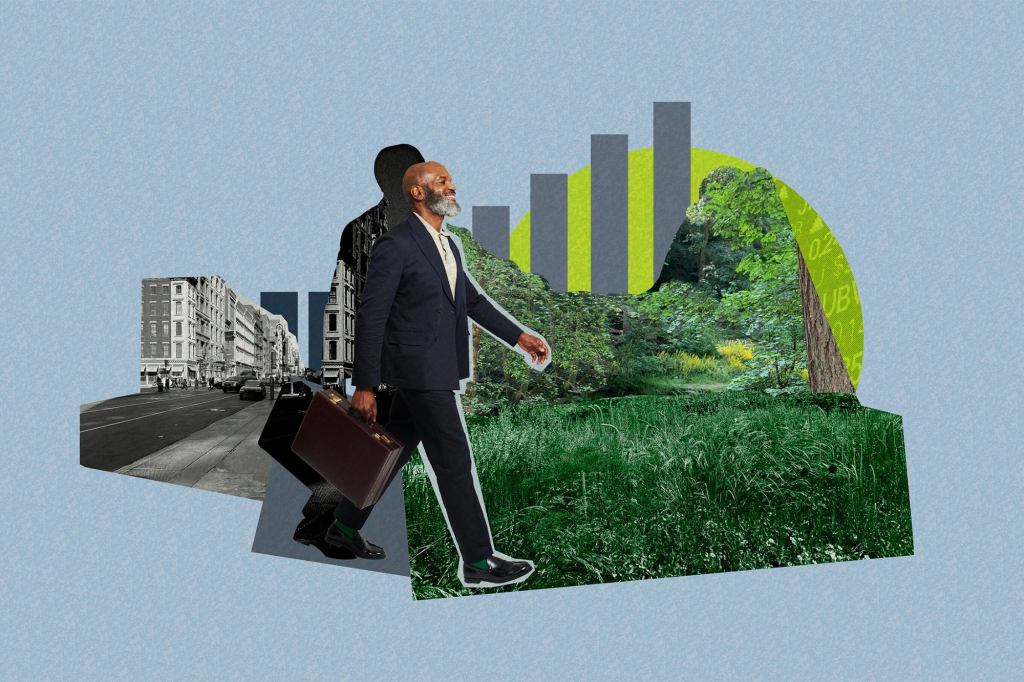
Multinational firms are under rising pressure-from investors, regulators, and employees-to demonstrate positive societal impact in the places where they do business. With ESG-focused institutional investments projected to reach nearly $34 trillion this year and roughly 90% of large U.S. companies now disclosing ESG reports, these pressures are now a central part of corporate strategy.
Losing staff could be detrimental to the projects we worked on, and there was a growing dissatisfaction with how meetings were run. These mostly one-sided discussions left the quieter half of us feeling pushed aside, like our thoughts didn't matter much. If things stayed this way, I worried the good people on our team would start quitting one by one.
In places where inclusion is part of the infrastructure of their economy-supply chains, procurement processes, capital access, or business ownership-people thrive. Inclusive economies create more resilience by expanding the base of potential business owners who can build, own, innovate, and hire. They allow more opportunities for homeownership and investing in the longevity of communities. As our economy becomes increasingly stratified and volatile, we need as much resiliency as we can get.
Imagine a world where everyone in your team feels valued, heard, and empowered to contribute. Imagine that world where people aren't afraid to challenge the status quo and great ideas emerge from unexpected places. Now imagine that world where toxic behaviors don't just go unchecked, they don't even have room to rise. Wouldn't that be a great world? What happens when leadership tolerates the wrong behaviors? What happens when decision-making is shaped by exclusion, fear, and insecurity?