#income-supplementation
#income-supplementation
[ follow ]
#social-security #retirement-income #financial-support #snap-work-requirements #food-assistance-policy
#social-security


Retirement
from24/7 Wall St.
1 day agoNew Social Security Proposal Deals Higher Earners a Harsh Blow
Capping Social Security benefits for higher earners is proposed to address funding shortfalls, but its likelihood of passing is low.
Retirement
from24/7 Wall St.
2 days agoHow to Avoid Social Security's Most Hated Trap
Many retirees face taxes on Social Security benefits, which can feel like double taxation due to low income thresholds.
Psychology
fromSilicon Canals
13 hours agoThe hardest part of growing up lower middle class wasn't the lack of money. It was learning to want things quietly, because visible desire in a household running on tight margins felt like an accusation against the people who were already giving everything they had. - Silicon Canals
Emotional training around scarcity shapes behavior in lower middle class childhoods, teaching children to suppress desires to avoid adding stress to their families.
fromThe Oaklandside
3 days agoThousands in Alameda County will lose CalFresh this week. Here's what to know
"There are people who have come here after escaping violence and persecution and torture. These are communities that we have historically said, 'You are welcome here. We have the support for you. We're going to help you get established in our country.' And now, the federal government is abandoning them."
East Bay (California)
fromTruthout
4 days agoLow-Income Moms Struggle to Keep Their Families Afloat Amid Gas Price Increases
Luna Rosado, a single mother, has seen her gas expenses rise by $40 weekly due to a 30 percent increase in prices after the war in Iran. This has resulted in $160 less for groceries and other necessities each month, forcing her to constantly adjust her budget.
Washington DC
Right-wing politics
fromFortune
2 weeks agoEconomists agree: You're not crazy for feeling like the rich get richer, and the poor are doing worse. Welcome to the 'K-shaped economy' | Fortune
The K recovery illustrates a growing economic divide where the wealthy prosper while the poor struggle, echoing historical patterns of inequality.
Mental health
fromSilicon Canals
2 weeks agoPeople who genuinely understand money but still feel broke aren't bad with finances. They grew up in a system where having enough was redefined every time they relaxed, so their brain permanently registers stability as the moment before loss. - Silicon Canals
Money anxiety stems from childhood experiences of financial instability where relief was followed by new crises, not from financial illiteracy or lack of knowledge.
Public health
fromTruthout
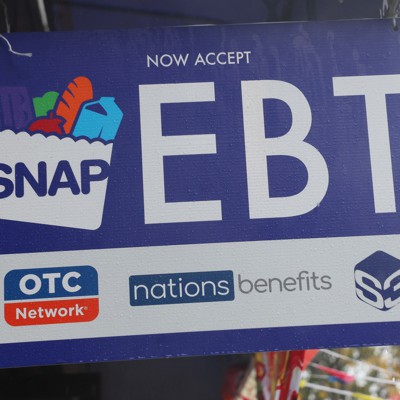
3 weeks agoTrump Administration Quietly Moves to Strip Food Aid From Millions
The Trump administration is pursuing a regulatory change to eliminate broad-based categorical eligibility in SNAP, which would remove federal nutrition assistance from approximately 6 million low-income Americans, including nearly 2 million children.
US politics
fromFortune
3 weeks agoSocial Security has kept wealth inequality in check for decades. Trump's policies could deplete it in 6 years | Fortune
Social Security's $40 trillion buffer has moderated wealth inequality for decades, but accelerating fiscal policies threaten its insolvency by 2032, potentially widening the wealth gap to Gilded Age levels.

#snap-work-requirements
Non-profit organizations
fromCity Limits
1 month agoWhat You Need to Know: New SNAP Work Requirements in NYC
New SNAP work requirements effective March 1 affect approximately 123,000 New Yorkers, expanding to include previously exempt groups like homeless individuals, veterans, and youth aging out of foster care.


Non-profit organizations
fromCity Limits
1 month agoWhat You Need to Know: New SNAP Work Requirements in NYC
New SNAP work requirements effective March 1 affect approximately 123,000 New Yorkers, expanding to include previously exempt groups like homeless individuals, veterans, and youth aging out of foster care.
Public health
fromBusiness Insider
4 weeks agoI'm a millionaire living in Washington. I'm happy to pay more in taxes - it helps everybody.
A self-made millionaire who experienced poverty acknowledges that wealth accumulation requires more than hard work, including luck, opportunity, and systemic advantages beyond individual effort.
UK politics
fromwww.theguardian.com
2 weeks agoEnergy bills: UK government urged to launch social tariff' to help vulnerable households
The UK government should implement a £3.7bn social tariff providing discounted energy bills for poor households, offering targeted support rather than universal subsidies.
Retirement
from24/7 Wall St.
2 weeks agoThis Could Be Social Security's Most Confusing Rule
Spousal Social Security benefits cap at 50% of the spouse's primary insurance amount and cannot grow beyond this maximum, unlike individual benefits which increase 8% annually when delayed past full retirement age.
fromThe Atlantic
1 month agoFour Conditions Make Cash Transfers Save Lives
Cash transforms health when four particular conditions are met. Most U.S. cash-transfer pilots have lacked them. But one major American policy does come close: the federal food-assistance program SNAP. Its success offers a road map for what effective cash assistance can look like in this country, if we choose to build on it.
Public health
UK politics
fromwww.theguardian.com
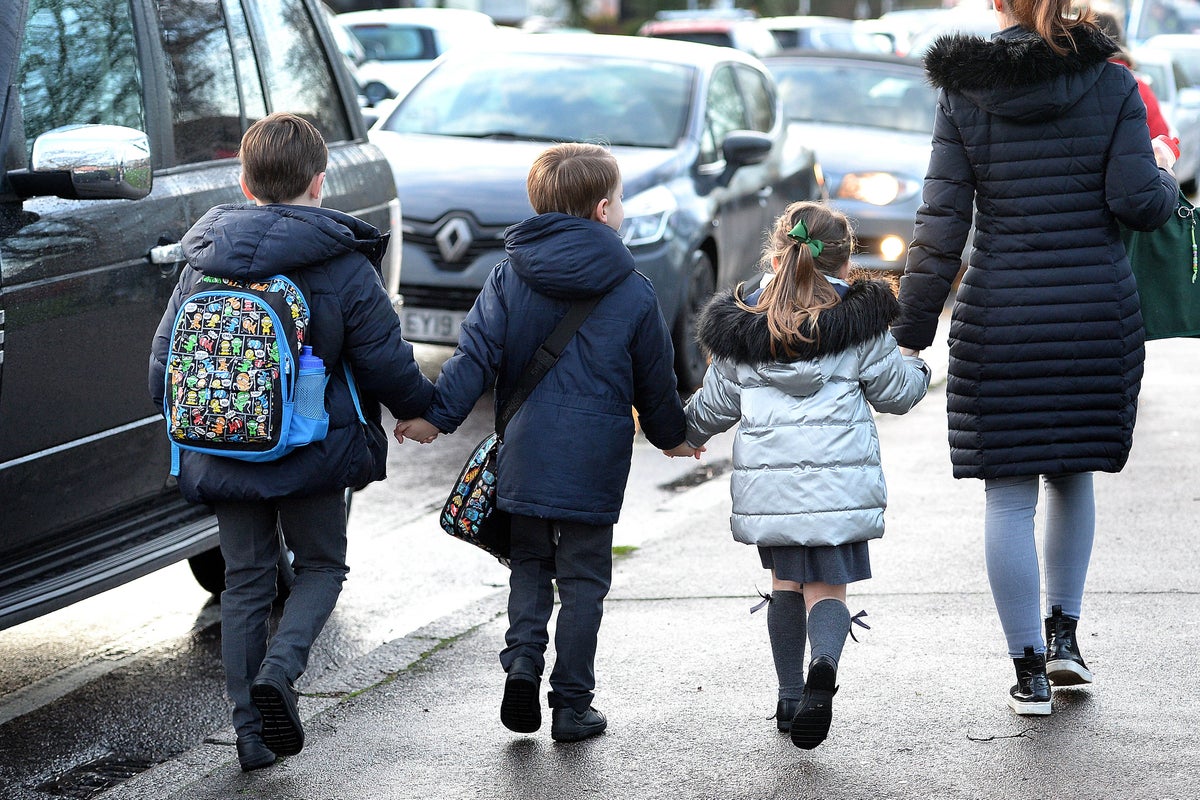
2 weeks agoInquiry launched into HMRC anti-fraud scheme that wrongly cut child benefits
The UK's National Audit Office is investigating an HMRC anti-fraud scheme that wrongly stripped 23,794 families of child benefit payments using flawed Home Office travel records that failed to document return journeys.
UK politics
fromwww.theguardian.com
3 weeks agoLabour has weapons in its arsenal to cushion the poorest from Iran war economic fallout | Heather Stewart
Labour's scrapping of the two-child limit will provide £440 monthly to over half-a-million households from April, potentially lifting 480,000 children out of poverty by 2026 amid rising inflation concerns.
fromInside Higher Ed | Higher Education News, Events and Jobs
1 month agoIndiana Bill Would Use Federal Earnings Test to End Programs
Starting this summer, most college programs will have to show that their students earn more than someone with only a high school diploma to avoid being cut off from federal funding, as part of a new accountability measure. Congress created the earnings test known as Do No Harm when it passed the One Big Beautiful Bill Act last summer. The Education Department is still working to finalize the regulations that outline how it will work.
Higher education
Real estate
fromRedfin | Real Estate Tips for Home Buying, Selling & More
2 months agoTypes of Housing Assistance Programs and How They Work
Housing assistance programs reduce barriers to stable housing and homeownership through emergency shelter, rent help, down payment grants, and financing assistance.
fromwww.theguardian.com
2 months agoThe Guardian view on long waits for disability benefits: the system should not push people closer to poverty | Editorial
Pip is designed to support disabled people with the additional costs of daily living and mobility, yet for many claimants it has instead become a source of prolonged uncertainty, financial hardship and distress. Waiting months and in some cases more than a year for a decision can push people into debt, rent arrears and poverty, especially as Pip unlocks other support such as carer's allowance.
UK news
Public health
fromSan Jose Spotlight
1 month agoFuture of Santa Clara County guaranteed income programs uncertain - San Jose Spotlight
Santa Clara County piloted four guaranteed basic income programs providing $1,200 monthly for two years to selected low-income residents; future funding remains uncertain.
fromwww.theguardian.com
2 months agoRecord number of people in UK live in very deep poverty', analysis shows
The UK's poorest families are getting poorer, with record numbers of people classed as in very deep poverty meaning their annual household incomes fail to cover the cost of food, energy bills and clothing, according to analysis. Although overall relative poverty levels have flatlined in recent years at about 21% of the population, life for those below the breadline has got materially worse as they try to subsist on incomes many thousands of pounds beneath the poverty threshold.
UK news

US politics
fromwww.independent.co.uk
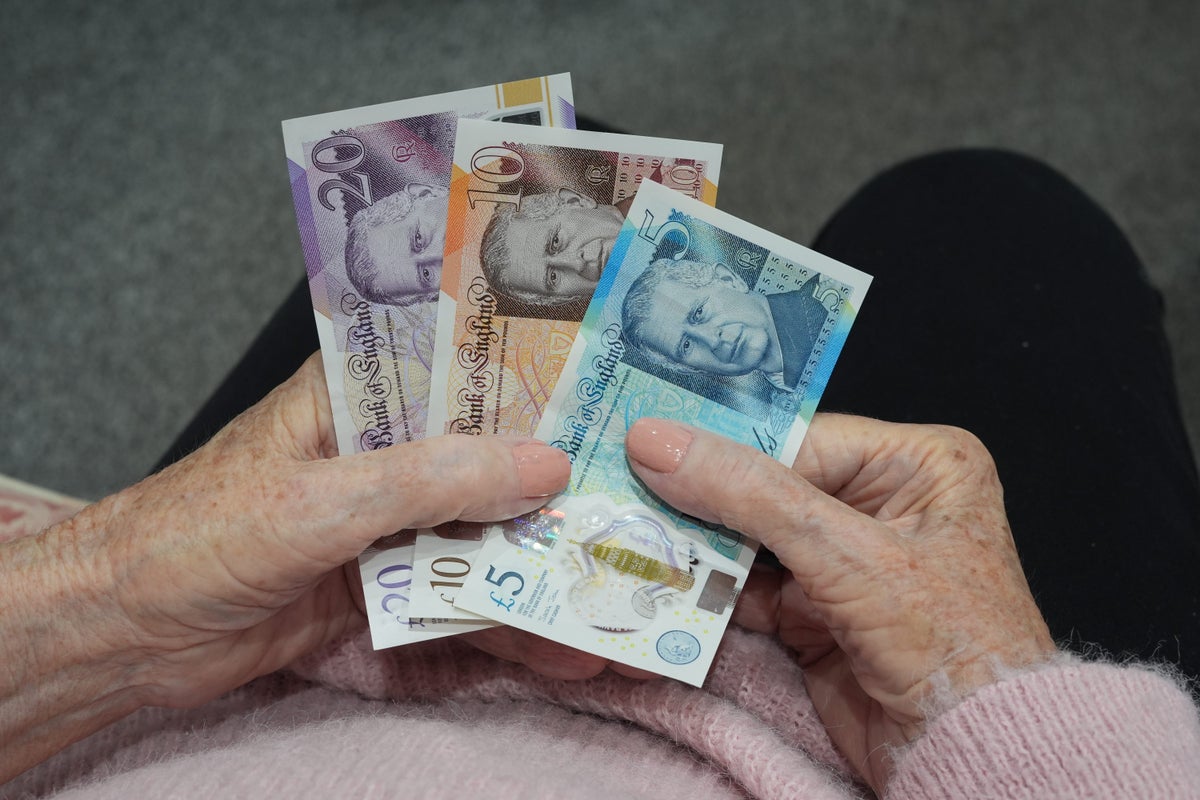
2 months agoMillions of vulnerable people missing out on benefits, Martin Lewis' charity warns
Around £24 billion in benefits goes unclaimed annually as millions, especially those with mental health problems, lack access to overstretched, inconsistent local support.
fromLondon Business News | Londonlovesbusiness.com
2 months agoUK in danger of becoming a 'welfare state with a bankrupt country attached' - London Business News | Londonlovesbusiness.com
My reforms changed the welfare system to make work pay and brought workless households to an all-time low. But because of the post-Covid collapse in vetting and rise of health-related welfare claims, millions of workers could take home more from welfare than wages after tax. This is an outrageous state of affairs. The system must stop writing off thousands every day and incentives to work need to be restored to end this ruinous waste of human potential.
UK politics
UK politics
fromwww.theguardian.com
2 months agoThe Guardian view on deepening poverty in the UK: a catastrophic Tory legacy has cut millions adrift | Editorial
Conservative policies from 2010–2024 left overall relative poverty unchanged, increased deep destitution, and forced millions into severe hardship despite many being in work.
[ Load more ]